

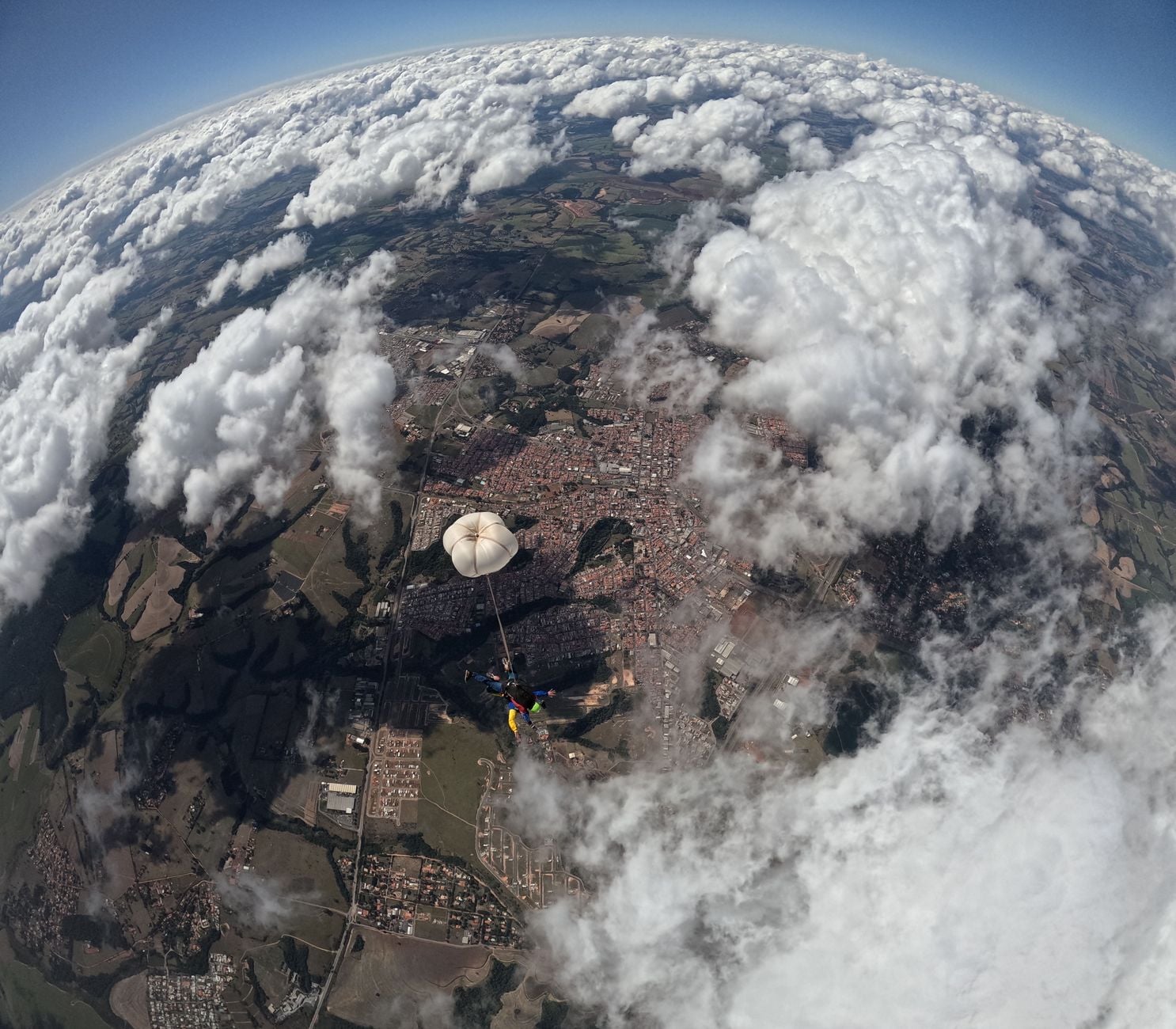
Scott Kelly stepped out of a Soyuz capsule on the steppe of Kazakhstan in March 2016 after nearly a year aboard the International Space Station, and the first things to hit him were not just the gravity crushing his legs or his ankles swollen like water balloons. It was also the sensory rush of Earth: the cold, mineral smell of the ground under the landing site, and later, back in Houston, the smell of rain on his backyard patio, which struck him as almost unbearably vivid, as if someone had turned up the volume on the world.
Kelly had just completed one of the longest single spaceflights by an American astronaut, part of NASA’s Twins Study with his brother Mark on the ground. He came home taller, his eyesight altered, his skin so sensitive that anywhere his body touched a chair or a mattress broke out in hives. And the sensory overload — the rain, the wind, the texture of ordinary things — was among the strangest parts of the whole return.
Nearly a year in a place with no weather
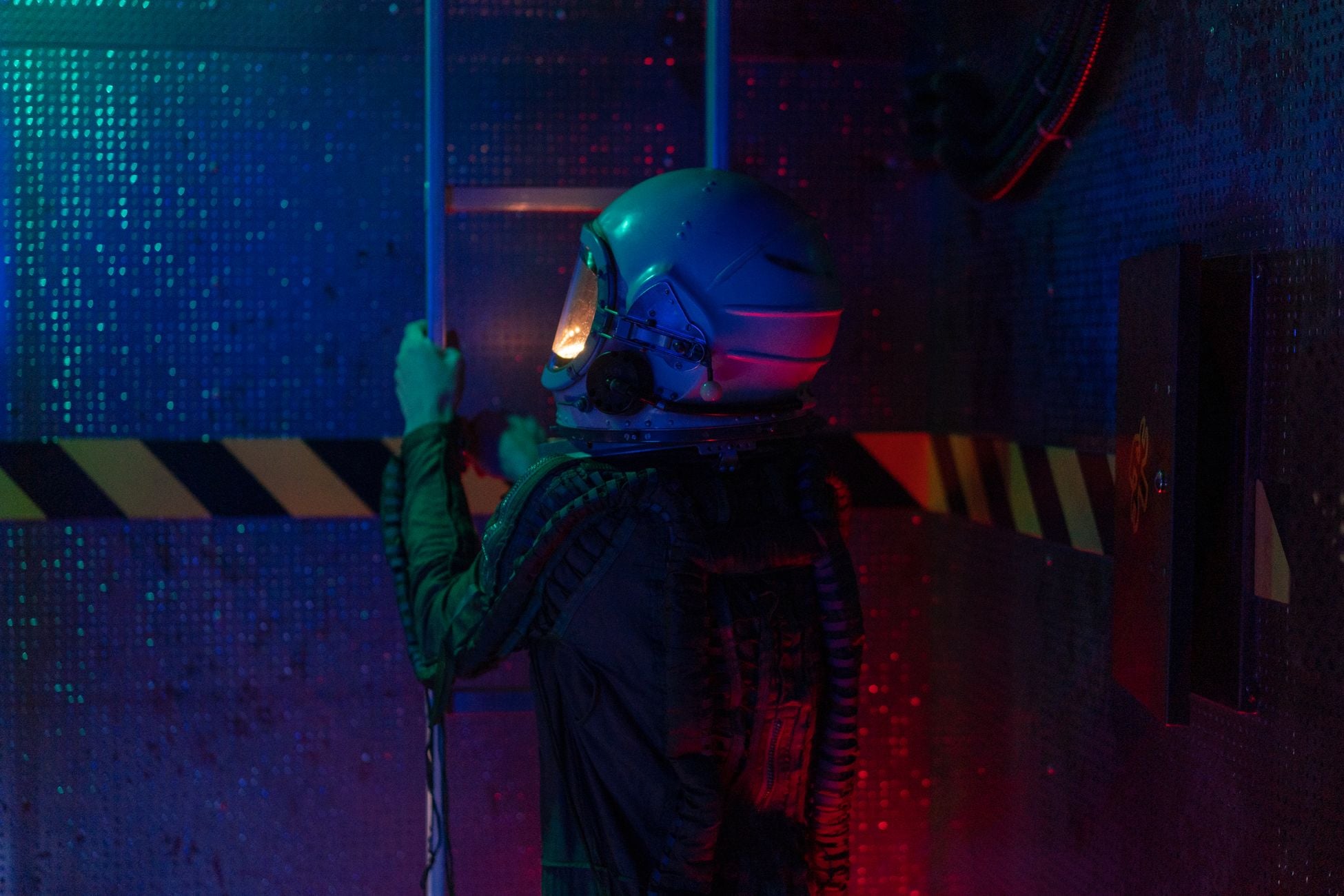
The Space Station orbits above Earth at high speed, which means the crew watches sixteen sunrises and sixteen sunsets every twenty-four hours. Inside, the air is filtered and recycled. The temperature holds steady. There is no wind, no rain, no seasons, no dust, no pollen, no wet dog, no cut grass, no coffee brewing in a room that smells of anything but the machine that made it.
Kelly spent nearly a year in that environment. The Station’s atmosphere is a closed loop scrubbed of most volatile compounds by lithium hydroxide canisters and catalytic oxidisers, engineered to keep astronauts alive rather than to smell like anywhere. Crews often describe a faint metallic or ozone-like tang after spacewalks, when suits repressurise and bring in traces of atomic oxygen from the vacuum outside. Otherwise, olfactory life on orbit is close to a blank.
A nose, deprived of input for that long, does not switch off. It recalibrates. When Kelly landed and the hatch opened over the Kazakh grasslands, the air rushing in carried cold, earth, diesel and wet stone. He described it as a rich, almost overwhelming smell after a year of filtered air.
The Twins Study, and what it found
NASA had a rare experimental design available: Mark Kelly, a retired astronaut and Scott’s brother, agreed to serve as a genetically matched ground control for the mission. The resulting Twins Study ran across ten research teams and documented shifts in gene expression, telomere length, gut microbiome composition, cognitive performance, and vascular structure. Most changes reversed within months of landing. Some did not.
Kelly’s carotid artery showed changes. His retinas showed structural changes consistent with spaceflight-associated vision problems. His cognitive speed showed differences after landing. And a small but persistent slice of his gene expression — the parts related to immune response, DNA repair, and inflammation — remained altered long after the rest reset.
The sensory strangeness he described was harder to quantify, but it fits a pattern researchers are beginning to map. Microgravity does not only redistribute fluids and unload the skeleton. It changes how the nervous system weights incoming signals. Recent work published in eLife on reaching movements during spaceflight found that astronauts systematically underestimate their own body mass in orbit, producing movements that are underactuated — a small piece of evidence that the brain rewrites its own baseline in weightlessness and has to rewrite it back on return.
Coming home to a world that no longer felt quite real
When Kelly finally sat down to dinner at his own table in Houston — his daughters beside him, his girlfriend Amiko, his brother Mark and their father around him — the scene did not feel entirely real to him. He wrote that the faces of the people he loved, the chatter of the table, the clink of silverware and the swish of wine in a glass all struck him as unfamiliar. Even the sensation of gravity holding him in his chair felt strange, and every time he set a glass down, part of his mind kept looking for a dab of Velcro or a strip of tape to hold it in place, the way everything had to be secured in orbit.
His own skin made ordinary comfort punishing. Because it had gone nearly a year without pressing against anything solid, it had become so sensitive that lying in bed left him with a burning rash everywhere his body touched the mattress. The one place the pain eased was the swimming pool, because floating was still the position his nerves understood. Grass, wind, rain — the plainest features of a spring day — arrived with a force he had never noticed before he left.
The rain, when it came, stopped him. Petrichor — geosmin, released by soil bacteria when raindrops hit dry ground — is something the human nose can detect at extraordinarily low concentrations. For a man whose olfactory system had spent nearly a year in filtered air, that first storm was less a smell than a physical assault of information.
What the body does when gravity comes back
The physical reentry was brutal in its own right. In microgravity, plasma volume drops, and the heart, no longer pumping against a gravitational column of blood, remodels itself smaller and more spherical. Bone mineral density in weight-bearing regions falls significantly. Muscle atrophies fastest in the calves and lower back — the postural muscles that hold a body upright on Earth and do nothing in orbit.
Newer research on the metabolic side is filling in the picture. A review of how microgravity affects liver metabolism documented shifts in lipid processing, oxidative stress markers, and mitochondrial function in astronauts and model organisms — changes that alter how the body handles food, alcohol, and inflammation for months after landing. Separately, work using a lab-on-chip model on the Station itself has begun tracking exactly which cellular pathways drive the muscle wasting Kelly experienced, in the hope that Mars-mission crews can be protected.
Kelly needed help standing on landing day. Support crews carried him from the capsule to a folding chair on the steppe. Photographs from that morning show him swollen-faced, eyes bloodshot, mouth in a tight line. He had trained for years for the ride up. Nobody had really trained him for the ride down.
Why the return is harder than the launch
Astronauts speak about this often, and it rarely makes the headlines from the mission. The launch is a defined event. Countdown, ignition, eight and a half minutes of vibration, orbital insertion. There is a script.
The return is not a moment but a long unspooling. Kelly’s ankles stayed swollen for weeks. His skin took days to stop breaking out. His inner ear, having relearned that up and down do not matter, had to unlearn the lesson. He has described reaching for supports that were not there as his balance lurched, and a part of his mind that still, weeks later, half-expected objects to hang in the air instead of falling — the reflexes of a year in orbit slow to switch off.
The reintegration reports the astronaut corps has quietly accumulated over decades — the notes about heightened smell, taste, and touch, the discomfort with soft furniture, the sense that the familiar world has gone subtly unreal — are consistent enough that they read as a phenomenon rather than a series of quirks. The nervous system, having adapted with impressive speed to weightlessness, is equally aggressive about adapting back. Everything gets turned up.
What Mars will demand
Kelly’s mission was designed partly as a proof-of-concept for longer flights. A round-trip Mars mission of the sort being planned would keep a crew in microgravity or reduced gravity for years, an order of magnitude beyond what any human has experienced. Analysis of brain structural changes during long-duration flight — ventricular expansion, shifts in white matter, altered cerebrospinal fluid dynamics — suggests the reentry problem scales with time in a way researchers are still trying to model.
The commercial side is preparing for the same challenges. Companies including Vast, which is building successor stations to the ageing ISS, have signed research partners to continue the biomedical and microgravity research now done on the Station once it is retired at the end of the decade. The Station itself is approaching the end of its operational life.
The rain, still
Kelly retired from NASA in April 2016, weeks after landing. In interviews and in his memoir since, he has returned again and again to the same small marvels — that grass smells good, that wind feels good, and that rain, in his own word, is a miracle — and has said he will try to remember how magical those ordinary things are for the rest of his life.
What is documented is that his body carried the mission home with it for months, and in a few genetic and vascular corners, for longer. The hard part had not been the launch, or the spacewalks, or the year of orbit. It was the ordinary world on the other side — the pool, the dinner table, the first spring rain — arriving all at once with a vividness his body had forgotten how to hold.
