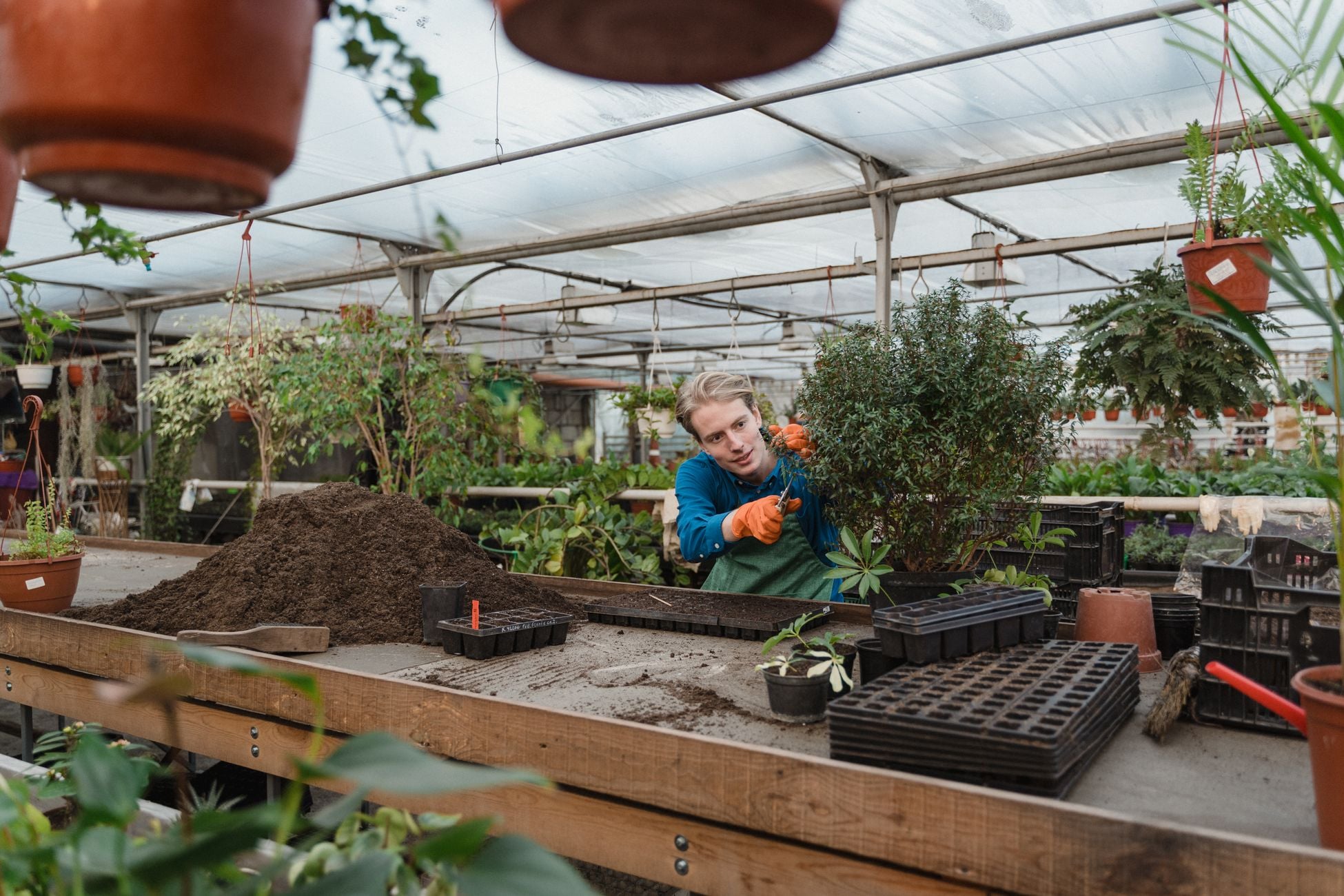
The most consequential Mars plan Elon Musk ever made was not Starship, not a million-person city, and not the colony rhetoric he is famous for now. It was a tabletop-sized greenhouse he never managed to launch. The mission was called Mars Oasis, and almost everything SpaceX became can be traced back to its failure.
In the autumn of 2001, a 30-year-old Musk was in Russia trying to buy a refurbished intercontinental ballistic missile. He was not there to start a rocket company. He was there to bolt a small robotic greenhouse onto the top of a converted weapon and send it to another planet.
Beside everything that came later, the plan was almost disarmingly modest. A sealed chamber would land on the Martian surface, carry seeds or food crops, hydrate them inside a controlled enclosure, and send back a photograph of green life against red ground. That was the original emotional payload. Not Starship. Not a colony carved into the regolith. At the beginning, the plan was closer to a terrarium than an empire.
Musk travelled to Moscow with Jim Cantrell, an aerospace consultant, and Adeo Ressi, his college friend from Penn. The meetings with Russian rocket groups including NPO Lavochkin and Kosmotras went badly, according to the later Bloomberg account republished by The Economic Times. The Russians did not appear to take the young internet entrepreneur seriously. Cantrell later recalled that one chief designer spat on him and Musk because he thought they were not serious.
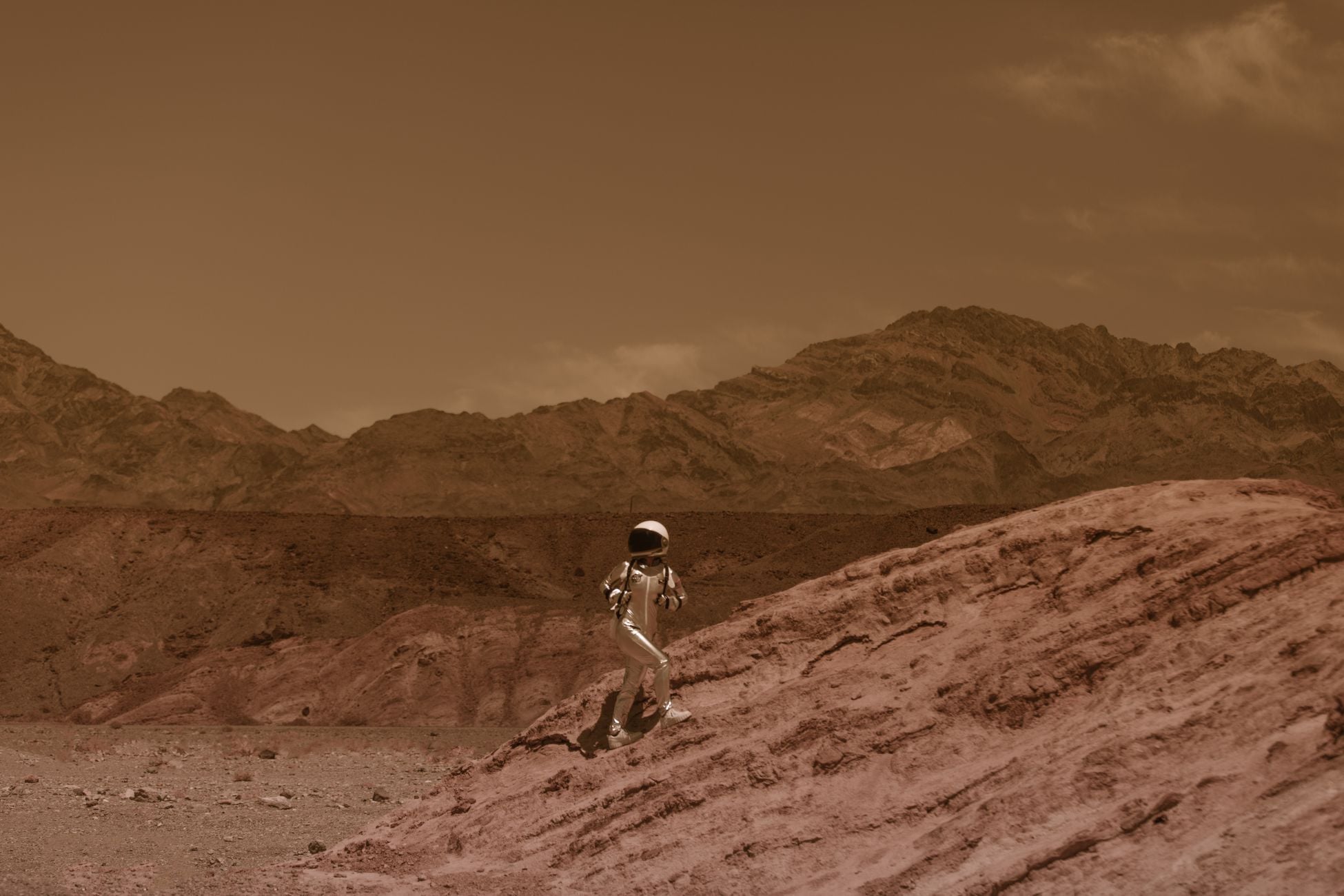
The greenhouse that almost flew
The hardware concept for Mars Oasis was small and almost charming in its restraint. The project was described in 2001 as a roughly $20 million technology-demonstration lander, intended primarily as a mini-greenhouse that would grow food crops inside an enclosed chamber on Mars.
Musk later described the same idea in a WIRED interview: a small greenhouse packed with dehydrated nutrient gel that could be hydrated after landing. The goal was a photograph of plants with a red Martian background, what Musk called “the first life on Mars, as far as we know, and the farthest that life’s ever travelled.”
The science goal was real, but it was never only science. Mars Oasis was meant to create a public image powerful enough to change the mood around Mars. Musk had looked for a NASA schedule for human Mars missions and found nothing. He came away convinced that the problem was not only engineering, but public will.
Why a plant, and why then
The choice of a greenhouse over a seismometer or weather station was a communication decision as much as a payload decision. A spectrometer reading is abstract. A living shoot is immediate. It gives a child, a voter, a schoolteacher, and a lawmaker the same thing to look at.
That intuition is visible in much smaller science settings too. The University of Chicago’s South Side Science Festival drew thousands of families around hands-on demonstrations, from microscopes to robots to biological displays. CU Boulder’s Día de Ciencias similarly uses hands-on engineering activities to make STEM feel reachable for younger students.
Mars Oasis was built around the same basic bet, scaled to planetary drama. If people could see a plant growing on Mars, Mars might stop sounding like a policy abstraction and start feeling like a destination.
The timing matters. Musk was already wealthy from earlier internet ventures and PayPal was heading toward a sale, but the final PayPal windfall was not yet the clean backdrop to the first Moscow trip. In Musk’s own later telling, the Mars idea sharpened in 2002 as it became clear PayPal was going to be sold; the Russian missile trips straddled late 2001 and 2002.
Why Russia, and why it fell apart
The Russian trips were the moment Mars Oasis began to die and SpaceX began to take shape. The Dnepr route looked attractive because converted ICBMs seemed cheaper than American launch options. But the numbers never settled into something Musk could trust.
By the second trip, the Russians were quoting prices that no longer made the Mars Oasis budget work. The group returned empty-handed. On the way home, Musk worked through a spreadsheet and came to the conclusion that the material cost of a rocket was only a small fraction of the market price.
That was the hinge. Mars Oasis had started as a mission to inspire NASA and the public. It ended by convincing Musk that the launch market itself was the bottleneck. SpaceX was founded in 2002, and the greenhouse mission was left behind.
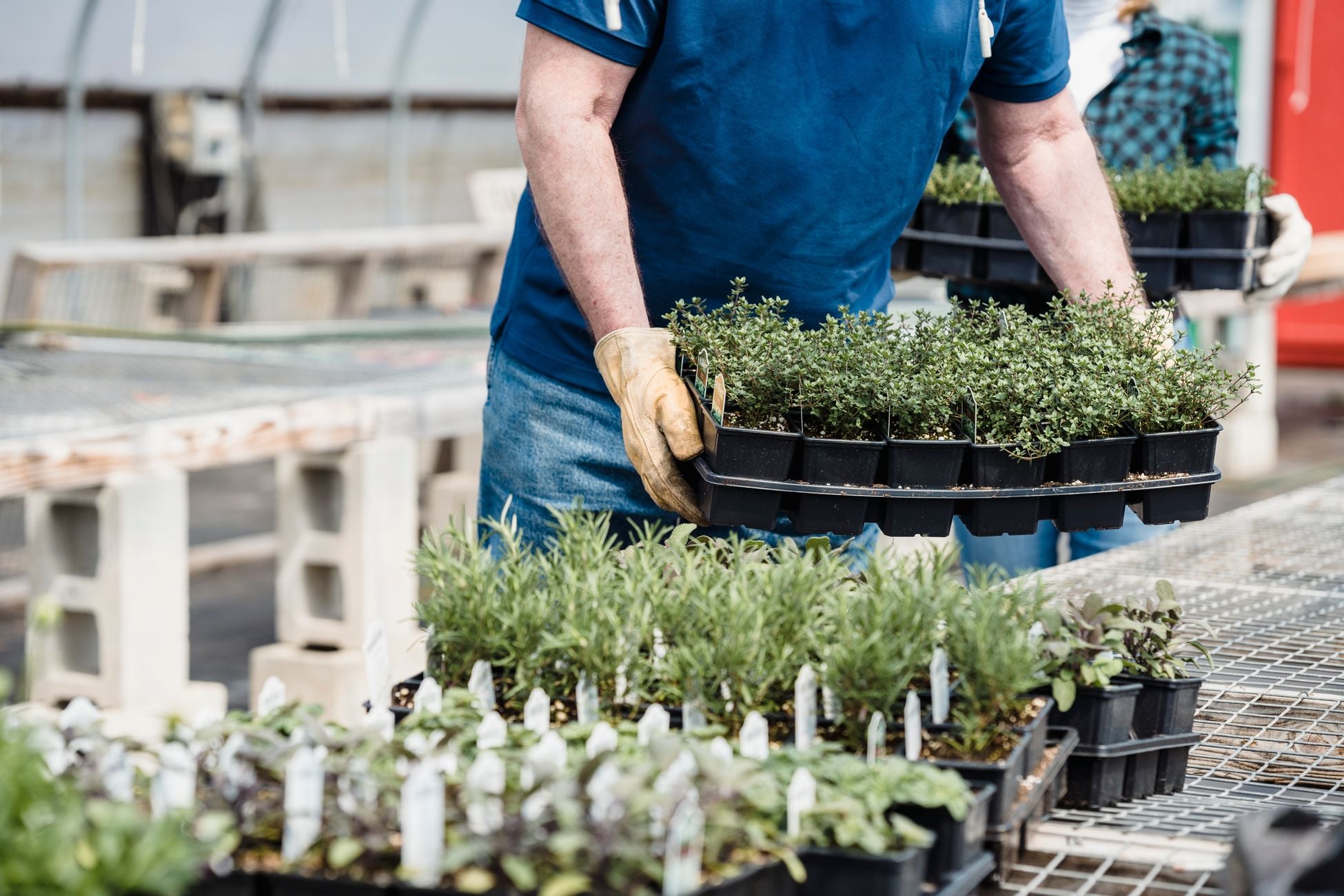
The plants that almost went
The biology side of Mars Oasis was more than a slogan. The 2001 SpaceRef profile described an enclosed chamber filled with treated Martian regolith, intended to grow food crops and test whether humans might someday live off the land. It also noted possible secondary experiments involving oxygen, rocket-fuel production from the Martian atmosphere, and radiation sensors.
Musk’s orbit around Mars advocacy also brought him into contact with Robert Zubrin and the Mars Society world, though the SpaceRef account made clear that Musk was trying to establish an independent Life to Mars Foundation rather than simply fold the project into an existing advocacy organization.
The appeal of a plant payload was that it compressed a vast idea into one visible event. If the plant grew, the mission had its image. If the image travelled, the project had done its political work.
The communication strategy embedded in the science
Mars Oasis was, in a real sense, a science communication project with a spacecraft attached. Its success metric was not just kilograms of data returned. It was attention, enthusiasm, and pressure.
That premise fits a broader principle in goal-setting: specific goals are easier to act on than vague ambitions. A Psychology Today overview of effective goals makes the ordinary version of that point: the more specific a goal is, the easier it is to monitor and pursue.
The broader goal-setting and task-motivation literature points in the same direction, emphasizing clear, challenging objectives, long-term aspirations, and shorter-term targets. Mars was the aspiration. A plant on Mars by the middle of the decade was the target people could picture.
What survived the pivot
When Mars Oasis disappeared, the underlying theory of change did not. SpaceX inherited the instinct for visible milestones: Falcon 1 reaching orbit, Dragon berthing with the International Space Station, Falcon boosters landing upright, Starship rising and exploding in public view.
Those images were engineering tests, but they also became recruitment posters for a future that had not arrived yet. Musk did not get the greenhouse photograph. He built a company that learned how to manufacture public proof in other ways.
The greenhouse idea also did not vanish from spaceflight. The ISS National Laboratory’s Vegetable Production System, known as Veggie, is a plant-growth unit aboard the International Space Station that can produce salad-type crops while also supporting recreation and relaxation for crew members.
That is not a direct continuation of Mars Oasis as an engineering program. But it shows why Musk’s first instinct had emotional force. Plants in space are never just plants. They are proof that a sealed human world can feel a little less sealed.
The image that never was
So here is the uncomfortable question. Was Mars Oasis actually a failure? If the greenhouse had flown and produced its single green photograph, would the world look meaningfully different today, or would the image have faded the way Apollo’s pale blue dot eventually did? The plant was supposed to move public will. SpaceX moved launch costs by an order of magnitude. Which one of those does more to put a human on Mars?
There is a tempting story in which symbolic gestures pull infrastructure along behind them. The history of Mars Oasis suggests the opposite. The symbol failed. The infrastructure got built precisely because the symbol failed. The frustration of not buying the ride was worth more, in the end, than the ride itself would have been.
Maybe the lesson is that space exploration does not need more iconic photographs. It needs cheaper rockets, and the willingness to be embarrassed by the gap between the speech and the spreadsheet. The plant never went to Mars. The reason it never went is the reason SpaceX exists. That trade may have been the most useful one Musk ever made — even if he did not know, at the time, that he was making it.