

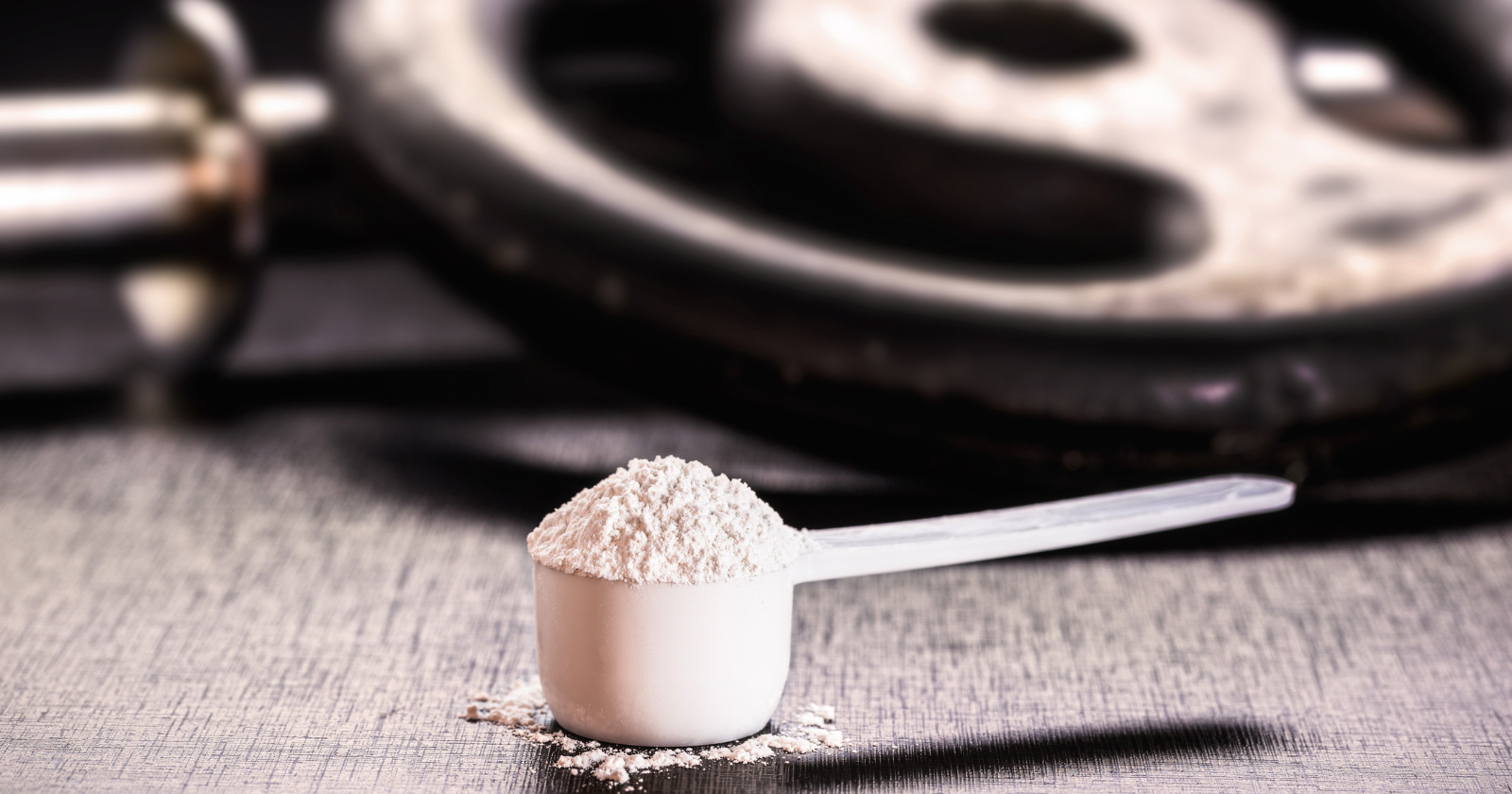
Walk into any supplement shop on Earth and you will find it: a white powder sold by the kilogram in plastic tubs, marketed to teenagers, grandmothers, and Olympic sprinters alike. Creatine monohydrate is now among the best-selling sports supplements in the world, the subject of an enormous scientific literature, and one of the most thoroughly studied compounds in the entire nutrition category.
It is also nearly two centuries old. In 1832, the French chemist Michel Eugène Chevreul simmered down a vat of skeletal muscle broth and pulled from the residue a previously unknown nitrogenous compound. He named it after kreas, the Greek word for flesh. He called it creatine.
Chevreul was already famous by then. He had spent years untangling the chemistry of animal fats, and his work on colour theory would later influence the Impressionists. But the meat extract he prepared in 1832 became one of the longest-running discoveries in nutritional science, a compound whose function nobody fully understood for another hundred years.
A molecule named after meat
The name was literal. Chevreul had been studying what remained after the water and fat were boiled away from muscle tissue, and the crystalline substance he extracted was, in his framing, the essence of flesh itself. The Greek root kreas shows up in the same family of words that gave English “pancreas” and “creosote”.
He published the finding quietly. There was no rush to market it. In 1832, the idea that you might eat a powdered version of muscle extract to grow more muscle would have seemed not just strange but vaguely necrophagic.
The chemistry took decades to fill in. By the 1840s, the German chemist Justus von Liebig had confirmed creatine was present in the flesh of mammals, birds, and fish. Liebig argued that the compound was a fuel for muscular work. He was, broadly, right.
The phosphate that powers a sprint
What Chevreul could not have known is that the molecule he named would turn out to be one half of the fastest energy system in the human body. In skeletal muscle, creatine binds to a phosphate group to form phosphocreatine, a high-energy reservoir sitting next to the contractile machinery of the cell. When a muscle fires hard, whether in a vertical jump, a heavy lift, or the first ten metres of a sprint, it burns through its small store of ATP in seconds.
Phosphocreatine refills it. The phosphate hops from creatine onto spent ADP, regenerating ATP almost instantly. The system runs for roughly ten to fifteen seconds of maximal effort before it empties and slower pathways take over. This is the phosphocreatine shuttle that biochemistry textbooks now treat as foundational.
An adult human body contains about 120 grams of creatine at any given moment. Roughly 95 per cent of it is stored in skeletal muscle. The rest is in the brain, the heart, and the testes. These are tissues with high and unpredictable energy demands.
How it ended up in a tub
For a hundred and fifty years after Chevreul, creatine was a laboratory curiosity. Researchers fed it to dogs, measured it in urine, used it to study muscle disease. The leap from biochemistry to dietary supplement happened in a single Olympic cycle.
At the 1992 Barcelona Games, the British sprinter Linford Christie won the 100 metres and the hurdler Sally Gunnell won the 400-metre hurdles at the World Championships the following year. Both had reportedly used creatine monohydrate as part of their training. British newspapers picked up the story. A handful of small American manufacturers began selling pharmaceutical-grade creatine powder by the tub.
The product was almost absurdly simple: a white, faintly sweet powder, odourless, soluble in warm water, identical in molecular structure to the substance already inside every consumer’s muscles. The pitch was that loading five grams a day for a week or so would saturate the muscle’s storage capacity and give the user a measurable edge in short, explosive efforts.
Trials followed. So did profits. By the late 1990s, creatine monohydrate had become one of the best-selling sports supplements in the world, and the scientific literature on it had quietly become enormous. It is now among the most thoroughly studied compounds in the entire nutrition category.

What the studies actually show
The original case for creatine was narrow: more reps, more sprint power, a little more lean mass. That case has held up. Athletes who load creatine generally see small but reliable gains in maximal strength and short-duration power, and a modest increase in total body water that translates into visible muscle fullness.
What has shifted is the breadth of who is taking it. Women, in particular, have begun adopting creatine in large numbers, with potential benefits for muscle preservation during menopause, bone density, and recovery. The supplement’s image, once tied to thick-necked powerlifters in basement gyms, has migrated to Pilates studios and longevity clinics.
The brain is the new frontier. Because neural tissue uses creatine to buffer its own energy demands, work on creatine and brain energy metabolism suggests measurable effects on mental fatigue, though the size of the effect is still debated.
Mood is a harder question. A 2025 systematic review found that creatine may slightly ease symptoms of depression in some patients, but the evidence is inconsistent and the trials small. The authors stopped short of recommending it as a treatment. The signal is interesting; the noise is loud.
Five grams a day
The standard dose has barely changed in thirty years: roughly three to five grams of creatine monohydrate per day, taken indefinitely. There is no need to cycle off. The body manufactures about a gram of its own creatine daily in the liver and kidneys from three amino acids — glycine, arginine, and methionine — and excretes a similar amount as creatinine, the breakdown product that nephrologists use to estimate kidney function.
A pound of raw beef contains roughly two grams of creatine. To hit the supplemental dose from food alone, you would need to eat several pounds of meat a day, which is one reason vegetarians and vegans tend to show the largest measurable response when they start supplementing. Their muscle stores are further from saturation to begin with.
The safety profile, after three decades of intense scrutiny, is unusually clean. Healthy adults taking five grams a day show no consistent adverse effects on kidney or liver markers. The most common side effect is mild water retention in the first week of loading.
The chemist who never saw a gym
Chevreul died in 1889 at the age of 102, having outlived almost every contemporary in French science. He was given a state funeral. Photographs of him in his final decade show a small, white-bearded man in a frock coat, still working at the museum where he had isolated creatine more than fifty years earlier.
He did not know what the molecule did. He did not know it was bound to phosphate in living muscle, or that it shuttled energy across the cell at speeds measured in milliseconds. He simply knew it was there. A crystalline residue at the bottom of a flask of meat broth, weighed, named, recorded.
The Greek word he chose has outlasted nearly every other piece of nineteenth-century biochemical nomenclature. Phlogiston is gone. Caloric is gone. Vital force is gone. Kreas survived because the molecule it pointed at turned out to matter — to sprinters, to neuroscientists, to perimenopausal women trying to hold onto muscle, to anyone whose cells need ATP faster than slow metabolism can deliver it.
The white powder in the tub on the gym counter is, chemically, the same substance Chevreul scraped from his evaporating dish in 1832. The label still bears the name he gave it. The flesh, in the end, kept its word.
