

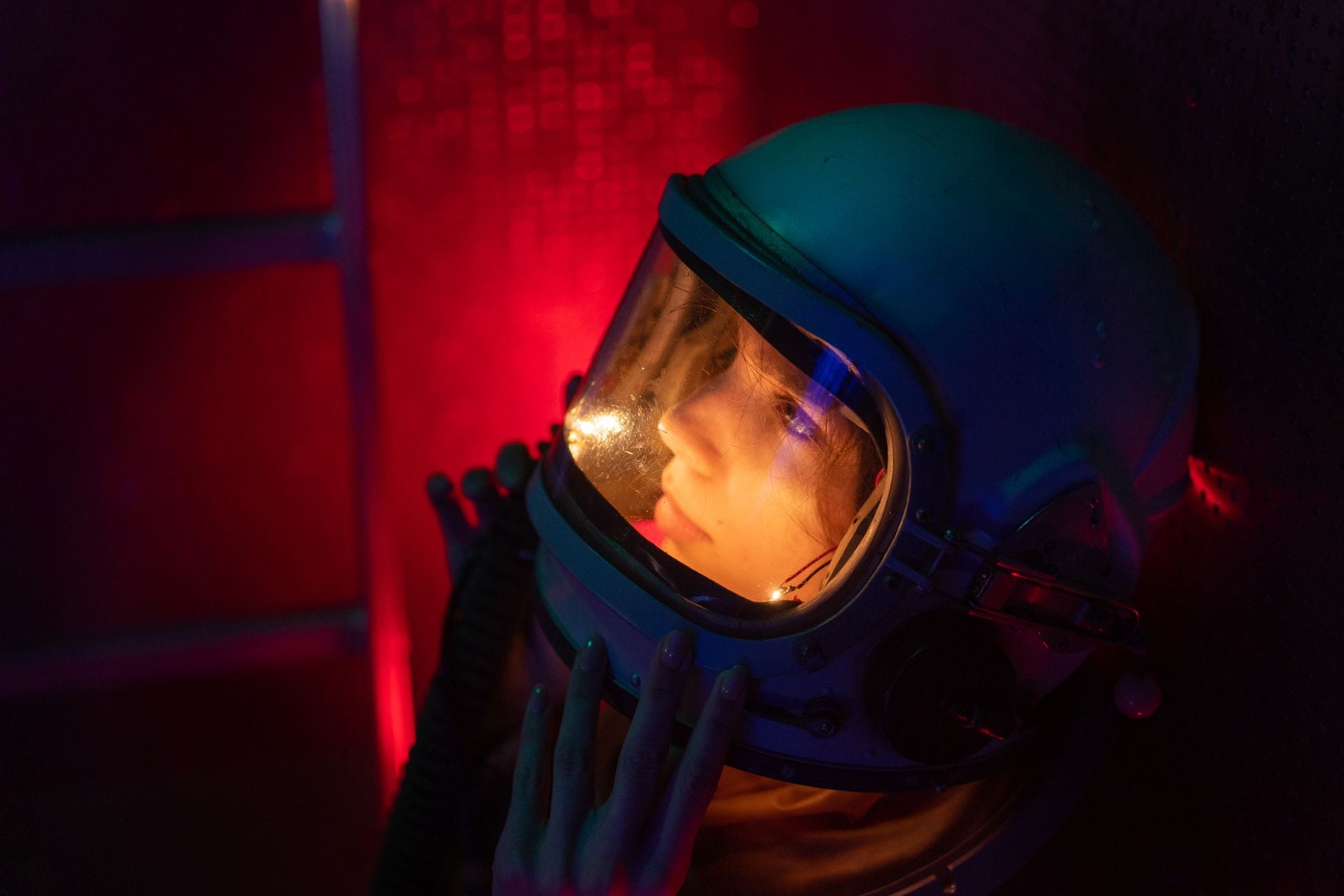
When Scott Kelly returned from nearly a year aboard the International Space Station, he struggled to walk unassisted. His inner ear, an organ that had functioned every second of his decades on Earth without him noticing, had spent nearly a year receiving no gravity signal at all. NASA flight surgeons watched him lurch the way a toddler negotiates a first afternoon of walking, and they had been expecting exactly this.
The vestibular system sits deep inside the temporal bone, just behind each ear, and it is the quietest machine in the human body. It never sleeps. It never asks for attention. It works so continuously that most people go their whole lives without knowing it exists.
The organ you have never felt working
The vestibular apparatus is a pea-sized labyrinth of fluid-filled canals and two small sacs called the utricle and saccule. Inside those sacs sit tiny calcium carbonate crystals — otoconia — resting on a bed of hair cells. Gravity pulls the crystals down. The hair cells register the pull. The brain reads the signal and knows which way is up.
This system operates continuously. When you tilt your head to sip coffee, the crystals shift a fraction of a millimetre and the brain compensates before your eyes have even moved. As Medical News Today’s overview of inner ear anatomy explains, the vestibular system pairs the inner ear with the brain regions that govern balance and eye movement — which is what lets a person stand still with their eyes closed without swaying, walk down stairs without looking, or turn a corner in the dark.
Neurologists have a bedside test for it called the Romberg test. Patients stand with feet together and eyes closed. If the vestibular system is working, they stay upright. If it is damaged, they fall. Healthline notes the test relies on the interaction of three sensory systems — vision, proprioception, and the vestibular apparatus — with the inner ear doing the heaviest lifting when the other two are removed.
What happens in the first hours of orbit
When a spacecraft reaches orbital velocity, the crew is in free fall around the Earth. The otoconia, those little calcium crystals, no longer settle. They float. The hair cells beneath them, which have spent every second of the astronaut’s life registering a steady downward pull, suddenly register nothing.
Most astronauts experience space motion sickness in the first few days. The stomach churns, the head swims, orientation collapses. Reaching for a floating pen, they miss. Turning their head to look at a colleague, they feel the room spin. The eyes are still working. The brain is still working. The vestibular system has gone quiet, and every other system that relied on it is confused.
Astronaut Chris Hadfield has described the initial disorientation of spaceflight and the gradual adaptation process as orientation loses its terrestrial meaning.
The brain rebuilds around the silence
What follows is one of the fastest and most complete neurological rewirings the adult human brain performs. Within days, astronauts stop feeling sick. Within a short time, they move through the station’s modules with the fluent tumbling grace that makes the ISS video feeds look choreographed.
They have not recovered their vestibular sense. They have replaced it. The brain reweights its inputs, leaning harder on vision and on proprioception — the sense of where your limbs are in space, gathered from stretch receptors in muscles and joints. The vestibular signal is still arriving, but the brain has learned it is meaningless and stops listening to it.
Research covered by Scientific American shows the adaptation is not total. Astronauts asked to grip floating objects in microgravity apply grip forces as though the objects still had Earth weight — the motor system holds onto its old model even when the vestibular one has been overwritten. The brain adapts in pieces, not all at once.
What NASA sees in the imaging
Structural MRI scans taken before and after long-duration missions show measurable changes in the brain’s white matter, in the volume of the ventricles, and in the connectivity of the vestibular processing regions in the brainstem and cerebellum. A longitudinal MRI study of astronauts reported by the Radiological Society of North America found that microgravity caused expansions in the crew’s combined brain and cerebrospinal fluid volumes — and that those volumes were still elevated a full year after landing.
The vestibular cortex, tucked in the parietal lobe, shows reduced activity. The visual cortex shows increased connectivity to the motor system. The cerebellum, which coordinates movement, reorganises its weighting of sensory inputs. The brain has performed something like a software patch, and it has done so quietly, without the astronaut noticing anything except that they no longer feel sick.
The return is worse than the departure
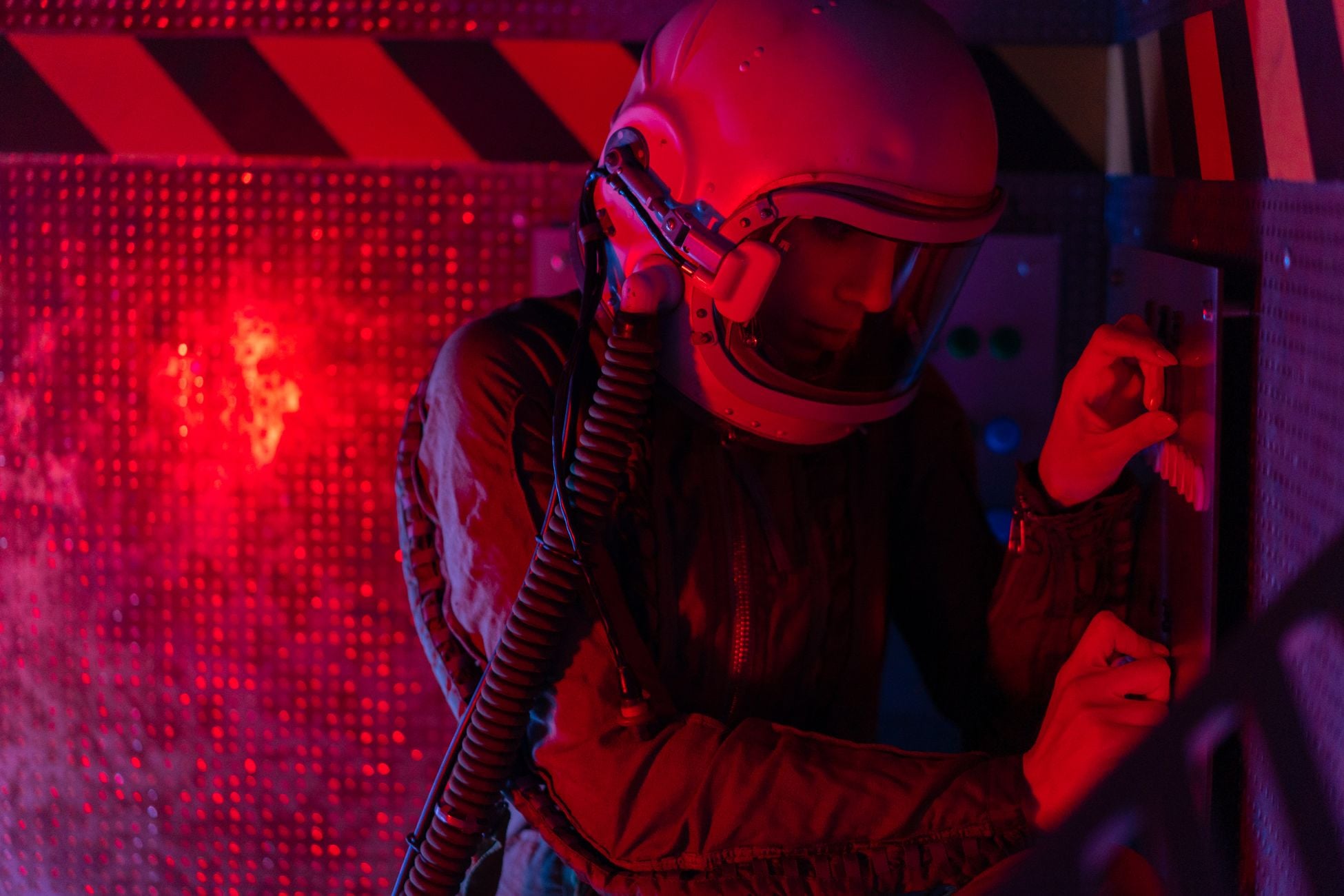
The problem with rebuilding around the loss is that the loss reverses the moment the capsule hits the atmosphere. Gravity comes back. The otoconia settle. The hair cells start firing again. The vestibular system wakes up and shouts.
The brain, which has spent six months or a year learning to ignore that signal, does not know what to do with it. Astronauts stepping out of the Soyuz capsule on the Kazakh steppe cannot stand unassisted. They are carried to chairs. They vomit. When they try to walk in a straight line for the flight surgeons, they veer. When they close their eyes, they fall.
Astronauts returning from long-duration missions report disorientation that persists for weeks. Turning the head in bed can make the room spin. Reaching for objects, they misjudge the grip force needed. The motor system continues applying microgravity calibration to objects that now have weight. Even tactile sensations can feel heightened or distorted as the nervous system recalibrates to pressure and contact.
Vestibular rehabilitation, from cosmonauts to grandparents
The therapy astronauts undergo after landing is called vestibular rehabilitation, and it was not invented for spaceflight. It was developed for people with inner ear disorders — Ménière’s disease, labyrinthitis, benign paroxysmal positional vertigo — and for elderly patients whose vestibular function has quietly degraded with age. Healthline’s guide to vestibular rehab describes it as a set of exercises that retrain the brain to process balance signals, using head movements, gaze stabilisation drills, and progressive walking tasks.
Astronauts do essentially the same exercises as an 80-year-old recovering from a fall. They stand on foam pads with their eyes closed. They walk heel-to-toe along a line. They turn their heads while focusing on a target. The brain, offered the correct inputs in graduated doses, relearns to trust the vestibular signal.
Most astronauts recover functional balance within a few days of landing. Full recalibration — the point at which they can drive, run, or turn quickly in a crowded room without disorientation — can take weeks. For the longest-duration crew members, subtle deficits linger for months.
What the silence teaches
The vestibular system is a useful window onto how much of ordinary human experience is stitched together from signals the conscious brain never sees. A person standing in a kitchen, waiting for the kettle, is being held upright by a thousand vestibular signals a second, a continuous stream of proprioceptive updates from every joint, a visual horizon lock from the peripheral field, and a set of pressure readings from the soles of the feet. None of it reaches awareness. The kitchen simply feels stable.
Remove one input — send the person into orbit, or damage the inner ear with a virus, or age them into their ninth decade — and the whole scaffolding becomes visible in the moment of its collapse. A 2022 Johns Hopkins study found that damage to the vestibular system is a major predictor of falls in Alzheimer’s patients, suggesting the same silent organ that keeps astronauts upright keeps grandparents from breaking hips.
There is a particular kind of intimacy in an organ that works for a lifetime without ever asking to be noticed. Related to that, Olympus Mons on Mars is so vast that a climber would never sense the slope. Some structures are too continuous to feel.
The astronauts who never fully come back
NASA has tracked long-duration crew members for years after their missions. For most, vestibular recalibration is complete within weeks, and astronauts who fly more than one long mission tend to adapt a little faster each time, as though the brain remembers the adjustment. For the longest-duration crew members, subtle balance deficits can linger for months before they resolve.
Not every change from a year in orbit reverses cleanly, though. The NASA Twins Study, which measured Scott Kelly against his identical twin Mark — a retired astronaut who stayed on the ground as the control subject — found that more than 90 percent of the genes that changed activity during his flight returned to normal within six months, which is another way of saying a measurable fraction did not. It is one reason NASA keeps watching returning crews long after they can walk a straight line again.
Somewhere above, at this moment, seven crew members aboard the ISS are moving through Node 2 without noticing the floor, because for them there is no floor. Their inner ears are quiet. Their brains have rebuilt around the silence. In six months, when they land in the dust of Kazakhstan and a flight surgeon holds a hand out to steady them, gravity will speak again, and they will have to learn to listen.
