

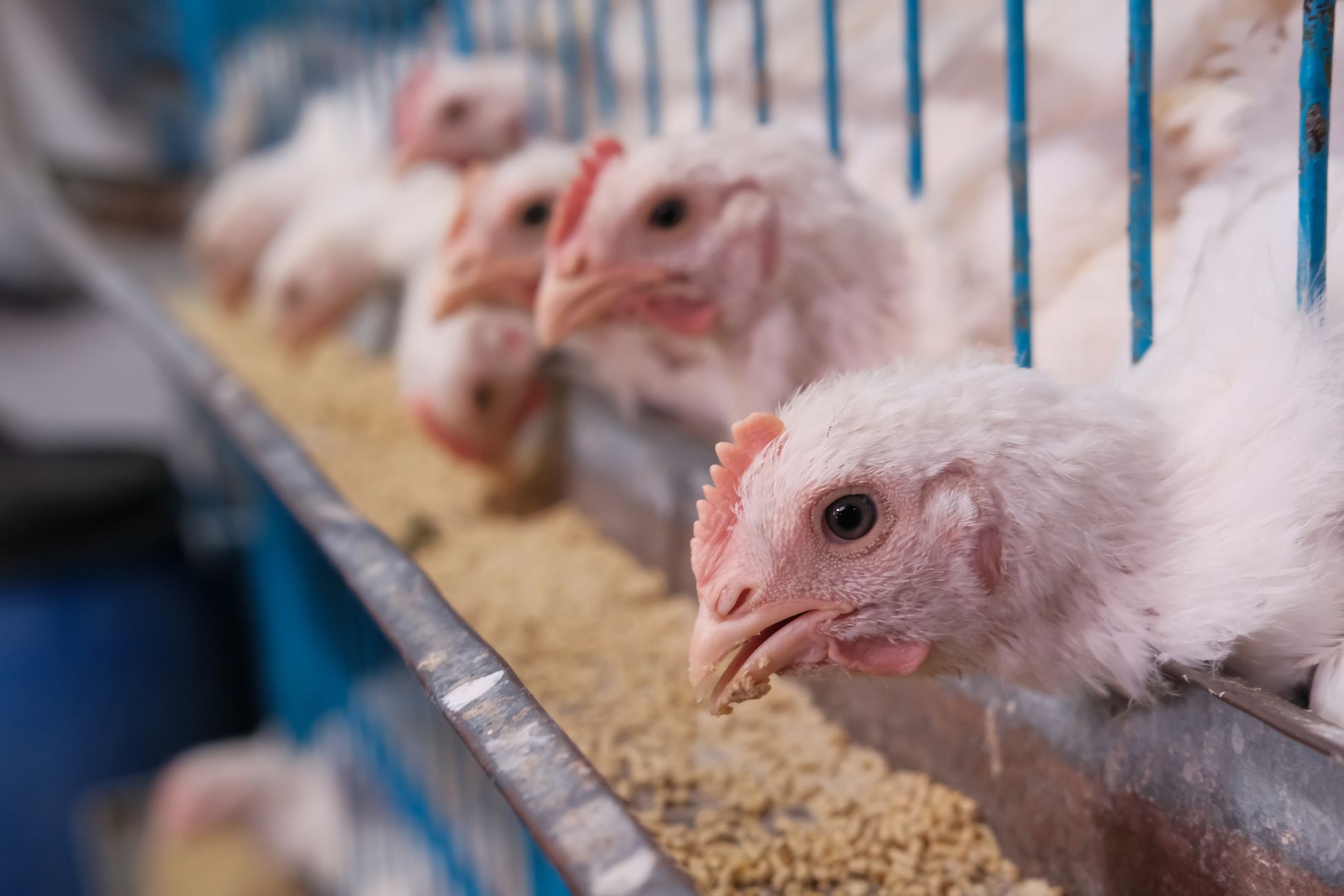
On a Tuesday morning in March 2026, a 25-page complaint landed in the Superior Court of the District of Columbia. The defendant was Aldi. The allegation was that the Batavia-based grocer had spent a decade marketing its eggs as 100% cage-free by 2025 while continuing to source from caged hens. The filing, brought by the animal protection nonprofit Animal Outlook, is one of the first major tests of a much larger question: whether the cage-free promises made by nearly every major American grocer and restaurant chain between 2014 and 2016 can now be enforced by the consumers who paid a premium believing them.
McDonald’s, Walmart, Kroger, Costco, Target, Aldi, and hundreds of others signed those pledges, brokered largely by the Humane Society of the United States and similar campaigns. The deadlines have now arrived. Many of those companies quietly missed them. The gap between what was promised and what was delivered has become the central story of the modern egg, a story now being fought out in federal courtrooms, USDA research grants, and class-action complaints from Washington, D.C. to West Lafayette, Indiana.
The American egg industry runs on roughly 374 million laying hens. Worldwide, more than 60% of eggs still come from caged birds, a figure that has barely moved in two decades. In the United States, despite the wave of corporate promises and state ballot measures, the standing flock remains overwhelmingly housed in conventional cages where a hen produces roughly 300 eggs a year on about 67 square inches of floor space, less than a sheet of letter paper folded in half. This article is about what happened to those pledges, and why the accountability is only now catching up.
What 374 million hens actually look like
The United States Department of Agriculture tracks the national laying flock month by month. Before the 2022 avian influenza outbreak wiped out more than 40 million commercial birds, the figure hovered close to 325 million. It has since climbed back toward 374 million as producers restocked. A single commercial layer house in the Midwest can hold between 150,000 and 350,000 birds under one roof. Some of the largest egg companies operate complexes with more than 5 million hens on a single property.
Inside a conventional cage house, the birds are stacked six to eight tiers high. Each cage holds between 5 and 10 hens. The wire floor slopes at about a seven-degree angle so eggs roll forward onto a belt. Manure drops through the mesh to a pit or scraper system below. Feed arrives by auger. Water arrives by nipple line. Light is artificial and timed to the minute, typically 16 hours on, 8 hours off, to maximise lay rate. A hen in such a system will never set foot on solid ground. She will lay her first egg at about 18 weeks and be slaughtered at about 72 weeks, when her production drops below roughly 80%.
This is the system the corporate pledges of 2015 were supposed to phase out. It is also the system that, as of 2026, still produces the overwhelming majority of American eggs.
The reckoning arrives in court
The Animal Outlook complaint against Aldi, with the Daily Herald reporting on it in early May, alleges that Aldi’s animal-welfare claims violate D.C. consumer protection law. A scheduling conference is set for August. Similar suits and complaints are being prepared against other retailers that quietly walked back their commitments after the 2022 avian flu sent wholesale egg prices to historic highs.
The story of those broken pledges sits uncomfortably alongside a supply-chain reality that commodity markets understood long before consumers did: cage-free production costs roughly 30% to 70% more per egg, and someone has to absorb the difference. When wholesale prices spiked, the retailers had a choice. Eat the cost, pass it to consumers, or quietly continue sourcing from cage systems while leaving the marketing language untouched. Many chose the third path.
The Aldi suit is one of the first major tests of whether companies can be held legally liable for that choice. If it succeeds, it opens the door to a wave of consumer-protection litigation that could finish what the corporate pledges started, not through animal welfare law, but through the much sharper instrument of false advertising.
The federal government picks the other side
While Animal Outlook was preparing its Aldi complaint, the Trump administration had moved in the opposite direction. In July 2025, the federal government sued California in the U.S. District Court for the Central District of California over Proposition 12, the 2018 ballot measure that bans the sale of eggs from caged hens regardless of where the hen was raised. The complaint, covered in a Los Angeles Times report, argued that Proposition 12 imposes burdensome regulations on egg production and has contributed to price spikes that pushed a dozen eggs in some American cities above $7.
In March 2026, Trump-appointed U.S. District Court Judge Mark C. Scarsi dismissed the complaint, ruling that the federal government had not shown it had standing to bring the suit. The dismissal left the administration the option to file an amended complaint within 14 days; any further appeal could eventually return the Commerce Clause questions the Supreme Court touched on in National Pork Producers Council v. Ross (2023) back into play. The political alignment is striking: a federal lawsuit attacking the strongest state-level cage-free law in the country, swatted away by a Trump-appointed judge in Los Angeles, is moving in opposite tempo to a private lawsuit attacking a retailer for failing to honor its voluntary cage-free pledge. Whichever side wins more often will shape what an American egg actually means by the end of the decade.
The heat problem nobody solved
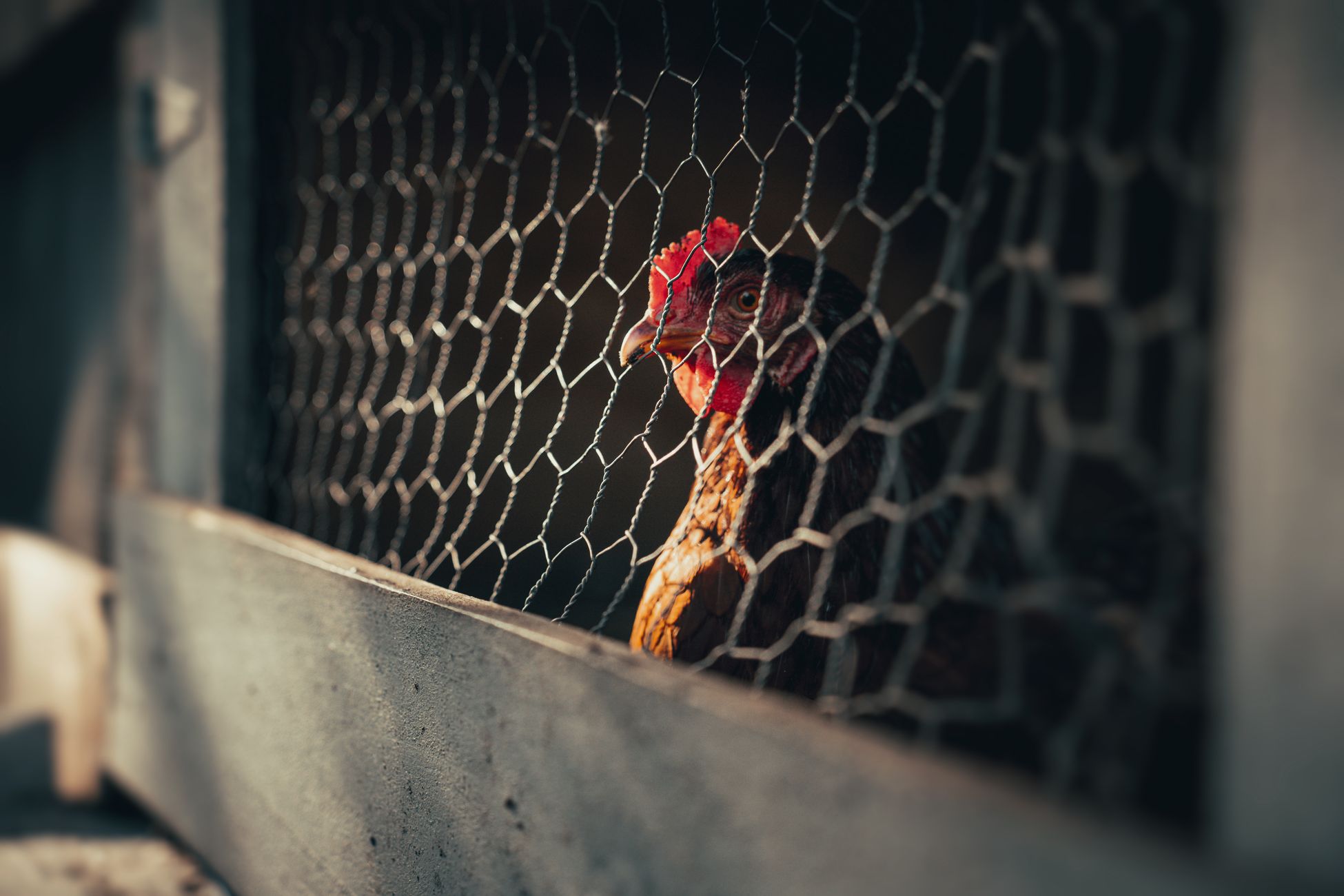
The other reason the cage system is under pressure is biological. Laying hens have no sweat glands. They cool themselves by panting and by dumping heat through their featherless combs and wattles. In a closed cage house with 200,000 other birds, ambient temperature can climb 10 to 15 degrees above outside air within hours if ventilation fans fail. The summer of 2022 killed millions of caged hens in single-day mortality events when cooling systems were overwhelmed.
Purdue University agricultural scientists working with the company NutraMaize have received a three-year, $460,455 USDA grant to test whether a high-antioxidant orange corn variety can reduce the oxidative damage hens suffer during heat stress. The grant is one of dozens funded under NIFA’s Laying Hen and Turkey Research Program, which exists in large part because the industry has run out of conventional engineering fixes for thermal load in dense housing. The USDA is, in effect, paying researchers to find nutritional workarounds for a problem that cage architecture itself created, and which a real shift to cage-free housing would substantially reduce.
What the birds actually do
Researchers at the University of Georgia have been fitting individual hens with passive RFID leg bands to track where they go, how often they move, and which birds dominate access to feeders, perches, and nest boxes. The UGA poultry science team reports at least 87% accuracy in categorising activity from the RFID signal alone: feeding, drinking, nesting, perching, dustbathing. The picture that emerges from cage-free aviaries is one of complex social hierarchies, individual personalities, and movement budgets that resemble those of wild jungle fowl, the species from which the domestic chicken was bred roughly 8,000 years ago in Southeast Asia.
None of that behaviour is possible in a conventional cage. A hen in 67 square inches cannot walk. She cannot turn around without contacting cage walls or other birds. The behavioural-deprivation literature, going back to the work of British ethologist Marian Stamp Dawkins at Oxford, established that hens are willing to push weighted doors and walk through cold tunnels for access to litter, nest boxes, and perches, the same way they will work for food when hungry. The cage-free pledges were a recognition of that science. The walk-back is a recognition that absorbing the cost is harder than signing the press release.
The egg on the plate
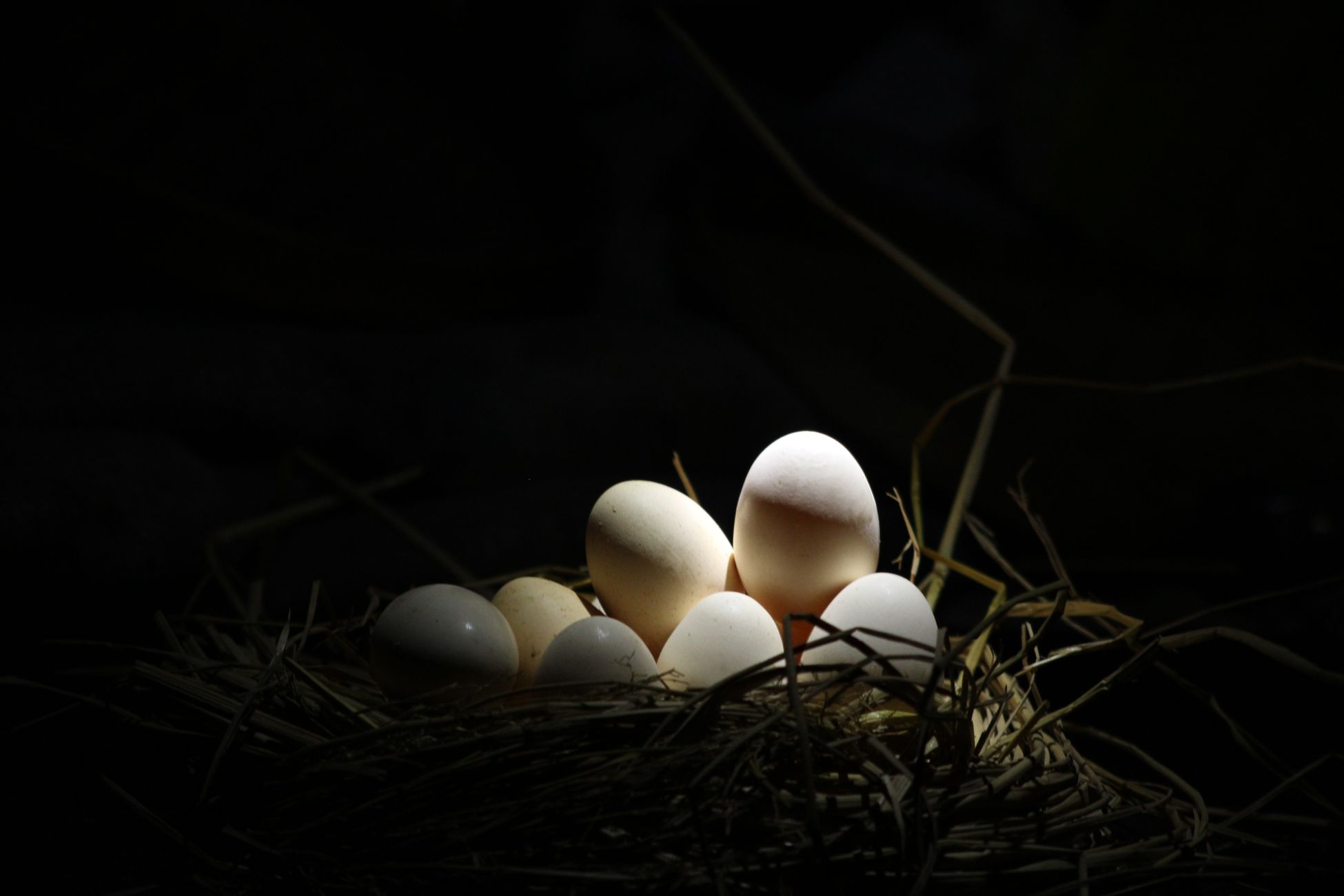
An average American eats about 280 eggs a year. The shell, the white, the yolk: none of it carries a visible mark of the system it came from. Nutritionally, a cage-free egg and a caged egg are nearly identical. A 2026 study covered in News-Medical’s coverage of a 15-year cohort of nearly 40,000 older adults found that moderate egg consumers developed Alzheimer’s disease less often than non-consumers, a finding that has nothing to do with how the hen was housed and everything to do with the choline and lutein content of the yolk.
The egg is one of the cheapest complete proteins on earth. It is also one of the most industrially produced. The two facts are not separable. Bringing the cost down to roughly 25 cents an egg at wholesale required the cage, the wire floor, the 16-hour light day, the 67 square inches, the 200,000-bird house, the auger, the nipple line, the conveyor belt, and the 72-week slaughter cycle. The cage-free pledges promised to break that equation. The reckoning underway in 2026 is about whether anyone will be held to it.
The one thing worth understanding is this: the cage-free egg in 2026 is no longer a voluntary corporate aspiration. It is a contested legal claim. When a carton at Aldi or Kroger or Walmart says “cage-free,” that statement is now potentially evidence in a courtroom, and consumers who paid a premium for it have standing to ask whether they got what they were sold. The labels matter more than ever, but only if buyers read them critically and, when the marketing outruns the supply chain, are willing to say so. The 374 million birds in the standing American flock will not change their own housing. The lawsuits, the state laws, and the purchase decisions at the register are the only mechanisms that ever have.
