

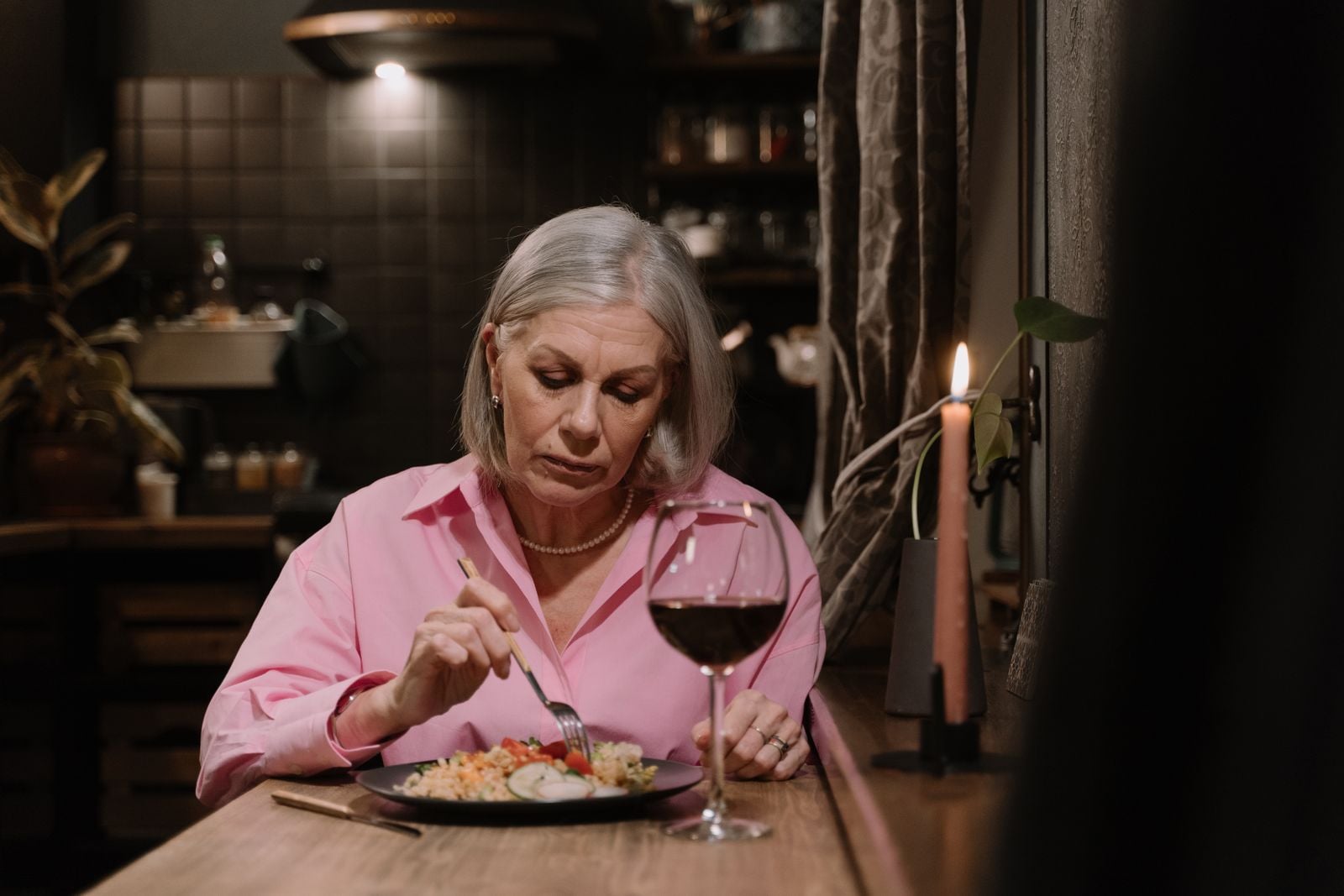
It doesn’t happen suddenly: how people in their 60s and 70s slowly find themselves alone, with no one to talk to
There is rarely a single day when a person becomes lonely.
It happens in smaller ways. You retire and no longer exchange a few words with the people who sat near you at work. A friend moves away. Another begins caring for a partner and stops accepting invitations. Adult children are busy with jobs and families of their own. You move somewhere warmer, only to discover that sunshine is easier to replace than history. Perhaps driving at night becomes less appealing, hearing a conversation in a noisy restaurant becomes harder, or an old knee makes the weekly walking group feel like too much effort.
None of these changes seems dramatic enough to call a crisis. You adapt to each one. Then, one ordinary afternoon, you realise you have not had a meaningful conversation with anyone for several days.
This is how many people in their 60s and 70s find themselves alone: not through one catastrophic loss, but through the gradual thinning of a life that once supplied connection without requiring them to organise it.
The social world we never knew we were relying on
During our working and family years, contact is woven into the architecture of the day. There is the colleague who asks whether you watched the match, the neighbour you see on the school run, the woman at the café who knows your order and the friend you call while driving home.
We may not think of these people as part of our support network. Some are not close friends at all. Yet they give the day texture. They notice us, respond to us and remind us that we occupy a place in the wider world.
Psychologists sometimes describe these acquaintances as “weak ties”, although their effect can be surprisingly strong. Research by Gillian Sandstrom and Elizabeth Dunn found that people reported greater happiness and a stronger sense of belonging on days when they interacted with more acquaintances than usual. The brief exchange with the person at the library, the familiar face at Pilates and the neighbour watering the garden may not provide deep emotional support, but together they create a sense of being part of life rather than watching it from the edges.
Retirement can remove dozens of these small encounters at once. The same can happen after relocating, giving up driving or losing a partner who once organised much of a couple’s social life. Close family may still call. There may even be a busy family group chat. But a screen full of messages is not always the same as having someone nearby who can linger over a cup of tea.
Connection is not measured by the number of names in your phone
It is possible to be socially busy and still feel lonely. It is also possible to spend long stretches alone and feel peaceful. The difference is not simply the number of people around us, but whether our relationships provide the kinds of connection we actually need.
One person may miss companionship: someone to walk with, attend a film with or share an ordinary Tuesday afternoon. Another may speak to people all day but have nobody with whom they can be vulnerable. A third may have loving children who live far away, yet miss the spontaneous contact that cannot be scheduled into a Sunday video call.
This is why “join a club” can be both sensible advice and slightly inadequate. Joining creates opportunity, but belonging takes repetition. The first visit may feel awkward. The second may still involve standing at the edge of the room. Connection develops when people see one another often enough to become familiar, when someone notices an absence and when participation gradually turns into membership.
The evidence suggests that this kind of group identity matters in retirement. A longitudinal study of English retirees found that each group membership lost after retirement was associated with roughly a 10 per cent lower quality of life six years later. Among people who had belonged to two groups before retiring, the estimated six-year mortality risk was 2 per cent if they retained both groups, 5 per cent if they lost one and 12 per cent if they lost both. The study was observational, so it cannot prove that group membership alone caused the difference, but its message is difficult to dismiss: belonging is not a decorative extra in retirement planning.
That group does not have to be impressive. It might be a choir, book club, community garden, volunteer shift, exercise class, faith community or a regular table at the local café. What matters is not filling the diary. It is having somewhere you are known and, ideally, somewhere your presence makes a difference.
The difference between being contacted and being known
Consider two women who both receive three phone calls in a week.
The first talks about appointments, grandchildren and what is happening on television. The conversations are pleasant, but she edits out the parts of herself she thinks might worry or burden anyone.
The second tells a friend that she has been feeling unsteady since retirement. She admits that she misses being competent and needed. Her friend does not rush to cheer her up or tell her how lucky she is. She listens.
On paper, both women have the same amount of contact. Emotionally, they have had very different weeks.
Connection requires more than an audience. It requires the experience of being seen without having to perform. This becomes especially important in later life, when identity can be unsettled by retirement, bereavement, caring responsibilities, changing health or a move away from familiar communities.
The answer is not necessarily to make ten new friends. Often it is to deepen one or two existing relationships by taking a small emotional risk: “I’ve been finding the days quieter than I expected.” “I miss having someone to talk things through with.” “Would you like to make this a regular walk rather than saying we must catch up sometime?”
Specific invitations build more connection than good intentions. “Coffee at ten on Thursday?” has a much better chance of becoming a relationship than “We should get together soon.”
We also need to remain connected to ourselves
There is another form of disconnection that can hide beneath a full calendar.
After decades spent responding to employers, partners, children and other people’s needs, some people reach their 60s without being entirely sure what they enjoy, value or want when nobody else is setting the agenda. They may join activities because they seem appropriate for retirees, agree to plans they do not enjoy and remain busy enough to avoid the uncomfortable question: what would make this stage of life feel like mine?
Researchers define self-connection through three related capacities: awareness of what we feel and value, acceptance of what we discover, and alignment between that knowledge and the way we live. In three studies involving 1,469 participants, stronger self-connection was associated with measures of meaning, flourishing, life satisfaction and positive mental health. This research is still developing and the findings are associative, but the framework offers a useful way to think about later life.
Self-connection might look like admitting that the large social gatherings you once tolerated now exhaust you, while one-to-one conversation restores you. It might mean recognising that you have been lonely, rather than continuing to insist you are simply “keeping busy”. It could be returning to painting, music, gardening or writing—not because the activity is productive, but because you feel more like yourself while doing it.
Time alone can support this inner connection when it is chosen rather than imposed. A quiet walk, a journal, an unhurried morning or an afternoon reading can help us hear our own thoughts after years of noise. The goal is not to eliminate solitude. It is to create a life in which solitude feels like a place we visit, not a room we cannot leave.
Connection has to be designed into retirement
Most retirement planning still centres on money: how much we will need, where it will come from and whether it will last. These questions matter enormously. But we also need a social plan.
Who will be part of an ordinary week once work disappears? Which relationships do we want to protect? Where will repeated contact happen? Who can we speak to honestly? What activities connect us with people who share something meaningful with us? And what practices keep us connected to ourselves?
These are some of the questions explored in my self-paced course, Your Retirement, Your Way. Built from my own experience of feeling unexpectedly lost after retirement, the course helps people develop a practical Retirement Thrive Plan around four ingredients: energy, connection, purpose and a clear vision for what comes next. (The Vessel is operated by Brown Brothers Media, so we may earn money if you buy through this link.)
The connection component is not about becoming more outgoing or packing the calendar. It is about identifying the relationships and communities that sustain you, noticing where your social world has become too dependent on one person or one role, and taking realistic steps to build both belonging and a stronger relationship with yourself.
Because loneliness rarely arrives suddenly, the way back is rarely dramatic either.
It may begin with sending one message instead of waiting to receive one. Returning to the same class next week. Asking a better question and staying long enough to hear the answer. Telling the truth when someone asks how you are. Or spending half an hour alone—not scrolling or distracting yourself, but noticing what you need.
Connection is built through these small acts of attention, repeated until a life begins to feel inhabited again.
