

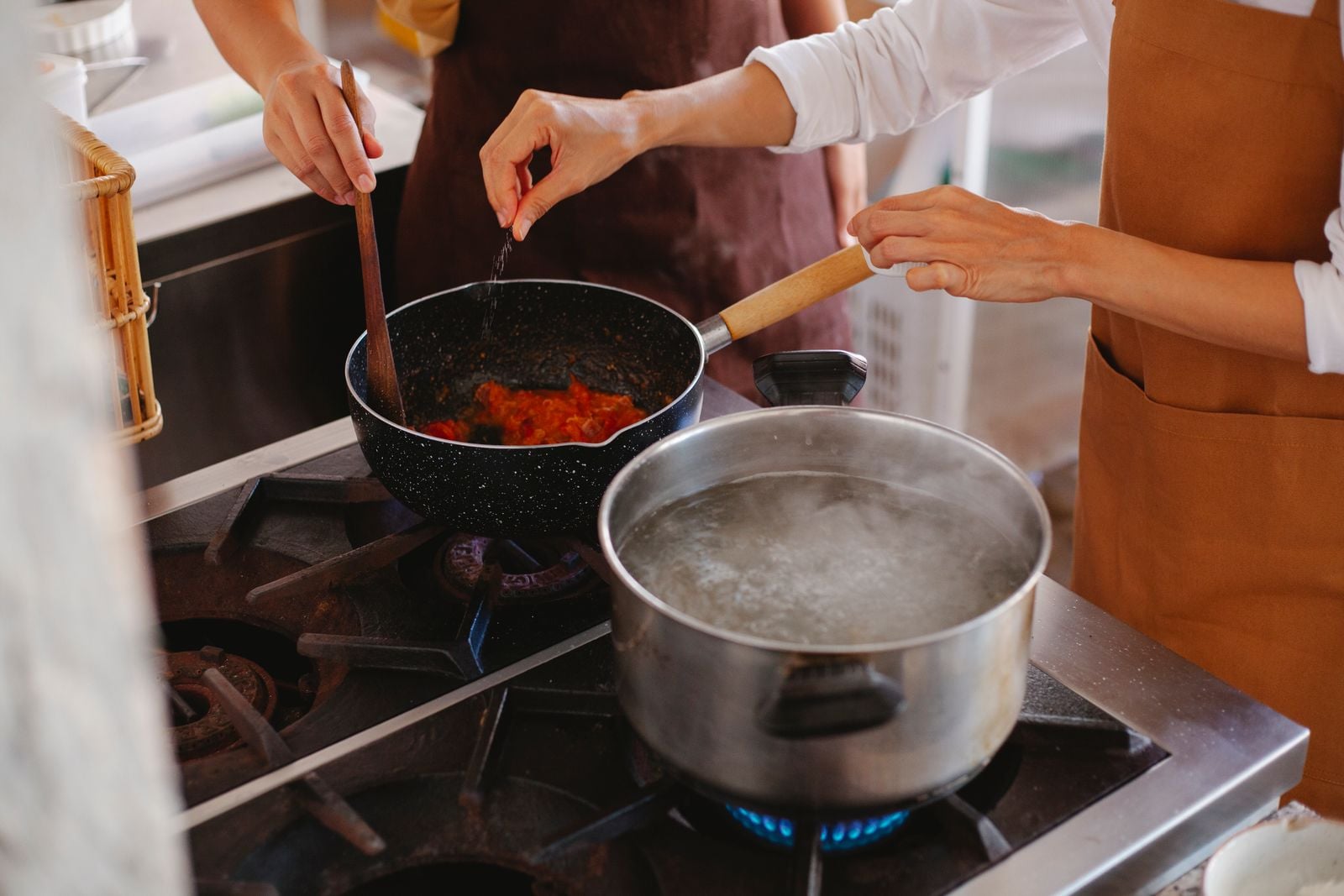
Ask someone who has cooked the same roast chicken every Sunday for thirty years whether they get bored of it, and you’ll usually get a shrug. The question assumes variety is the point. It rarely is.
Most food writing treats repetition as a failure of imagination — a rut, a plateau, a sign that someone stopped caring. The person who makes the same lentil soup every Thursday is quietly cast as the person who gave up.
But watch them closely. They don’t measure. They know exactly when the onions have gone translucent enough. They can tell by the sound of the pan whether the heat is right. That isn’t a rut. That’s mastery, hiding in plain sight.
The quiet architecture of a five-meal rotation
Adults who cook a small, fixed repertoire for decades tend to share a pattern. Roast chicken and potatoes. A pasta dish. Something with rice. A soup or stew. One weekend project — a Sunday roast, a curry, a loaf of bread.
Five, give or take. Rarely more.
The rotation isn’t chosen. It accretes. A recipe survives because it tastes right, feeds the people in the house, tolerates being made when tired, and can be adjusted for what’s in the fridge. Everything that doesn’t meet those tests quietly falls away.
What’s left is a working kitchen — small, reliable, and completely internalised.
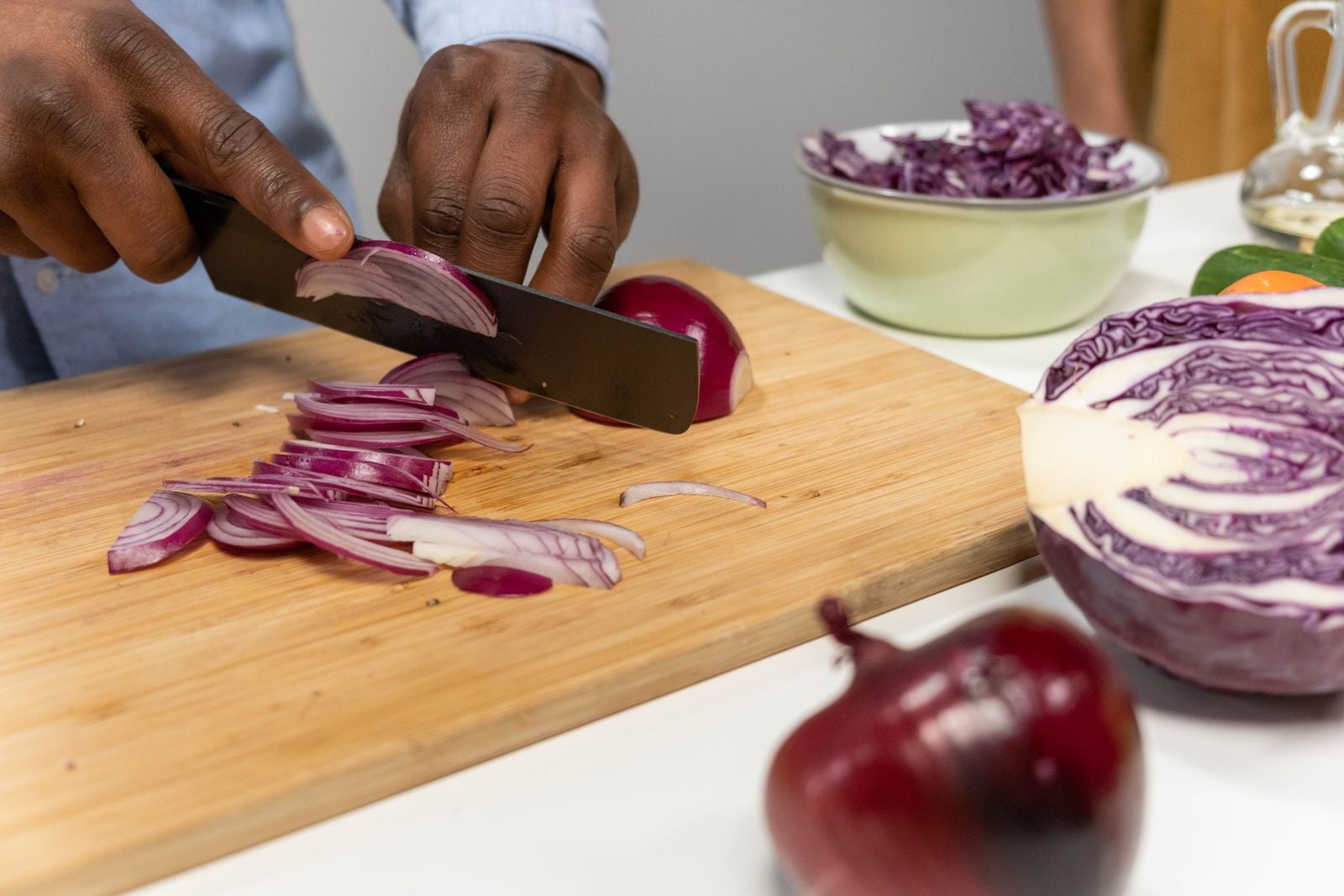
Competence, not novelty, is what actually feels good
The cultural story is that variety keeps life interesting. The psychological evidence is more complicated.
A stable sense of self-worth comes less from stimulation and more from the reliable experience of being good at something. There’s a sharp distinction between fragile self-esteem (dependent on external validation) and secure self-esteem (rooted in genuine competence and self-knowledge). The person who knows they can produce a decent dinner without thinking about it possesses a small but durable version of the second kind. Self-esteem, as decades of research have shown, is not determined by whether other people find your life impressive.
It’s determined by whether you trust your own hands.
The proficiency barrier — and why it matters past childhood
Developmental researchers studying children have observed a threshold of motor competence above which people start to engage more, enjoy more, and self-select into activity rather than avoid it. Kids who can catch a ball reliably will play catch. Kids who can’t, won’t. Research on motor competence and physical activity has documented this pattern across childhood development.
The same dynamic exists in adult kitchens, though nobody studies it that way.
Below the threshold, cooking is stressful. Recipes are followed nervously. Ingredients feel like liabilities. Above the threshold, cooking is a form of thinking with your hands. You don’t need the recipe because you understand what the recipe was trying to do.
The five-meal rotation is what a person builds when they’ve crossed that threshold in a small, defended patch of territory and decided not to bother crossing it anywhere else.
That’s not laziness. That’s economy.
Habit is doing most of the work anyway
A recent study from the University of Surrey, the University of South Carolina, and Central Queensland University found that most of what people do in a given day is guided by habit rather than active decision-making. The finding surprised the researchers less than it surprised the coverage. Most of adult life runs on grooves.
The question isn’t whether you’ll run on grooves. You will.
The question is whether the grooves you’ve worn are ones that feed you, or ones that leave you tired and hungry at 8pm scrolling delivery apps. A five-meal rotation is a groove someone chose to keep.
Every Thursday-night lentil soup is a small vote against decision fatigue.
What the food itself is doing
There’s also a physiological layer worth noting. A study drawing on the English Longitudinal Study of Ageing, published in the British Journal of Health Psychology, examined the diets of more than 3,000 middle-aged and older adults and found that higher intake of fruits, vegetables, and fish was linked to multiple domains of psychological well-being, including a sense of purpose and day-to-day happiness.
The five-meal rotation, in practice, tends to include far more vegetables than takeaway culture does. Not because the cook is virtuous. Because vegetables are what you have when you cook regularly at home.
The rotation cooks the person as much as the person cooks the rotation.

Small domains, deep roots
Psychologists writing about professional identity have observed that specialisation in a narrow domain tends to produce not just skill but a coherent sense of self. The specialist doesn’t need to be good at everything. They need to be good at something specific, and to know they’re good at it.
The kitchen version of this is almost invisible because it’s domestic. Nobody gets a certificate for making the same shepherd’s pie for forty years. But the psychological machinery is identical. You have a domain. You have mastered it. You can produce a good result under fatigue, distraction, or grief.
That last one matters more than people admit.
The grief kitchen
The person who keeps making the same meals after a spouse dies is not being sentimental in the way outsiders assume. They are running the only reliable ritual they still trust. The chicken goes in the oven at 180. The potatoes are peeled. The salt goes in with the water.
The world can be doing whatever it wants outside. Inside the kitchen, cause and effect still work.
The ritual that refuses to shrink even when the household has — the widow who keeps cooking for two — is often read as denial. Sometimes it is. More often it’s the opposite: a person insisting, correctly, that the practices which built their self-respect don’t need to be dismantled just because the audience has changed.
Why the rotation looks unimaginative from the outside
A five-meal rotation is boring to describe. It’s not boring to inhabit.
This is the same asymmetry that makes people who reread the same three or four novels every few years look, from the outside, like they’ve stopped exploring. From the inside they’re doing something more precise: revisiting a fixed point to notice how much they’ve moved. The rotation cook is doing the same thing in a different medium. This year’s roast chicken tastes slightly different because this year’s cook is slightly different.
The dish is the instrument. The cook is what’s being tuned.
Why competence is a form of self-respect
The word competence has been flattened by workplace usage. In its older sense — the sense the psychological literature still uses — it means something closer to capacity. You are competent at a thing when you can be counted on to do it, by yourself and by others.
Self-respect, unlike self-esteem, doesn’t need an audience. It doesn’t need a compliment. It needs a track record.
The person with five reliable meals has a track record. Thousands of dinners produced. Hundreds of people fed. A quiet accumulation of proof that they can take raw materials and turn them into something the household actually wants to eat.
That proof lives in the body. It doesn’t require anyone else to validate it.
The alternative most people are actually living
Compare this with the person who cooks something different every week from a new recipe, aspiring toward variety, and who ends up ordering delivery three nights out of five because the cognitive load is too high on a Tuesday.
That person isn’t more adventurous. They’re less anchored.
Variety without a base is exhausting. The rotation cook has solved the base. Everything else — the occasional new recipe, the seasonal experiment, the dinner-party project — sits on top of a floor that doesn’t wobble.
What the rotation is protecting
The five meals are rarely the point in themselves. They protect something.
They protect the household from the low-grade daily anxiety of not knowing what’s for dinner. They protect the cook from having to be creative when they’re depleted. They protect the family’s shared memory: the smell of a specific Sunday, the taste of a specific soup, the sound of a specific pan.
These are the sensory anchors that adult children remember decades later. Not the innovative dishes. The five.
The competence that quietly holds a life together
There is a version of adulthood, widely marketed, that treats mastery as a stepping stone to something else — a personal brand, a side hustle, a photographable achievement. The rotation cook rejects this entirely, usually without noticing they’re rejecting anything.
They have found a small domain. They have become genuinely good at it. They have decided that being genuinely good at it is enough.
That decision, made quietly and repeatedly for decades, is one of the most stabilising things a person can do for their own psyche. Researchers describing the development of self-esteem across the lifespan have found that it tends to rise gradually through adulthood and peak in the sixties, largely because people accumulate exactly this kind of undramatic, domain-specific competence and stop apologising for the size of the domain.
The rotation isn’t a failure of ambition.
It’s the ambition, satisfied.
