

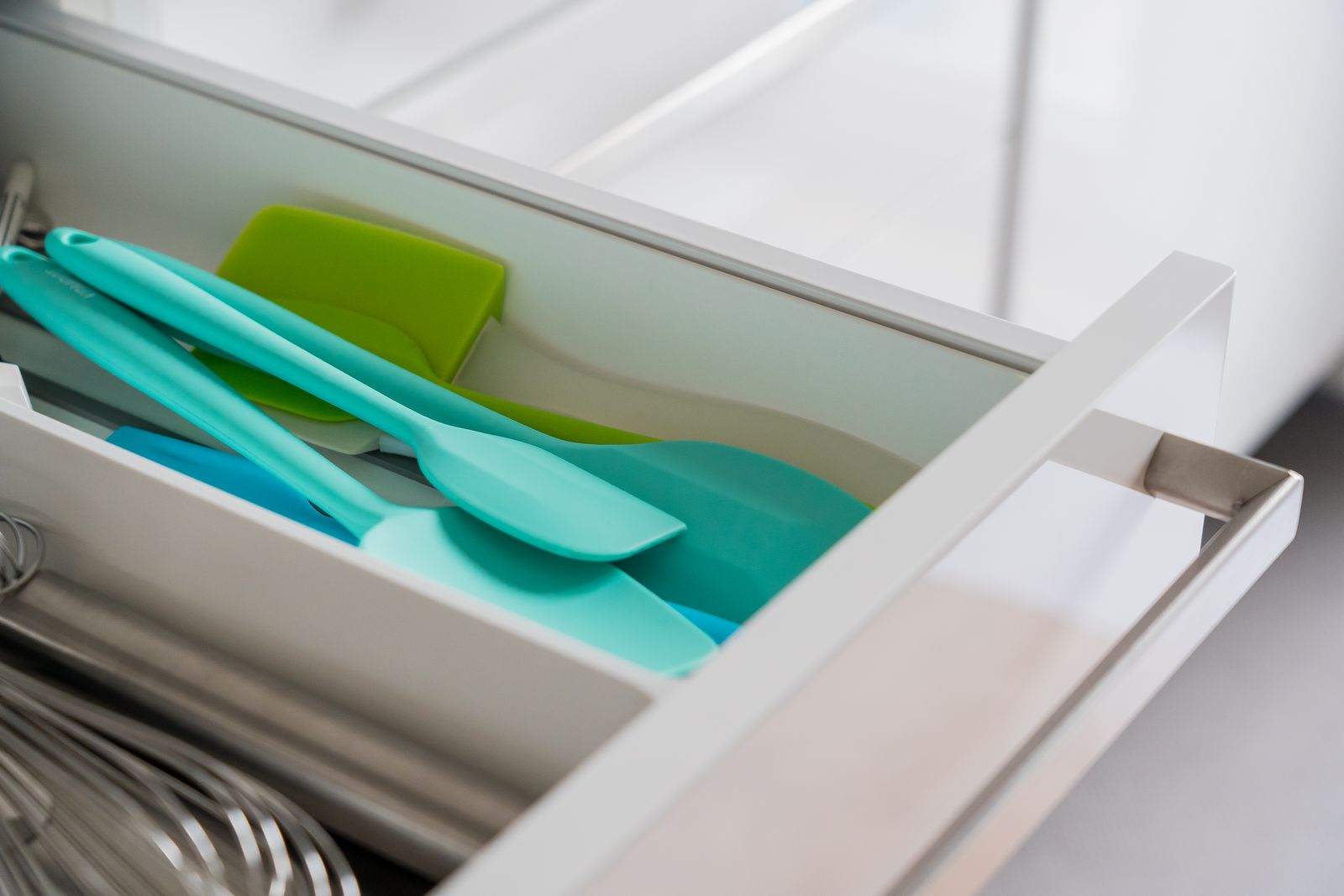
The cutlery drawer is immaculate. Forks nested, knives aligned, the small dividers fitted so precisely they look engineered. Three feet away, the counter holds last week’s mail, two mugs, a charger cable, and a receipt from somewhere nobody remembers going. This isn’t a contradiction or a failure of consistency. It’s a survival map. Somewhere along the way, the person who built that drawer learned that the world is mostly weather, but a small patch of it can be made to behave, and that patch can hold you through almost anything.
Most clean-living advice treats household order as a single trait, as if a person either has it or doesn’t, and the goal is to push the line further across the house each year. The drawer people are dismissed as inconsistent, half-finished, lacking follow-through. That framing misses what’s actually happening. The one perfect drawer isn’t a failed attempt at total order. It’s a successful, fully realised act of psychological self-regulation, and it’s doing exactly what it was designed to do.
The square foot that obeys
Psychologists have a name for the broader phenomenon at work here: locus of control. The term describes a person’s underlying belief about who or what governs the outcomes in their life. People with a strong internal locus believe their actions shape what happens to them. People with an external locus believe outcomes are mostly handed down by circumstance, other people, or luck. A stronger sense of personal control correlates with better mental health, lower anxiety, and higher resilience under stress.
What the textbook version sometimes misses is how people without much real control over their early environments improvise a version of it. A child cannot control whether a parent comes home calm or shouting. They cannot control whether dinner happens, or whether the mood at the table will turn. What they can control, sometimes, is the order of pencils in a tin. The arrangement of books on a shelf. One drawer.
That drawer becomes the proof. Not the proof of being tidy. The proof that somewhere in the world, effort produces a predictable result. Open it, and it is exactly as you left it. Nothing has moved. Nothing has been used against you. Nothing has been rearranged by someone in a bad mood. For a child whose nervous system is constantly scanning for the next disturbance, that small zone of reliability is not a quirk. It is regulation.
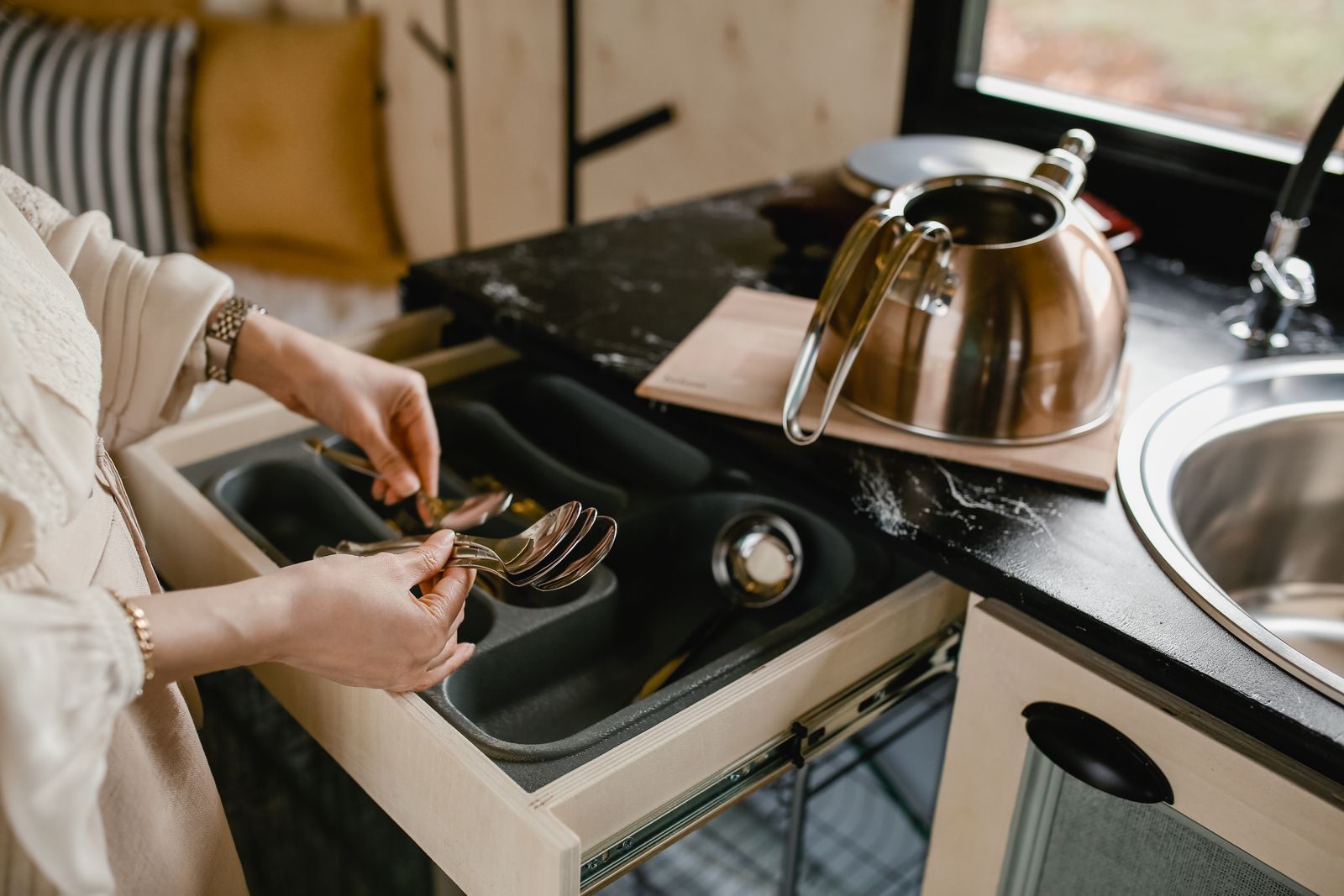
Why one drawer and not the whole house
Here is where the pattern gets interesting. If order is so soothing, why doesn’t the person extend it everywhere? Why does the rest of the house drift?
Because the drawer isn’t about cleanliness. It’s about ratio. The coping mechanism doesn’t require the whole environment to be controlled. It requires one piece to be reliably controllable while everything else stays human-sized and imperfect. Trying to extend the order to the entire house would be exhausting, and it would raise the stakes of every small failure. A single perfect drawer can be maintained in five minutes. A perfect house demands constant vigilance, and vigilance is the original problem the drawer was meant to solve.
The drawer is a coping mechanism in the technical sense. People develop habitual outlets that take the edge off underlying stress without necessarily addressing its cause. Some are corrosive: the bottle of wine, the late-night snack, the doomscroll. Some are functionally neutral or even healthy. The maintained drawer is closer to the second category. It doesn’t solve the original wound. It does, repeatedly and at low cost, calm the system enough for the person to keep going.
What stress resilience actually looks like at the cellular level
The reason a small ritual of order works at all has to do with how the nervous system handles chronic uncertainty. Recent work catalogued by Nature on neurobiological mechanisms of stress resilience describes resilience as a coordinated set of adaptations across brain circuits, hormonal systems, and even immune signalling. The prefrontal cortex and the limbic system handle threat appraisal and emotional control. The HPA axis calibrates cortisol release. These systems don’t just respond to one big event; they recalibrate continuously based on whether the environment seems predictable or chaotic.
Small, reliable rituals send a particular signal to that machinery. They say: here, at least, the prediction matches the outcome. Over time, the experience of even one predictable corner can dampen the baseline sense of threat. Not because the rest of life has become safer, but because the system has been given a reference point.
This is the part most home-organisation writing gets wrong. It treats the goal as the order itself. The order is incidental. The actual goal is the felt sense of I can affect something, delivered on demand, in under a minute, by opening a drawer.
The childhood underneath
Patterns like this don’t usually appear at random in adulthood. They tend to trace back to early environments where something important couldn’t be predicted. A parent’s mood. Whether there would be money this week. Whether a sibling’s illness would dominate the house again. Whether the version of the adult who came home would be the warm one or the other one.
The World Health Organization, in its work surfaced through the UN on mental health and wellbeing, has been blunt about how much early environments shape later coping. Childhood and adolescence are described as critical stages where homes, schools, and communities lay down the protective or risk-bearing patterns a person carries forward. Adverse early experiences, parental mental illness, violence, poverty: all of these elevate later vulnerability. Supportive environments, by contrast, build resilience. What sits between adversity and outcome, often, is a set of improvised strategies the child invented to keep functioning. Some of those strategies remain useful for life.
The drawer is one of them.
So is the spotless kitchen counter while the bedroom drowns in laundry. So is the immaculate car in the driveway of a chaotic house. People who grew up in chaos and made physical space their one controllable variable often never stop, even when the chaos is decades behind them. The strategy outlives its original context, which is what coping mechanisms do.
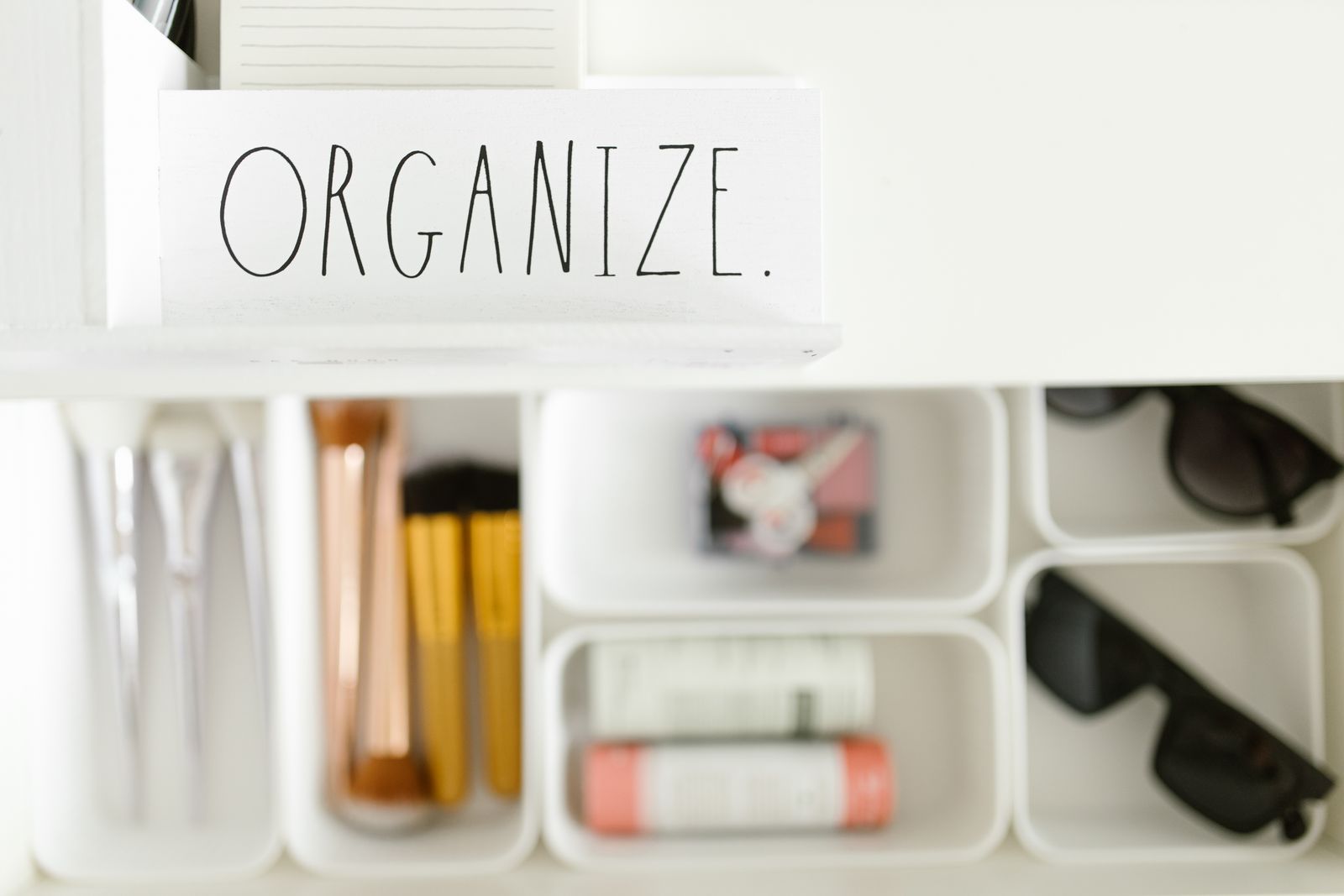
The geography of inspection
There’s a related pattern worth naming, because it explains why the drawer is sometimes a drawer and not, say, a closet. Children of unpredictable households often develop an intuitive sense of which spaces will be inspected and which won’t. The drawer chosen for perfect order is frequently the one that gets opened in front of others. The cutlery drawer, the entry-hall console, the medicine cabinet a guest might glimpse.
This overlaps with the dynamic Silicon Canals has described before, where the rooms strangers walk into get inspected and the private ones get whatever is left of you. The drawer is sometimes its own version of that. A small public-facing piece of self that can be presented as evidence: see, I am functioning. The rest of the house drifts because the rest of the house is private, and private space gets whatever energy is left after the performance for the world.
Not every drawer-keeper has this dynamic. Some keep the most hidden drawer in the house perfect, the one nobody else opens. That version is even more telling. It is order maintained for no audience at all. It is the proof to oneself, alone, that effort still translates to outcome somewhere.
When the coping is healthy and when it isn’t
The question worth asking is when a small zone of order is a useful regulatory tool and when it has tipped into something more compulsive. The line is harder to spot from the inside than from the outside.
A healthy version looks like this: the drawer takes a few minutes to maintain, produces a brief lift in mood, and doesn’t require constant rumination when out of sight. The person can leave town for a week without the drawer becoming an intrusive thought. The order is functional and pleasant. It is not load-bearing in a way that would crack if disturbed.
A less healthy version looks different. Someone moves a single fork and the day is ruined. The drawer cannot be left imperfect for a single night. The maintenance ritual grows from minutes to half an hour. Other small zones start appearing, and then more, until the person is spending real time defending the perimeter of a world they cannot actually control. At that point the coping mechanism has done what coping mechanisms often do: it has begun to substitute for addressing the underlying stress rather than easing the person’s ability to face it.
Most drawer-keepers are not in the second category. Most are doing exactly what the human nervous system evolved to do under chronic uncertainty: build a tiny redoubt of predictability and use it as a regulator. The behaviour is so quiet it usually escapes notice, even from the person doing it.
The wider story about control
The thing about having one square foot of obedient world is that it teaches a deeper lesson than the drawer itself. It teaches that small, contained acts of agency are real. That control doesn’t have to be total to count. That the difference between coping and not coping is sometimes not a heroic intervention but a five-minute ritual repeated for years.
This is consistent with what the research on health locus of control has long suggested. People who believe their own actions can affect their state of being tend to have better mental health outcomes than those who feel events simply happen to them. The drawer is a daily, physical rehearsal of that belief. It says: I am not powerless. It says so without language, without therapy, without anyone noticing. It just sits there, orderly, every time it’s opened.
Similar logic shows up in adjacent behaviours. People who spend Sunday rebuilding a task system rather than doing the tasks are doing a version of the same thing: producing a small, visible piece of order in advance of a week they fear will overrun them. The medium changes. The mechanism is the same.
What to do with the information
If you are the drawer-keeper, the first useful thing is to stop apologising for it. The pattern is intelligent. It is doing real work. The fact that the rest of the house drifts is not evidence of laziness or inconsistency; it is evidence that you correctly intuited which battles were worth fighting and which weren’t. Spreading the standard across the entire house would not produce more peace. It would produce a second job.
The harder thing to sit with is the question underneath the drawer. What does it mean that a grown adult, years or decades past the original chaos, still needs one square foot of the world to obey before the nervous system will stand down? The drawer is not just a clever adaptation. It is also a piece of evidence. It says that somewhere, the baseline never fully reset. That the threat-scanning machinery is still running, still looking for a reference point, still requiring proof on demand that effort produces outcome. A person who genuinely believed the world was safe would not need the drawer. They might keep one for pleasure, but they would not feel the small drop in the chest when a fork is out of place. The drawer is doing real work, yes. It is also marking the spot where something underneath was never addressed. The five-minute ritual that has held you steady for twenty years is also a twenty-year-old wound, quietly demanding maintenance. That is worth knowing, even if the answer is to keep the drawer.
One square foot. Sometimes it is the difference between coping and not. Sometimes it is the shape of what you never got to put down.
