

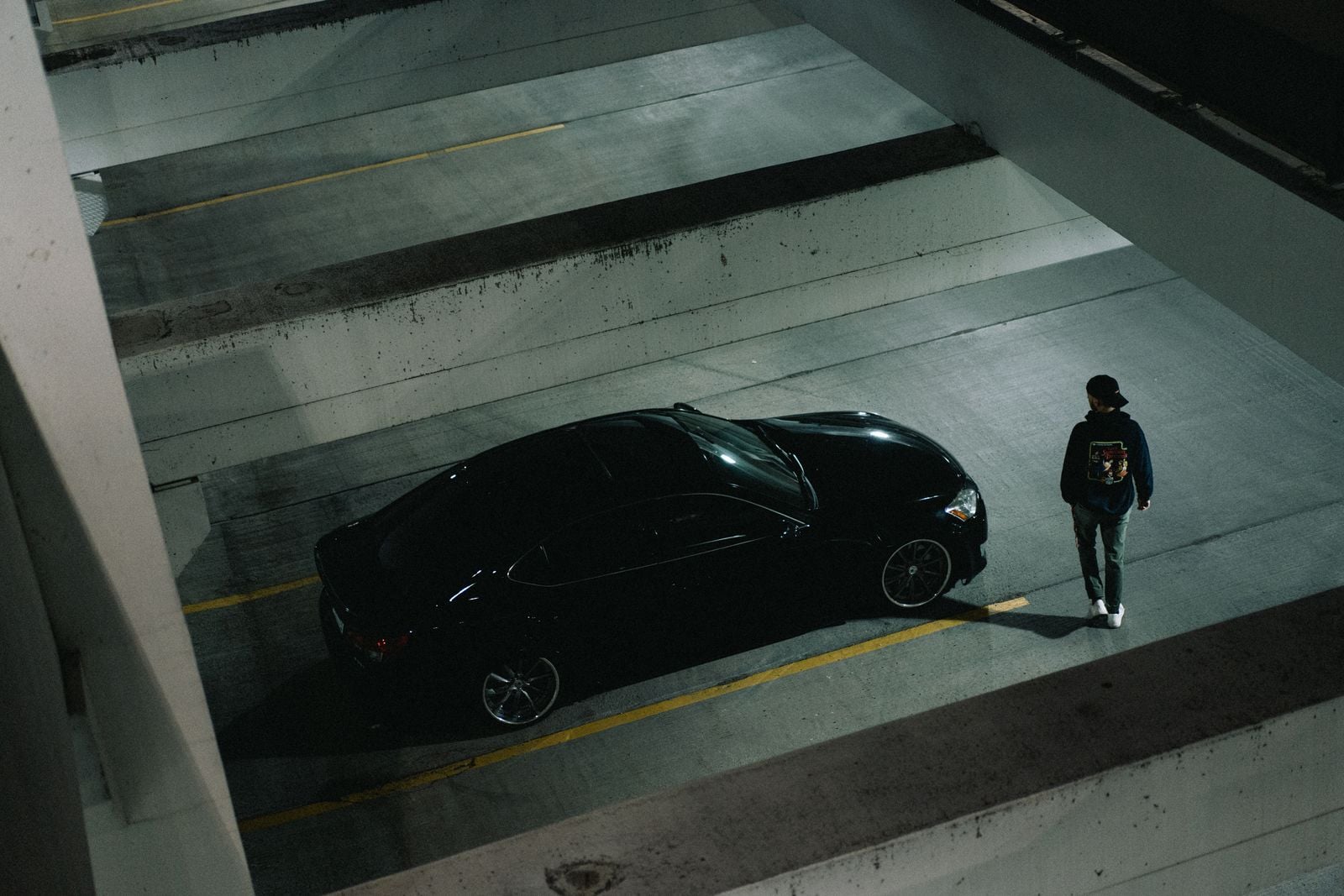
The parking lot arrival is a quietly deliberate act. Adults who consistently show up twenty minutes early, then remain in the car with the engine off and the radio low, are not padding their schedules against traffic. They are engineering a pocket of time in which nobody — not a boss, not a child, not a spouse, not a waiting friend inside the restaurant — has any claim on them. The early arrival is the point. The sitting is the point.
Most productivity advice treats this behaviour as inefficient. Twenty minutes in a car with no output is twenty minutes that could have been spent answering emails, running an errand, or squeezing in one more call. The conventional read is that these people are anxious about being late, or overly cautious, or bad at time estimation.
The evidence suggests something else entirely. What looks like over-scheduling is actually a small, defended act of autonomy in a life where autonomy has been steadily eroded by calendars, notifications, and the expectations of other people.
The transition is the last unclaimed hour
For most working adults, the day is now composed almost entirely of demand zones. There is the workplace, where colleagues and managers make requests. There is the home, where partners and children and pets and appliances make requests. There is the phone, which makes requests on behalf of everyone else who cannot physically reach you. What has quietly disappeared is the interstitial space — the walk between the tram stop and the office, the bus ride home, the slow lunch alone at a counter.
These transitions used to absorb the cognitive residue of one setting before the next one began. Now they have been colonised. The commute has become a conference call. The lunch break has become a Slack thread. Even the walk from the parking garage to the office is punctuated by push notifications.
Sitting in the car for twenty minutes rebuilds a transition that the modern day has erased. It is not laziness or avoidance. It is a small structural correction.
Why the nervous system needs a threshold
Human beings do not switch contexts cleanly. Moving from one role to another — worker to parent, driver to guest, employee to friend — requires a period of internal recalibration. The Kate Berardo framework used in cross-cultural psychology identifies five domains disrupted by any significant change: routines, reactions, roles, relationships, and reflections. Even micro-transitions between contexts touch each of these.
When the shift happens too quickly, the previous role bleeds into the next one. The unresolved conversation from the office rides along into the parent-teacher meeting. The tension from the commute walks into the dinner reservation.
The twenty-minute parking lot pause functions as a decompression chamber. Heart rate settles. Facial muscles relax. Whatever was said in the last meeting stops replaying. The next role has not yet been picked up. For a rare stretch, there is no role at all.
What the research actually says about buffer time
A Nature collection on stress and health catalogues a growing consensus that chronic, low-grade stress — the kind produced by unbroken responsiveness rather than acute crisis — degrades cardiovascular function, immune response, and mood regulation. Acutely stressed people mobilise disproportionate effort to avoid even low-probability threats, meaning the constantly-on adult is quietly burning fuel to defend against dangers that mostly do not exist.
Recovery from that state does not require a vacation. It requires micro-doses of non-demand. Sitting in a parked car qualifies.
A Pew Research Center survey published in April 2026 found that 36 percent of adults under 30 rate their mental health as fair or poor, and only 18 percent say they are managing their stress extremely or very well — 40 points lower than the share among adults 65 and older. Nearly half of adults under 30 said stress management is a major challenge to taking care of their overall health, and 42 percent named time itself as a major obstacle. The people who have found a way to steal twenty minutes back are not indulging themselves. They are patching a documented deficit.
The parking lot is a modern version of the threshold ritual
Cultures across history have built rituals into the boundary between one space and another. Removing shoes at the door. The wash basin at the temple entrance. The moment of silence before a meal. These are not superstitions. They are engineered pauses that mark a change of state and give the nervous system time to catch up.
Modern life has stripped most of these thresholds away. The garage-to-kitchen door is a single step. The Zoom meeting ends and the next one begins in the same chair. There is no physical marker to tell the body that context has changed.
Beyoncé performs the same stretches, playlist, and hour-long meditation before every show — a pre-performance sequence that structures her transition from private person to stage presence. Most adults are not preparing for a concert. But most adults are asked to switch performances several times a day, and almost none of them have built a ritual for it.
The twenty minutes in the car is a self-invented threshold. It is doing exactly what more elaborate ceremonies used to do.
What people actually do in those twenty minutes
The activity, when observed, is remarkable for its ordinariness. Some scroll their phones, but not with the frantic quality of a work check — more like flipping through a magazine at a dentist’s office. Some listen to the last few minutes of a podcast episode without the pressure of the next task. Some eat something they did not want anyone to see them eating. Some cry, briefly and without event.
Many simply sit. They watch other cars arrive. They look at the trees at the edge of the lot. They notice that the light is a particular colour they had not registered while driving.
None of this is impressive. None of it would show up on a productivity dashboard. That is the entire mechanism. The value of the twenty minutes is precisely that nothing is being extracted from them.
The same instinct shows up in other quiet defences
The parking lot pause belongs to a family of small, unremarkable behaviours that adults use to reclaim territory inside otherwise porous lives. The chair nobody else is allowed to sit in serves the same function in space that the parking lot serves in time — a defended square metre where no request can land. Rereading the same novels every few years does it in memory, returning the reader to a self that existed before life required so much usefulness.
The pattern is consistent. Adults under sustained demand do not typically stage grand rebellions. They build small, private, structurally invisible pockets in which the demand is paused. The pocket is more important than what happens inside it.
Why the twenty-minute buffer disproportionately helps parents and caregivers
The behaviour appears most strikingly among parents, caregivers, and people in service professions — the demographics whose days are defined by other people’s needs. Motherhood in particular reshapes identity so thoroughly that many new parents describe losing access to their own inner life for months at a time. Small recovery mechanisms — a moment alone in the car, a shower with the door locked, a pause before opening the front door — become disproportionately valuable because they are the only ones available.
Adolescents’ daily stress raises their parents’ cortisol levels. The demand from one household member does not stay contained. It leaks. The parking lot pause is a way to seal the leak briefly before entering the next room where it can begin again.
The rise of leave patterns tells the same story
The pattern also shows up at a larger scale. A Psychology Today analysis of the rise in mental health leave notes that a growing share of employees are formally stepping out of their working lives to recover, often after long periods of unbroken responsiveness. The taking of leave is the macro version of the parking lot pause: a person deciding, finally, that the transition between roles requires actual time and that they are entitled to that time.
What makes the parking lot behaviour different is that it does not require an HR conversation, a diagnosis, or permission from anyone. It is a private, self-administered version of the same medicine. The people who have discovered it are, in a small way, ahead of the institutional curve.
What it means that this now counts as radical
A generation ago, arriving somewhere early and sitting outside would not have registered as a strategy. It would have simply been the shape of the day. The demand density was lower. The transitions were built in.
The fact that adults now have to actively engineer twenty-minute pockets of unclaimed time — to schedule them, defend them, and pretend to be running errands to justify them — is a data point about what the modern day has become. The parking lot pause is not a quirk. It is an adaptation.
The people doing it are not confused about time management. They have simply figured out, without necessarily articulating it, that the space between where they were and where they are going is one of the last places where they get to belong entirely to themselves. They are guarding it accordingly.
The next time you see someone sitting in a parked car with the engine off and no obvious purpose, it is worth resisting the reflex to wonder what they are waiting for. They are not waiting. They have arrived. The car is the destination for the next twenty minutes, and the meeting or the dinner or the family evening is the interruption after.
