
Authorship note, 14 September 2026: The original contributor byline on this article was retired in May 2026. Silicon Canals Editorial Team reviewed and updated the article and is responsible for its current publication.
A 2023 survey of high-functioning professionals found that the majority who scored highest on burnout markers also scored highest on the belief that rest had to be earned. Knowing rest is good, it turns out, may be almost entirely uncorrelated with taking it. The literature on self-compassion suggests the gap between knowing and doing isn’t laziness or poor time management. It might be something closer to a missing signature.
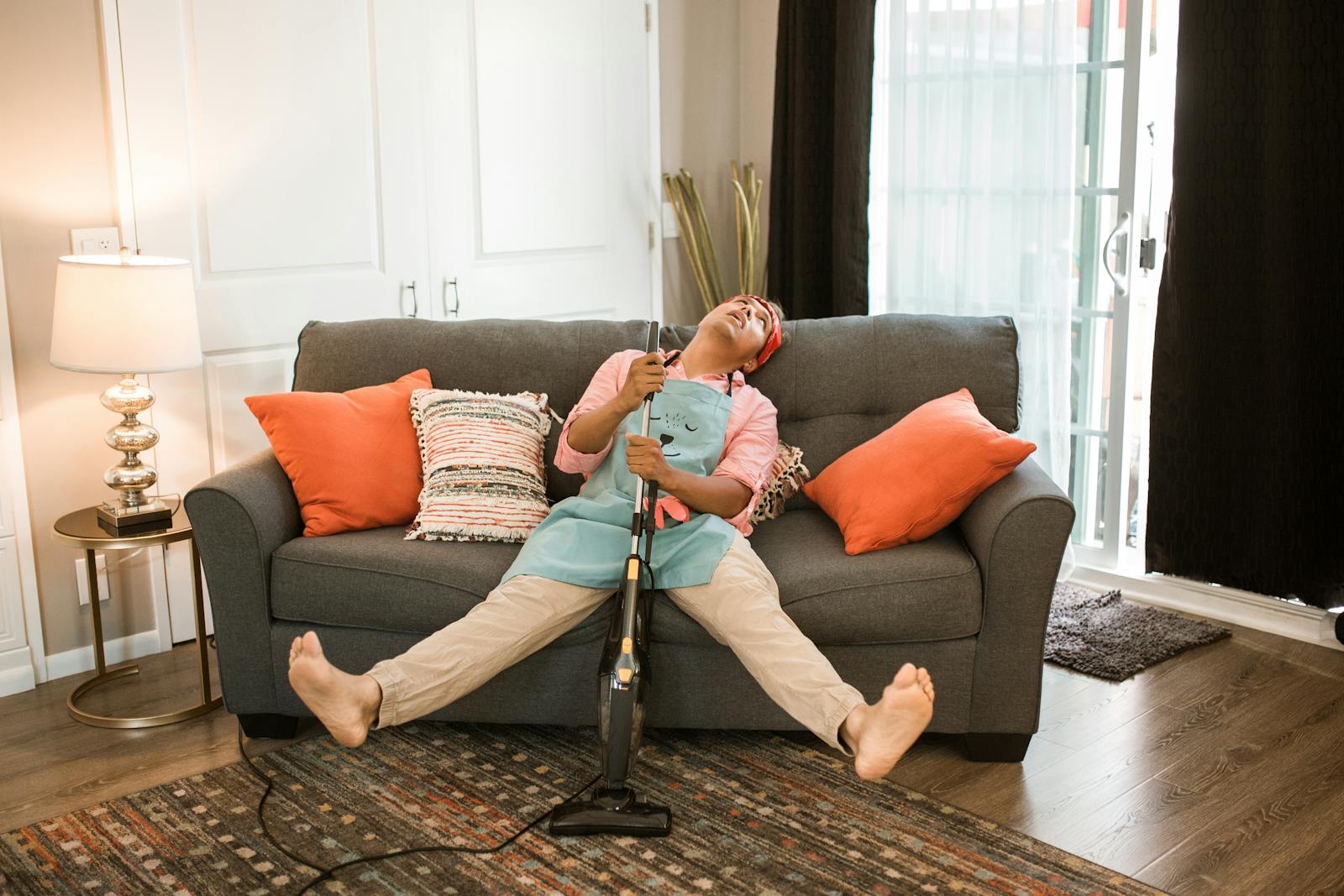
Picture a scene that plays out in countless homes on a Sunday afternoon. Someone sits down on the couch around three, intending to read for an hour, and finds themselves on their feet within ninety seconds to put a load of washing on. They hadn’t decided to. The body had simply registered the unfamiliar absence of a task and corrected for it, the way a thermostat clicks the heating back on. Sit down again. Stand up again. By the third time, they might find themselves saying the sentence out loud to an empty room: I am allowed to sit here.
This is a familiar pattern for a particular kind of high-functioning adult. They have absorbed every public health message about rest. They could perhaps list the cognitive function, cardiovascular health, immune regulation, memory consolidation, and mood outcomes. They believe the message — for everyone except themselves. Somewhere underneath all of that fluent intellectual agreement, they may have quietly decided that the rules they would readily quote to a friend do not apply until someone in authority signs off. The person they’re waiting for never shows up. Because the person is them.
The permission slip nobody is going to write
Much of the productivity discourse assumes the problem is time management. It may not be. The problem, for a particular kind of person, might be authorisation. You know rest is good. You can recite the studies. What you may struggle to do is take rest without first locating an external voice that grants it.
That voice was perhaps a parent, a coach, a supervisor, a deadline. Somewhere along the line it stopped being any of those things and became a vague atmospheric pressure: an internal weather system that says not yet, not yet, not yet.
For many adults, the realisation eventually arrives that they may have been waiting twenty years for that weather to break on its own.
What the research suggests about self-permission
The psychological literature has a strange gap here. There is a substantial body of work on self-compassion, thanks largely to Kristin Neff at the University of Texas, Austin. There is research on self-esteem, self-acceptance, self-care. But the specific act of granting yourself permission sits awkwardly between constructs.
Greater Good Science Center recently profiled the strange academic shyness around self-love as a psychological construct, noting that researchers have largely avoided it because it can be hard to disentangle from narcissism. Frameworks exploring self-love often identify three components: self-contact, self-acceptance, and self-care. The first one, self-contact, may be the one most people skip. You perhaps cannot grant yourself permission to rest if you have not first made contact with the part of you that is tired.
For a lot of people, that contact may not have happened in a very long time.
Why high-functioning people may be particularly bad at this
If you grew up being praised for output, you might have learned a transactional model of worth very early. Rest, in that model, becomes something you earn by finishing. The trouble is the list never finishes. There is always one more email, one more rep, one more chapter, one more thing that needs handling.
A piece in Forbes summarised four signs you’re compassionate to everyone but yourself: relentless self-criticism, chronically putting others first, an inability to forgive your own mistakes, and discomfort accepting help. Most readers may recognise three of the four immediately. The fourth often takes a little longer, which probably tells you something.
People tend to feel more compassion for others than for themselves, and that gap may matter. Self-compassion, rather than compassion-for-others, appears more strongly linked to lower depression and greater positive emotion. You can be a saint to your friends and still be quietly running yourself into the ground.
The fear that may run underneath
Perhaps the most useful angle is the work on fear of self-compassion. People who struggle to be kind to themselves often aren’t simply forgetful or busy. They may be afraid. Afraid that if they soften, they’ll fall apart. Afraid that if they rest, they’ll never get back up. Afraid that the productivity is the only thing keeping the wolf from the door.
Psychology Today summarized this work well, pointing out that fear of self-compassion appears to predict worse outcomes in depression, eating disorders, and PTSD, and that the fear itself may be what’s blocking treatment from working. People may not be refusing rest because they don’t know they need it. They might be refusing it because softening feels structurally unsafe.
That tends to land hard. Many people in this pattern haven’t been failing to rest. They may have been actively guarding against it.
What twenty years of holding out might cost
The body keeps a fairly precise ledger. Chronic activation of the sympathetic nervous system, sustained over decades, may show up in cardiovascular markers, sleep architecture, and inflammatory profiles long before it shows up in your subjective sense of being tired. By the time you feel it, you may have been paying interest for a while.
The same mechanism that routes anger into productivity in people who don’t think they have any may also apply to exhaustion. If you’ve spent twenty years converting tiredness into one more task, you might eventually lose the ability to recognise tiredness as tiredness. It can start to feel like the texture of being alive.
And then one day you stand up off the couch for the third time in ninety seconds and realise you don’t quite know what you would do with an unstructured afternoon if someone gave you one.
The seam where permission may go missing
There’s often a moment in childhood you can point to, if you look. It isn’t always dramatic. The implicit message often wasn’t that rest was bad. It was perhaps that rest was what you did after you’d taken care of everyone else.
It can be a beautiful ethic and a slow poison.
Resistance to self-compassion may stem from beliefs around masculinity and individualism: if I accept help, I’m weak; I should be able to handle things on my own. Add to that the ethic of service, and you might produce a particular adult, typically warm, reliable, well-liked, who has rarely asked for the day off without an apology attached. Few people think to check on the person who keeps the system running.
Why intellectual knowledge may not be enough
Here is something the research community sometimes seems to miss. Knowing that rest is good does not necessarily produce rest. Knowing the cortisol curve does not flatten yours. The gap between cognitive understanding and somatic permission can be enormous, and bridging it may not be an information problem.
Before you can grant permission, you may need to notice the part of you waiting for it. Most people are too busy to notice. They might be sprinting past their own tiredness on the way to the next thing.
For some people it can take sitting down three times before they notice they’re tired. Three times.
What might actually shift the pattern
A few things that may help:
Make contact before you make decisions. Try sitting with the question am I tired? for ten seconds before you answer. Most people answer in two. The honest answer often lives somewhere around second eight.
Stop waiting for the list to finish. The list is probably not going to finish. It was perhaps never going to finish. Rest taken at the end of a finished list may be a fairy tale. Rest might be something you take in the middle, while the list is still very much undone, because your nervous system may need it now rather than in some imagined future where everything is handled.
Watch for the fear, not just the avoidance. What looks like discipline can sometimes be fear wearing discipline’s clothes. If sitting still makes you anxious, that may be data. The anxiety might be the signal that something underneath needs attention, rather than a cue to get up and clean the kitchen.
Notice that compassion received may build compassion given to self. Receiving care from others appears to increase your capacity to care for yourself. The implication can be uncomfortable for the self-sufficient: you may not be able to bootstrap your way to self-permission entirely alone. Some of it might have to come in through other people first.
The strange grief of granting it to yourself
Here is the part nobody tends to warn you about. When you finally do give yourself permission to rest, the first feeling may not be relief. It might be grief. You realise how long you may have been holding out on yourself. You count the years. You think about the slow afternoons you didn’t take, the holidays you cut short, the friend who asked what you do for fun and got a list of things you used to do.
Greater Good’s work on self-compassion as a developmental skill reframes this grief as part of the work, rather than a sign you’re doing it wrong. You may be mourning a younger version of yourself who didn’t know they were allowed. You are also, in real time, perhaps becoming the adult who tells them.
It can be quiet work. It doesn’t tend to look like much from the outside. From the inside it might feel enormous.
The walk, and what it might take to make it count
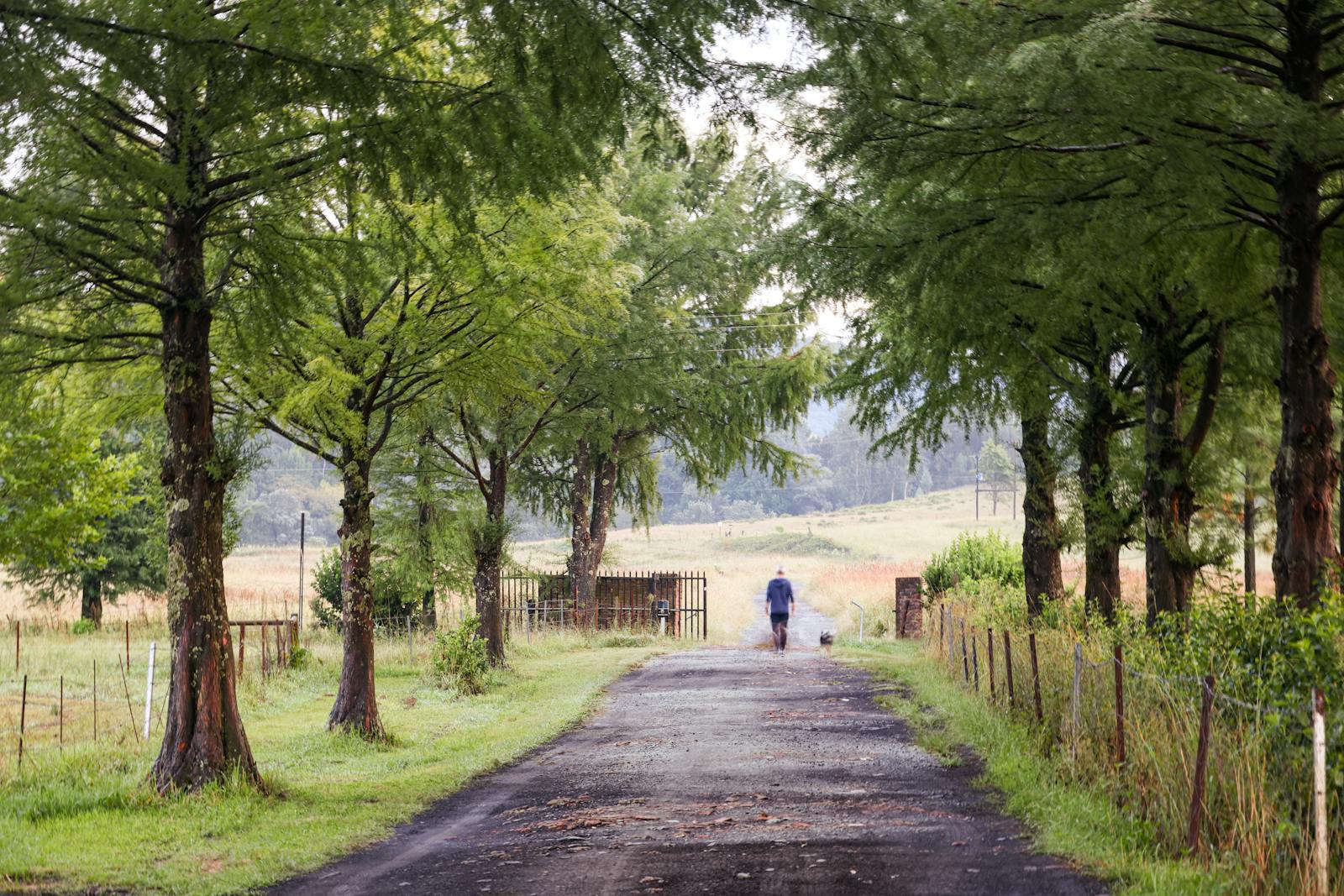
Consider the daily walk that many people use as exercise. For years it can be entirely instrumental — exercise, cardiovascular hygiene, fresh air for the brain, a checked box. Then at some point, a person may let it just be a walk. No podcast. No optimisation. No mental list of what they’ll do when they get home. Just the path, the wind, the surroundings. And the realisation can land, often unexpectedly: this is rest. While moving. Which may be something they had been told for years was possible and never quite actually experienced.
What to take forward
Back to that couch, that first Sunday afternoon. Eventually the person stays seated. Not for an hour. Maybe twenty minutes. Long enough to notice that none of the small tasks they kept jumping up to handle actually needed supervising. The machine in the next room turns over. The breathing settles. Nothing gets signed. The afternoon light moves across the floor. And that, badly and quietly, may be the whole of it.