


For decades, the dominant warning about midlife went something like this: the empty nest will hit when the last child leaves, you will cry for a week, and then you will rediscover yourself through pottery classes and weekend trips. The script missed something. The loneliest part is not the leaving. It is the long quiet that settles in afterward, somewhere in the early 50s, when the house has rearranged itself into a shape no one prepared you for.
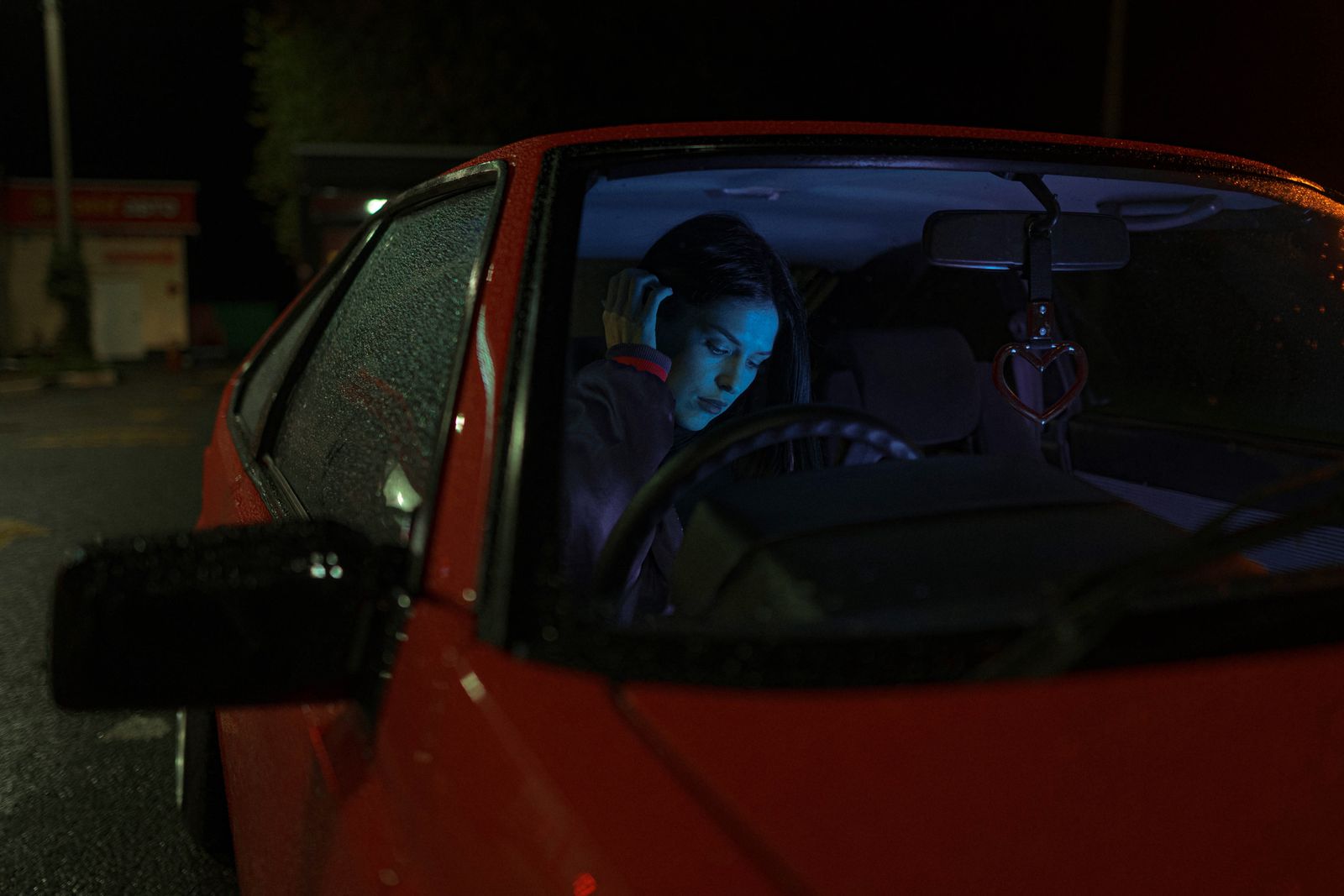
Ask a 52-year-old what time she went to bed on Tuesday and she can tell you, because Tuesday was the night she sat in the car in her own driveway for eleven minutes before going inside. The radio was off. The engine was off. She had just driven home from her mother’s apartment, and the house in front of her contained a husband watching something on a tablet and two bedrooms that used to be full and now were not. She was not crying. She was just not ready to walk in yet.
That eleven minutes is the part the empty-nest essays never describe.
The conventional wisdom holds that loneliness peaks in the very old or the very young. Both are true. But there is a third peak that gets less attention, and it lives in the 50s. It arrives when the children are launched but not fully gone, when the parents are still alive but visibly smaller, when you are nobody’s main person anymore.

The role that quietly disappears
For roughly two decades, a parent’s identity is organised around someone else’s becoming. There are lunches to pack, forms to sign, college essays to read at midnight. The work is exhausting and absorbing, and that absorption is part of what makes it bearable.
Then it stops. Not all at once, but in a series of small subtractions. The bedroom door stays closed for weeks at a time. The group chat goes quiet on weekdays. Someone else is now the person your adult child calls first.
Psychologists describe this as role loss, and the research on identity disruption in midlife suggests the instinct after a major shift is to try to return to the previous version of yourself. That version does not exist anymore. The job that defined twenty years has been quietly retired by the people you did it for.
Parents who are still here, but smaller
The other half of the early-50s squeeze is upward. Parents in their late 70s and 80s are often still alive, often still independent on paper, but the relationship has begun to invert.
The phone calls are now about appointments, medications, the strange thing the bank said. You are reading their mail. You are explaining their insurance to them. You are noticing that your mother repeats the same sentence twice in a single visit and pretending not to.
This is the sandwich generation in its mature form, and it is enormous. According to data compiled by the U.S. Office on Women’s Health, more than 44 million Americans provide unpaid care to an elderly or disabled adult in a given year, and informal caregivers supply roughly 80 percent of long-term care in the country. Sixty-one percent are women.
The same data shows that about 75 percent of caregivers reporting severe emotional, physical, or financial strain are women. Caregivers are more likely to have depression, anxiety, sleep loss, weakened immune response, and slower wound healing. One study cited in that research found that elderly people who felt stressed caring for a disabled spouse were 63 percent more likely to die within four years than caregivers who reported no such stress.
The numbers describe a population that is exhausted. They do not quite capture how lonely the exhaustion is.
The specific shape of midlife loneliness
Loneliness in your 50s does not look like the loneliness of your 20s or 30s. Younger loneliness tends to be loud and embarrassing. Midlife loneliness is administrative.
It looks like driving to a pharmacy at 7pm to pick up someone else’s prescription. It looks like a calendar full of appointments, none of which are yours. It looks like a marriage that has been on autopilot for so long that neither person can remember the last conversation that wasn’t logistics.
There is a piece we’ve published before about the loneliness that hides behind sociability, the person who laughs at every joke and drives home in silence. The early 50s version is its grown-up cousin. You are still functional. You are still hosting. You are still the person everyone considers reliable. And nobody knows that the most honest hour of your week is the one in the car between your mother’s apartment and your own house.
Why this stretch is structurally lonelier than the ones around it
The loneliness of the early 50s is not just an emotional state. It is a structural one, built into how modern adulthood is sequenced.
In your 20s and 30s, loneliness is uncomfortable but socially legible. Friends are also moving, also struggling, also single, also figuring it out. CNBC reported on a study in PLOS One led by University of Kansas communication researcher Jeffrey Hall that found young, educated women experience both high connection and high loneliness simultaneously, often because they are being repeatedly uprooted by jobs, breakups, and degrees. The loneliness is real, but the cohort around them is in similar churn. There is solidarity in the chaos.
By the early 50s, the cohort has scattered into different fortresses. One friend has a teenager in crisis. Another is divorcing. Another has just moved her own mother into hospice. Everyone is busy in non-overlapping ways. The peer group, when you most need it, is the least available.
And the people who used to fill the house simply are not in the house.
What the research says about the cost
The damage from sustained midlife loneliness does not announce itself dramatically. It accumulates.
A study published this year in Aging & Mental Health, based on data from more than 10,000 adults across 12 European countries, found that loneliness was associated with worse memory performance at baseline, even when it did not measurably accelerate decline over the following seven years. Lead author Luis Carlos Venegas-Sanabria of the Universidad del Rosario described the finding as suggesting loneliness shapes the starting point of cognitive performance more than its trajectory.
NYU Grossman School of Medicine’s Jordan Weiss, commenting on the same study, put it more bluntly: the damage probably happens earlier in life than the researchers can detect. Social connection patterns established in middle age may have long-lasting effects on brain health decades later. The patterns set in the 50s become the cognitive scaffolding of the 70s.
This is not a small finding. It suggests that the years people most often dismiss as a transitional rough patch, the years when they tell themselves they will reconnect with friends once things settle down, are actually the years when the connection infrastructure of the rest of their life is being built or not built.
Why the marriage often does not help
One of the cruel features of the early-50s slump is that the marriage, if there is one, often cannot carry the weight that was previously distributed across an entire household.
For two decades, the children acted as a third party in nearly every conversation. They generated topics, dramas, schedules, and shared anxieties. With them removed, two adults who have not had to entertain each other in twenty years suddenly look across the kitchen table.
Some couples find this delightful. Many find it disorienting. The relationship has to be reinvented, the people inside it are tired, and reinvention is the kind of work that needs energy neither person has on a Tuesday night. This is the demographic moment when so-called grey divorce climbs. It is also the moment when couples who do stay together can drift into parallel solitude, sharing an address and almost nothing else.
The cultural script makes it worse
The wider culture handles this period badly. The empty-nest narrative is built for one emotional beat, the parent crying in the dorm-room parking lot, and then assumes recovery. There is no widely available script for the seven-year stretch that follows.
One recent essay in USA Today by a father preparing to send his youngest to college rejected the empty-nest framing outright, insisting his nest would never be empty. The instinct is understandable. It is also a way of not looking directly at what is changing. Calling it something gentler does not make the room any less quiet at 9pm.
The honest version is harder to print on a greeting card. The house is not empty. It is differently occupied. And the person doing most of the occupying is now alone with a version of themselves they have not had time to meet in twenty years.
What helps, and what only looks like it helps
The advice industry tends to recommend the same menu: take up a hobby, join a book club, get a dog. None of this is wrong. None of it is sufficient.
What actually helps tends to fall into three categories. The first is active problem-solving rather than passive worry. The difference between rearranging your week to protect two hours of sleep and lying awake at 4am cataloguing what is wrong. People who take a problem-solving stance tend to report lower stress than those who default to helplessness.
The second is asking for help in concrete terms. Rather than vague offers of support, caregivers benefit from specific, concrete commitments from their support network. A sibling who picks up the prescription on Thursdays. A friend who takes the call when the parent has fallen again. A weekly two-hour respite where someone else is on call.
The third, and the one most people skip, is grief work. The early 50s ask you to grieve a role that nobody died for. The job of raising someone has ended, and there is no funeral for that. People who allow themselves to name the loss tend to move through it. People who insist they are fine tend to find it waiting for them in the parking lot.
The reframe that actually lands
The early 50s are not a malfunction. They are a phase the culture has failed to describe accurately, and the people inside it are left to translate the silence on their own.
What the research can say is narrow. The friendships kept up now are statistically more likely to still be there at 70. The patterns of connection laid down in this decade tend to shape the cognitive starting point of the next. Beyond that, the data thins out. Nobody has run the longitudinal study on what happens to a woman who sits in her driveway for eleven minutes every Tuesday for a year.
The quiet does not announce what it is. It might be a passage. It might be the new weather. The empty-nest essays end with a parent waving from a doorway, and most of what comes after that wave has never made it onto the page.
