


Saturday morning is supposed to feel like relief. For a significant number of adults, it feels like static: a low hum of unease that nobody warned them about and nobody quite knows how to name.
The conventional explanation is loneliness. Or under-scheduling. Or some failure to cultivate hobbies. None of these quite hold up under scrutiny.
What’s actually happening is stranger and more uncomfortable. The weekday wasn’t just keeping a person busy. It was keeping them from noticing.
The autopilot most people don’t realise they’re flying on
A University of Surrey research release on a study in Psychology & Health reported that roughly 65% of daily behaviours are initiated habitually, meaning they begin automatically in response to familiar cues before deliberate thought fully enters the picture. The researchers used real-time prompts on participants’ phones across the UK and Australia, asking 105 adults six times a day what they were doing and whether the action was triggered by habit or intention. The dominant answer was habit. Quietly, consistently, overwhelmingly. That does not mean people are sleepwalking through life — many habits support what a person already wants — but it does mean that a startling amount of ordinary life begins before the conscious mind has finished announcing itself. Dr. Amanda Rebar, the study’s lead author, put it plainly: people like to think of themselves as rational decision makers who consider their actions carefully, when in fact much repetitive behaviour is undertaken with minimal forethought and generated automatically. Two out of every three actions in a given day, on average, are already moving before you’ve decided to move them.
This is not a moral failing. It’s how the brain economises. The problem is what happens when the cues stop.
Why Monday-to-Friday hides the question
A weekday is a scaffolding of cues. The alarm at 6:40. The kettle. The commute. The first meeting. The lunch break that arrives whether anyone is hungry or not. Each cue triggers the next action, and the next, and the next.
You don’t have to ask yourself what you want from your life at 10:17 on a Wednesday morning. The calendar is asking the questions for you.
Then Saturday arrives. The cues thin out. The scaffolding lifts. And suddenly the person standing inside the routine has to decide, from scratch, what to do with the next sixteen hours.
For some adults, that’s pure relief. For others, it surfaces something that the weekday had been politely covering up: an awareness that much of what they do has been running on inherited rhythm rather than recent choice.
The discomfort isn’t boredom. It’s visibility
A Psychology Today essay on loss of self describes the experience of becoming invisible to themselves: losing touch with who we are, what we value, and what still feels personally chosen.
Structure protects that invisibility. Structure is, in fact, what makes the invisibility tolerable.
When the structure recedes — on a weekend, a holiday, a sabbatical, or after retirement — the question returns. Not as a thought, usually. As a feeling. A faint dread around 11am on Saturday. A weird heaviness on Sunday afternoon. A restless walk that doesn’t fix anything.
The discomfort is not always loneliness. It can be the mind noticing, perhaps for the first time in months, that autopilot has been doing most of the steering.
The architecture nobody told you was holding you up
This is structurally the same pattern at work in other transitions. Friendships in later adulthood often thin not because of any personal failure, but because the workplace, the school run, or the marriage that maintained them quietly ended. The friendships didn’t always die. The architecture holding them up did.
Weekends work the same way in miniature. The architecture of weekday life — meetings, deadlines, the rhythm of needing to be somewhere — was holding up more than productivity. It was holding up the felt sense that life was happening on purpose.
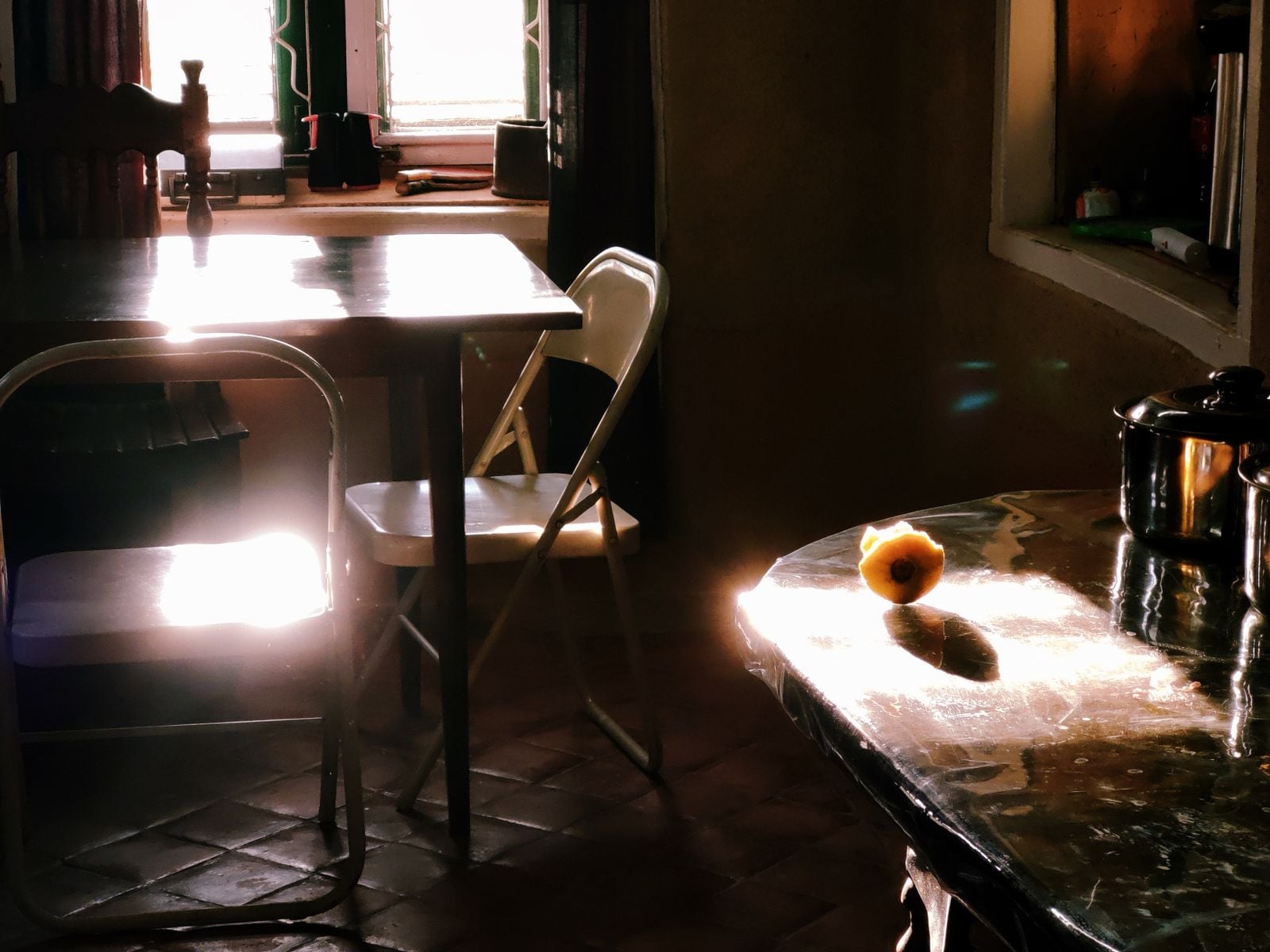
Remove the architecture for 48 hours and the question of purpose returns, uninvited, to the kitchen table.

What momentum actually does
Momentum is the polite word for behaviour that continues without examination. A job that you’ve held for nine years because nothing prompted you to leave. A relationship that has become more administrative than affectionate. A weekly schedule whose original justifications have long since dissolved.
Momentum is not bad. It’s how complex adult lives get sustained at all.
The problem is that momentum and meaning can look identical from the inside, right up until the moment the cues stop and the difference becomes obvious. A person on holiday in a new city, with no routine to lean on, sometimes discovers, three days in, that they have no idea what they actually enjoy doing when no one is watching.
A Psychology Today piece on self-awareness in intimate relationships describes self-reflection as taking a step back to consider thoughts, beliefs, actions, and personal meaning. Weekends create a small version of that pause. Holidays create a larger one. Retirement is the pause that has nowhere to hide.
The relief that doesn’t arrive
People expect Saturday to feel like release after the week’s compression. For many, it does.
For others, the release reveals that the compression was the only thing making the week feel coherent. Without it, the day stretches strangely. Hours stop having edges. The kettle still works. The body still moves. But the felt sense of forward motion is gone.
This is the moment that often gets misnamed. People call it laziness. Or boredom. Or a midlife wobble. Sometimes those words fit. Often it is something simpler and harder to fix: the absence of imposed structure has made internal direction visible, and there isn’t much there.
Not because the person is empty. Because they haven’t had occasion to develop it.
Why the weekend dread tends to peak in middle age
Younger adults often have weekends full of social momentum that mimics weekday structure: plans with friends, dating, errands tied to a shared household. The cues persist. The autopilot keeps flying.
In the late 30s and 40s, that social scaffolding thins. Friends have children or move away. Partners settle into their own routines. The weekend becomes genuinely unstructured for perhaps the first time since adolescence. This is also when adults notice that an empty Tuesday afternoon can feel like an accusation rather than a gift, and that something they can’t quite name goes quiet when the meetings stop. None of this means anything is wrong with them. It means the scaffolding has thinned enough for them to see the shape of the building underneath.
The body is part of the conversation
Weekend unease is not only an abstract thought. It can show up physically, too. A tight chest before lunch. Restless scrolling that never quite becomes rest. A tiredness that does not make sense, because the person finally has time off.
That does not make the feeling a diagnosis. It simply means the body is often where unasked questions become noticeable first.
Which is part of why the weekend hum matters. Ignoring it for years can make life feel increasingly mechanical, not because anything dramatic happens at once, but because the same old routines keep answering questions the person has not asked in a long time.
What might actually help
The instinct, when Saturday feels strange, is to fill it. Add a class. Book a brunch. Buy a project. Anything to restore the cue-and-response rhythm of the weekday.
This works in the short term. It postpones the question. It does not answer it.
What often helps more is staying with the discomfort long enough to learn what it is pointing at. Habits aligned with intention can be powerfully supportive, but only if the intention has been examined recently enough to still be accurate.
If a person’s last serious examination of what they actually want from a Saturday was at age 26, the autopilot they’re running may be twenty years out of date.
The quiet work of weekends
Here is the part nobody wants to hear: the weekend dread is not a problem to be solved. It is information. And most people will spend the next forty Saturdays burying it under brunches, projects, and errands rather than sitting with it for the ninety uncomfortable minutes it would take to hear what it is saying.
That is a choice. It is also a forecast. The autopilot does not get less entrenched with time — it gets more so. Every weekend spent silencing the hum is a weekend voting for the version of life you already have, whether or not that version still fits.
The structure was never the problem. The structure was very, very good at its job. The question is whether you intend to keep letting it do that job for you, or whether, one Saturday soon, you plan to find out what it has been hiding.
