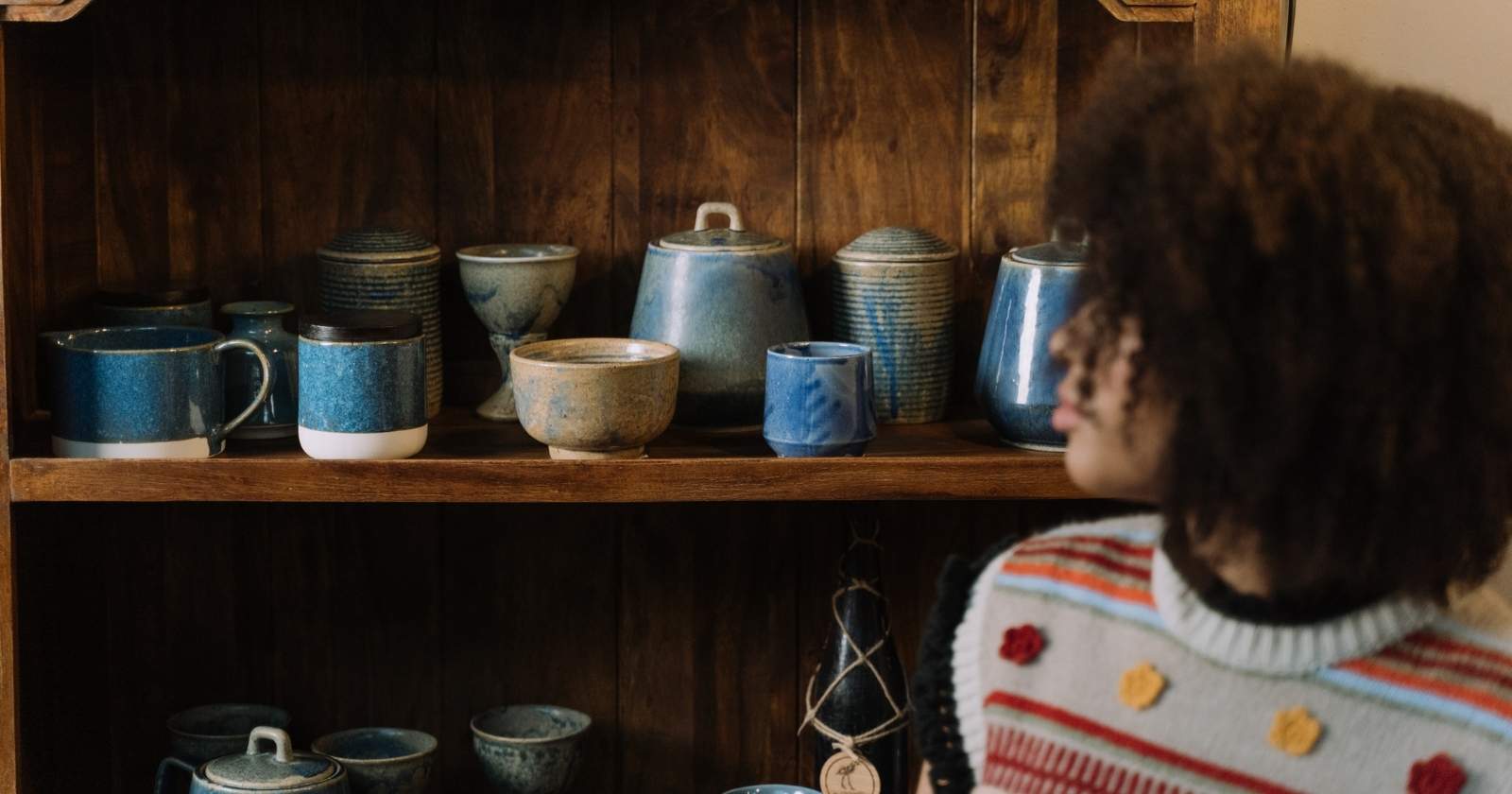
Open almost any kitchen cupboard and you will find a quiet hierarchy. Four or five mugs in heavy rotation, glazed unevenly, handles slightly off-balance, one with a hairline crack that nobody has the heart to throw out. Behind them, on the higher shelf, sits the good set. The matching ceramic ones from the wedding, the hand-thrown stoneware from that trip to Lisbon, the heavy Japanese cups someone gave as a serious gift. Untouched. Dusted, maybe, but not used.
This is not an accident of laziness.
The conventional reading of this is sentimentality. The owner is told, gently, that they should let the nicer ones into daily life, that good things are meant to be used, that there is something faintly sad about saving objects for an occasion that never comes. The advice is well-intentioned and almost entirely wrong.
What looks like sentimentality is closer to a quiet kind of evidence-gathering. The mugs in rotation are the ones that have, over years of mornings, demonstrated something the nicer ones never had to: that they fit a hand, a mood, a specific weight of tiredness at 7am. They were not chosen so much as confirmed. And the cupboard full of nicer ones, however expensive, has simply not earned the same proof.
The objects that prove they belong
The daily-use object accumulates meaning through use rather than having it assigned from the outside. A mug that has survived a thousand mornings hasn’t been given significance arbitrarily. It has earned it.
A personality cluster around object attachment includes sensitivity, empathy, loyalty, and a tendency toward anthropomorphism, the habit of treating non-human objects as if they had inner lives. The cluster sounds like a list of soft traits, but what it actually describes is a person who pays attention. Someone who notices that one mug holds heat better, that another sits more comfortably in the left hand, that a third has a chip in exactly the spot the lower lip never touches.
The favourite mug is not a feeling. It is a record of attention paid over years.
Why the nicer ones feel like guests
There is a reason the wedding china stays on the high shelf. Objects acquired for their potential, their elegance, their value, their suitability for a future moment, carry a small obligation. They were bought to be worthy of something. Until that something arrives, using them feels slightly like cheating.
The mugs in rotation carry no such obligation. They were never aspirational. They arrived as freebies, as accidents, as gifts from people whose taste did not need to be honoured. One was bought at a service station on a long drive. One came with a tea sampler. One was made by a niece at a pottery class and has a handle that is structurally questionable. None of them are asking to be worthy of anything. They are simply present.
This is the difference between an object that demands to be used correctly and one that has been allowed to be used at all. The good set is a guest. The favourites are family.
Habit as a form of recognition
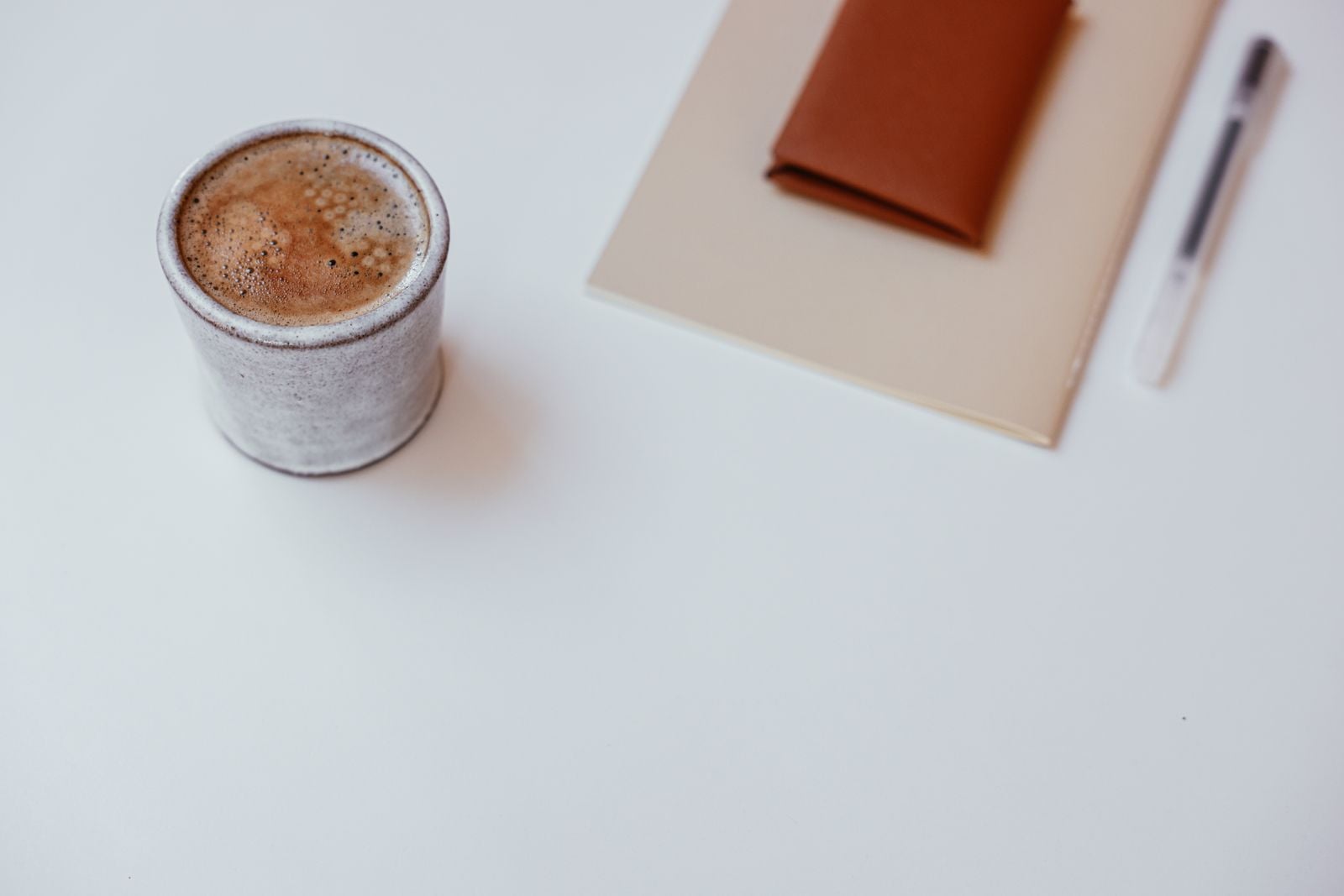
Habits operate on a subconscious loop in which a cue triggers a behaviour that leads to a reward. The loop runs automatically, freeing up mental bandwidth for everything else. The morning mug is one of the cleanest examples of this loop you will find. You do not stand in front of the cupboard at 6:45 and weigh aesthetic options. The hand goes to the same mug. The day begins.
The mug habit is a vote for the kind of morning you already have, the one that does not need optimising. Reaching for the same mug is a small daily refusal to treat your own ordinary life as a draft.
That refusal turns out to matter. As Silicon Canals has explored before, one of the strongest predictors of day-to-day happiness is the ability to be present in an unremarkable moment without wishing it were something else. The favourite mug is a kind of training in that.
The reverse of the sunk cost trap
Behavioural economists would point out that holding onto familiar objects has the shape of a sunk cost effect. We grow attached to what we have already invested in, even when better alternatives are available. The Berkeley-based Greater Good Science Center has documented how the sunk cost fallacy can drive bad decisions, from doomed investments to deteriorating relationships, by making people loyal to what they have already given up rather than to what they actually want now.
And yet the mug is the gentle, non-pathological inverse of this pattern. The Forbes contributor Mark Travers has written about how sunk cost thinking keeps people stuck in bad relationships long past their expiry date. A clarifying test: would you still be making this choice if you hadn’t made the original investment?
Apply that test to the mug and the answer is interesting. Yes. You would still choose it. Not because of what you have already invested, but because every morning it confirms itself again. The relationship is not maintained by loss aversion. It is maintained by ongoing, low-stakes evidence that the object works. This is what separates a sentimental clutch from a functional bond. Sentimentality holds onto an object despite present experience. Daily-use attachment is reinforced by it.
The objects that chose back
There is an old idea in design writing that some objects feel as if they were waiting for you. They sit in the hand correctly. They warm at the right rate. They survive being knocked off the counter. Without anyone planning it, they enter the rotation and stay.
What is really happening is mutual selection over time. The owner keeps reaching for the object, and the object keeps not breaking, not chipping in the wrong place, not disappointing. Each morning is a small handshake between a person and a thing. The nicer mugs in the cupboard have not been given the chance to fail or succeed at this. They are still applicants.
This is why the suggestion to start using the good ones often lands wrong. It treats the cupboard as a storage problem. The owner experiences it as a relationship problem. The favourites have proven something. The nicer ones, however objectively superior, have not. Forcing them into rotation feels less like an upgrade and more like introducing a stranger to the breakfast table.
What this has to do with everything else
The mug pattern shows up everywhere once you start looking. The same person who keeps four mugs in use while twelve sit unused will often have a similar pattern with sweaters, with pens, with the chair they sit in to read, with the route they walk through the park even though three other routes are technically more scenic. There is always a small handful of confirmed objects, and a larger collection of objects that exist but have not been validated by daily life.
The cluster of traits, sensitivity, empathy, loyalty, a tendency to anthropomorphise, describes someone who is also likely to do this with people. The handful of friends in active rotation, while a wider social circle stays affectionate but untouched. This is not coldness or social neglect. It is the same logic. The close ones have proven something across a thousand small interactions. The wider circle has not had the chance, and forcing intimacy feels like using the wedding china to drink instant coffee.
A closer reading of the psychology suggests that people who reach midlife with only a few close friendships have often just applied the mug principle to people: a small number of confirmed bonds, kept in active use, while the rest of the cupboard stays politely unopened.
The small daily proof
What the favourite mug provides, in the end, is a kind of reassurance that not everything in a person’s life needs to be earned or optimised or upgraded. There is something on the shelf that does not need to be impressive. It only needs to be there at 7am, in approximately the right shape, holding approximately the right temperature, asking nothing of the person reaching for it. That is a small thing. It is also, on most mornings, the first interaction a person has with the physical world after waking. The quiet message of it, that something familiar is still here, that it still works, that the day can begin in a known way, is a kind of structural comfort that the nicer mugs in the cupboard, by design, cannot provide. Transitional objects provide psychological comfort during moments of stress, uncertainty, or change, and are increasingly recognised as tools for emotional regulation across the lifespan, not just in childhood. The morning mug is exactly this: a small, low-stakes anchor against the more demanding day ahead. It does not photograph well. It does not signal taste. It does not announce that its owner has arrived anywhere worth arriving. That is precisely the point of it.
Here is the harder claim, though, the one that the gentle reading of all this tends to avoid. Refusing to use the good mugs is not a failure to live fully. It is the opposite. The current cultural script insists that every object in your home should be beautiful, every meal should be plated, every Tuesday morning should be content-worthy, because anything less is a kind of waste. Use the good china. Light the expensive candle. Live now. The advice sounds generous. It is actually a quiet demand that ordinary life perform its own significance at all times.
The person reaching for the chipped mug is opting out of that demand. They are refusing to dress up a Tuesday. They are admitting, without apology, that most mornings are not occasions and do not need to be staged as occasions. The good mugs stay in the cupboard not because their owner is failing to seize the day, but because their owner has noticed that the day does not need to be seized. It needs to be met. The four in rotation are how it gets met. They have shown up every morning. They have not let anyone down. They have, in their small ceramic way, chosen back. And that is worth protecting, not because the objects are precious, but because the refusal they represent is.