

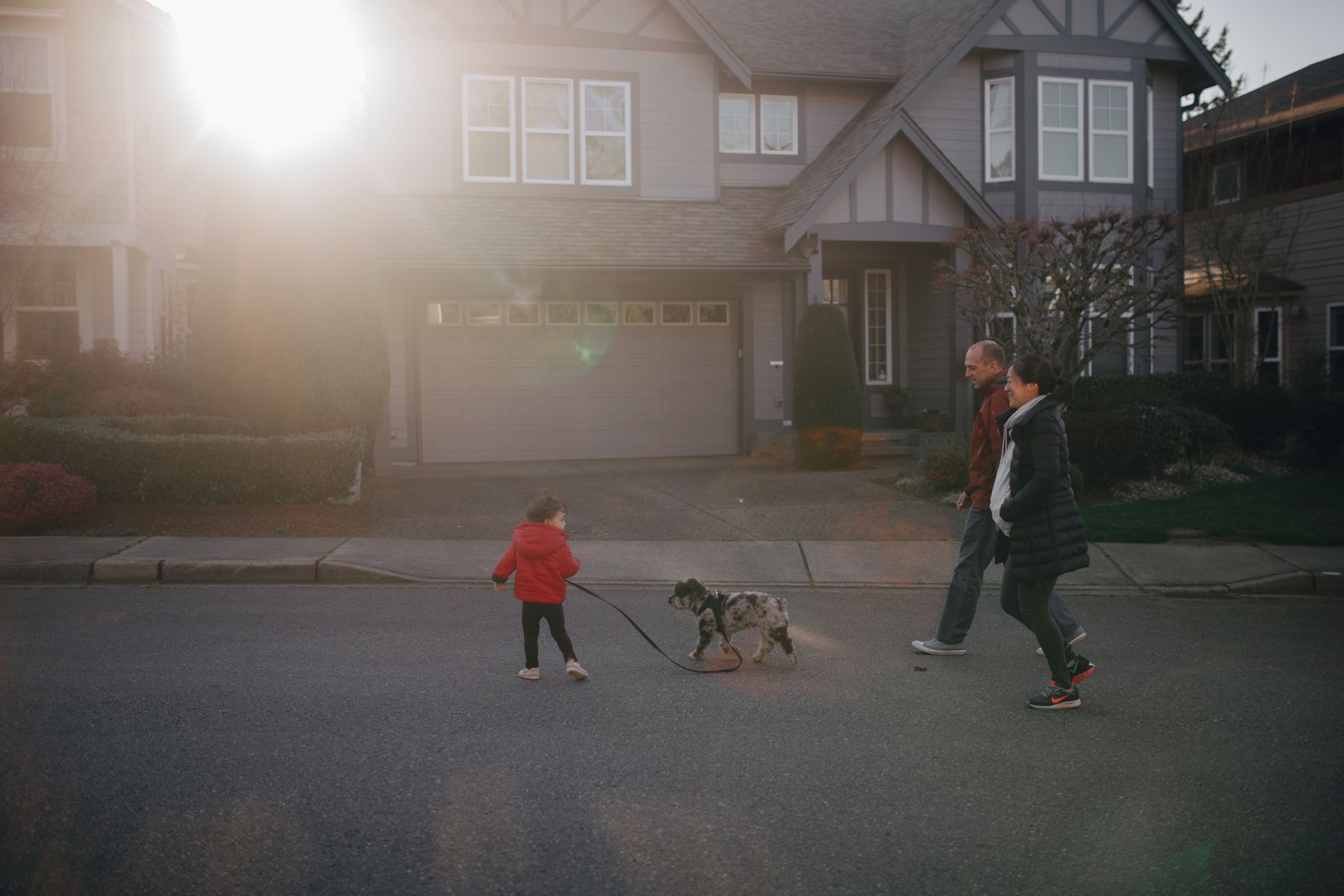
The same generation that rode in the back of station wagons without seatbelts, drank from garden hoses, and disappeared into the woods until the streetlights came on is now the generation most likely to be told they are bad at risk. Their adult children quote them statistics about helmet use and ask, with genuine concern, whether they really should be on a ladder at their age. The contradiction sits there, unresolved: the people who survived a childhood the current culture would call negligent are now treated as the ones who need supervising.
Most of the conversation about latchkey kids gets framed as either nostalgia or trauma. Either those afternoons made them resilient, or those afternoons made them lonely and hyper-independent in ways therapy is still untangling. Both framings miss what the people themselves keep saying when asked. The loss they describe is not safety they never had and not closeness they were denied. It is a specific kind of competence they were once asked to demonstrate daily, and which nobody asks them to demonstrate anymore.
What the unsupervised afternoon actually taught
A child who lets themselves into an empty house at 3:15 is, in that moment, the highest authority in the room. They decide whether the stove gets turned on. They decide whether the dog gets walked, whether the homework gets started, whether the sibling who is crying actually needs a Band-Aid or just wants attention. Decisions accumulate. By the time a parent walks in at 6, the child has made perhaps forty small judgments without consulting anyone.
This is not a romantic claim about character building. Research on former latchkey children finds the outcomes were uneven and heavily dependent on age, neighborhood, and how long the stretches actually were. Kids under ten left alone for extended periods reported more loneliness and fear. Adolescents who spent unsupervised hours with peers, rather than alone, showed more behavioral problems. A large study of 46,000 young adolescents found that those left alone for less than three hours at a stretch showed no major differences from supervised peers, while those left longer showed lower adjustment across multiple measures.
So the picture is not that benign neglect was secretly wonderful. The picture is that, within a tolerable window, children were being handed real problems with real consequences and asked to solve them. They burnt the grilled cheese. They learned not to. They lost the key. They learned where to hide a spare. They got into a fight with the kid across the street and had to negotiate the return walk to school the next morning without adult mediation.
The psychology of competence, and what happens when nobody asks for it
Self-determination theory, developed by psychologists Edward Deci and Richard Ryan, identifies three psychological needs that underpin well-being across cultures and life stages: autonomy, competence, and relatedness. Of these, competence is the one the current adult environment quietly starves. Autonomy is fine; most adults choose their own schedules, more or less. Relatedness is uneven but at least nameable. Competence, the feeling of being effective at something that actually matters, has been progressively outsourced.
Writing on motivation in remote work and education, researchers have pointed out that competence and mastery require continuous opportunity to demonstrate skill, ideally with feedback that confirms the demonstration mattered. Most adult environments now give the opposite signal. Software updates itself. Cars park themselves. Directions arrive on the phone. The grocery delivery shows up at the door. Each one removes a small daily occasion on which a person used to prove, to themselves, that they could handle a thing. The convenience is real. So is what it costs.
The result is a population of adults whose hands remember things their lives no longer require. They know how to read a paper map. They know how to fix a toilet float without watching a video. They know how to talk a frightened younger sibling into calming down because they had to, at eight years old, on a Thursday afternoon. None of this comes up.
Why the mourning is quiet
People do not generally complain about being kept safe. The framing of the loss is awkward because the gains of the current era are real and obvious. Childhood mortality is down. Car-seat regulations save lives. Locked doors prevent break-ins. To say out loud that something has been lost feels like arguing for the return of preventable tragedy, which is not the argument anyone is actually making.
So the mourning shows up sideways. It shows up when a sixty-two-year-old insists on changing her own tire in a parking lot while her adult son hovers with a phone, ready to call AAA. It shows up when a man in his fifties spends a whole Saturday building a shed he could have bought assembled, and then refuses to explain why this mattered. It shows up, sometimes, in the strange flat moment when a partner asks what you want for your birthday and you cannot answer, because the question assumes a kind of wanting that the rest of life no longer rewards. We’ve explored elsewhere how people who learned early not to need anything often find adulthood does not give them the vocabulary back.
Risk as a relationship, not a quantity
The current culture talks about risk as if it were a number on a dial: more is bad, less is good, optimization is the goal. This is the wrong frame. The latchkey generation learned risk as a relationship. You walked the dog at dusk and there was a chance the dog would bolt. You climbed the tree and there was a chance you would fall. The chance was real. You learned to read the limb, to test the branch, to come down before the light went. The competence was in the calibration, not the avoidance.
This is closer to what developmental psychologists describe as autonomy support. Work compiled in Nature’s review of parental autonomy support finds that adolescents whose parents encouraged them to make their own choices, express viewpoints, and develop self-regulation showed lower levels of internalizing and externalizing difficulties, stronger motivation, and more constructive peer relationships. The mechanism is the satisfaction of basic psychological needs: feeling effective, feeling connected, feeling like the author of one’s own decisions.
The latchkey arrangement was not autonomy support in any deliberate sense. Most of those parents were not reading parenting literature. They were working. But the structural effect, within the tolerable window, mimicked it. The child was treated as someone whose judgment could be trusted on a small set of real problems, and was given the chance to find out whether the trust was warranted.
The complicated inheritance
None of this is to flatter the generation. The same childhood that produced competence also produced patterns that the people who lived them now describe with less affection. Hyper-independence. Reluctance to ask for help. The reflex to handle a crisis privately and present the resolution, never the process. A worker who sits with a problem for three days rather than send the email that would solve it in twenty minutes. A parent who cannot accept a meal from a neighbor.
This is the underside of being eight years old and in charge of the house. The child who succeeds at independence often does not know how to stop succeeding at it. The same pattern shows up in adults who, as spent childhood reading every signal for what someone needed from them, never developed the muscle for asking what they themselves needed back. And many of these adults grew up watching their parents do the same with money, with feelings, with everything. There is a particular cohort that carries a low background fear of running out for decades past the point where their household balance sheet has any business producing it. The competence and the wound are often the same thread.
What the current world actually asks for
An adult navigating the present is mostly asked to manage interfaces. To choose between options that someone else designed. To wait on hold. To verify identity. To accept a software update. To click through a terms-of-service agreement. To find the right form. The skills that get rewarded are patience with bureaucracy, tolerance for waiting rooms, fluency with logins.
These are not really skills. They are forms of submission dressed up as competence. The latchkey kid learned to assess and act. The current environment rewards assessing and submitting a ticket. The mismatch produces a particular flavor of low-grade frustration that the people experiencing it often cannot name.
Writing on values, identity, and purpose, psychologists have noted that outward success often feels disconnected from a deeper sense of purpose when the daily activities of a life no longer require the skills the person identifies with. The competent eight-year-old still lives inside the fifty-year-old. There is just nowhere to put her.
What to do with the inheritance
The honest answer is that you cannot recreate the conditions that produced the competence, and you probably should not want to. The unsupervised afternoon was not a curriculum. It was a byproduct of an economy that needed both parents working before after-school care had caught up. The children who turned out well turned out well partly through accident, partly through the temperament they brought to it, and partly through the specific neighborhood that surrounded them.
What can be done is smaller and more private. The adults who feel the loss can notice where they have outsourced things they did not need to outsource, and take some of them back. Not as a performance. As a way of giving the old muscle something to do. Fixing the leaking faucet rather than calling. Cooking from a recipe rather than ordering. Walking somewhere rather than driving. None of this is a moral act. It is an attempt to give the part of the self that knew how to handle things a real thing to handle.
The other thing that can be done is to stop treating the children currently in the household as fragile. Within the tolerable window. The research is fairly clear that gradual independence, introduced in age-appropriate increments, with clear rules and a reliable adult to come home to, produces better outcomes than either constant surveillance or abrupt abandonment. A nine-year-old who walks to the corner store and back has been given something. The same nine-year-old whose every minute is supervised has had something quietly taken from her.
The unspoken part
What the generation is mourning, when it talks about seatbelts and unlocked doors and afternoons their parents could not track, is not the absence of safety. It is the presence of a daily expectation that they could be counted on. The world counted on them at eight in a way it does not count on most adults at fifty.
Competence, in the current arrangement, has been redefined. It used to mean the capacity to handle a real problem with real consequences. Now it means the capacity to navigate someone else’s system without complaint. A person who can sit on hold for ninety minutes, click through six menus, and arrive at the correct department is considered to have done well. A person who fixes the thing herself is considered eccentric, or worse, untrusting of professionals.
This is not a smaller way of living. It is a different thing entirely, wearing the same word. The latchkey generation is not mourning danger. It is mourning the version of itself that the world used to require, and quietly noticing that the replacement is not competence at all. It is endurance.
