

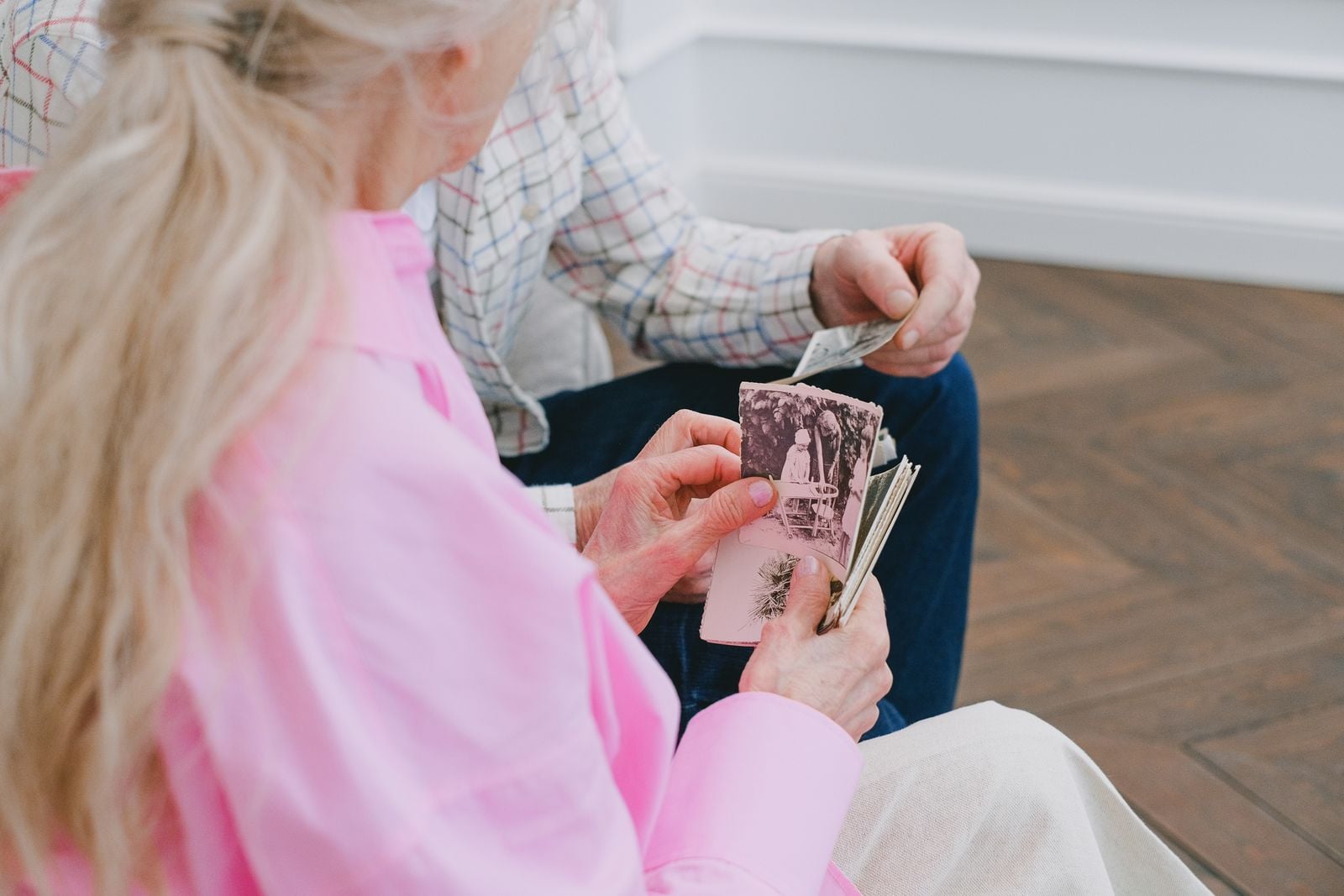
Long marriages are often described as a battle against conflict or boredom. Sometimes the stranger challenge is quieter: living beside someone who has changed so gradually that their partner remembers versions of them that no longer seem present.
That can feel like grief, even though no one has died and the relationship may still be intact. The person is there. An earlier version of them survives mainly in memory.
Marriage advice usually frames lasting love as a test of patience or communication. Stay curious. Keep talking. Schedule the check-ins. All of that can help. But decades together also mean two people changing in increments neither can fully see in themselves, and the marriage becomes an ongoing practice of releasing old expectations and learning the person who is present now.
The witness problem
Many long marriages create an asymmetry of memory. A spouse may be the only person who knew their partner at twenty-six, thirty-four and forty-one, and who can see the full arc between those years. Friends and siblings hold fragments. The marriage holds a longer reel.
When someone becomes quieter after a job loss, harder after a parent dies or softer after an illness, their partner often carries the clearest archive of who they were before. Change feels gradual from the inside. The person standing beside it has a comparison point.
Caregiving and bereavement research offer one language for this tension, but ordinary personality change is not the same as dementia, disappearance or bereavement. The resemblance is emotional: someone can be present while a familiar way of being has receded.
Why the drift can feel like grief
Grief is usually associated with absence. Long relationships can produce a softer, less formal version of it: sadness for routines, dreams or traits that once shaped the marriage and no longer do.
Family researcher and clinician Pauline Boss coined the term ambiguous loss in the 1970s. Her early research focused on families of service members missing in action; later work examined psychological absence in conditions including dementia. In an ordinary marriage, the concept is best used as a lens rather than a diagnosis. It offers language for the uneasy combination of presence and absence without turning normal change into a disorder.
There is no funeral for the person who used to sing badly in the car. There is no formal goodbye to the version who wanted to move to the coast. They may still be making toast in the next room. They may simply not be that version anymore.
The couple has changed too, not just the individuals
Long marriages accumulate more than two changing people. They accumulate a changing us.
Psychologist Mark Travers has written about research on marital storytelling, in which recurring stories can express both an individual identity and a shared couple identity. That shared narrative is built from rituals, private references, remembered crises and the small moments that gradually become part of a couple’s private language.
Relationship researchers John and Julie Gottman use the term bids for connection for everyday attempts to reach toward a partner. Their framework also emphasises “Love Maps”: continuing to learn a partner’s hopes, stresses and inner world. Knowing the person who is here now is part of maintaining the relationship, not a task completed in its first years.
That scaffolding can help a couple keep functioning as both people change. It can also sharpen the sadness, because the shared story makes change visible. Nobody else may notice that a husband stopped telling the joke about the ferry. His spouse does. It can feel like a tiny bereavement no one else would think to attend.
What happens when the archive grows too heavy
Sometimes the distance between remembered and present selves becomes part of a larger relationship crisis. But population statistics cannot explain why any one marriage ends.
Family researchers Susan L. Brown and I-Fen Lin reported that 36% of U.S. adults who divorce are 50 or older. They also found that adults 65 and older were the only age group whose divorce rate was increasing.
That trend is real, but it does not show that later-life divorce is usually caused by mourning an earlier version of a spouse. Longer lives, financial independence, caregiving, an empty nest, changing expectations and long-standing conflict can all matter. For some couples, a growing sense of unfamiliarity may be part of the story. It should not be presented as the typical explanation without evidence.
Sometimes the archive does feel too heavy. The gap between the remembered person and the present one can become another room in the marriage, and not every couple finds a way to live in it together.
The couples who stay, and what they seem to do differently
Couples who stay connected across decades do not have to pretend that nobody changed. What appears to help is continuing to update their knowledge of each other.
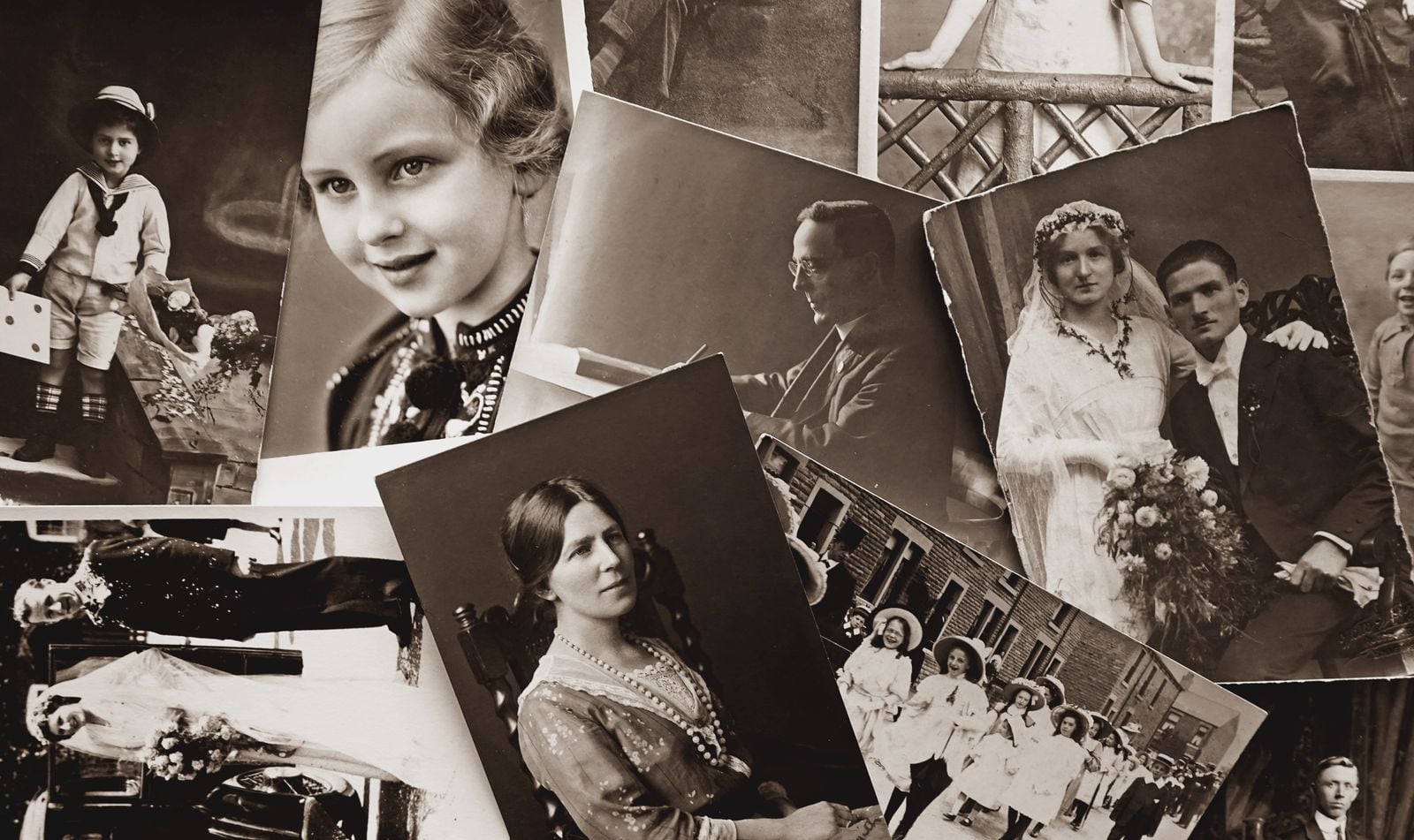
Curiosity becomes a discipline. Instead of treating a partner as an archived document, each person keeps asking some version of: Who are you this year? What matters now? What has become harder? What has started to feel possible?
Those questions do not stop change. They keep the archive current. A spouse is less likely to mourn only the person from 2004 when they have also been getting to know the versions from 2019, 2023 and 2026.
The strongest long marriages are not necessarily the ones in which two people stay recognisably the same. They may be the ones in which both people are allowed continuous revision without every change being treated as a betrayal of the original agreement.
The versions people cling to
The earlier version of a spouse is not only their earlier self. It is tied to the earlier version of the person who loved them: the self who chose, was chosen and imagined a particular future.
Grieving an earlier partner can therefore mean grieving an earlier self too. It can mean letting go of a future once assumed to be fixed, along with the person who expected certain doors to remain open.
That may be why people reread the same novels, rewatch the same winter films or keep a jumper their partner has not worn in fifteen years. Those gestures can be less about refusing the present than checking in with an earlier self that few other people remember.
What the grief may be asking
The instinct, when a spouse becomes unfamiliar, is often to pull them back. It can show up as pressure to make the old joke, revive the old plan or return to a version of themselves that once fit the relationship more neatly.
That pressure can feel less like love than correction. The present-day person is being measured against a specification written decades earlier by someone who has also changed.
The harder move may be to acknowledge the sadness without using it as evidence that the partner has failed. That means making room for the earlier version in memory while reintroducing oneself to the person actually in the room.
Long-term couples can build something that new couples have not yet had time to build: a shared reality capable of absorbing transformation. The goal is not identity preservation. It is shared meaning across identity change.
The private honour of being someone’s witness
There is something worth naming here, even if it sounds sentimental. Remembering who a spouse used to be can become a form of custodianship that few other relationships offer.
A long-term partner may hold a version that no photograph captured, no friend fully knew and no child ever met. They may be one of the last living witnesses to a person who once existed in exactly that form. The sadness of that can be real. So can the privilege.
Long marriages, at their best, become an agreement to hold those earlier versions without forcing anyone to return to them: to remember the person at twenty-nine and to be remembered as the person at thirty-one, even when neither remains exactly the same.
That is not the same as being stuck in the past. It is closer to loving someone across change: keeping an older version safe in memory while meeting the present version without demanding that they become a replica.
The quiet work of staying
Couples who navigate the long drift often do a particular kind of work. They allow sadness without weaponising it. They notice changes without demanding a reversal. They keep getting to know a partner who is no longer exactly the person they married and was never going to remain so.
They keep the archive. But they do not confuse it with the person making dinner.
That may be one of the hardest parts of a long marriage: being a witness to slow transformation and choosing, year after year, to stay in the room and learn who is there now.
Sometimes the discovery is that the present-day person is still worth loving. Just differently. Just now.
