

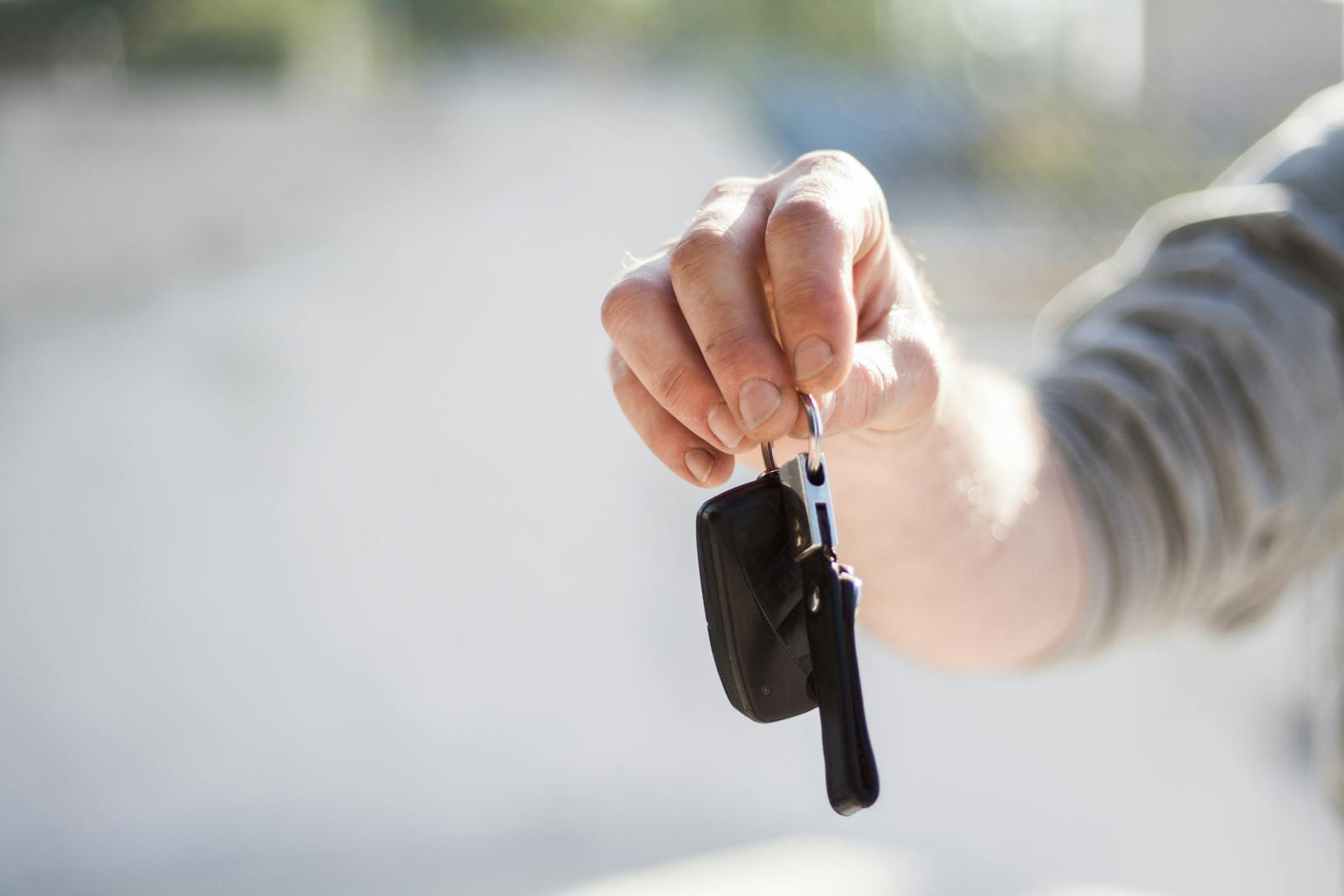
She arrives in her own car. She always does. The driveway is full, the porch light is on, and she parks one street over so she can leave without anyone having to move. Inside, someone offers to drive her home later. She smiles, lifts her keys an inch out of her pocket, and says she’s already set.
Most people read this as independence, or sometimes as a mild social quirk. A friend who always shows up in their own car. A cousin who declines the carpool offer year after year. A partner who books a separate Uber even when the destination is identical.
But that framing can miss the feeling underneath. For some adults, driving themselves is not only about preference. It is about having an exit. And the need for an exit was often learned somewhere specific, usually long before they had the language to explain it.
The car is not the point. The control is.
In a household where adult moods determined the temperature of the room, being stuck somewhere could become its own kind of dread. Not dramatic danger, necessarily. Just the slow recognition that a child could not leave when the air shifted, when a parent started drinking, when an argument began in the front seat on the ride home.
Children in those homes often do not develop a neat vocabulary for what is happening. They develop logistics. They notice who is driving, who is staying, who is already irritated, what the mood was when everyone got in the car, and what the mood is likely to be when everyone gets back in.
By adulthood, the logistics can harden into habit. The habit looks like independence because it produces the same external behavior. But the internal experience can be different. One person enjoys autonomy. Another person needs it to feel settled.

Why autonomy can feel non-negotiable
Self-determination theory, developed by Edward Deci and Richard Ryan, identifies autonomy, competence, and relatedness as three basic psychological needs. In that framework, autonomy is not simply a taste for doing things alone. It is the experience of acting with a sense of choice and willingness.
That distinction matters. A person who freely chooses to drive alone may simply like the quiet ride, the music, the route, or the chance to decompress. A person who feels unable to accept a lift may be responding to a much older lesson: that relying on someone else can quickly become uncomfortable, unpredictable, or costly.
The article is not claiming that every person who drives themselves has the same backstory. Some people are introverts. Some have work calls after dinner. Some have children, pets, sleep routines, or early mornings. But when the refusal is automatic, defensive, and out of proportion to the situation, the habit may be carrying more history than it first appears to carry.
Being on someone else’s clock
Accepting a lift means accepting a set of negotiations most people barely notice. The passenger leaves when the driver leaves. The passenger stops where the driver stops. If the driver wants to extend the evening, the passenger extends it. If the driver wants to get coffee on the way home, the passenger gets coffee. If the driver is angry about something that happened at dinner, the passenger sits inside that anger until the ride ends.
For someone who grew up watching adult moods govern the household weather, none of these are small. They can feel like a replay of the original problem. The grown-up version of being eight years old in the back seat, listening to an argument, knowing the next stretch of time is not fully theirs.
So the keys go in the pocket. The car gets parked where it can be reached without a long goodbye. The gathering becomes easier to enjoy because the exit has been built before the entrance.
What it can cost to never need a ride
The cost is real, even when it is invisible. The person who never accepts a lift may also struggle to accept help moving, help during illness, help during a difficult month, or help when life becomes too heavy to carry alone. Asking is a muscle. When it has not been used for years, it does not suddenly become easy just because adulthood has made some people safer to rely on.
A similar pattern can appear in people who volunteer for every airport run and every holiday logistics task. The role of helper becomes the only comfortable position from which to occupy a room. Driving yourself everywhere can be the same logic in reverse: if nothing is needed, nothing has to be owed. Both behaviors can come from a familiar place: a childhood or earlier life in which needing something came with a price.
The mood tax
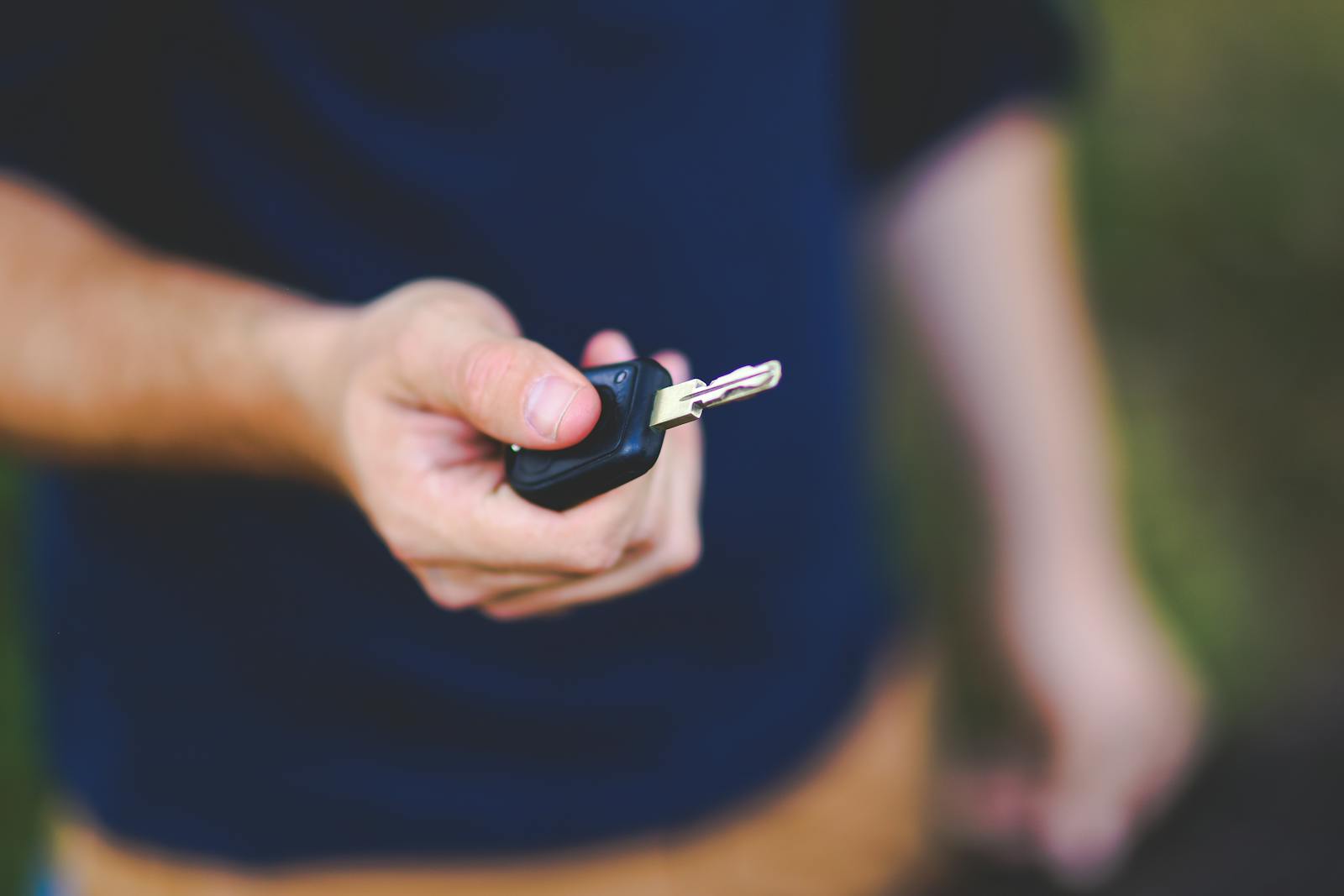
Some people grow up learning that every request carries a surcharge. A favor is rarely just a favor. Before asking, they have to read the room, judge the timing, soften the tone, prepare for irritation, and calculate whether the help will later be used against them.
A ride home can become an expensive favor in that kind of household. The passenger does not just owe gratitude. They owe pleasantness for the duration of the ride. They owe small talk if small talk is wanted, silence if silence is wanted, and careful attention to the driver’s mood. If that mood changes, they are stuck inside it.
The adult who insists on driving themselves may have done the math, even if not consciously. Fuel, parking, and an extra hour of attention can feel cheaper than the mood tax. Always.
Why this can show up in bigger patterns
The driving habit rarely shows up alone. It may travel with adjacent behaviors: separate bank accounts kept long after a relationship has stabilized, a tendency to travel alone even when it costs more, a refusal to be picked up from airports, a strong preference for living alone, or a need for a private room when traveling.
These habits are not automatically unhealthy. Many are reasonable, practical, and sometimes wise. The question is not whether a person likes control. The question is whether losing control over small things creates a reaction that feels bigger than the moment requires.
Adverse childhood experiences research has documented that childhood environments can undermine a child’s sense of safety, stability, and bonding, including environments affected by substance use, instability, violence, neglect, or other serious stressors. That does not mean every private habit in adulthood should be traced back to adversity. It does mean early environments can shape how safe dependence feels later.
A car is, among many things, a small zone of total control. The radio is theirs. The temperature is theirs. The route is theirs. The stop time is theirs. For someone who once had very little say, that small zone can feel enormous.
The problem with turning every habit into a wound
There is a tendency in modern online language to turn every protective adaptation into a dramatic label. That can flatten the truth. Some people drive themselves everywhere because parts of childhood were genuinely unsafe. Others do it because of one unreliable caregiver, one bad year, one repeated family pattern, or one ex-partner who made dependence feel foolish. Others simply like driving.
The behavior is the same. The story behind it is not.
The point is not to pathologize the habit. The point is to notice when the habit is no longer a preference and has become a rule. When a friend offers a lift to a wedding twenty minutes away and the response is reflexive, tense, and immediate. When the person has no practical reason to refuse, but the body refuses before the mind has time to consider the offer. That is when the rule may be doing more work than the situation requires.
The autonomy that was not fully chosen
Self-determination theory treats autonomy as a basic psychological need, alongside competence and relatedness. The need is not about never relying on anyone. It is about feeling that one’s actions are chosen rather than forced.
That helps explain the difference between healthy independence and guarded independence. The freely chosen kind says: this person drives because they enjoy the quiet ride. The guarded kind says: this person drives because the alternative feels intolerable.
From outside, the behaviors may look identical. The difference often appears only when the option is removed. A person with a simple preference may be mildly inconvenienced. A person with a hard protective rule may feel trapped before the evening has even begun.
What changes when the keys come out of the pocket
Unlearning this pattern does not mean forcing anyone to accept lifts they do not want. It means noticing the moments when accepting a lift would be reasonable, low-stakes, and possibly pleasant, then observing what happens internally when the offer is made. Often there is a small flash underneath the polite refusal. A fast spike of dread. A scan of the other person’s mood, schedule, likely route, likely conversation, and likely expectations afterward. That spike may be old information trying to protect the present. It may come from a time when being stuck with someone else really did mean being stuck with their mood. The car, in that sense, is not just a vehicle. It is a small inherited contract about who gets to decide when something ends. The feeling underneath the refusal is not stupid. It may simply be outdated, running a protocol the present no longer requires.
Over time, a person can become so practiced at refusing help that every refusal feels like a small victory. The result is someone who looks capable from the outside and quietly lonely from the inside.
The quieter version of the same story
Not everyone with this pattern grew up in an obviously unsafe household. Some grew up with parents who were unreliable about logistics, forgot pickups, arrived chronically late, or used rides as currency in family arguments. Some had caregivers who drove drunk. Some had parents who used the captive time of a car ride to deliver criticism that could not be escaped.
The mechanism can be similar even when the details differ. Once a child learns that being in someone else’s vehicle means being in someone else’s emotional weather, the lesson can stick. The car becomes a metaphor for the larger problem: depending on people who cannot be depended on can become its own kind of pain.
The adult version of that child is not necessarily antisocial. They show up to the gathering. They are warm at the table. They stay late, sometimes later than anyone. They may simply want to know, the entire time, that the keys are in their pocket and the car is parked where they can reach it without explaining themselves to anyone.
Here is the harder question. If a habit only looks like independence because the alternative was once unsafe, it is not independence. It is a leftover safety protocol wearing independence as a costume. Calling it strength flatters the adaptation and protects the original wound from being looked at directly. The keys in the pocket are not always freedom. Sometimes they are the last unbroken promise a child made to themselves about who would be in charge of the ride home.
Feature image by Negative Space on Pexels
