

Cancelling a plan you’d been dreading isn’t always avoidance, and it isn’t always anxiety wearing a clever disguise. Sometimes it’s the opposite. Sometimes it’s the first honest thing a person has done all month.
The standard reading goes the other way. Flakiness, fear of intimacy, social burnout, a generation that can’t sit through discomfort. All of that exists. But there’s another category that gets folded into those, wrongly, and it’s worth pulling apart.
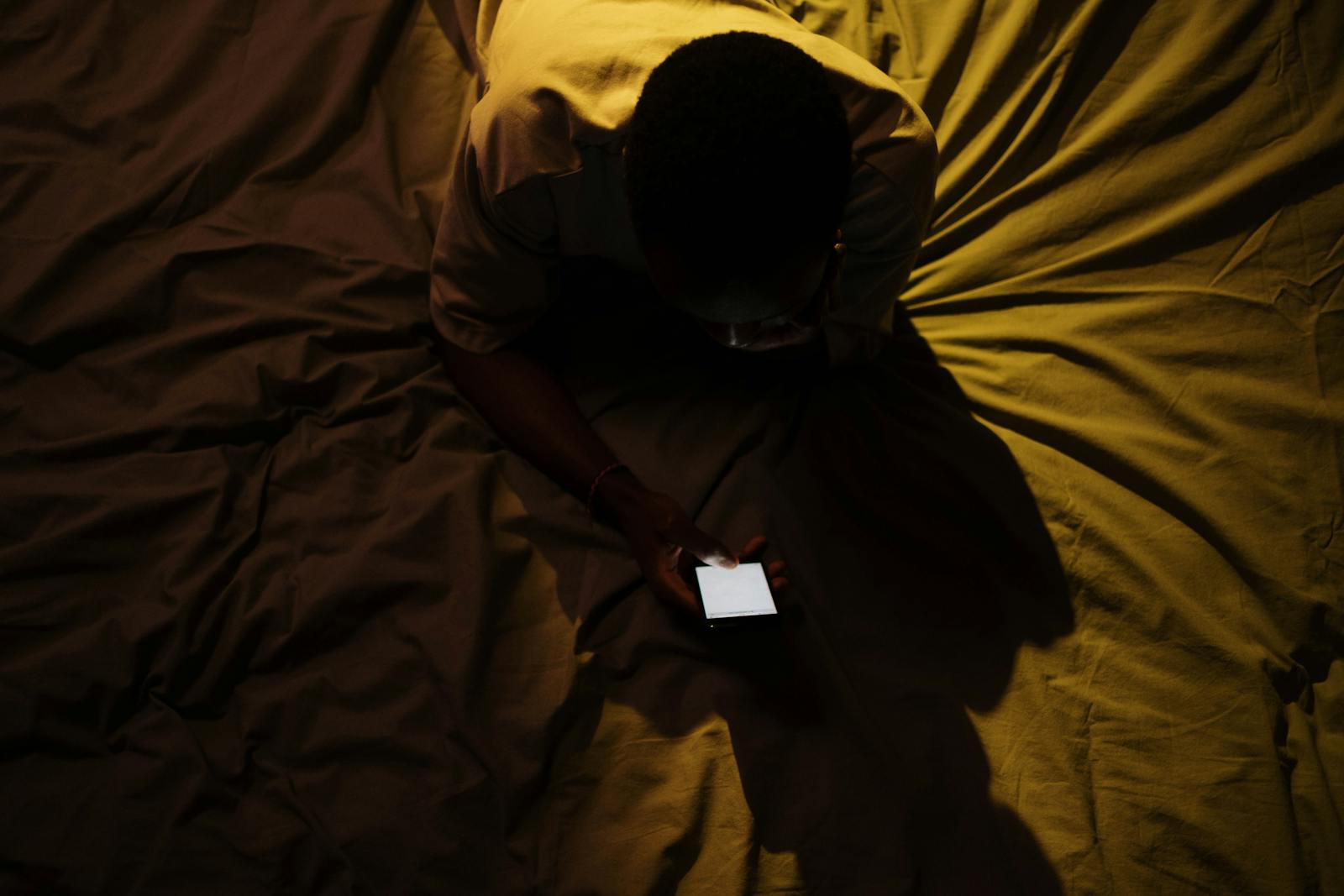
You sit on the edge of the bed at 6:47pm, already dressed, already running through the route in your head, and the dread sits in your chest like a small stone you’ve been carrying for fourteen days. Then you pick up your phone and type: so sorry, I’m not going to make it tonight. You don’t add a reason. You don’t invent a headache. You don’t build a whole small legal case for why you are allowed to stay home. And the moment you press send, something loosens in your shoulders that you didn’t know had been tight since the second Tuesday of last month. That feeling is not always laziness. It is not always flakiness. For some people, it is the relief of discovering that a no can stand on its own.
The myth that cancelling means failing
Most boundary advice treats cancellation as a moral problem to be solved. The conventional wisdom says: if you committed, you should go. If you don’t want to go, you shouldn’t have committed. Anything else is flakiness, immaturity, a character defect to be coached out of you. There is truth in that, up to a point. Other people’s time matters. Reliability matters. A pattern of cancelling at the last minute can damage trust. The framing isn’t wrong so much as incomplete: it assumes every yes was a real yes in the first place, that the original commitment was a clean act of will rather than a reflex performed under social pressure. That’s a generous assumption, and for a lot of people it doesn’t hold. A lot of yeses are not really agreements. They are the sound a person makes when they have learned to fill silence with availability.
The relief that follows a cancelled plan is not always relief from the plan itself. Sometimes it is relief from the version of yourself you had to become in order to say yes to it.
What the dread has been doing all week
For two weeks, your mind has been rehearsing the evening. The drive there. The conversation you’ll have to carry. The energy you’ll have to find at hour three. The moment when you will want to leave but feel rude for being the first one to stand up.
Psychology writing often describes this kind of pre-event worry as anticipatory anxiety: the anxious loop that starts before something has actually happened. The label is useful here not because every dreaded dinner is a mental-health event, but because it captures something ordinary and recognisable. Sometimes the imagined version of an event takes up more space than the event itself.
By the time the day arrives, you may feel as if you have already gone. You have already pictured the small talk. You have already managed the awkward pause. You have already spent the energy in advance.
So when you cancel, the relief can feel strangely large compared with the actual plan.
It was not just one evening you were dreading. It was the accumulated cost of carrying that evening around for fourteen days. In that sense, cancelling does not simply clear the calendar. It gives back the part of the week that had been quietly rented out to dread.

The excuse economy
Notice what happens when many people try to cancel something. The first thing the mind does is construct a reason. Not necessarily the most honest one. Just the most acceptable one. A migraine. A work thing. A family obligation. Something that sounds serious enough to pass inspection.
This is the excuse economy, and a lot of adults have been living inside it since childhood. The unspoken rule is simple: a no, on its own, is insufficient. A no must be paid for with a justification that the listener can understand, verify, and approve. Otherwise it can feel like rudeness. Selfishness. Abandonment. A personal rejection disguised as a scheduling decision.
People who grew up around adults who treated ordinary refusals as betrayals often learned this early. You couldn’t just not want to go to your aunt’s house. You had to be sick. You couldn’t just want to stay in your room. You had to have homework. The reason had to be unimpeachable, because anything less could be treated as an insult.
Decades later, the same person is staring at a phone at 6:47pm trying to invent a credible reason to skip dinner. The friend may not even mind. But the old habit of needing to earn the no is older than the friendship.
Why “I just don’t want to” can feel impossible
Self-determination theory, developed by Edward Deci and Richard Ryan, identifies autonomy as one of three basic psychological needs, alongside competence and relatedness. Autonomy, in this context, is not rugged individualism. It is the experience of acting with a sense of choice rather than moving only under pressure from outside yourself.
That distinction matters because a no without an excuse can feel like a tiny act of autonomy. The decision does not need to be dressed up as an emergency. It does not need to be made more palatable. It comes from the simple recognition that your willingness is allowed to count.
For people who learned early that their preferences were negotiable but their behaviour was not, this can feel destabilising. Stating a preference without justification feels incomplete. The sentence keeps asking for a because.
The first few times you don’t provide one, it can feel like leaving the house without your wallet. Something essential seems missing.
Then, slowly, it can start to feel like the most honest thing you have said in years.
The difference between cancelling and avoiding
It matters to draw a real line here. Not every cancellation is healthy. Some cancellations are avoidance dressed up as boundary work, the kind that slowly narrows a life by keeping every uncomfortable thing at a distance.
So how do you tell the difference, when both feel like relief in the moment?
The answer often becomes clearer afterward. Avoidance tends to leave a residue: guilt, secrecy, a sense that you have dodged something you still need to face. The kind of cancellation this piece is talking about tends to leave something else: lightness, honesty, and a quieter sense that an internal signal finally got through.
One Forbes piece on boundary-setting styles makes a useful point: boundaries are not only about assertiveness. They are also shaped by how deeply a person absorbs other people’s emotions and how comfortable they are with disappointment.
That is why two people can make the same cancellation and have completely different experiences. One person sends the text and feels clear. Another sends the same text and feels cruel, even when the message itself was kind. Same behaviour. Different inner weather.
What the relief may be telling you
If cancelling produces a flood of relief that seems out of proportion to the event, that relief is information. It does not automatically mean the plan was wrong, or the friendship is bad, or you should start cancelling everything that feels inconvenient. But it may be worth listening to.
Maybe the friendship has been one-directional for longer than you wanted to admit. Maybe the dinner was really a performance review in disguise. Maybe the event was fine, but you were exhausted in a way that no single evening of small talk could fix.
The size of the relief can point to the size of the mismatch between what you agreed to and what you actually had room for. Small relief, small mismatch. A whole-body exhale, a larger one.
This is why push-through advice can be so limited. Pushing through a small mismatch is part of adult life. Pushing through every mismatch, week after week, is how people become resentful at friends they love, tired inside lives they chose, and strangely angry at invitations that were never meant to hurt them.

The first cancellation is the hardest
People who have spent years earning their nos with elaborate explanations often find the first plain cancellation surprisingly difficult. The text sits in the message field. The thumbs hover. A small voice says: they are going to think you don’t care about them.
Sometimes the other person may be disappointed. That part is real. A no does not become harmless just because it is honest.
But often, the reply is ordinary. No worries. Totally understand. Let’s reschedule. Life continues at a frequency you did not realise you had been distorting yourself to match.
One piece on the power of no frames saying no as a way of reclaiming peace. For chronic over-explainers, the simpler version may land harder: a no without an excuse is the first time you treat your own preference as load-bearing. You don’t have to be sick to skip the thing. You can just not want to go.
Why this lands harder at work
The excuse economy is often most entrenched in professional contexts, where an unjustified no can feel more dangerous. At work, people are rarely just declining a request. They are managing impressions: reliable, helpful, committed, easy to work with, not difficult.
Coaching on people-pleasing at work often focuses on declining requests with more clarity and less apology. That advice is useful, but the deeper pattern is not always about the request itself. It is about whether a person feels allowed to treat their own time as real before someone else validates it.
The over-functioner at the office has something in common with the friend who cannot cancel dinner. Both are trying to avoid becoming the person who disappoints someone. The script changes. The reflex does not.
The wider pattern of trained endurance
A dreaded dinner may sound small, but small commitments are where larger patterns become visible.
For two weeks, you tolerated the future evening. You absorbed the dread, distributed it across afternoons, and treated it as the cost of being a reliable person. The cancellation interrupts that pattern in miniature.
That does not mean every discomfort should be avoided. Some plans are worth keeping even when you feel tired. Some friendships need the effort. Some commitments matter precisely because they are not always convenient.
But there is a difference between effort and self-erasure. There is a difference between showing up because something matters and showing up because you cannot bear the feeling of being allowed to choose. Once you have felt the relief of one honest no, it becomes harder to ignore the places where your yes has become automatic.
What to do with the relief
Don’t immediately talk yourself out of it. Don’t rush to schedule a make-up dinner just to cancel out the guilt. Don’t text three more times to over-apologize until the no has been softened into something barely recognisable. Sit with it for a moment. Notice what your shoulders did. Notice that the world did not end. Notice that the friendship, if it was sturdy, is still there in the morning.
And then notice the next thing, which is harder. The relief from one cancellation is clean. The relief from the third, the seventh, the twentieth begins to feel less like a signal and more like a habit. At some point, the same exhale that meant honesty starts to mean something else, and you may not catch the moment it changes.
That’s the part nobody quite tells you. The internal compass that pointed so clearly the first time can drift. Some weeks the relief will be calibration. Some weeks it will be avoidance wearing the same face. The honest no and the easy no can look identical from the outside, and occasionally from the inside too.
Maybe that’s the point you have to live with. The no, finally, did not have to be earned — and now you are left to figure out what it costs when it doesn’t.
Feature image by cottonbro studio on Pexels
