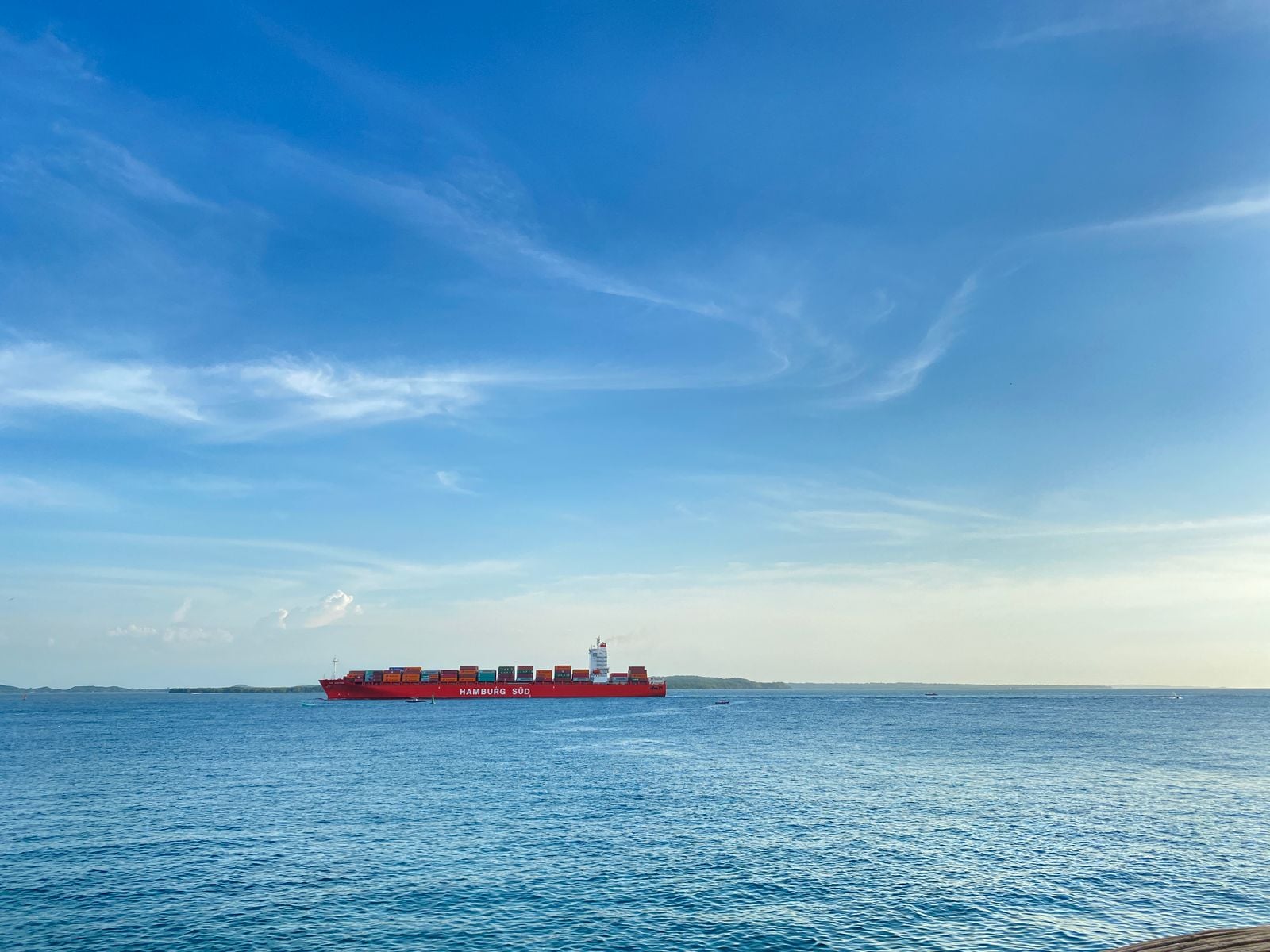
Four QatarEnergy-controlled tankers were transiting the Strait of Hormuz on Monday — the largest single-day movement of empty Qatari hulls through the waterway since the US-Iran war began in late February. According to Bloomberg reporting carried by Energy Connects on 22 June, the move follows a tentative US-Iran interim peace agreement that has partially reopened the strait after roughly three months of near-total closure.
The timing is the story. The transits began the day after an explosion at the Barzan facility inside Ras Laffan Industrial City injured dozens during start-up operations, and that sequencing tells you more about the pressure QatarEnergy is under than any official statement could. Qatar declared force majeure on LNG deliveries in early March after Iranian strikes hit its liquefaction facilities and blocked its only export route. The country halted output early in the conflict after attacks on its vast liquefaction facilities and the closure of the strait, which blocked its route to international markets. It has not delivered meaningful volumes to buyers outside the region since.
The empty ships are the tell. A loaded LNG carrier leaving Ras Laffan is a contract being fulfilled. An empty one steaming back into the Gulf, through a waterway that has been functionally closed since March, is a bet on the durability of the corridor, and on the urgency of resuming exports after three months of near-zero international revenue.
Why the empty leg matters more than the full one
LNG shipping is a closed loop. A cargo leaves Ras Laffan, sails to a regasification terminal in Europe or Asia, discharges, and the same hull returns in ballast to load again. Break the return leg and the entire export chain stalls within days, because Qatar’s storage tanks at the loading jetties fill up fast.
So when Qatar paused loaded and empty transits after the strait closed in March, it was effectively cutting its forward export capacity at both ends. The decision to resume empty-ship transits now, following the US-Iran peace framework, signals that QatarEnergy’s risk committee has concluded the corridor is sufficiently functional to recommit capital to the return leg, even with negotiations still fragile.
That is a significant commercial statement, given what happened 24 hours earlier.
The Barzan explosion
On the evening of Sunday 21 June, an explosion and fire broke out at the Barzan gas supply facility inside Ras Laffan Industrial City during start-up operations. QatarEnergy confirmed there was an operational incident during the start-up of operations at Ras Laffan, which resulted in an explosion and fire at the Barzan local gas supply facility in the evening hours of Sunday, June 21, 2026. Qatar’s Interior Ministry reported 54 people injured and 18 missing, with search-and-rescue teams deployed across the complex.
Barzan primarily supplies domestic gas rather than LNG export trains, and officials said there was no hazardous leak threatening public safety. But the explosion occurred as QatarEnergy was in the process of recommissioning the world’s largest LNG export facility after months of war-related shutdown. The timing has introduced fresh uncertainty about how quickly the restart can proceed.
QatarEnergy had told customers it could restore about 50% of its production capacity within a month after safe navigation through the Strait of Hormuz is restored, and roughly 80% within two months. Those timelines are now under active review.
The chokepoint that almost never closes — until it did
The Strait of Hormuz carries a significant share of the world’s liquefied natural gas and seaborne crude. Qatar’s exposure is close to total: virtually every molecule of Qatari LNG leaves through the narrow passage between Oman and Iran.
There is no pipeline alternative of meaningful scale. There is no overland route. The strait is the business.
Iran’s Revolutionary Guard has threatened to close Hormuz repeatedly across the past two decades. In 2026, it followed through. The IEA described the resulting supply disruption as the largest in the history of global oil markets. Brent crude surged roughly 10–13% to around $80–82 per barrel at the onset of the conflict in early March, and European TTF natural gas prices spiked sharply on fears of extended Qatari outage.
Prices have since eased as US-Iran talks have progressed. US-Iran tensions saw Dutch natural gas prices — an international benchmark — rise early on Monday, however, a sign that the market’s nerves are not fully settled even as volumes begin to return.
What the pause actually looked like
The shutdown was not a cautious slowdown. Vessel tracking data through March and April showed Q-Max and Q-Flex carriers idling in the Gulf of Oman, anchoring off Fujairah, or diverting away from the strait entirely. Qatar has managed to export some cargoes, loading just over 300,000 tons of LNG in the week to June 19, the most since early March. That is still only about a fifth of levels before the US and Israel attacked Iran at the end of February.
The cost of three months of near-zero international exports is enormous. A Q-Max carrier earns nothing on a ballast leg at anchor. Multiply that across a fleet idling for weeks, add the contractual penalties and force majeure negotiations with buyers, and the financial pressure to resume the moment the corridor is even partially safe becomes acute.
The resumption is partly economic exhaustion. Empty ships earning nothing while burning bunker fuel are a balance-sheet problem. Empty ships earning nothing for three months are a crisis.
The wider gas market is pricing in the restart
European TTF futures have eased back from their early-conflict highs as the US-Iran peace framework raised hopes of a faster Qatari supply return. Asian JKM has followed. The relief is partial, not full: traders are still pricing a war-risk premium above pre-conflict levels, and the Barzan explosion has added fresh noise to an already uncertain picture.
But the curve has flattened. The market is no longer pricing a permanent Hormuz closure. It is pricing a bumpy partial reopening, with QatarEnergy as the single most important variable in the global gas balance.
That matters for European utilities heading into summer storage injection season. Germany, Italy, and the Netherlands had been bracing for a severe supply scramble. They now have a window to refill tanks at prices that, while elevated, are not catastrophic, assuming the Ras Laffan restart proceeds without further incidents.
The Iranian calculation
Iran closed Hormuz and paid a significant diplomatic price for it. The reasons it eventually agreed to a peace framework are well-rehearsed in energy-security analysis: Iranian crude itself transits the strait, the Revolutionary Guard’s naval assets are vulnerable to a sustained US Fifth Fleet response, and a prolonged closure was alienating China, which buys the overwhelming majority of Iran’s sanctioned oil exports.
Qatari LNG is, in a sense, a hostage that protects itself. Disrupting it inflicts severe pain on Asian buyers — India, Japan, South Korea, Pakistan — none of whom Tehran has an interest in permanently antagonising. The interim peace agreement reflects that calculus, even if it remains fragile.
Doha has its own diplomatic cover. Qatar hosted indirect US-Iran talks for years before the conflict, mediated the Gaza ceasefire negotiations, and maintains working channels with Tehran that few other Gulf states can match. That mediator role has concrete operational value when your entire economy sails past Bandar Abbas every day.
What Doha gains from moving fast
Resuming exports at the earliest possible moment, rather than waiting for full political clarity, is a competitive move as much as an operational one. Every cargo Qatar delivers while other suppliers are still navigating war-risk insurance reviews is a cargo that locks in a long-term buyer relationship.
QatarEnergy is in the middle of a multi-year expansion that will significantly increase its annual LNG capacity by 2030. Demonstrating that the supply line is resilient under extreme stress, including a three-month war-related shutdown followed by a rapid restart, is exactly the proof of concept it needs as it negotiates the final tranche of long-term offtake contracts with European and Asian utilities.
A reliability premium, in LNG, is measured in decades. Buyers signing 20-year contracts care more about whether the gas shows up after a Middle East crisis than they do about the headline price.
The shipping insurance question
War-risk insurance premiums for Gulf transits surged after the conflict began and have remained elevated. London market underwriters tightened their approach to new bindings for hulls transiting Hormuz at the height of the crisis.
The resumption of empty-ship traffic suggests those bindings have begun to loosen, or that QatarEnergy is self-insuring on the return leg. Either way, the friction cost is being absorbed somewhere, and the fact that it is being absorbed rather than causing a halt is itself a market signal.
Watch for freight-rate quotes in the back half of June. If the Baltic LNG rate index softens through the next two weeks, it will confirm that the insurance market has moved on. If it stays elevated, or rises on Barzan news, the resumption is more fragile than it looks.
The American shale angle
US LNG exporters had a significant windfall during the three-month Gulf shutdown, as European buyers scrambled for non-Gulf molecules. Cheniere, Venture Global, and Sempra all saw their cargo prices firm. Western energy companies benefited materially from Qatar’s outage. That advantage narrows as Qatari volumes return.
That narrowing matters for the politics of US export policy. The argument that American LNG is a strategic substitute for Gulf supply gets harder to sustain when Gulf supply demonstrates it can restart within weeks of a peace framework, even after the largest LNG supply disruption in history.
It also reshapes the negotiating leverage of long-term contract talks. European buyers who were paying crisis premiums for non-Middle East molecules three months ago are now reminded that the Middle