Roughly nine out of every ten public cloud workloads run on it. Every Android phone in every pocket boots it. The majority of the world’s supercomputers depend on it, and so does the flight software on SpaceX’s Falcon 9 boosters. The kernel doing all of this work was first uploaded to an FTP server by a 21-year-old student who thought it would never amount to much.
On 25 August 1991, Linus Torvalds, a second-year computer science student at the University of Helsinki, opened a text editor on his beige 386 PC and typed a message to the Usenet newsgroup comp.os.minix. The subject line read: What would you like to see most in minix? The first sentence has since been printed on T-shirts, framed in server rooms, and quoted at almost every open-source conference on Earth.
“I’m doing a (free) operating system,” he wrote, “just a hobby, won’t be big and professional like gnu.”
The hobby got bigger. It now runs a substantial portion of the world’s public cloud workloads, billions of active Android phones, the majority of supercomputers on the TOP500 list, and flight software on SpaceX’s Falcon 9 boosters.
The bedroom in Helsinki
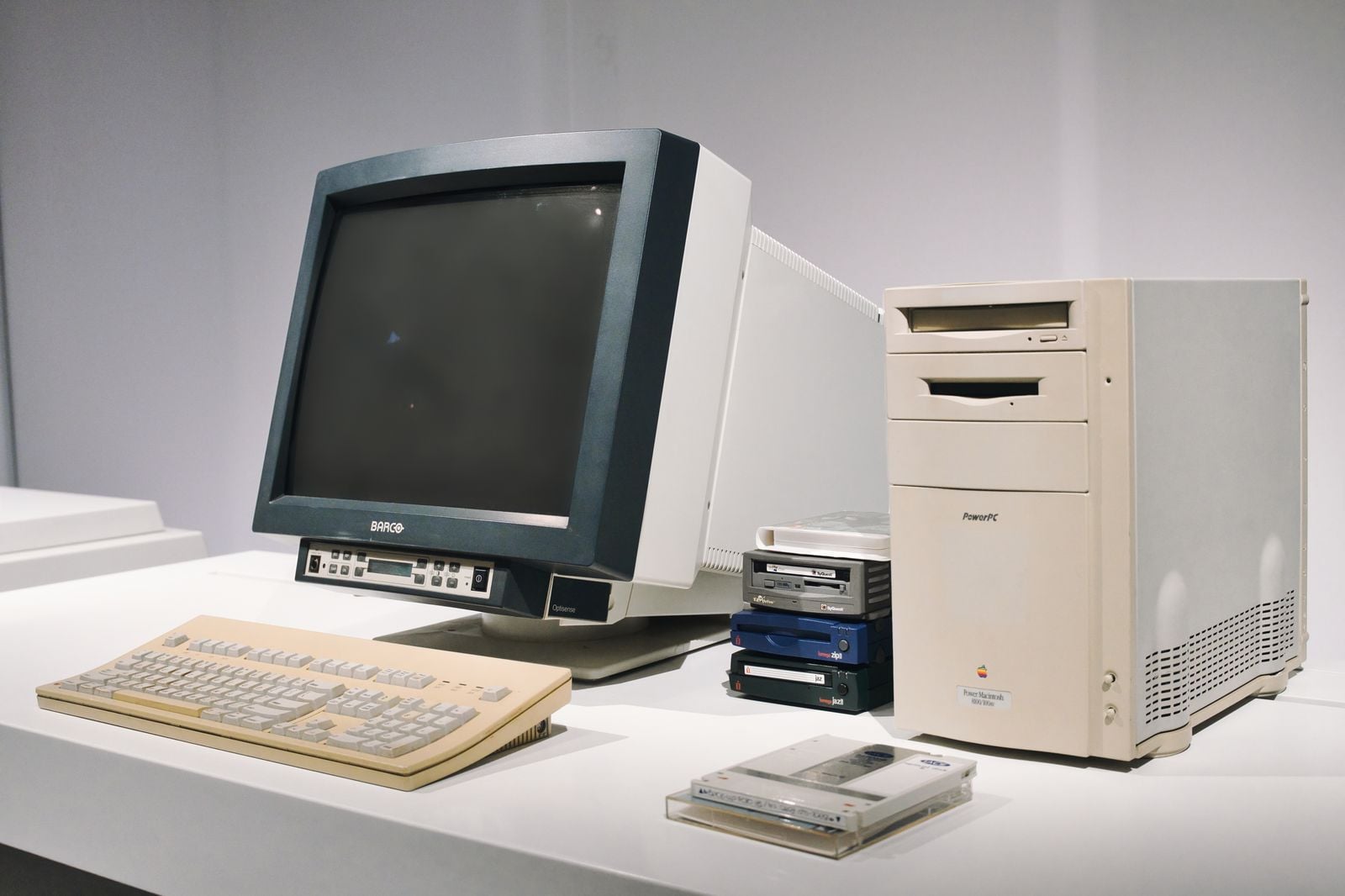
The machine Torvalds used to write the first version of Linux cost him 18,000 Finnish markka, paid in installments. It had an Intel 80386 DX processor running at 33 MHz, 4 megabytes of RAM, and a 40-megabyte hard drive. A modern smart light bulb has more memory. He bought it on 5 January 1991, partly with money from a student loan and partly with savings from a tax refund his father had been holding for him.
What he wanted was a Unix-like system he could run at home. The university had Unix on its mainframes, but undergraduates queued for terminal time. MINIX, the teaching operating system written by Andrew Tanenbaum at the Vrije Universiteit in Amsterdam, ran on PCs but was deliberately limited because Tanenbaum wanted students to read the whole codebase in a single semester.
Torvalds wanted more. He started by writing two small programs that switched the 386 between modes. One printed AAAA endlessly, the other printed BBBB. When he got them to alternate cleanly, he had something close to a task switcher. From there he added a terminal emulator so he could dial into the university computer from home. From the terminal emulator he added a disk driver so he could save files. From the disk driver he added a filesystem. By late August the thing booted, and it was no longer a terminal emulator. It was a kernel.
The Usenet post that aged badly
The famous message went out at 20:57:08 GMT. Torvalds asked what features people wanted in a Minix-like system. He noted his kernel was “nothing big and professional like gnu,” referring to Richard Stallman’s GNU project, which had been trying since 1983 to build a free Unix replacement and was still missing the most important piece: a working kernel.
The understatement was sincere. Torvalds genuinely did not think the project would scale. In the same message he warned that the code was “AT-harddisks” only and would “probably never support anything other than AT-harddisks, as that’s all I have.” Within six months people had ported it to SCSI drives, floppy drives, and a Finnish brand of tape backup nobody outside Helsinki had heard of.
On 17 September 1991 he uploaded version 0.01 to an FTP server at the Helsinki University of Technology, called ftp.funet.fi. The directory was originally going to be called “freax,” a portmanteau of “free,” “freak,” and Unix. Ari Lemmke, the FTP administrator, didn’t like the name and created a directory called ‘linux’ instead. Torvalds disliked it for being too egotistical but never got around to renaming it.
Why the kernel won
The technical reason Linux spread faster than every rival free Unix is mundane and decisive: it ran on the cheapest hardware most people already owned. BSD Unix was tied up in a lawsuit between AT&T and the University of California, Berkeley, that wasn’t settled until 1994. GNU’s own kernel, Hurd, was attempting a microkernel architecture so ambitious it has still not reached a stable release. Minix was restricted by Tanenbaum’s licence to educational use.
Linux had none of those problems. In December 1992, Torvalds switched the licence from his own home-brewed terms to the GNU General Public License version 2, written by Stallman. The GPL required that anyone who modified and distributed the code had to share their changes under the same licence. Companies could not lock the kernel up. Programmers could fix something on a Tuesday in Cape Town and have the patch reviewed in Helsinki on Wednesday.
The other reason it won was social. Torvalds was a brutal code reviewer but a patient maintainer. He let people fork, argue, send fixes, and rejoin. By 1994, when version 1.0 shipped, the kernel had contributions from roughly 100 developers across a dozen countries. By 2025 thousands of individual developers across more than 1,500 companies were contributing to the kernel, including Intel, Google, Huawei, Samsung, IBM, and Meta.
The Tanenbaum debate
In January 1992, Andrew Tanenbaum, the author of MINIX, posted a message to comp.os.minix titled “LINUX is obsolete.” He argued that Torvalds’s kernel was a monolithic design, with everything from the filesystem to the network stack running in one big address space, and that this was the wrong way to build operating systems. Microkernels, where each subsystem ran as its own isolated process, were the future.
Torvalds replied within hours. His answer is one of the most quoted threads in computing history. He conceded the academic point about microkernels but argued that a monolithic kernel was easier to write, easier to debug, and crucially, it actually worked on hardware people already owned. The argument turned personal at times. Tanenbaum told the 22-year-old student he would have received a failing grade for the design.
Thirty-four years later, the macOS kernel is a hybrid, Windows NT is a hybrid, and Linux is still monolithic. Tanenbaum’s microkernel ideas live on in seL4 and in some embedded systems, but the kernel that boots when you turn on a Pixel phone in Lagos or a Tesla in São Paulo is the one the failing student wrote.
The hobby that ate enterprise computing
The shift from hobby to infrastructure happened between roughly 1998 and 2003. IBM announced in 2000 that it would invest a billion dollars in Linux development. Oracle ported its database. Google, founded in 1998, built its entire search index on commodity x86 servers running modified Linux kernels. When Andy Rubin’s small startup Android Inc. was looking for an operating system to put on a touch-screen phone, they chose Linux because it was free, modifiable, and ran on the low-power ARM chips they were targeting. Google bought Android in 2005.
By 2025, the kernel powered critical infrastructure including the New York Stock Exchange matching engine, air traffic control systems, and in-flight entertainment screens on most long-haul aircraft. The International Space Station switched its laptops from Windows XP to Debian Linux in 2013, citing reliability. The Large Hadron Collider’s data acquisition runs on Scientific Linux. The James Webb Space Telescope’s ground control software runs on Red Hat Enterprise Linux.
The unlikely social architecture
What is harder to explain than the code is the way the code gets written. The Linux kernel is now tens of millions of lines, and yet the patch flow has not collapsed under its own weight. The kernel stands as one of the most successful examples of distributed coordination without traditional hierarchies, demonstrating how thousands of strangers, separated by language and time zone, manage to ship working software on a regular release cadence.
Part of the answer is the maintainership tree. Torvalds himself reviews a tiny fraction of patches. Most flow through about a dozen senior lieutenants. Greg Kroah-Hartman handles stable releases, David Miller historically handled networking, Andrew Morton handles the memory management subsystem, and each of those people delegates further. By the time a patch reaches Torvalds it has usually been reviewed by three or four people who know the subsystem better than he does.
There is a psychological subtext to the hobby framing that has persisted in Torvalds’s interviews for three decades. He has repeatedly described himself in modest terms, attributing the success to timing and to other contributors. The pattern is familiar to anyone who has read the literature on impostor syndrome, the persistent feeling that achievements are not really earned. Whether Torvalds has it is anyone’s guess, but the rhetorical posture of “just a hobby” has stayed remarkably consistent from the 1991 Usenet message to his most recent keynote talks. Research published in Scientific Reports in 2026 found that imposter feelings show statistically detectable but small effects on mental health outcomes across personality types, suggesting the phenomenon is more common than rare in high-performance contexts.
The pattern of leaders who maintain low-profile self-presentation while building world-changing systems has become something of a template in open-source governance. The Torvalds pattern of public modesty, ruthless technical standards, and refusal to monetise the core asset personally recurs across successful open-source projects.
What happened to the people on the original thread
Of the roughly 30 people who replied to Torvalds’s August 1991 post, several stayed involved with the kernel for decades. Lars Wirzenius, the fellow Swedish-speaking computer science student at Helsinki who had introduced Torvalds to Usenet years earlier, contributed what is widely considered the first non-Torvalds code in the kernel: the sprintf formatting routine that printk uses to render messages to the console. Wirzenius later worked at Canonical on Ubuntu and helped found the Linux Documentation Project. Bruce Evans, the Australian developer whose Minix-386 patches Torvalds had relied on, was the first person Torvalds thanked in the original release announcement, and went on to co-found FreeBSD.
Torvalds himself moved from Helsinki to Santa Clara, California in 1997 to work at Transmeta, then in 2003 to the Open Source Development Labs, which merged with the Free Standards Group in 2007 to become the Linux Foundation, and finally to the Portland, Oregon area, where he still lives. He works from home, mostly in a converted shed at the back of his garden. His daily workflow is reading email, applying patches with git, the version control system he wrote himself over a frantic two weeks in April 2005 after a dispute with the previous tool’s vendor, and writing terse review comments that have made grown engineers cry.
He has never taken equity in a Linux company. His salary comes from the Linux Foundation, which is funded by member dues from the same corporations that depend on his code. The licensing arrangement that lets Amazon Web Services bill customers billions of dollars a year for compute time also means Amazon must contribute its kernel modifications back to the commons. The hobby is still, technically, free.
The Helsinki dorm room where the first version was written has been demolished. The original 386 is preserved at the Helsinki University Museum in the main university building, switched off, the hard drive still containing the source code for version 0.01 in a directory called /usr/src/linux. The fan would whirr if you plugged it in. It would boot in about four seconds. It sits there quietly, unplugged, while the kernel it once held continues its work elsewhere.