

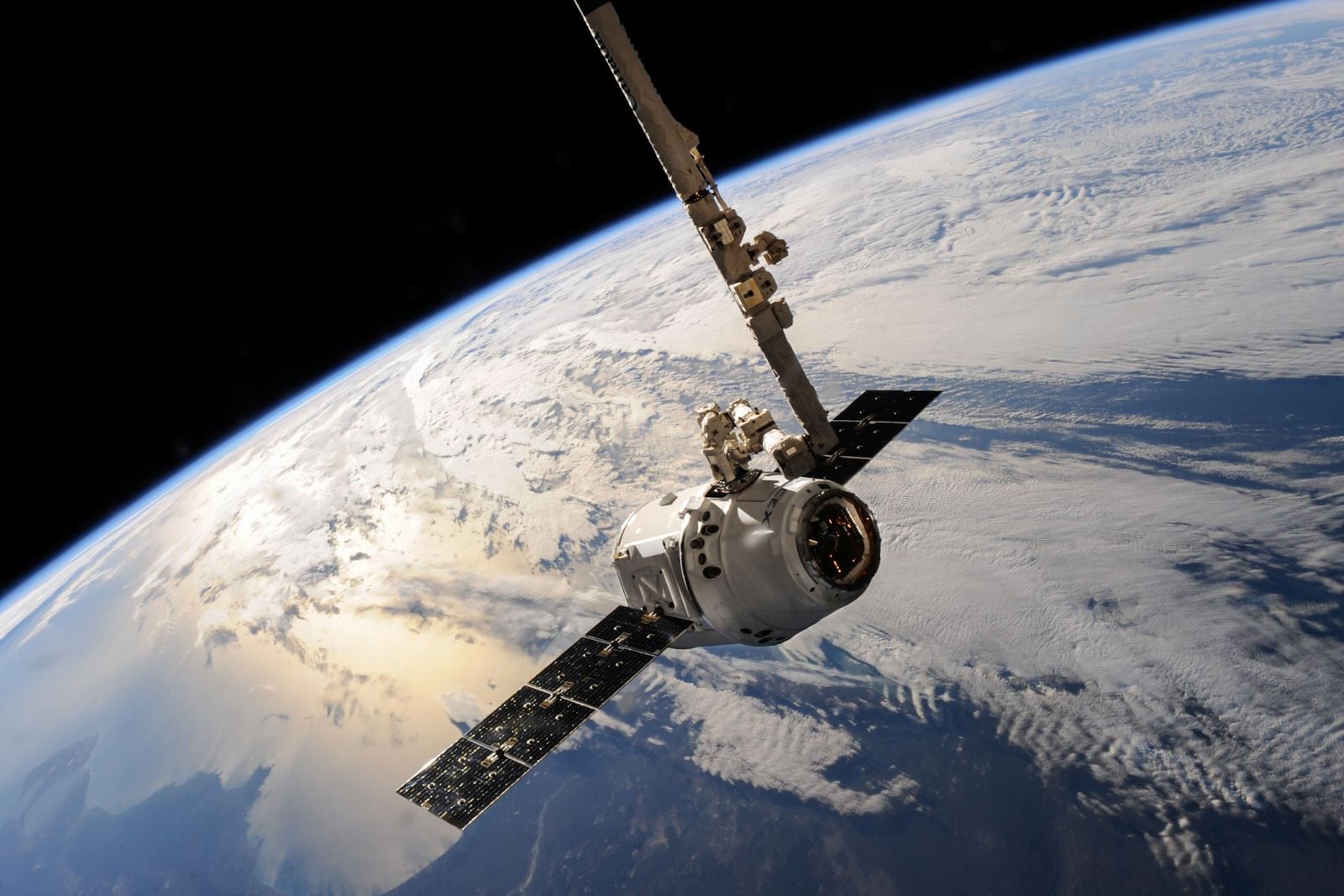
Astronauts can return from long missions several centimetres taller than when they launched. Scott Kelly came home from 340 days on the International Space Station about two inches — roughly 5 centimetres — taller. The gain was temporary: once Earth’s gravity began loading his body again, his spine moved back toward its pre-flight length.
That return is not a vertebral collapse. The spine is reloaded, balance systems must recalibrate, and the muscles that normally hold the trunk upright may be weaker after months of doing less work. The crucial point is that scientists have not proved one simple mechanism for the height change — and detailed MRI evidence does not support the claim that swollen discs explain the whole story.

The spring uncoils — but not for one simple reason
On Earth, intervertebral discs and the spine’s natural curves share the work of absorbing load. The discs are water-rich and change slightly through the day: standing and walking compress them, while rest allows fluid to return. That daily cycle is one reason many people are slightly taller in the morning than at night.
In microgravity, the sustained downward load disappears. The spine lengthens and its normal curves can flatten. For years, disc swelling was treated as the obvious explanation. But an MRI study of six NASA astronauts found no measurable disc swelling after long-duration flight. What it did find was a nearly 20% loss of mass in the paraspinal muscles that support, align and rotate the spine.
The study’s first author, Douglas Chang, then chief of physical medicine and rehabilitation at the University of California, San Diego School of Medicine, suggested that the extra height might instead reflect a loss of normal spinal curvature in an unloaded environment. A six-person study cannot settle the mechanism for every astronaut, but it makes any claim that the mechanism is simply “water” far too certain.
Scott Kelly was the subject — Mark stayed on Earth
Kelly’s mission is often described as a twin mission, but the twins were not together in orbit. NASA’s Twins Study kept Mark Kelly on Earth as the control subject while researchers followed Scott before, during and after his 340 days aboard the ISS.
After landing in Kazakhstan in March 2016, Scott described nausea, dizziness, aching joints, heavy fatigue and skin irritation. His extra height receded as his spine was loaded again. Some of the other effects of returning to Earth took longer to settle.
Re-entry is reloading, not a 48-hour collapse
Gravity starts loading the spine as soon as a returning crew is back in 1g. Height then trends toward its pre-flight level over the following hours and days. The vertebrae are not suddenly collapsing onto one another; an unloaded, somewhat straighter spine is being compressed again as its familiar curves return.
The injury question is more complicated. Astronaut studies have reported frequent back pain during flight and a higher incidence of disc herniation after spaceflight, but the precise causes remain unsettled. Paraspinal muscle loss offers one plausible concern: the spine is carrying weight again while some of the muscles that stabilise it are weaker than they were at launch.
That is different from claiming that freshly “re-pressurised” discs must give way. Post-flight backs can be vulnerable, and rehabilitation matters, but the evidence does not justify presenting a two-day spinal collapse as a universal biological sequence.
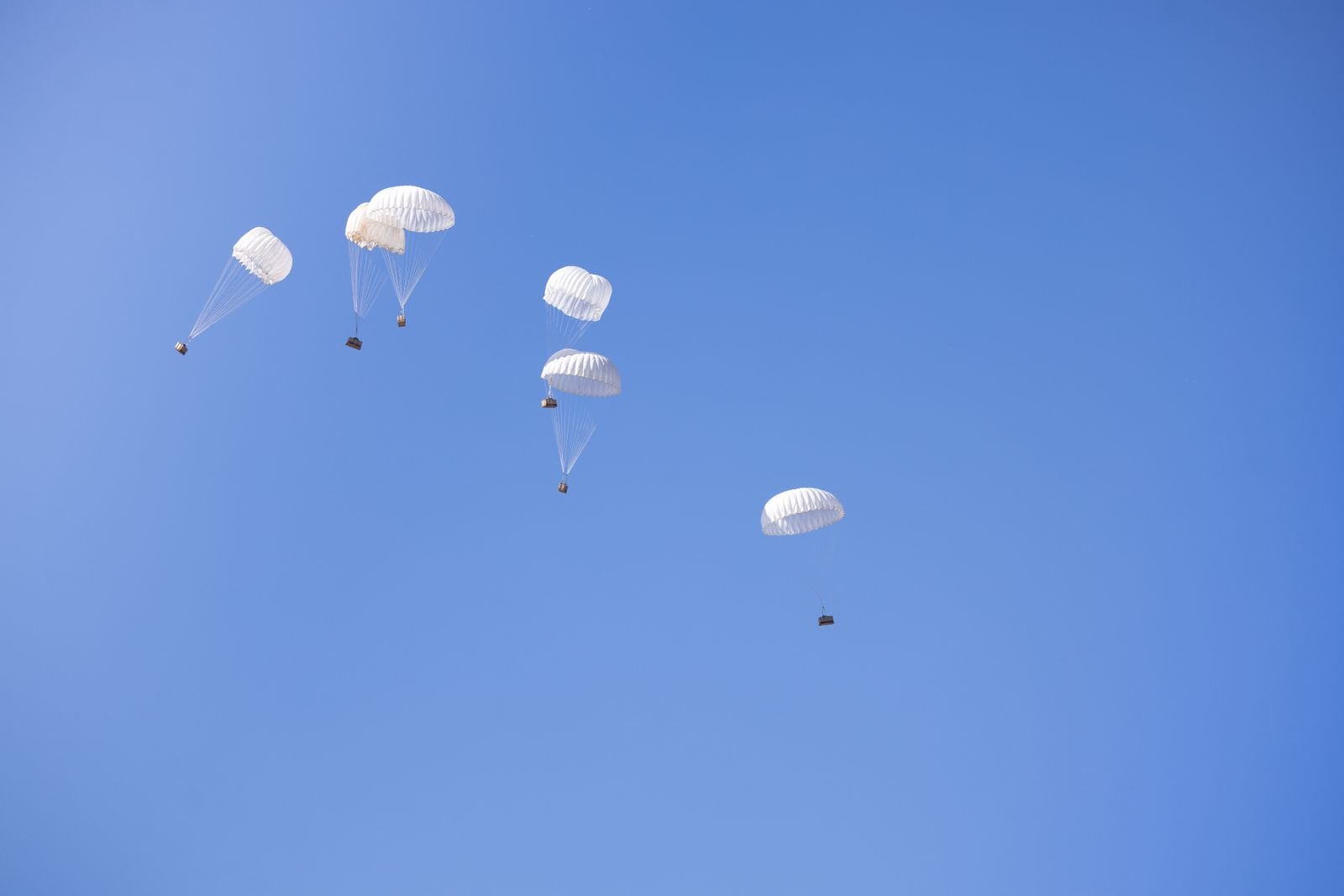
The face that arrives home
The fluid shift is easier to see in the face. In microgravity, fluid moves from the legs toward the torso and head, producing the familiar “puffy face” and, for some astronauts, a feeling of congestion. Researchers also monitor the headward shift because it can affect the eyes and contribute to vision changes during long missions.
The vestibular system does not fall silent. Instead, the brain receives a pattern of motion and orientation cues unlike the one it learned on Earth. When gravity returns, spatial orientation, hand-eye coordination, balance and walking can all be temporarily disrupted while the system readapts.
The brain shifts, then readapts
The brain undergoes physical changes as well. MRI data from 26 astronauts showed that the brain consistently shifted upward and backward inside the skull after spaceflight. The shifts were generally larger after longer missions. Most of the measured displacement and deformation moved back toward normal within six months, although the backward shift showed less recovery.
The researchers did not identify an immediate clinical danger from the movement itself. They did, however, find that larger shifts in one sensory-processing region were associated with post-flight balance changes, making the finding relevant to how crews move and work after landing.
A separate 2026 study in the Journal of Neuroscience followed 11 astronauts who had lived on the ISS for at least five months. The team, led by Philippe Lefèvre of UCLouvain in Belgium, found that the astronauts moved objects more slowly and gripped them more firmly in microgravity, as though their brains still expected the objects to have Earth-like weight.
That adaptation was incomplete, but it carried an advantage. Tests performed about a day after landing showed that grip control and rhythmic movement recovered quickly. The brain did not fully replace its lifelong model of gravity, so it could return to that model rapidly when 1g came back.
Joints, cartilage and the 18-day question
Not every part of the musculoskeletal system shows obvious damage after a short flight. A National Jewish Health study led by Richard Meehan and Smarika Sapkota examined three astronauts before and after the 18-day Axiom Mission 4. Ultrasound measurements found no statistically significant changes in cartilage thickness, synovial fluid, tendons or ligaments in the hips, knees and ankles.
The astronauts had performed cycling exercise and used anti-inflammatory medication during the mission, both of which may have helped. But the sample contained only three people and the flight lasted less than three weeks. Meehan and Sapkota were careful not to extend the result to the much longer exposure expected on lunar or Mars missions.
The finding is encouraging within its limits: this small group showed no measurable lower-limb joint damage after 18 days. It does not settle what six months of unloading does to spinal discs, back muscles or joint structures.
What the countermeasures actually do
ISS crews train with aerobic and resistive exercise to replace some of the mechanical work that gravity normally demands. Resistance devices let astronauts perform movements such as squats and deadlifts without conventional weights. Cycle ergometers provide cardiovascular work, while treadmill users wear a harness that keeps them in contact with the running surface.
Exercise helps, but it does not erase every effect. NASA reports that weight-bearing bones lose an average of 1% to 1.5% of their mineral density per month during spaceflight when Earth’s normal loading is absent. Muscle mass can also decline, particularly in the legs and trunk, if diet and exercise countermeasures are insufficient.
Spinal ultrasound, MRI, strength testing and post-flight functional assessments help researchers track those changes. The measurable figures are already stark enough without comparing them to “the worst osteoporosis on Earth.” Months without normal loading can alter bone, muscle, balance and circulation even in highly trained people who exercise almost every day.
The Mars problem
A Mars mission would involve several different loading environments: roughly six months of weightlessness during each transit, about one-third of Earth’s gravity on the Martian surface, and full 1g after the crew finally returns home. Each transition affects orientation, balance, locomotion and the body’s ability to maintain blood pressure while standing.
The operational problem begins before anyone gets back to Earth. A crew arriving on Mars may need to unload equipment, assemble habitats, operate rovers and respond to emergencies while adapting to a new gravity field with muscles and bones conditioned by months of reduced loading.
Existing endurance records show how much remains unknown. Valeri Polyakov’s 437-day mission aboard Mir remains the world single-flight benchmark. Frank Rubio’s 371-day mission is the American single-flight record, replacing the marks previously held by Mark Vande Hei and, before him, Scott Kelly.
Even those missions took place mainly in one microgravity environment followed by a return to Earth. A Mars crew would cross between microgravity, partial gravity and full gravity while carrying out demanding work at every stage.
Artificial gravity produced by a rotating habitat remains a proposed countermeasure rather than the operational environment of a long-duration crewed spacecraft. NASA has studied centrifuge-based artificial gravity on Earth, but current crews still rely primarily on exercise, monitoring and rehabilitation. The open question is not whether gravity matters. It is how much loading the body needs, how often it needs it and how quickly a crew must be ready to work after landing.
The clue in your own back
You are usually a little taller after a night lying down than after a day spent upright. Astronauts amplify that familiar response by removing sustained loading for months. Their extra centimetres are temporary, but the transition back is not trivial: the spine shortens again while muscles, balance and circulation are readapting at the same time.
The striking image is not a spine collapsing. It is a human body built around gravity meeting gravity again — centimetre by centimetre, step by careful step.
