Three passports. One royal title. A bitcoin haul valued in the billions at seizure. Four jurisdictions with claims on the same defendant, and roughly 8,000 miles between the Brooklyn courthouse that wanted him and the Beijing custody he ended up in.
By the end of a single day in January 2026, the arithmetic resolved. Chen Zhi, founder of Prince Group, had been stripped of his Cambodian citizenship and his Neak Oknha honorific by royal decree. The US Department of Justice had an unsealed federal indictment against him in the Eastern District of New York. The UK’s National Crime Agency had moved on London real estate tied to his network. The Treasury’s Office of Foreign Assets Control had sanctioned Prince Group. Three Western governments wanted Chen Zhi in a courtroom they controlled.
Cambodia handed him to a fourth.
Beijing, not Brooklyn.
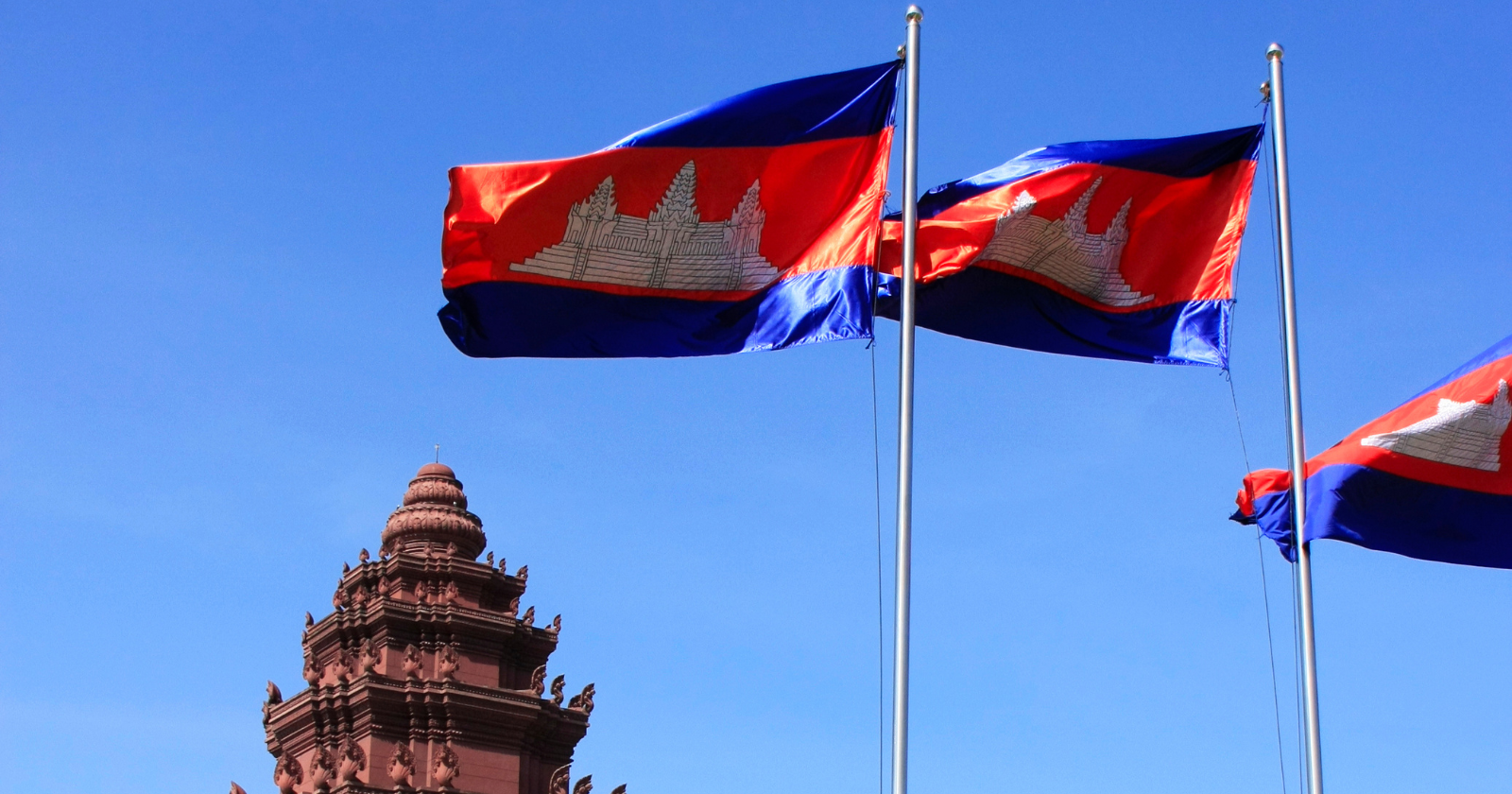
The choice of destination was the story. In doing so, Phnom Penh told the world which capital it now answers to.
The title that wasn’t supposed to come off
The Neak Oknha honorific is not ornamental. In Cambodia, the title is granted by royal decree, traditionally to those who have made significant contributions, usually financial, to the state. Recipients are advisors in name and patrons in practice. Chen Zhi received his title years before the controversy, by which point Prince Group already controlled banking, casino operations, and real estate holdings. He had also, according to the US Department of Justice indictment, allegedly built one of the largest forced-labour scam compound networks in Southeast Asia.
Prince Group denies the allegations. The company has called them baseless. Chen Zhi has not been convicted of any crime in the United States or the United Kingdom. The indictment remains an indictment.
That said, the title came off fast. Cambodian state media reported in January 2026 that the king had revoked the Neak Oknha designation, and that a separate decree had stripped Chen’s Cambodian citizenship. The man who had bankrolled charity drives, sat at state functions, and, according to filings from US prosecutors, allegedly directed the operational architecture of the network from Phnom Penh, was now a foreign national to the country he had operated from. The speed of that unmaking was itself a signal. Cambodia was clearing the legal ground for a handover, and the direction of travel was already decided.
Why Beijing and not Brooklyn
The mechanics of extradition explain part of it. Cambodia and the United States do not have a functional extradition treaty for politically and commercially sensitive cases. Cambodia and China do. But the legal plumbing is the smaller half of the answer. The larger half is that the political weather had shifted, and Phnom Penh read it correctly.
Joshua Kurlantzick, senior fellow for Southeast Asia at the Council on Foreign Relations, has written that regional surveys show China being chosen as the preferred regional partner, with US global leadership emerging as a top geopolitical concern. The pattern displaced what had been the region’s top worry, China’s behaviour in the South China Sea, and replaced it with anxiety about Washington itself.
Cambodia, more than almost any other ASEAN state, sits inside Beijing’s economic gravity. Chinese capital had financed major infrastructure projects including ports, hydropower plants, and a long roster of real estate and casino developments. By the time Chen Zhi’s case became a diplomatic question, Cambodia’s calculus did not really include a Brooklyn courtroom. Sending him west would have cost Phnom Penh something concrete with Beijing in exchange for goodwill from a Washington it increasingly viewed as unreliable. Sending him east cost nothing and bought favour.
Silicon Canals’ investigation reveals how scam operations in Southeast Asian labor camps produce the fraudulent messages tied to Chen Zhi’s extradition.
Watch the full story on the Silicon Canals YouTube channel.
The compounds at the centre of the case
The DOJ indictment describes a network of compounds where workers, lured by fake job advertisements across Asia, had their passports confiscated and were forced to run online investment fraud, the so-called “pig butchering” scams, under quota. United Nations Office on Drugs and Crime investigators and Amnesty International have documented similar operations across Cambodia, Myanmar and Laos. The annoying “wrong number” text that lands on phones in São Paulo, Berlin and Lagos is, according to those investigators, often typed by someone who cannot leave the building.
Foreign Affairs described the broader pattern as Chinese-backed special economic zones proliferating in Southeast Asia, with some hosting illicit activities such as gambling and scam syndicates, while local resistance and public unrest surges. Sihanoukville became a hub for such activities after a Chinese-funded real estate and casino boom transformed it.
Prince Group denies operating any such compounds. The company maintains its businesses are legitimate. The DOJ indictment, the UK Treasury action, and the OFAC sanctions all describe the network differently. The relevant point for the power calculation is that the alleged victims include large numbers of Chinese nationals, which gave Beijing both a domestic political case for claiming Chen Zhi and a diplomatic lever to use on Phnom Penh.

Bitcoin and the silence of the victim
The forfeiture itself is what makes the case structurally strange, and the chronology repays close attention. Years before the indictment unsealed, a large quantity of bitcoin drained out of a mining operation linked to Chen Zhi’s network. At the time of that drain, the haul was worth billions of dollars. The victim of the original theft, according to on-chain analysts, was the network itself. The coins moved across wallets, through mixers, and into addresses that on-chain analysts spent years mapping. By the time the US Justice Department seized those coins, the value had grown substantially, representing a sum larger than Cambodia’s quarterly economic output. The forfeiture action that followed was the largest civil seizure of its kind on record. Which is to say: a major civil forfeiture involves coins that one alleged criminal enterprise allegedly took from another, and that a third party, the US government, eventually claimed. None of that money will be returned to anyone willing to admit they once owned it.
This is why the extradition question matters more than the headline figure. A trial in the Eastern District of New York would have produced testimony, exhibits, and a public record of how the money moved, who knew what, and which financial institutions touched the coins. A handover to China produces something else. A prosecution whose record stays inside Beijing’s system, available to the world only at Beijing’s discretion. Cambodia did not just choose a destination; it chose which version of the truth would ever become public.
What “handed to Beijing” actually means
China’s Ministry of Public Security has described Chen Zhi as the leader of a transnational fraud and trafficking network and pledged to prosecute him under Chinese law. Beijing has run a multi-year campaign against scam compounds operating along the China-Myanmar border, with large numbers of Chinese nationals repatriated from Southeast Asian operations in recent years. The political incentive to claim Chen Zhi was strong: he is, by birth, a Chinese citizen from Fujian province, and the victims of the alleged scam operations include large numbers of Chinese nationals.
The diplomatic incentive ran the same direction. Council on Foreign Relations noted that even close US partners in Southeast Asia had become unusually vocal about concerns regarding policy consistency and the credibility of long-term commitments from Washington. For Phnom Penh, which has tilted toward Beijing for the better part of a decade, the question of where to send Chen Zhi was less a legal calculation than a confirmation of which capital it answers to.
The cost of being unmade
Citizenship revocation is a tool, and Cambodia just demonstrated how quickly it can be deployed when the political calculus changes. A man who held the country’s most prestigious honorary title was, by January 2026, defined by Phnom Penh as someone who had never really belonged. The DOJ alleges that thousands of workers in his network experienced a more violent version of the same rupture: passports confiscated, doors locked, families unreachable.
The mechanism is the same in both directions. The state declaring who belongs and who does not. Cambodia used it to remove a problem rather than to prosecute one. Stripping the title and the passport was not punishment. It was paperwork that made the handover to Beijing cleaner.
What Brooklyn loses
The Eastern District of New York indictment remains live. The forfeited bitcoin is in US government custody. The sanctions on Prince Group’s network and the freeze on London property continue. None of that requires Chen Zhi to be physically present in a Brooklyn courtroom.
What Brooklyn loses is testimony. A defendant in custody can be questioned, can plea, can name correspondent banks and politically exposed counterparties. A defendant in Chinese custody, prosecuted under Chinese law for a Chinese-defined version of the offence, produces a different evidentiary record, one that Beijing controls. Whatever Chen Zhi knew about the international financial plumbing of Prince Group’s alleged operations, including which banks moved the money and which jurisdictions hosted the shell companies, may now surface only at China’s discretion.
For the families of trafficking victims across Southeast Asia, that distinction is not academic. UNODC has estimated that hundreds of thousands of people remain in scam compound conditions across the region. The financial backbone of those operations, according to investigators, runs through banks, payment processors and crypto exchanges that have largely escaped direct legal scrutiny. A defendant cooperating with US prosecutors might have changed that. A defendant in Beijing probably will not. Cambodia’s choice of destination, in other words, did not just decide Chen Zhi’s fate. It decided what the rest of the world would be allowed to learn about the system around him.
The wider pattern
The Chen Zhi case is one data point in a larger shift. The World Politics Review documented the steady erosion of US influence in the region, while oil-market analysts at OilPrice noted that Cambodia’s turn to hydropower, funded by China, fits a broader pattern of Beijing’s infrastructure footprint deepening even as regional fuel crunches strain supply.
Cambodia did not invent the playbook. Other states in the region have similarly chosen Beijing over Washington on questions ranging from South China Sea arbitration to vaccine procurement. But the speed of the Chen Zhi handover, citizenship revocation and extradition in the same month, was a particularly clean demonstration of how the calculus now runs in Phnom Penh.
The story Silicon Canals has been tracking through earlier reporting, including the five-year Wirecard investigation that took down a similarly opaque conglomerate, and the ShinyHunters breach that exposed how slowly enterprise systems respond to known vulnerabilities, keeps arriving at the same uncomfortable place. The financial and physical infrastructure of large-scale fraud often outruns the legal infrastructure designed to address it. Jurisdiction shopping is no longer just an offshore tax strategy. It is now a feature of how transnational criminal cases resolve.
Three governments, one defendant, one missing trial
By mid-2026, the public record on Chen Zhi consisted of: a US indictment that may never be tested at trial in New York, a UK property freeze whose targets cannot easily be summoned to court, an OFAC sanctions designation that operates administratively rather than judicially, and a Chinese prosecution whose contours and evidentiary standards are largely opaque to outside observers. Four jurisdictions touched the case. One got the defendant.
The forfeited bitcoin sits in a US Treasury wallet. The Prince Group offices in Phnom Penh have new signage and, by some accounts, new tenants. The compounds, according to UNODC’s continuing reporting, are still operating, though the named operators have changed.
The texts still arrive. “hey, is this still your number?” Typed at three in the morning local time, on phones whose owners cannot leave the rooms they were trafficked into, on behalf of a network whose alleged architect is somewhere inside a building in Beijing that does not take press calls.
From that building, so far, nothing.