
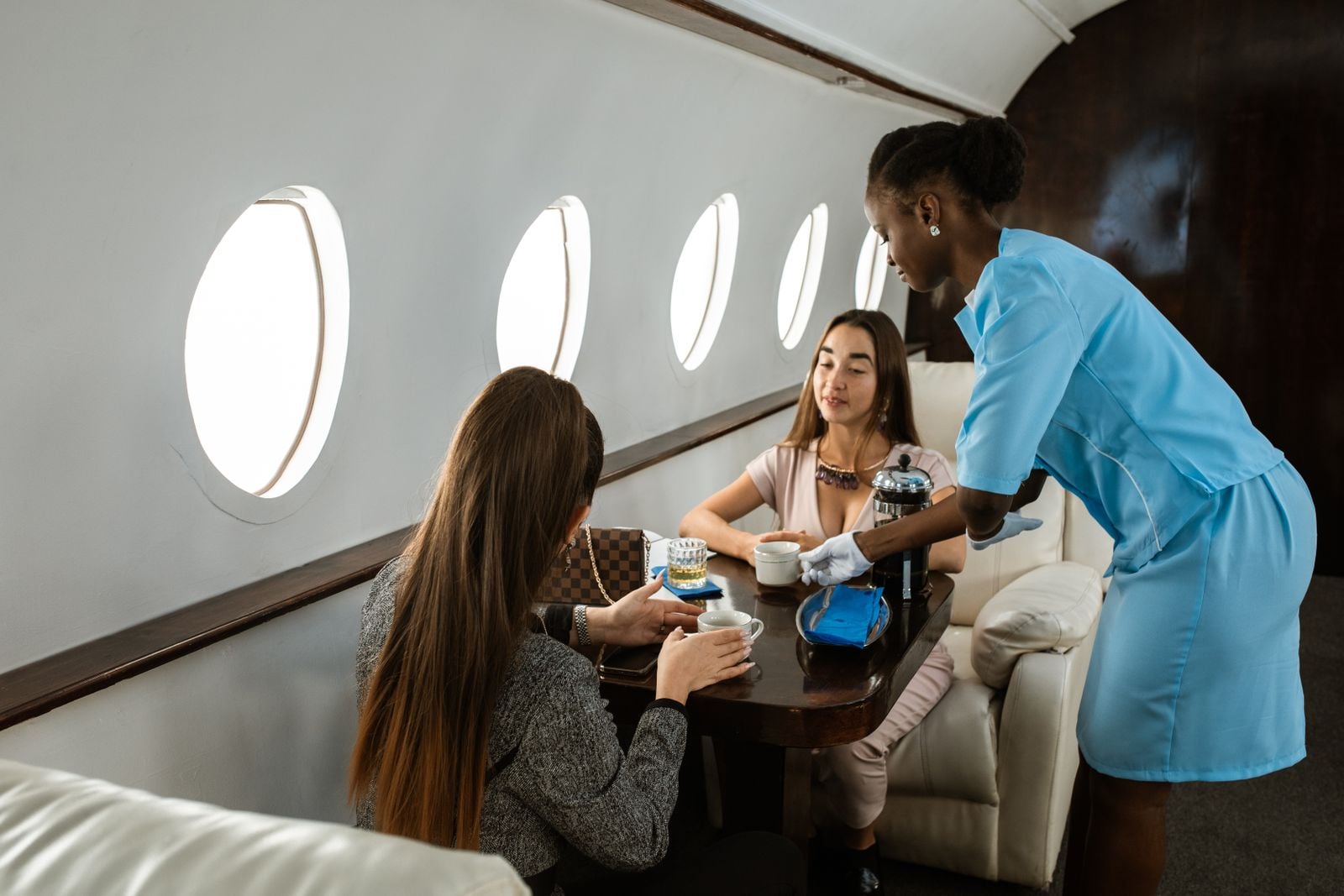
In 1983, sociologist Arlie Russell Hochschild watched a Delta Air Lines training session in which flight attendants were instructed to smile at passengers as if the cabin were their own living room and every stranger a personal guest. She called what they were doing emotional labor — the paid work of manufacturing a feeling in yourself so that someone else feels a particular way. Four decades later, the term has slipped its industrial harness. It now describes the friend who remembers every birthday, the sister who calls the parents, the colleague who reads the room on Slack before typing, and the partner who notices the tone shift three minutes before the argument.
None of them are getting paid. Most of them do not know they are working.
The concept that outgrew its category
Hochschild’s original book, The Managed Heart, treated emotional labor as a workplace transaction. Delta bought the smile. The attendant supplied it. The question was what happened inside a human being who had to sell surface calm for eight hours over the Atlantic.
What Hochschild could not have predicted was how thoroughly the concept would migrate out of the cabin and into every unpaid relationship a person maintains. By the mid-2010s, the phrase was doing work she never asked it to do. It described the mental load of remembering the dentist appointment. It described the eldest daughter who fields the family group chat. It described the friend everyone calls when they are falling apart, and who is somehow never called back.
Hochschild herself has said, repeatedly, that the term has been stretched past its usefulness. And yet the stretch happened for a reason. People recognised something in it. The word gave shape to a category of effort that had been invisible precisely because no one was billing for it.
What friendships quietly ask of the person who never leaves
Look at the average adult friendship group and there is almost always one person doing a disproportionate share of the maintenance. They remember who is between jobs. They notice when someone has gone quiet on the group chat for eleven days. They text first after a fight. They soften the tone of a message before sending it. They keep the peace at the dinner and clean up the emotional dishes afterwards.
Psychologists writing for Psychology Today describe emotional labor in personal relationships as involving the energy and effort required to maintain connections — noting that people who carry most of this burden often stop recognizing it as work at all. It becomes a personality trait. It gets called being thoughtful. It gets called being the responsible one.
What it actually is: a workload with no contract, no wage, no shift rotation, and no one to cover for you when you’re sick.
The environmental scan that never stops running
One of the clearest markers of unpaid emotional labor is what researchers loosely call environmental monitoring — the automatic scan a person runs the moment they enter a room. Who looks off. Who has gone quiet. Whose shoulders are tight. Whose smile is a fraction too late. The scanner then adjusts: softens the joke, changes the story, redirects the conversation away from the topic that was making someone tense.
People who do this rarely think of themselves as working. They think of themselves as considerate. But the scan runs constantly in the background, the way a phone hunts for signal in a bad reception zone, and it drains the battery in exactly the same way. The tiredness at the end of a dinner party is real. It has a cause. The cause simply had no name until Hochschild gave it one.
Silicon Canals has previously covered how this pattern shows up in the smallest daily interactions — apologising to a waiter for the kitchen’s mistake, for instance, is not politeness. It is the same instinct running in a lower gear: managing someone else’s discomfort before it becomes yours to sit with.
The Slack channel as a modern galley
The workplace, meanwhile, has quietly become the most efficient extraction machine for emotional labor ever built. Hochschild’s flight attendants at least had a uniform, a shift end, and a paycheck that priced the smile. The modern knowledge worker on Slack has none of these things.
Consider the tone-management work embedded in a single message. A colleague drafts a reply. They add an exclamation mark so the sentence doesn’t read as cold. They add a softening “just” before the request. They add an emoji because a plain full stop now signals hostility. They read the message back three times, gauging how it will land on someone whose day they can’t see. Then they send it, and immediately begin the parallel scan of how it was received.
None of that appears in a job description. All of it is emotional labor. And it accumulates. A 2024 systematic review summarised by Nature estimated pooled burnout prevalence in the public health workforce at 39%, rising to 42% during pandemic periods, with a rapid global survey of over 2,700 healthcare professionals across 60 countries reporting a 51% burnout rate. The primary drivers named were excessive workload, moral decision-making, inadequate protective equipment, and work–home interference — but underneath most of those categories sits emotion management. The tone taken with a frightened patient. The composure maintained in front of a grieving family. The face kept steady in front of a colleague who is closer to breaking than you are.
The cost the ledger doesn’t show
Because emotional labor is unpaid and largely invisible, it tends to be measured only when it collapses. That is what the clinical literature has been steadily documenting.
A press release covered by USA Today summarised industry data on therapist burnout: SimplePractice’s 2023 State of Therapist Well-Being Report found 52% of therapists reported experiencing burnout within the past year, and nearly one in three reported being currently burned out. A peer-reviewed study published in JAMA Network Open found that 35.2% of therapists in a trauma-treatment cohort met criteria for burnout — and, critically, that patients treated by burned-out clinicians were 37% less likely to show clinically meaningful improvement after adjustment for other variables.
Read that number again. The unpaid, invisible cost of holding someone else’s feelings, when it goes on too long without relief, produces a measurable worsening in the outcomes of the people being cared for. This is the material consequence of a workload that no spreadsheet is tracking.
Hospitality workers show the same pattern in a different register. Research summarised by Nature on emotional labor in hospitality describes staff engaging in “surface acting” — modifying displayed emotion to meet organisational expectations — and links it to reduced wellbeing over time. The smile Hochschild watched being trained into flight attendants in 1983 is still being trained into workers in 2026. Only the uniform has changed.
The domestic version has the longest shift
The friendship and workplace versions of emotional labor at least have exits: friend groups drift, jobs end. The domestic version does not. The person who runs the household emotional operations — remembering the school forms, tracking which relative is upset with which, translating between a partner and a teenager, managing the mood of a Sunday afternoon — is on a shift that runs from waking until sleep, then resumes at 3am when a child has a nightmare.
Psychology Today contributors examining why a relationship can start feeling heavy point to a specific pattern: relationships that function on a technical level but feel exhausting to the person doing the maintenance work. The technical function is intact because one party is subsidising it with unpaid effort. The heaviness is the unpriced labor showing up on the wrong side of the ledger.
Which points to Hochschild’s underappreciated insight. The smile is not the problem. The problem is who is producing it, for whom, and whether the production is being noticed at all.
What happens when the quiet giver goes quiet
The most instructive experiment in all of this is what happens when the person doing the unpaid emotional work stops doing it — even briefly. The Psychology Today piece on stepping back describes three typical outcomes: the other party notices and adjusts, the other party is confused but open, or nothing changes at all. The third outcome is the hardest, because it reveals that the relationship was being held together almost entirely by one person’s effort.
People who have played this role — the fixer, the funny one, the capable one, the calm one — often struggle to step out of it because the role has become load-bearing to their identity. Silicon Canals has explored how adults who spent years being the capable one often reach a moment when the character has become so thoroughly worn-in that they cannot locate the person underneath. The role paid nothing and cost everything, and quitting it feels like losing a job you were never officially hired for.
Hochschild’s warning, updated
The original argument in The Managed Heart was that when a company commercialises a worker’s feelings, something in the worker gets alienated from their own inner life. The feelings stop belonging to them. They belong to the employer, the shift, the passenger in 12B.
Extended into friendship, family, and Slack, the argument becomes uncomfortable in a different way. No one is buying the emotional labor. It is being extracted informally, by people who often love the person doing the work and would be horrified to hear it described as extraction. The person supplying it is often the last to notice the transaction is one-directional. They notice only that they are tired in a way sleep does not fix, and that the people they support most consistently rarely ask how they are.
Four decades on from the Delta training room, the useful move is not to police the term Hochschild coined. It is to keep asking the question she was actually asking: who is doing the feeling work, who is benefiting from it, and what happens to the person doing it when no one is keeping the books.
The flight attendants had a union. The friend who checks in on everyone does not.