

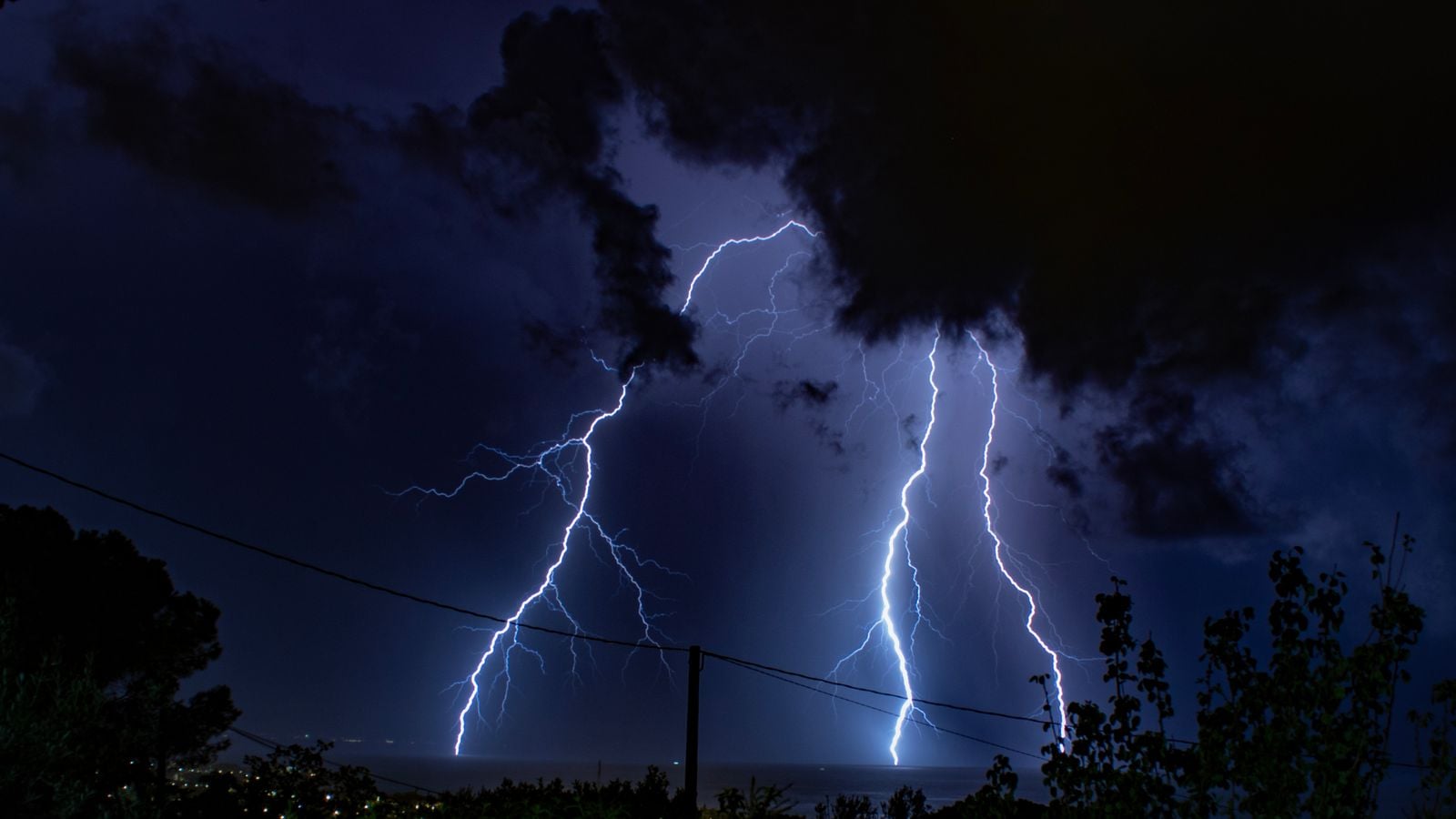
At 2:44 a.m. on 13 March 1989, a severe geomagnetic disturbance reached Hydro-Québec’s transmission system. In less than 90 seconds, the James Bay network collapsed. About six million people lost power, and most service returned within nine hours.
Hundreds of kilometres to the south, the same storm caused a very different kind of failure. It destroyed a transformer at a nuclear power plant in New Jersey.
The Quebec blackout became the photograph: one province, one timestamp, millions of people suddenly in the dark. The transformer at the Salem plant became a maintenance record. Together, they explain why a severe solar storm cannot be understood only by counting the customers who lose power immediately.
The storm was larger than one blackout
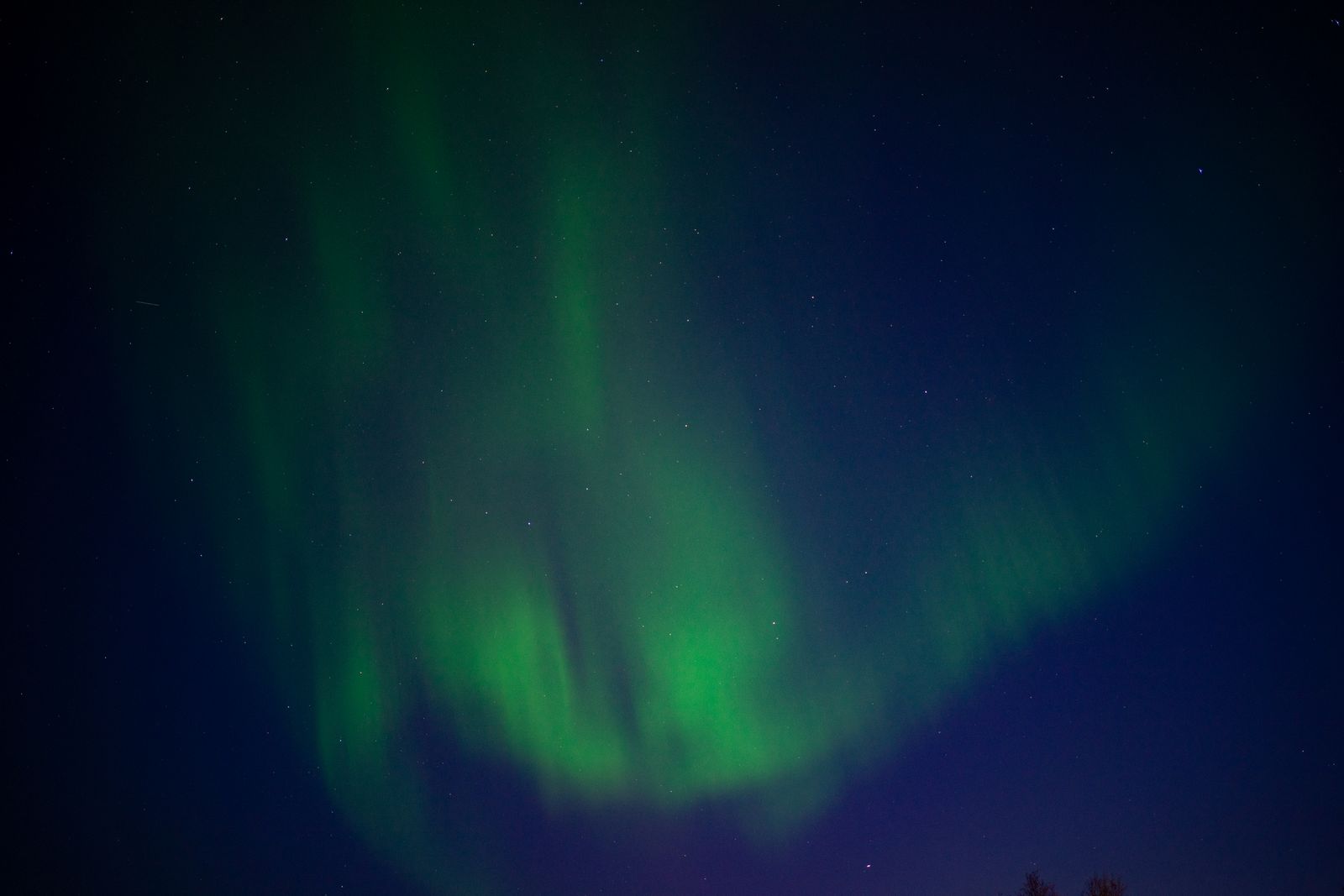
The disturbance followed powerful eruptions from the Sun that sent magnetised plasma towards Earth. When that material interacted with the planet’s magnetic field, rapid magnetic variations produced electric fields at ground level.
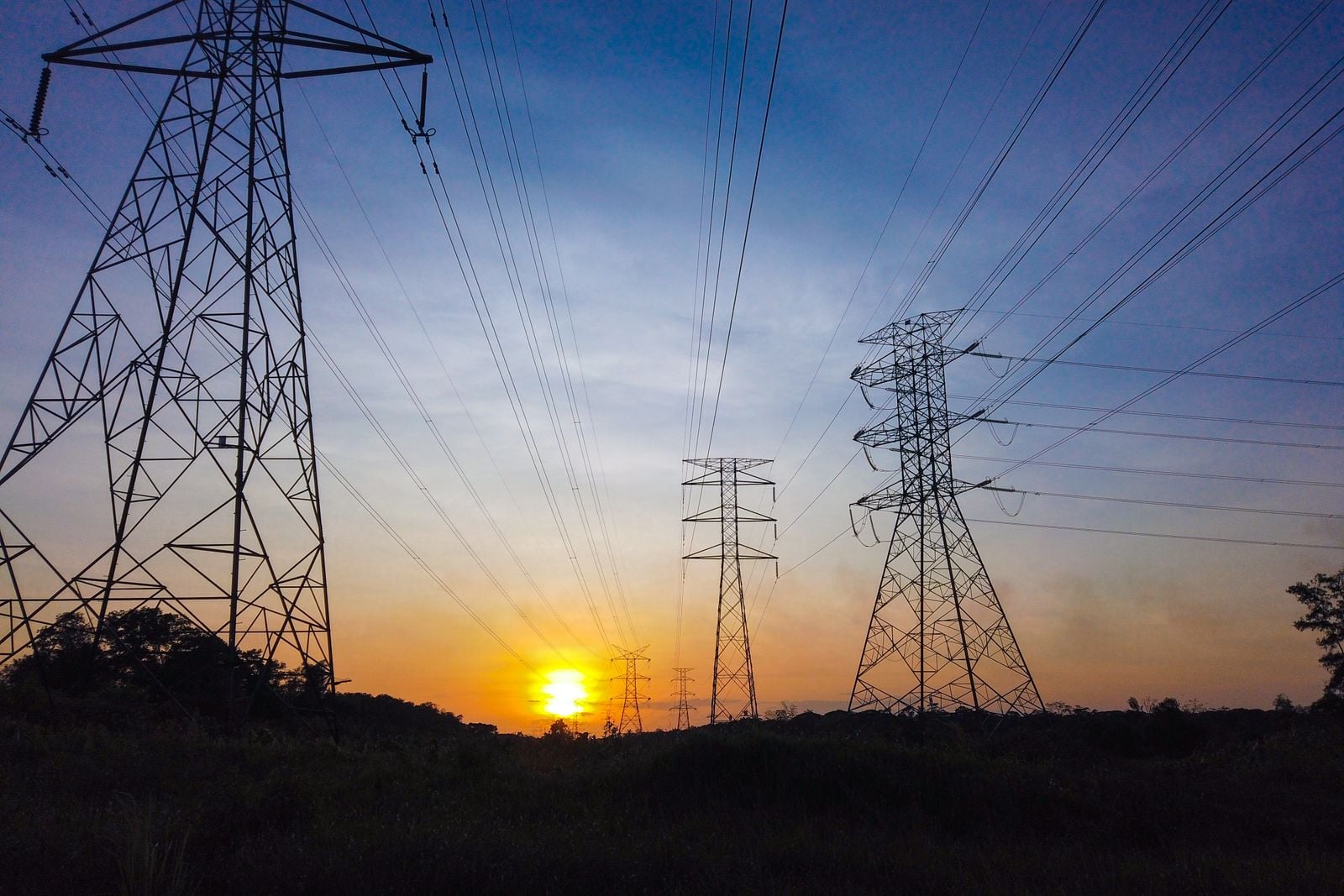
Those fields can drive geomagnetically induced currents through long, grounded conductors such as high-voltage transmission networks and pipelines. In a power grid, the currents behave more like direct current than the alternating current transformers are designed to handle.
Quebec was unusually exposed. Its long 735-kilovolt transmission lines crossed the electrically resistive rock of the Canadian Shield. Rather than dissipating easily through the ground, more of the induced current found a path through the grid.
Once the current entered transformer windings, it pushed magnetic cores towards saturation. Reactive-power demand increased, harmonics distorted the electrical waveform and protective equipment began disconnecting parts of the network. The resulting voltage collapse moved faster than operators could stop it.
Salem revealed the other side of the threat. A grid does not need to suffer a regional blackout for an individual transformer to be damaged. Equipment design, line orientation, local geology and operating conditions all influence where the stress concentrates.
Why distance offers limited protection
The intuitive model of an electrical failure is local. A tree falls across a line, a substation floods or a generating unit trips, and the effects begin near the physical fault.
A geomagnetic disturbance works differently. The changing magnetic field can extend across an enormous area. Multiple transmission corridors may therefore experience abnormal currents during the same event, even when they are operated by different utilities and separated by borders.
That does not mean every transformer receives the same dose or suffers the same outcome. The induced current depends on the electrical network, the conductivity of the ground beneath it, the direction and length of the lines and the characteristics of individual transformers.
The important point is that the storm can create simultaneous stress at locations that would ordinarily be treated as separate risks. Quebec’s collapse and Salem’s transformer damage were not a conventional sequence in which one failure travelled physically from Canada to New Jersey. They were two effects of the same wide-area disturbance.
Cascades do not respect borders
Once equipment begins disconnecting, a second mechanism takes over. The pattern is known as cascading failure: an initial fault changes the flow of electricity through the surrounding network, potentially overloading neighbouring lines and triggering further disconnections.
Some cascades remain local. Others cross borders because neighbouring systems share transmission lines, generation reserves and frequency control.
On 31 January 2026, for example, a failure in Ukraine’s electricity network triggered the collapse of a key high-voltage line and caused a nationwide outage in Moldova. Power was restored later that day, but transport, traffic signals, border facilities and medical services were disrupted.
That incident had nothing to do with space weather. It nevertheless showed how an electrical failure in one country can quickly become an emergency in another when their systems are closely connected.
Fifteen gigawatts in five seconds
The same basic vulnerability appeared at a much larger scale on 28 April 2025. Spain and Portugal lost roughly 15 gigawatts of power in about five seconds, equivalent to approximately 60% of the Iberian Peninsula’s electricity supply at the time.
Trains stopped, airports experienced disruption, hospitals moved to backup power and electronic payments failed in many places. Subsequent investigations treated the blackout as a multifactor event involving voltage behaviour, control systems, protection responses and operating conditions rather than one simple broken component.
The Iberian blackout was internal, not solar. Its relevance is speed. Modern electrical systems can redistribute power and disconnect equipment in seconds, while diagnosis, political coordination and physical repair still move at human pace.
The continental United States is divided principally among the Eastern, Western and Texas interconnections. Those electrical boundaries can limit the direct synchronous propagation of some disturbances between regions, although they do not prevent serious cascades within an interconnection. Europe’s highly meshed cross-border network brings substantial trading and resilience benefits while also creating dependencies that operators must manage continuously.
The precedent from 1859
The March 1989 storm was severe, but historical evidence indicates that Earth has experienced substantially more extreme events.
During the Carrington Event of 1859, auroras were reported as far south as Cuba. Telegraph equipment malfunctioned and sparked. At some stations, operators disconnected their batteries and continued sending messages using electrical currents induced by the storm itself.
The world was not yet dependent on high-voltage grids, satellites, GPS timing, digital communications or electronic financial systems. Telegraph networks provided an early demonstration of the physics without exposing anything resembling the technological surface that exists today.
A similarly extreme storm now would not guarantee a continental blackout or the destruction of hundreds of transformers. The outcome would depend on the storm’s magnetic orientation, duration, geography, grid conditions and the defensive actions taken by operators.
The concern is that the largest extra-high-voltage transformers are not interchangeable products waiting in warehouses. They are custom-built pieces of infrastructure weighing hundreds of tonnes. Replacement lead times can reach a year or more even under ordinary conditions.
One failed transformer is an expensive engineering project. Simultaneous failures across several utilities would become a manufacturing, transport and international supply-chain problem.
Grids already operating with narrow margins
Recent blackouts offer reminders that many grids are already managing ageing equipment, limited generation reserves or weak transmission infrastructure.
In June 2026, a technical failure in Tanzania’s national grid caused a major outage affecting several areas served by the state utility Tanesco.
Three months earlier, Cuba’s power grid collapsed for the third time in March. Authorities attributed the immediate failure to a generating unit at the Nuevitas power plant, followed by a cascading effect. Ageing infrastructure and chronic fuel shortages had already left the system vulnerable.
Neither event is a model for what a geomagnetic storm would do. Their causes, grid designs and restoration challenges were different. What they demonstrate is that the consequences of an unusual external shock depend heavily on the condition of the system that receives it.
Exposure also does not divide neatly between rich and poor countries. Long transmission lines, transformer design, geology, latitude, operating conditions and preparation all matter. A wealthy and sophisticated grid may have stronger defences while simultaneously supporting more infrastructure that depends on uninterrupted power.
What has changed since 1989
The 1989 grid was not purely analogue, but it was less digitally networked than the system operating today. Many protective relays were electromechanical, and grid control relied less heavily on continuous data exchange between thousands of intelligent devices.
The modern grid is a cyber-physical system. Electricity networks now interact with communications infrastructure, SCADA platforms, automated protection, energy markets, distributed generation and inverter-based renewable resources.
That coupling is not inherently a weakness. Reliable communications and well-designed controls allow operators to detect disturbances, shed load selectively and regulate voltage more effectively than their predecessors could.
The danger appears when several layers are disrupted together. A severe space-weather event can affect radio communications, satellites and navigation services while geomagnetically induced currents stress the power network. Communications would not necessarily disappear, but degraded visibility or control could complicate an already difficult grid emergency.
Preparation has also improved since Quebec. Grid operators monitor space-weather alerts, model geomagnetically induced currents, adjust operating conditions and apply standards intended to reduce the risk from benchmark disturbances. The uncertainty lies at the extreme end: events that exceed the assumptions built into those protections.
The transformer nobody photographs
There is a reason Quebec became the case study while Salem remained a footnote. A blackout gives the public a visible event: dark streets, stranded passengers and a clear restoration clock.
Transformer damage appears in inspection reports, engineering assessments and replacement schedules. It can occur far from the place receiving the most attention, and its significance may become clear only after the immediate emergency has passed.
The precise probability and likely consequences of another extreme geomagnetic storm remain contested. Estimates vary because modern electrical grids have existed for only a small part of the Sun’s observable history, and no Carrington-scale event has struck Earth during the era of widespread electrification.
That uncertainty is not a reason to assume catastrophe. It is also not a reason to ignore a low-frequency event capable of applying stress across many systems at once.
Quebec showed how quickly a grid could collapse. Salem showed that the headline blackout was not the storm’s entire damage map.
The next major event may leave its most important record not in one photograph of a dark city, but in maintenance logs scattered across utilities that believed they were dealing with separate machines.
