Ford has rehired roughly 350 veteran engineers after automated quality systems and AI-driven inspection tools failed to deliver expected manufacturing standards. The reversal coincides with Ford reclaiming the top spot among mainstream brands in the JD Power Initial Quality Study, a ranking it had not held since 2010.
What Ford executives admitted
Speaking to reporters, Charles Poon, Ford’s vice president of vehicle hardware engineering, said the company had misjudged what automation could do on its own. According to reports, Ford’s leadership acknowledged the company had misjudged what automation could achieve on its own in the manufacturing process. Chief Operating Officer Kumar Galhotra reportedly indicated the company had increasingly depended on automated quality systems with disappointing results, prompting it to bring back technical specialists to identify potential problems early in the design process.
The scale of Ford’s earlier AI bet was substantial. As reported by the BBC, Ford had previously announced plans to implement AI throughout its manufacturing operations, including 900 AI-powered cameras inside its plants to flag quality issues at source. CEO Jim Farley had previously expressed views about AI’s potential impact on white-collar employment.
The financial reversal
The course correction is now framed internally as a cost win. Farley indicated the rehiring strategy has resulted in significant cost savings through reduced warranty and recall expenses. Ford acknowledged that achieving top quality rankings required significant changes to its talent strategy — including replacing senior leaders across engineering, supply chain, and manufacturing.
Ford is not retreating from AI. The veteran engineers are being deployed to train younger staff and to reprogram the company’s AI tools, as Bloomberg first reported.
The structural story underneath
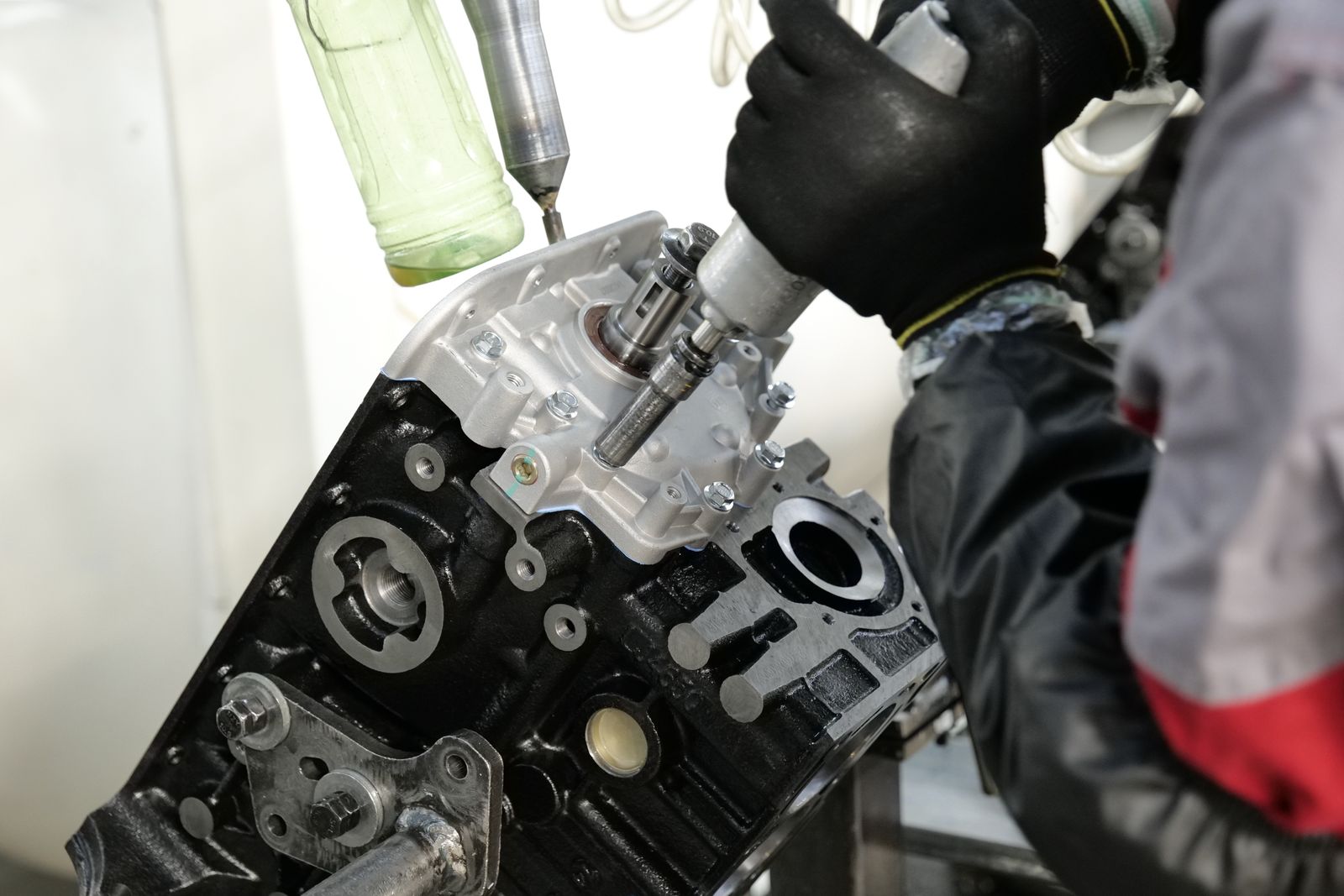
 Photo by Ruslan Alekso on Pexels
Ford’s admission lands at a moment when capital markets continue to reward AI deployment narratives and penalise headcount. Oracle announced 21,000 job cuts this year as it pivoted resources toward AI infrastructure, per BBC reporting. The structural incentive for large enterprises is clear: announcing AI-driven workforce reduction tends to lift equity valuations, while quietly rehiring experienced staff to fix what the automation broke does not.
That asymmetry — loud about replacement, quiet about reinstatement — is the part of the AI transition that rarely makes earnings calls. Ford’s case is unusual mainly because the company put numbers on it. Poon’s framing is worth reading carefully: the AI tools weren’t wrong so much as undertrained, because the engineers who could have trained them had already been allowed to leave. The institutional cost of losing tacit knowledge does not show up on a balance sheet until warranty claims do.
Why this matters beyond Detroit
For manufacturers across Asia, Europe, and North America watching the generative AI rollout, Ford’s experience is a data point that the industry has not yet metabolised: automated inspection systems trained on incomplete institutional knowledge produce defects that are expensive to discover at scale. The veteran engineer rehiring represents less a rejection of AI than an acknowledgment that experienced human expertise was required to make automation work effectively.