

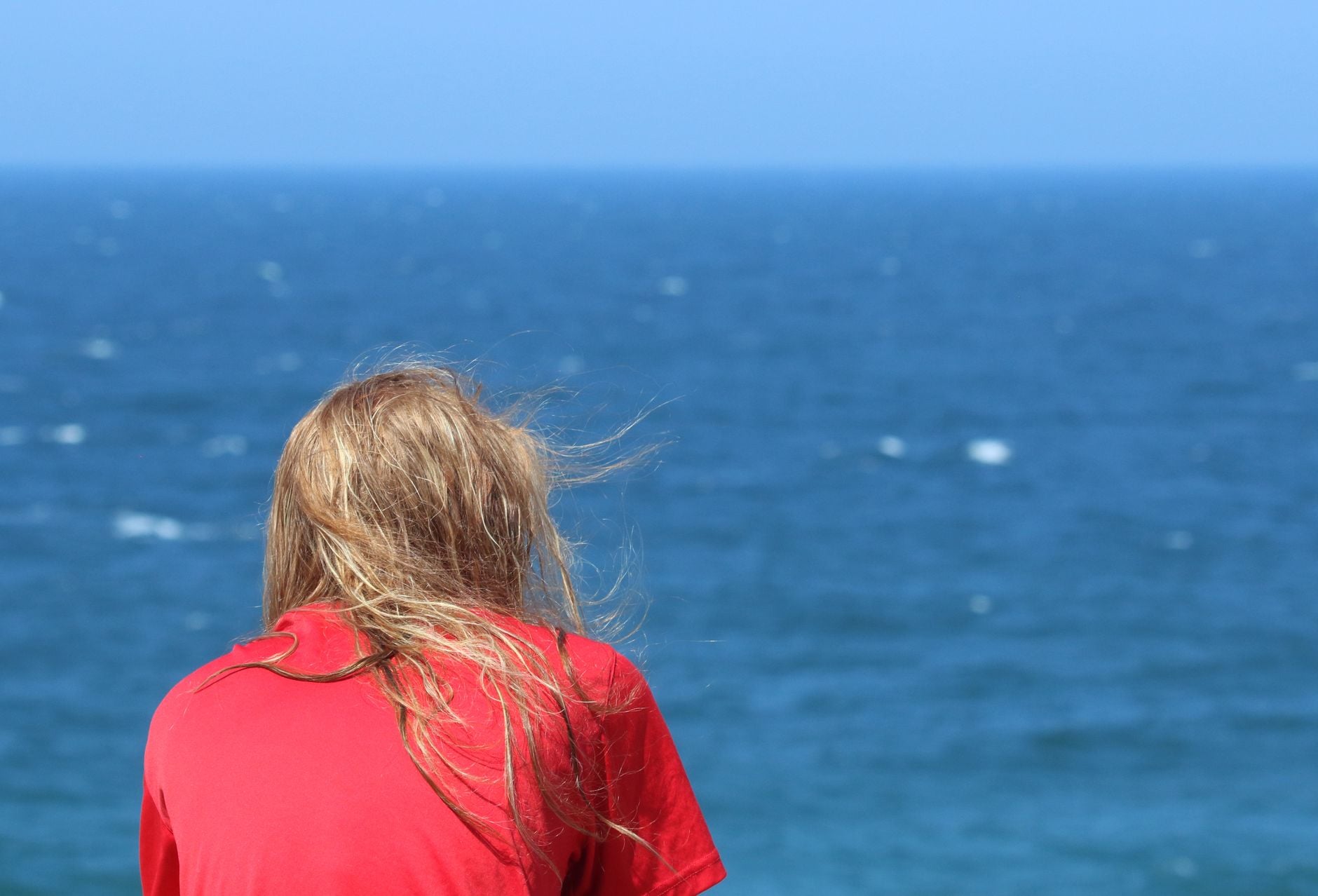
There is a particular feeling that arrives before the holiday has properly started. You step out of the car near the ocean, or reach the end of a street where the water suddenly opens in front of you, and your body seems to loosen before your mind has built an explanation.
It can feel sentimental to admit this. Modern life trains people to treat calm as something earned later: after inbox zero, after the deadline, after the flight, after the meeting, after the quarterly target. But the speed of the ocean response may not be imaginary. Research on blue space suggests that water can change the body before a single wave has been consciously listened to.
One of the most striking claims, popularised in recent writing about the psychology of water, is that less than two minutes of looking at water outdoors may be enough to activate the parasympathetic nervous system, lowering blood pressure and slowing heart rate. That is the branch of the nervous system associated with recovery rather than threat: the state in which the body can downshift from vigilance into regulation.
The deeper point is not that the sea is a medical treatment. It is that the nervous system is constantly reading the environment, and water appears to be one of the cues it reads quickly.
Why water works so fast
For many people, the ocean is calming because it gives the mind just enough to hold onto without demanding effort. The horizon is simple. The movement is repetitive. The colour field is large. The scene changes, but not aggressively. There is novelty without interruption.
Environmental psychologists sometimes describe this as soft fascination. A restorative setting captures attention lightly, allowing directed attention to recover. That matters in a work culture where attention is usually treated as an endlessly renewable resource. It is not. Screens, messages, decisions and social monitoring all make demands on the same limited system.
Water scenes seem unusually good at loosening that grip. In a 2010 paper in the Journal of Environmental Psychology, Mathew White and colleagues found that the presence of water increased preference, positive affect and perceived restorativeness across natural and built scenes. In other words, people did not only like nature more than built environments. They often rated scenes with water as especially restorative.
That helps explain why the effect can begin visually. The body does not need to wait for the full sensory theatre of the beach: salt air, wind, sound, sunlight, cold water on skin. The sight alone can be enough to begin changing state.
The body notices before the story starts
The physiology is not just a mood metaphor. A 2016 study in Environment and Behavior used a large aquarium exhibit as a natural experiment. As the exhibit was restocked with more marine life, visitors tended to watch for longer, and researchers recorded greater reductions in heart rate along with improved mood and interest.
The setting was not a wild coastline. It was a managed aquarium. That makes the finding useful in a different way. If a constructed aquatic display can affect heart rate and mood, then part of the water response is not dependent on romance, travel or nostalgia. Some of it appears to come from visual contact with aquatic environments themselves.
That does not mean every person will experience the same response. Someone afraid of water, grieving by the sea, or arriving at a crowded beach after a difficult drive may not feel instantly calm. Context matters. But on average, water-rich scenes appear to offer a reliable restorative cue for many people.
This is why the phrase “I feel lighter by the ocean” may be more literal than it sounds. Emotional lightness is not floating away from the body. It may be the body shifting out of a threat posture: muscles unclenching, breath slowing, cardiovascular arousal easing, attention widening.
The coastline as nervous-system infrastructure
Blue-space research also extends beyond short exposure. In a longitudinal panel study published in Health & Place, White, Ian Alcock, Benedict Wheeler and Michael Depledge examined coastal proximity, health and wellbeing. The wider literature does not reduce the effect to one simple cause, but coastal environments have repeatedly been linked with wellbeing, physical activity and restoration.
That matters for cities. Silicon Canals usually writes about technology, startups and work, but the built environment is part of the productivity stack too. A worker’s mind is not only shaped by tools, calendars and management. It is shaped by what the body sees when it looks up.
If water can help the nervous system downshift quickly, then waterfronts, canals, lakes, rivers and even visible fountains are not decorative extras. They are part of how a city gives its residents moments of recovery. The same may be true at a smaller scale for offices, hospitals, schools and homes that use views, images or access to water to interrupt cognitive overload.
This does not mean every office needs an aquarium or every founder needs to move to the coast. It means the nervous system is more environmental than many professional cultures admit. Humans do not become disembodied cognition because they open a laptop.
Why the ocean beats the phone
The modern mind is often overstimulated in a very specific way: fast, sharp, social and evaluative. Notifications arrive as small claims on attention. Feeds offer novelty without rest. Work tools turn other people’s priorities into bright visual signals. Even leisure can become another stream of demands.
The ocean offers almost the opposite pattern. It moves, but not like a feed. It changes, but not like an alert. It gives the eyes somewhere to rest without making the brain solve anything. That may be why people often describe water as clearing their mind rather than merely entertaining it.
There is also scale. A horizon makes personal urgency feel smaller without requiring a person to argue themselves into perspective. The body can receive the cue directly: there is space here, there is rhythm here, there is no immediate task hidden inside this view.
For anyone working in high-pressure environments, that distinction matters. Recovery is not always a week away. Sometimes it begins with a sensory shift so small that people dismiss it as mood. A view of water may not solve burnout, bad management or financial stress. But it can give the nervous system a brief instruction that modern work rarely gives: stand down.
The useful takeaway
The wrong lesson is that the ocean is a shortcut to happiness. The better lesson is that people are easier to regulate than they are often allowed to be. A nervous system can be pushed into vigilance quickly, but it can also be invited out of it quickly.
That invitation does not have to begin with a retreat, a wellness plan or a major life redesign. It may begin with looking at water long enough for the body to remember a different rhythm.
So the person who feels emotionally lighter within minutes of arriving at the ocean is not necessarily romanticising the view. Their body may simply be doing what bodies do: reading the world, finding a cue of safety and space, and easing before the mind has found the words for it.
