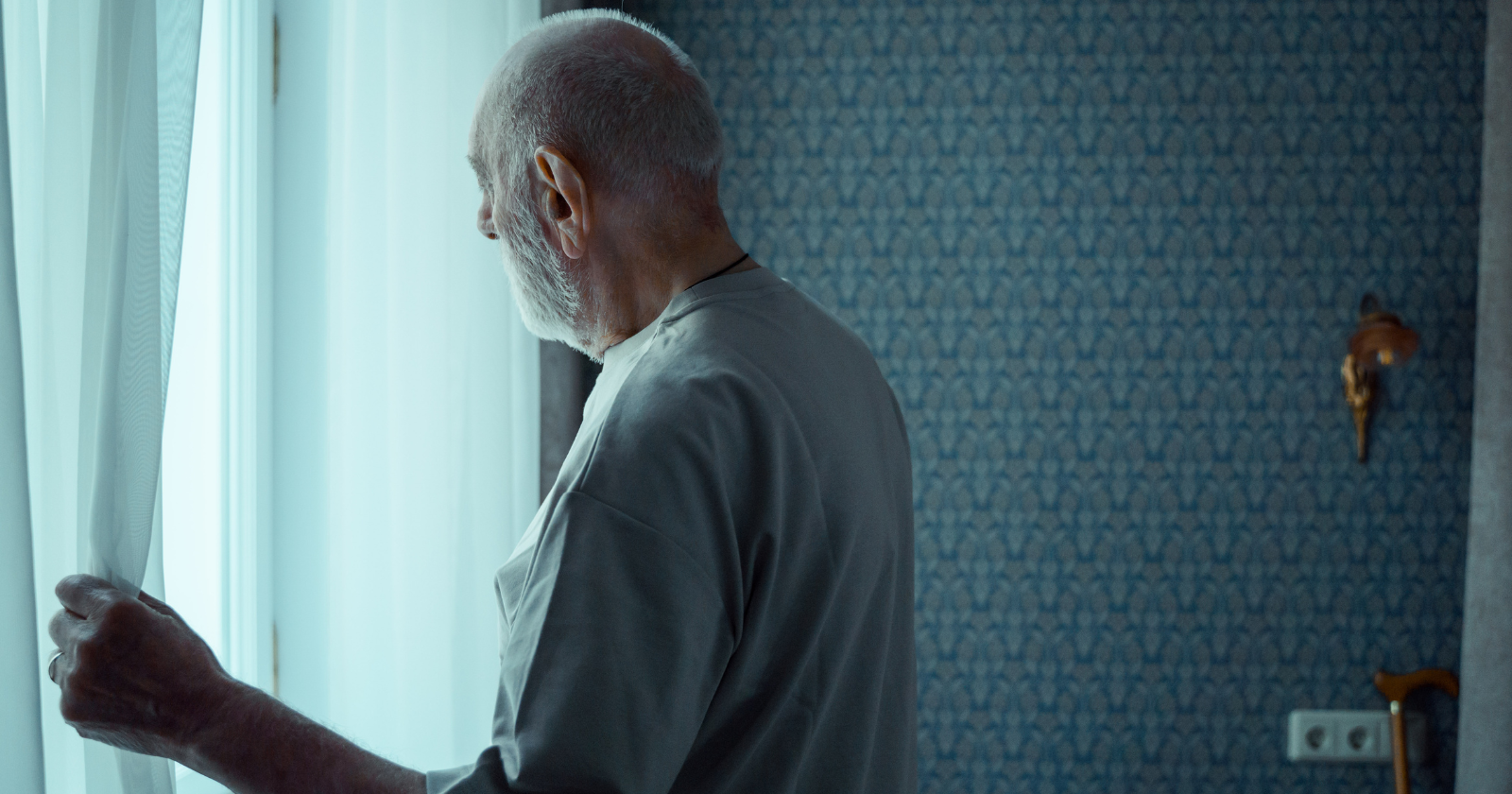
There is a familiar scene in families after retirement. A man who once spoke fluently about deadlines, machinery, customers, colleagues or problems to solve now sits through long stretches without offering much. People around him may decide he is bored, withdrawn or simply has nothing to say.
The identity explanation is more generous. Work may have supplied a title, a schedule, a reason people sought his judgement and a daily answer to the question of where he belonged. Remove all of that at once and conversation can lose some of its old entry points.
But the headline turns this plausible pattern into a diagnosis. There is no study showing that retired men’s silence is caused by losing the only identity anyone valued. Silence is an observable behaviour, not a transparent account of motive.
The whole claim has not been tested
Research on retirement identity generally asks about meaning, satisfaction, social roles and adjustment. It does not place a representative sample of silent retired men in a room, measure how often they speak, and establish that occupational identity explains the difference.
The headline combines three claims: retired men become quiet, the loss of work identity causes that quiet, and nobody valued any other part of them. The first varies between individuals. The second would require a causal design. The third is a judgement about other people’s regard that a survey cannot readily verify.
Psychology gives us reasons to take identity loss seriously. It does not grant permission to read a man’s inner life from the length of a pause.
Work provides more than a job title
A 2023 study in the Journal of Aging Studies interviewed 40 recently retired Danish men about meaning in life. Researchers Mette Marie Kristensen and colleagues identified six themes: family ties, social connectedness, the structure of everyday life, contribution, engagement and time. Work had supported several of them at once.
This matters because the loss can be broader than prestige. A workplace provides repeated contact without requiring anyone to arrange it. It supplies shared subjects, recurring problems, reciprocal obligations and visible consequences for what a person knows. A retired man may retain his expertise while losing the setting that made it socially legible.
The Danish study was qualitative and culturally specific. It can describe how these men made sense of retirement, not explain all retired men. Still, it offers a credible reason conversation can change: the man may not have lost language so much as the structure that regularly called his knowledge into use.
Masculinity shapes the transition without determining it
Many men in older generations were taught to connect adulthood with paid work, provision and competence. A British qualitative study by Helen Barnes and Jane Parry found that traditional gender roles sat less comfortably with retirement for men than for women in their sample. The researchers also stressed the surrounding resources, relationships and non-work activities through which retirement was negotiated.
That is not the same as saying every retired man faces a crisis. Ilkka Pietilä and colleagues interviewed Finnish metal workers and engineers approaching or entering retirement. The language of a crisis of masculinity appeared in their expectations, but not as a uniform feature of their actual experience. Social class shaped both what the men expected to lose and what retirement became.
Some men feel relief when demands stop. Some retain continuity through family roles, trade skills, community membership, hobbies or part-time work. Others never treated employment as the centre of the self. Gendered expectations matter, but they do not erase class, culture, occupation or personality.
Retirement adjustment rests on several resources
A systematic review of 115 retirement studies found stronger evidence for a range of predictors of adjustment: health, finances, personality-related attributes, leisure, voluntary retirement and social integration. Occupational identity belongs inside that larger system.
The voluntary element is easy to miss. Choosing to leave a role is different from being pushed out by restructuring, caring demands or declining capacity. A planned handover is different from an abrupt ending. Two men with the same job title can enter retirement with entirely different resources and interpretations.
Longitudinal evidence also complicates the picture of inevitable decline. A Finnish cohort study of 3,543 public-sector employees found that average life satisfaction improved during the retirement transition and remained stable afterwards. The result does not make identity loss imaginary. It shows that retirement is not one psychological event moving in one direction.
Being needed may matter more than being admired
The strongest part of the headline is its attention to value, although “the only identity anyone ever valued” is too absolute. Research on multiple social identities suggests that adjustment is connected not only with receiving recognition but also with retaining opportunities to contribute.
In a cross-sectional study of 171 retirees, people who reported more valued group identities after retirement also reported greater retirement satisfaction, better subjective health and higher quality of life. The statistical pathway ran more strongly through giving support than receiving it. The design captured one point in time, so it could not establish cause and effect.
A later longitudinal study of 170 Australians in their first year of retirement found that retaining existing group memberships and gaining new ones were associated with better health and life satisfaction. Pre-retirement memberships appeared to help indirectly by creating continuity and making new group ties easier to develop.
This gives the identity argument a more precise shape. Work once said: your presence changes what happens here. Retirement can remove that feedback. Family affection may be genuine, but affection and contribution are not interchangeable experiences.
Silence still has more than one meaning
A quiet retired man may be reorganising a sense of usefulness. He may also be content, tired, reflective, hard of hearing, uncomfortable with a particular conversation or simply someone who has always preferred fewer words. Culture and family habits shape what silence communicates.
The risk in the headline is that compassion becomes another script imposed on him. Instead of deciding that he has nothing to say, people decide they know exactly why he says nothing. Both readings replace curiosity with certainty.
Retirement can take away a role that once made a man’s abilities visible. The silence does not tell us, by itself, whether that is what happened.