

A MIT-OpenAI study of nearly 40 million chats found the heaviest ChatGPT users…
We are writers and editors, not clinicians, psychologists, or therapists.

Technology, AI, capital and institutions, examined through who builds systems, who controls them and who benefits.
11,488 articles · Technology & Power
We are writers and editors, not clinicians, psychologists, or therapists.

In 1991, Cambridge computer scientists Quentin Stafford-Fraser and Paul Jardetzky pointed a grayscale camera at a coffee pot outside the Trojan Room to spare themselves three flights of stairs — and accidentally built the world's first webcam. Here's how a 128×128 pixel workaround for a mundane annoyance turned into the template for every livestream on the planet.

For roughly a billion years — from 1.8 to 0.8 billion years ago — Earth's oceans went chemically stagnant, oxygen stalled, and life did nothing much except reproduce as microbial slime. Geologists call it the Boring Billion, and it is the longest uneventful chapter in the planet's history.

SK Hynix's $26.5 billion U.S. market debut is the largest IPO by a non-American company in U.S. history.

The evidence on the other side is harder to set aside.

Every time you type a question into a chatbot, the reply feels weightless.

As MIT Technology Review put it, "generating an image using a powerful AI model takes as much energy as fully charging your smartphone." That figure came from a single study and describes one particularly heavy model, not image generation in general but a striking comparison is it.

What the IMF did not say on Wednesday matters as much as what it did.
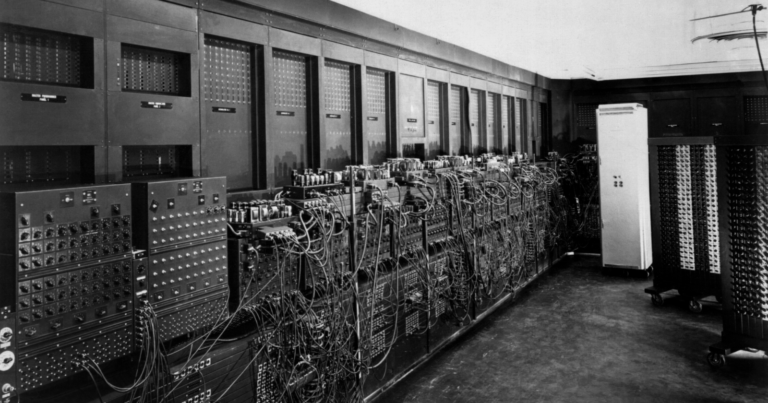
In 1946, six women at the Moore School of Engineering were handed the wiring diagrams for ENIAC and told to program it without manuals. The ballistic trajectory they got running became the first working software ever demonstrated on a general-purpose electronic computer — and their names were left off the press release.

General Intuition, a startup building what it describes as a foundation model for embodied AI, has raised $320 million at a $2.3 billion valuation on the thesis that robotics is approaching the same inflection point language AI crossed with GPT-3. The company's approach — training on millions of hours of video game data rather than real-world robot telemetry — was detailed by TechCrunch this week.

Visa and Mastercard get the blame for card fees, but the biggest slice — called interchange — flows straight to the issuing bank. Here's how the swipe actually splits, and who funds your airline miles.

Interchange fees — the invisible cut card issuers take from every U.S. card swipe — have quadrupled since 2009 to roughly $119 billion a year, quietly baked into the price of almost everything sold with plastic.