

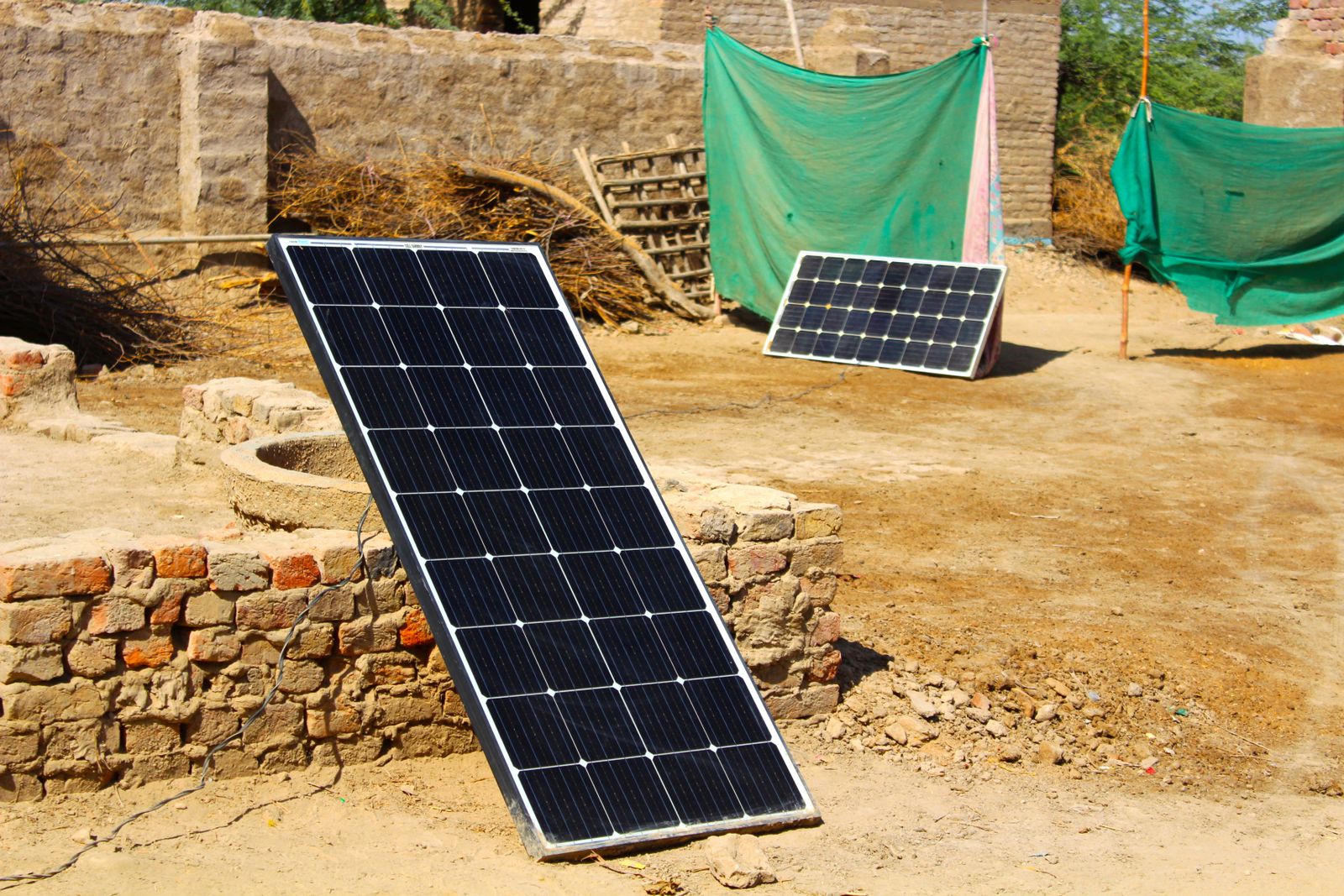
A diesel grain mill is a small, loud furnace where fuel costs can consume a significant portion of customer payments. The fuel goes in, the noise comes out, and the margin sits trapped between them. Swap the engine for a solar-powered motor and the furnace stops eating the margin. That, in one sentence, is the case Nairobi’s small-shop entrepreneurs are building for going off-grid.
The conventional read on African electrification is that countries like Kenya need to build their way out of the access gap with bigger plants, longer transmission lines, and more grid. Most policy modelling assumes universal access arrives by extending the wires. The entrepreneurs running solar mills and solar fridges in peri-urban Nairobi are quietly suggesting the wires might not be the answer at all.
The grid Kenya already has is cleaner than most
Kenya’s centralised power system is already one of the greenest in the world. Geothermal, hydro, and wind do most of the work. The country runs above 90 per cent renewable on its grid, pursuing universal electricity access through a mix of grid extension and decentralised solar, according to the International Energy Agency.
So this is not a story about dirty coal being displaced by clean solar. It is a story about the communities that the central grid still has not reached, and the businesses inside them that run on diesel because diesel is what shows up when the wires do not.
Diesel is expensive. Diesel is loud. Diesel is also, for a grain mill operator on the edge of a market town, the single biggest line item on the books.
What a solar mill actually changes
Grain mill operators face significant challenges with diesel equipment. Customers bring in maize to be ground into the flour that becomes ugali, the dense staple eaten across East Africa and demonstrated in countless kitchen videos online. MIT Technology Review reports that diesel mills are slow, prone to jamming, and consume a substantial portion of revenue in fuel costs.
Matt Carr, the CEO and cofounder of Agsol, the Nairobi-based company building solar versions of these machines, notes that diesel mill operators can spend up to 40 per cent of what they charge customers on fuel. Take that line item to zero and the entire economics of the shop changes.
Agsol’s solar grain mill costs around $1,300 up front, with a payback period between six and twelve months. After that, the machine is significantly more profitable to operate than the diesel one it replaced. The company sold 530 units in 2025 and has raised more than $4 million since launching its first product in Kenya in 2018, supported in part by a UK government innovation programme backing clean-energy hardware for emerging markets.
The cost curve that made all of this possible
None of this works without the solar module itself collapsing in price. Solar panel prices have dropped dramatically in recent years, from roughly $3 per watt to closer to cents per watt. That is not a marginal improvement. That is the difference between solar being a development-aid product and solar being a thing a small-business owner buys because the maths works.
The drop in module prices is what turned the Agsol mill from a curiosity into a cash-flow decision. At $3 per watt, the upfront cost would have been punishing relative to monthly grain-milling revenue. At a few cents, the machine pays for itself before the rainy season is out.
This is the part of the energy transition that does not make European headlines. The headlines focus on giga-scale storage, hydrogen corridors, and grid balancing. The thing actually changing lives in Kiambu County is a panel cheap enough that a woman running a one-room shop can justify the loan.
Productive use, not just lighting
For two decades, off-grid solar in East Africa meant lanterns and home systems. A bulb, a phone charger, maybe a radio. Useful, but consumption-side. The household got light. The household did not get income.
The Agsol model points at something different: productive-use solar. A grain mill is not a lifestyle upgrade. It is a machine that turns sunlight into cash flow. Same logic applies to solar fridges for fish vendors, solar pumps for smallholder irrigation, solar cold-chain for vaccines and dairy.
The shift from consumption-side to productive-use is the bit that lets off-grid solar stop being charity and start being infrastructure. A lantern saves a family kerosene money. A mill changes what a family can earn.
Why this matters for the 2030 target
Kenya is working toward universal electricity access by 2030. Reaching that figure through grid extension alone would require running poles and wires to scattered settlements where the cost-per-connection is brutal and the consumption-per-connection is small. The arithmetic does not close.
Off-grid solar closes the arithmetic by sidestepping the wire. A productive-use solar machine is, in effect, a private mini-grid for one business. Multiply that across thousands of grain mills, welding shops, barber chairs, fridges, and pumps and what emerges is electrification without poles.
The interesting policy question is whether Nairobi’s government starts treating productive-use solar as part of the access calculation rather than a parallel charity track. If a solar mill replaces a diesel one in a village the grid has not reached, has that village been electrified? The technical answer is no. The economic answer is yes.
Solar-as-a-service is finding the same logic in Europe
The financing model matters as much as the hardware. A $1,300 outlay is real money for a shopkeeper, even with a six-month payback. Which is why pay-as-you-go and solar-as-a-service structures are doing as much work as the panels themselves.
This is not only a Kenyan story. Silicon Canals shared before that Berlin-based GIGA.GREEN raised €30 million to scale its solar-as-a-service platform across Germany, letting commercial customers skip the upfront capital and pay for the electricity their roof produces. The structural insight is identical to the one Agsol relies on in Kenya: the panel is cheap, the customer’s capital is the bottleneck, and whoever solves the financing wins the deployment.
In Munich the customer is a logistics warehouse. In Kiambu the customer is a grain mill. The financing math rhymes.
The diesel incumbent is still cheap to buy, expensive to run
One reason diesel hardware persists is that the sticker price is low. A small diesel mill is cheaper to walk out of the shop with than a solar one. The lifetime cost is brutal, but the lifetime cost is not what a cash-constrained buyer optimises for. The buyer optimises for what they can afford this week.
Breaking that pattern requires either financing that flattens the upfront cost or a clear, fast payback that the buyer can be confident in. Six to twelve months is short enough to be believable. Three years would not be.
This is why the Agsol number matters more than it looks. A payback period that fits inside a single harvest cycle is the threshold at which a rural entrepreneur can rationally choose the more expensive machine.
What scales and what does not
530 units in a year is not yet a transformation. There are tens of thousands of diesel mills in Kenya alone, and millions of productive-use diesel engines across sub-Saharan Africa. Scaling from hundreds to hundreds of thousands is the part that almost no off-grid solar company has cleanly executed.
The companies that have come closest tend to share three traits. They build hardware specifically for productive use rather than retrofitting consumer products. They handle financing in-house or through tight partnerships with local lenders. And they invest in service networks, because a broken solar mill 200 kilometres from Nairobi is just an expensive paperweight if nobody can fix it.
Agsol is betting on the first two. The third, service density, is the hardest to fund and the one that determines whether the model survives its own growth.
The climate accounting is almost a side effect
Every diesel engine that gets replaced by a solar one is a small line item on Kenya’s emissions ledger. The aggregate is real but modest by global standards. The bigger climate story sits in the precedent: a country with low historical emissions reaching universal access without building the fossil-fuel infrastructure that wealthier economies are now spending trillions to retire.
That is the leapfrog argument that has been made about mobile phones bypassing landlines and mobile money bypassing branch banking. It is being tested again, in slower motion, with productive-use solar.
The mobile-phone version of the leapfrog worked because the technology genuinely got cheaper than the alternative. The solar version is reaching the same threshold now, mill by mill, fridge by fridge.
The numbers behind the unglamorous machine
The headline figures are worth holding together. 530 Agsol units sold in 2025. A $1,300 sticker price. A payback window of six to twelve months. Up to 40 per cent of revenue clawed back from a fuel supplier the moment the diesel engine goes quiet. On a mill turning over even modest volumes, that translates into hundreds of dollars a year staying inside the shop instead of leaving through the fuel can.
Set that against the addressable base. Tens of thousands of diesel mills are still running in Kenya, and the productive-use diesel fleet across sub-Saharan Africa runs into the millions. Agsol’s 530 units are a fraction of a fraction. But the unit economics — sub-$1,300 hardware, sub-twelve-month payback, panel costs that have collapsed from $3 per watt to cents — sit inside the range where a peri-urban shopkeeper with access to credit can rationally say yes.
The wires may still arrive one day. By then, the mills will already be running on sunlight.
