
In 2004, three psychologists put a name to something most people recognise without having a word for it. Writing in the Journal of Personality, Avi Assor and Guy Roth of Ben-Gurion University of the Negev, with Edward Deci of the University of Rochester, described parental conditional regard: affection handed out when a child meets a standard and quietly withdrawn when they do not. Children raised inside that arrangement, the researchers found, tend to comply out of a sense of internal compulsion rather than choice, and to carry resentment and poorer wellbeing forward with them. It is not a theory about hospitality. But it is one of the clearer places to start when trying to understand the adult who stands in their own doorway apologising for a kitchen the guest has not yet seen.
The apology usually arrives before the coat comes off.
Sorry about the mess. Sorry, I meant to hoover. Sorry, don’t look at the sink.
The house, in most cases, is fine. A cup on the counter. A jumper over a chair. The apology is doing something other than describing the room.
What the apology is actually doing
The easy reading is that these people are self-conscious about cleanliness, or perfectionist, or socially anxious. Sometimes they are. But the pre-emptive apology has a specific shape that doesn’t quite fit the tidiness explanation. It happens even when the house is tidy. It happens with close friends who have seen the place a hundred times. It happens when nobody has looked around yet.
What it looks like, watched closely, is a small tax being paid at the door. A ticket bought before the guest is allowed to enjoy the visit. The host is establishing, quickly and without fanfare, that they know the house is not good enough, that they know they should have done more, and that the guest is being welcomed despite the shortfall rather than into something the host feels entitled to offer.
This is not a diagnosis. It is a way of describing a common pattern.
If you enjoy learning about the psychology of why we behave the way we do, you’ll like this video on self-awareness.
Where the reflex tends to come from
The pattern often traces back to a household in which hospitality was performance rather than exchange. Guests coming over meant the good towels, the hidden clutter, the warning not to sit on that chair, the low-level scramble in the kitchen. The message a child absorbs in that house is not that guests are welcome. It is that guests are a test, and the family passes or fails.
Assor returned to this ground in 2012 with Karen Tal, in a study of 153 adolescents published in the Journal of Adolescence. Teenagers who experienced their mothers’ warmth as conditional on achievement swung between inflated self-regard after a success and self-devaluation and shame after a failure, and that swing predicted a rigid, compulsive over-investment in the next attempt. The standard stops being external at that point. It becomes the thing the person measures themselves against when nobody is watching.
Years later, the adult version of that child stands in their own hallway and pays the tax on their parent’s behalf. The floors don’t have to be dirty. The apology is a habit built on a rule that was never quite unlearned: you don’t just get to have people over. You earn the right, and you announce, in advance, everything the house is not.
Why it sounds like modesty but works differently
From the outside, the apology reads as humble. Self-deprecating. Charmingly domestic. And in most rooms it passes without comment, because the guest is polite and says the house looks lovely and moves on.
The dynamic underneath is less humble than it looks. The apology closes a door the guest didn’t know was open. It settles, quickly, that this is a house being offered with an asterisk. The guest is now on the other side of a small favour rather than an equal welcome. It also, quietly, prevents the guest from noticing anything themselves. The mess has been named first. There is nothing left to observe.
There is reason to think the reflex does not stay in the childhood home. A 2019 paper in Motivation and Emotion, led by Arlen Moller of the Illinois Institute of Technology alongside Guy Roth, Christopher Niemiec, Yaniv Kanat-Maymon and Edward Deci, ran four studies on adults and found that exposure to conditional regard tracked with poorer peer and romantic relationship quality in adulthood. One of the mechanisms the researchers identified was projection: adults raised on conditional terms tended to assume the people around them were operating on the same terms. Someone taught that affection is contingent tends to assume the guest is grading, because grading is the arrangement they know.
The move has something in common with the habit of apologising for taking up space in a photograph or a restaurant booth. The through-line is the same: an early lesson that being seen came with a cost, and that pre-empting the judgement felt safer than waiting for it. Apologising for the house is apologising for occupying it in front of someone else.
A quick note on apologies in general
Not every apology is doing this. Changiz Mohiyeddini, a professor of behavioural medicine and psychopathology at the Oakland University William Beaumont School of Medicine, has written in Psychology Today on what separates apologies that repair from apologies that backfire, noting that an expression of regret offered on its own, without an acknowledgement of harm and responsibility, reads as social lubricant rather than genuine repentance. Some apologies acknowledge harm. Some ask for something back. Some cost the speaker nothing at all. The pre-emptive house apology falls into a fourth category, closer to a toll than a repair: an admission of insufficiency offered before anyone has claimed there was any.
Even the reverse pattern is instructive. The psychologist Guy Winch has argued that people who refuse to apologise even when they are plainly in the wrong are usually protecting a fragile sense of self rather than expressing pride. The person who apologises constantly and the person who apologises never are often working the same problem from opposite ends: keeping a sense of self intact by controlling what other people are allowed to think of them first.
The households where hospitality was never quite free
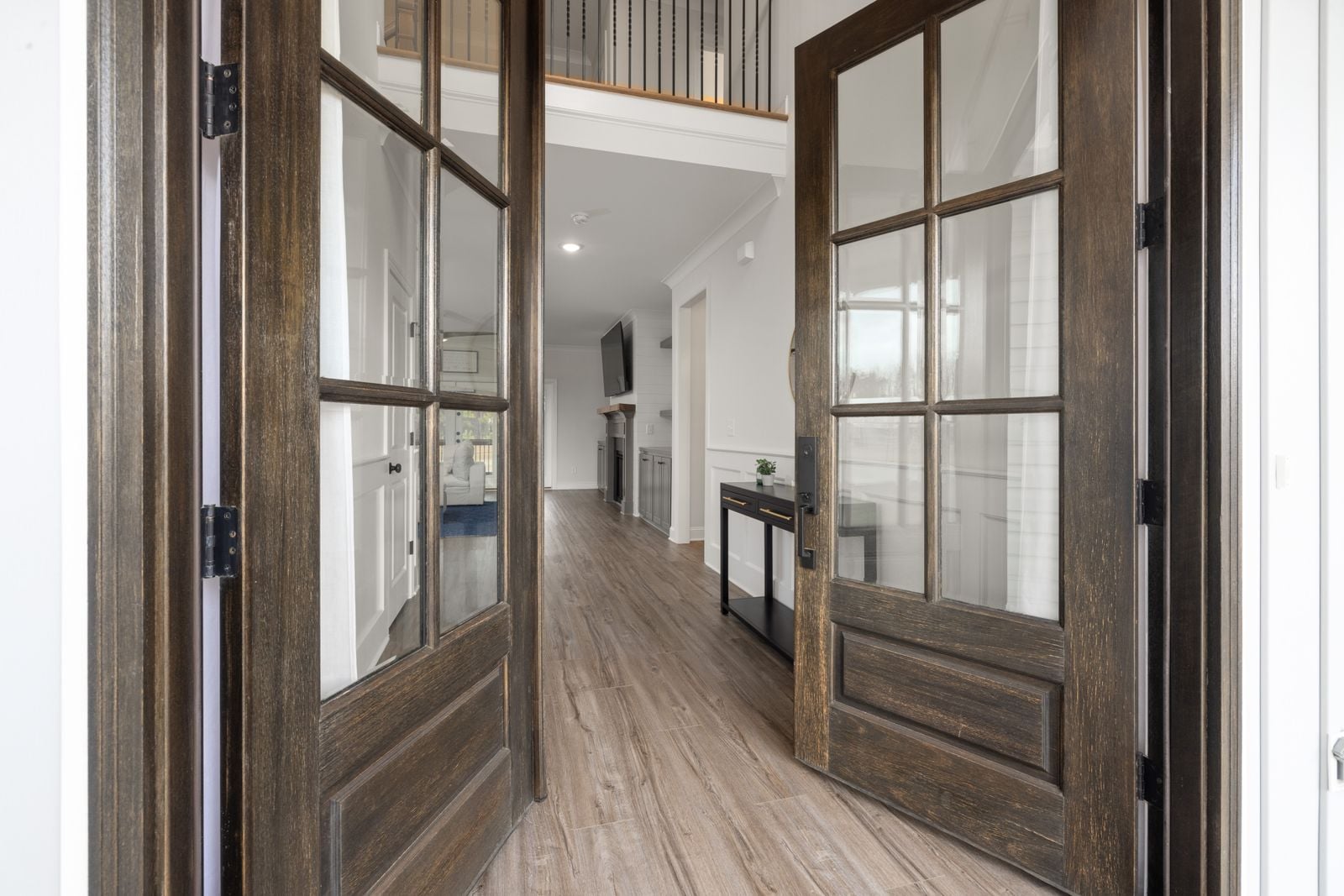
In some houses, having guests was ordinary. Someone knocked, someone answered, the kettle went on, nobody rehearsed. In other houses, guests required an operation. The living room was reconstituted. The child was told to be on best behaviour. The parent’s mood, before and during and after the visit, tracked how the house had been received.
The second kind of house teaches something the first does not. It teaches that welcoming people is a risk. That the room will be graded. That the family’s standing in a stranger’s eyes depends on whether the skirting boards were wiped. Children in those houses learn to read tension around the doorbell. They learn to preview the parent’s apology before the door is opened, and to fill the small silences that follow with helpful reassurance.
That is, mostly, the reflex being carried into adulthood. Not shame about crumbs. A rule about earning the right to have people over.
A related current runs through people who keep the thermostat lower than they would actually like: the sense that ordinary comfort in a home is something a person has to qualify for. Warmth in the room, ease at the door, the assumption that the house can be offered as it is. All three sit close together.
What the source material actually supports
None of this is settled science, and it is worth being precise about the gap. The conditional regard research measured academic achievement, emotion regulation and relationship quality. It did not measure doorways, dish racks, or how often anyone apologises for their kitchen. No study has traced the pre-emptive house apology to a particular kind of childhood. The connection drawn here is an interpretation, not a demonstrated causal chain.
What can be said carefully is this. The pattern of pre-emptive apology is common. It often exceeds what the state of the room warrants. It shows up in people who describe childhoods in which the house had to be presentable before it could be entered by anyone outside the family. And the framework Assor, Roth and Deci built, in which acceptance is felt to be contingent on meeting a standard, and which the 2019 follow-up found still operating in adult relationships, offers a plausible fit for why the reflex persists long after there is no parent in the room to judge the state of the sink.
What softens it
The reflex tends to loosen in the same way most inherited social habits loosen. Slowly, and by noticing. A guest who says, warmly, that the house is fine, and means it. A friend who arrives and doesn’t scan. A partner who points out, gently, that the apology has been offered three times and nobody asked for it. Over time, the person begins to notice they are apologising for a room that contains, at most, a laundry basket.
The habit rarely disappears entirely. It softens into something smaller. A shrug at the counter instead of a full script at the door. An acknowledgement without an apology attached.
People who grew up in houses where guests didn’t require a performance will not fully understand what that softening feels like. For everyone else, the small moment of not apologising at the door, and watching the guest walk in anyway, is its own kind of quiet recalibration.
Most people, on the way to becoming adults with their own front doors, absorbed a rule about what a home has to be before it is allowed to contain other people. Some are still paying the toll on the way in.