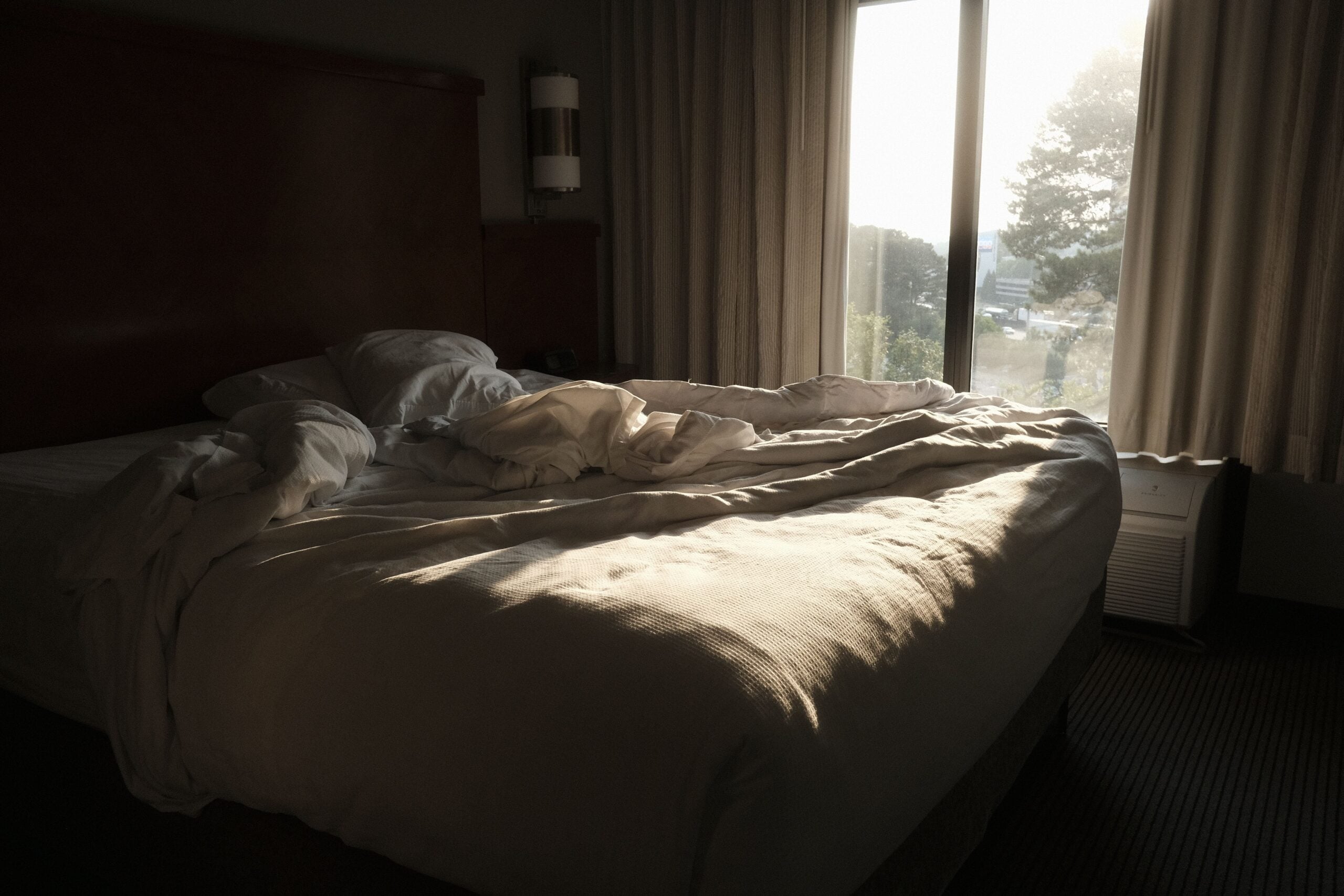
In 1997, a researcher called Jens Pruessner and his colleagues noticed something in saliva samples that had nothing to do with whether the person giving them was an early riser or not. Within the first thirty to forty five minutes after waking, cortisol levels rise sharply, by somewhere between 38 and 75 per cent on average, in nearly everyone who has been studied. It doesn’t matter whether you got up at five or at eleven. The surge, now called the cortisol awakening response, or CAR, turns up on schedule relative to the moment you actually wake, not relative to the clock on the wall.
I find that distinction more interesting than it probably sounds. Most of what gets written about mornings, including a piece I wrote myself not long ago about the genetics of whether you’re naturally a lark or an owl, is really about timing: when you wake, and whether that’s something you can change. The CAR is a different kind of story. It’s not about when your morning starts. It’s about what your body does in the first three quarters of an hour once it has. None of what follows is medical advice, just a look at what the research has found so far; anyone dealing with real exhaustion or chronic stress is better served by a doctor than by an article.
What actually happens in the first 45 minutes
Cortisol has a daily rhythm on its own, rising gradually through the last part of sleep and falling slowly across the rest of the day until it bottoms out around bedtime. The CAR sits on top of that rhythm as a distinct, sharper spike, peaking around half an hour after you open your eyes and fading not long after. It’s been observed from early infancy through old age, and it’s been the subject of a genuinely enormous amount of research since Pruessner’s original finding, somewhere in the range of hundreds of papers a year at its peak.
What the CAR is actually for is still not settled. The leading idea, sometimes called the preparation hypothesis, is that it primes the body and brain for whatever demands the day is about to bring, a kind of biological readiness signal rather than a response to anything that’s already happened.
It isn’t really about the light
The obvious guess is that the CAR is triggered by daylight hitting the eyes. Researchers have tested this directly, and the finding cuts the other way: waking earlier is associated with a larger CAR, which is the opposite of what you’d expect if brighter, later-morning light were doing the work. Kudielka and Kirschbaum, who have published extensively on this, concluded plainly that the response is not simply a reaction to light.
There’s also a genetic thread running through it, separate from the genetics behind chronotype. A twin study put the heritability of CAR magnitude, how big a person’s typical surge tends to be, at around 0.40. That’s a real number worth sitting with alongside the chronotype research I mentioned earlier: whether you lean toward mornings or evenings is partly written into your biology, and separately, so is how strongly your body responds in the minutes after you actually wake, whatever time that happens to be.
Why it might matter for the rest of the day
The part of this research I keep coming back to involves the brain rather than the bloodstream. In one study, participants with a more robust CAR that morning went on, hours later in the afternoon, to show a particular pattern under a demanding working memory task, less activity in the hippocampus and prefrontal cortex paired with stronger coupling between those regions, and better performance on the task itself. A second, pharmacological version of the same study found a causal link rather than just a correlation, using a controlled, placebo compared design rather than only observing who happened to have a bigger or smaller morning surge.
If the preparation hypothesis holds up, that’s a genuinely interesting idea: something happening in the first three quarters of an hour after you wake may be doing real, measurable work on how your brain handles cognitive load that afternoon, independent of caffeine, breakfast, or anything resembling a routine.
The double edge
None of this makes a bigger surge simply better, and I want to be careful not to imply otherwise. A heightened CAR has also been linked to job stress and general life stress in the research literature, while a blunted or reduced CAR shows up associated with fatigue, exhaustion and burnout. The same hormone spike that seems to prepare the brain for a demanding day also seems to track how much demand and strain a person is already carrying. It’s a marker that moves with context, not a dial with an obviously correct setting to aim for. If any of that sounds like more than an ordinary rough patch, a GP or a therapist is a better resource than a research summary.
What I’d take from this
I don’t think this hands anyone a new morning ritual, and I’d be sceptical of any piece that tried to turn it into one. What it does, for me, is complicate the story that a productive morning comes down to what time you get up or how much willpower you can muster before the world starts pulling at your attention. There’s a hormonal process running in the background of everyone’s first forty five minutes awake, lark or owl, five o’clock riser or eleven o’clock one, and researchers still aren’t entirely sure what it’s for. That feels like a more honest place to leave the subject than a tidy piece of advice would.