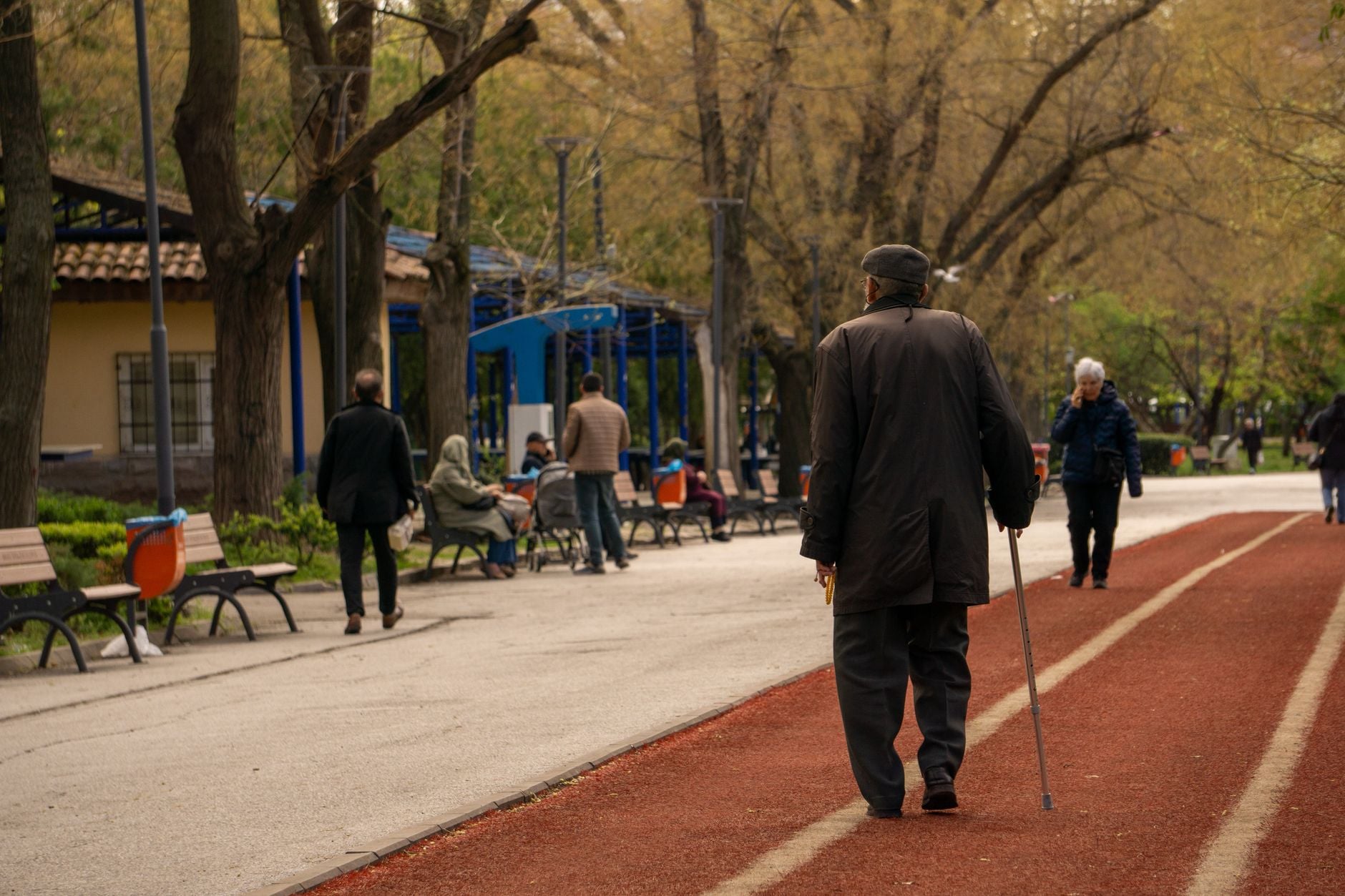
I am 37, which is not old. I do not have the standing to write from the far end of life, and I am wary of turning a few more birthdays into a claim of wisdom.
Still, getting older has made some things harder for me to avoid. They are not grand revelations. Most are ordinary facts I understood intellectually years before I began living as though they were true.
Time is finite. People cannot read my mind. Relationships do not maintain themselves. The person I am now will change again. Most of life happens on days that seem too unimportant to remember.
These are observations, not instructions. Age does not deliver the same lesson to everyone, and it certainly does not make every older person wise. It simply keeps presenting the bill for whatever we have been pretending not to know.
Time becomes less abstract
When I was younger, time felt like a large reserve stored somewhere out of sight. A friendship could be resumed later. A difficult conversation could wait. The book, trip or quiet afternoon I wanted could be postponed until life became less crowded.
Later is still real, of course. It is simply not guaranteed to arrive in the shape I imagined.
Psychologist Laura Carstensen’s work on socioemotional selectivity theory offers one explanation for why priorities often shift with age. Her theory argues that our sense of how much time remains helps organise our goals. When the future feels expansive, exploration and preparation tend to carry more weight. When time feels constrained, emotionally meaningful people and experiences move closer to the front.
This is a body of theory and research about broad patterns, not a timetable for any individual. A young person facing an ending may feel time narrow, while an older person may remain deeply interested in exploration. The useful part, for me, is the idea that chronological age is not doing all the work. Our perception of time changes what seems worthy of it.
I used to think this meant becoming urgent. Increasingly, I think it means becoming selective. Urgency tries to fit everything in. Selectivity accepts that choosing one thing means not choosing another.
Relationships run on time, not good intentions
It is possible to love someone and still let the relationship thin out through inattention. Nothing dramatic has to happen. Two people can care about each other, assume the bond is secure and repeatedly give the available Tuesday evening to something louder.
Jeffrey Hall’s research on friendship development is unusually concrete about this. In two studies, time spent together was associated with greater closeness, while shared leisure and certain kinds of everyday conversation also mattered. The paper cannot assign an exact number of hours to every friendship, and much of the work involved people building new relationships after relocation or at university. It does make a simple constraint visible: closeness requires opportunities to be together.
I have written before about how my lasting friendships became less performative. What I notice now is that honesty was only part of it. Those friendships also survived because, imperfectly, we kept returning. Affection felt permanent, but the relationship still needed hours.
The older I get, the less convincing “we must catch up soon” sounds when it remains detached from a date.
Nobody else can infer the whole private story
Another quiet lesson has been the limit of other people’s perception.
I can spend days forming a careful explanation in my own head, then feel disappointed that someone failed to understand something I never actually said. I can assume that effort is visible, that hurt is obvious or that gratitude has somehow travelled without being expressed.
Usually, other people are working with the small portion I gave them.
This does not mean every feeling must become a conversation or that all relationships are safe places for complete openness. It means I have become less willing to treat being misunderstood as proof that the other person did not care. Sometimes I provided a puzzle with half the pieces missing.
Age has not made difficult conversations easy for me. It has made the cost of avoiding them more familiar. Silence can preserve comfort for an afternoon while creating confusion that lasts much longer.
We keep changing after we feel finished
At almost every age, the current self can feel like the final version. We recognise how much we changed in the past, yet imagine the future will mainly contain more events happening to essentially the same person.
Jordi Quoidbach, Daniel Gilbert and Timothy Wilson called this the “end of history illusion”. Across six studies, people aged 18 to 68 reported having changed more over the previous decade than they expected to change over the next one, including in personality, values and preferences.
It is a finding from one research programme, not a universal rule about everyone, and later work has tested parts of the idea in different ways. I still find the central asymmetry recognisable. The past contains obvious former selves. The future self is harder to imagine, so the person standing here can feel strangely complete.
That has made me gentler about some old decisions. They were made by a person with different information, priorities and fears. It has also made me cautious about building a life so rigid that a future version of me has no room to disagree.
Most days are not preparation for the real ones
A large event is easy to recognise as life: a wedding, a birth, a move, a launch, a loss. An ordinary Wednesday often feels like the administrative material between those events.
Yet ordinary days are where relationships are maintained, meals are shared, work is done and a home slowly takes on its atmosphere. They are not especially vivid, but they make up most of the calendar.
I thought about this while writing an earlier piece on people who stop saving clothes, rooms and good china for a future that keeps receding. The detail that stayed with me was not the china itself. It was the habit of treating the present as a rehearsal space for a more deserving life.
I know that habit. I can postpone enjoyment until the work is finished, the week is tidier or I have become the kind of person who has earned an unproductive afternoon. The conditions keep moving because a life produces fresh obligations faster than I can clear the old ones.
Recognising this has not turned every Tuesday into an occasion. Most Tuesdays are still Tuesdays. I have simply stopped expecting meaning to announce itself before it arrives.
Getting older does not settle the argument
There is a comforting story in which age strips away vanity, teaches proportion and leaves a person peacefully certain about what matters. I can see why the story appeals. I just do not think time works so neatly.
People can become more open or more defended. Experience can deepen judgement, but it can also give old assumptions a longer history. A mistake repeated for twenty years does not become a principle merely because it has lasted.
The modest change I recognise in myself is a greater willingness to leave some questions unresolved. I do not need every disagreement to end with somebody declared right. I do not need every ambition to prove something about my worth. I am getting better at noticing when I want certainty mainly because uncertainty is uncomfortable.
None of these lessons stays learned. I forget them, act against them and remember them again, usually after making the familiar mistake.
Perhaps that repetition is part of getting older too: not graduating from the same human problems, just recognising them a little sooner when they return.