There is a drawer in many houses that nobody opens without a reason. Sometimes it is a shoebox on top of a wardrobe, a folder at the back of a filing cabinet, or a tin that once held biscuits. Inside are birthday cards, condolence cards, postcards, and the occasional letter.
Most may have come from people who are still alive, but the ones written by people who have died are often the reason the collection survives. From the outside, keeping them can look like an inability to throw things away. From the inside, the attachment is usually much more specific.
The person is not necessarily attached to the card as an object. They are attached to the eight or nine words in blue biro at the bottom, written in a hand they can never ask to see again.
What the card is actually holding
A loved one’s voice can become difficult to summon clearly after they die. It may return unexpectedly in a dream, in a familiar phrase, or in the voice of a stranger, yet remain frustratingly absent when deliberately called to mind. Photographs preserve a face, but handwriting preserves a different kind of presence.
Handwriting is physical evidence that a particular person was in a particular place, thinking about you long enough to pick up a pen. A printed message from a company does not carry that evidence, and a typed message does not contain the same physical movements. The shape of each letter came directly from the person who wrote it.
Once that person is gone, the supply is fixed. Every surviving card becomes part of a finite archive, and discarding one permanently reduces the amount of that handwriting left in the world. What looks like loose sentimentality can therefore be a quiet recognition that the object cannot be replaced.
Why this is different from hoarding
The language of clutter has become so common that almost any attachment to a physical object can be treated as unhealthy. That flattens an important distinction. Keeping a modest collection of irreplaceable cards is not the same as experiencing persistent difficulty discarding possessions across everyday life.
Medical News Today describes hoarding as a broader pattern involving distress around discarding and accumulation that compromises the use of living spaces. Those features concern the extent of the accumulation and its effect on daily life, not simply the emotional importance of one category of belongings.
A small stack of cards in a drawer does not, by itself, fit that broader pattern. The drawer closes, the house remains usable, and the person may have no comparable difficulty discarding ordinary possessions. The cards have been selected because of who wrote them and because no new examples of that handwriting can ever be produced.
The same person may discard cards from living friends without much hesitation. That selectivity matters because it shows that the attachment is not indiscriminate. It is connected to loss, memory, and irreversibility.
Attachment does not simply disappear
Grief specialist and clinical social worker Phyllis Kosminsky co-authored a discussion of attachment and bereavement with Mark Shelvock. They describe healthy grieving as the ability to move attention towards and away from loss while remaining connected to the rest of life. Their account also explains that re-engaging with life does not require relinquishing attachment to the person who died.
That distinction helps explain why a card can remain meaningful without preventing someone from continuing with life. The relationship no longer receives new conversations, visits, or messages, but its place in the person’s internal world does not immediately vanish. The card is one of the traces through which that connection can still be encountered.
A card that has remained unopened for three years may even feel unfamiliar when it is finally read again. The handwriting is known, but the exact wording may have been forgotten. The encounter is not new contact, yet it can briefly restore a detail that memory had stopped supplying.
Attachment can extend to people, objects, and ideas. A handwritten card can contain elements of all three: a physical object, a trace of the person, and a reminder of what it felt like to be known or loved by them.
The specific power of handwriting
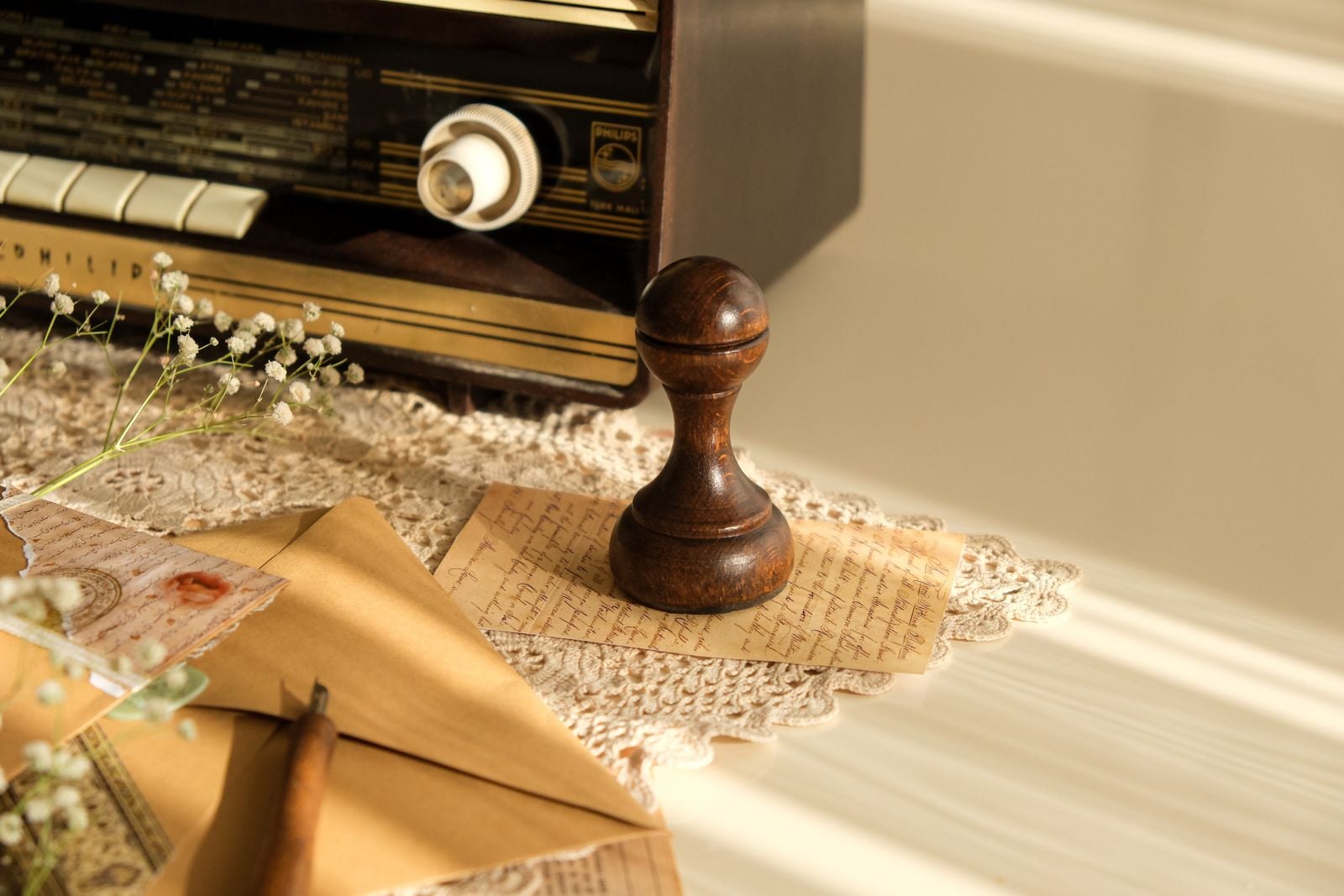 Photo by betül nur akyürek on Pexels
Physical reminders have long formed part of the ways people remember those who have died. A Psychology Today discussion of grieving objects notes that such objects can provide solace, even if only briefly. Its focus is pregnancy loss, but the more limited observation applies here too: a tangible trace can help preserve a connection that can no longer be renewed in person.
Handwriting is particularly effective because it is idiosyncratic. There is the loop of a lowercase g, the way someone crossed a seven, whether they wrote xx or xxx at the end, and the word they always misspelled in exactly the same way. These details can evoke a person more precisely than a generic object associated with them.
This is why someone who has cleared out almost everything else may still be unable to discard a card that says, in blue biro, hope this is a good one, love from Dad. The sentence may be ordinary, but the hand that wrote it is not reproducible.
Why the pattern gets misread
Other people may describe the behaviour as being stuck, usually with good intentions. The assumption is that keeping the cards means the person has failed to move forward and would benefit from letting go. That interpretation confuses continuing to value a trace with refusing to accept a loss.
The card does not necessarily prevent grief from changing or life from continuing. It may simply preserve evidence that the person existed in a form less vulnerable than unaided memory. Knowing the card is there can matter even when it is rarely opened.
The distinction is between an object that restricts someone’s life and an object that quietly accompanies it. A drawer containing a few letters can remain closed for years while work, relationships, travel, and ordinary routines continue around it.
The scale of the pattern matters
No single possession can establish what someone’s broader relationship with objects looks like. A drawer of selected cards is different from accumulation that overtakes living spaces or causes continuing distress and disruption. The existence of the cards alone does not justify applying a clinical label.
It is possible to acknowledge that distinction without declaring every form of keeping harmless. The relevant question for this article is narrower: why can a few pieces of paper feel impossible to discard when thousands of other objects do not? Their meaning comes from their scarcity, their authorship, and the fact that no replacement can ever arrive.
What the drawer is really for
People who keep these cards may not reread them very often. The point is not always the content of the messages. Sometimes it is enough to know that the object exists in a particular place and could be opened if memory needed help.
Years later, one card may be taken out. There, in a hand that had almost been forgotten, is a sentence written on an ordinary afternoon by someone who was thinking about its recipient. The room where it was written may no longer exist, but the movement of the pen remains.
The card is not a substitute for the person, and it never was. It is evidence that the person was once in the world and that, for part of the time they spent there, they were thinking about someone they loved.
That is not an entire life trapped in a drawer. It is one surviving trace of a life, and a reasonable thing to keep.