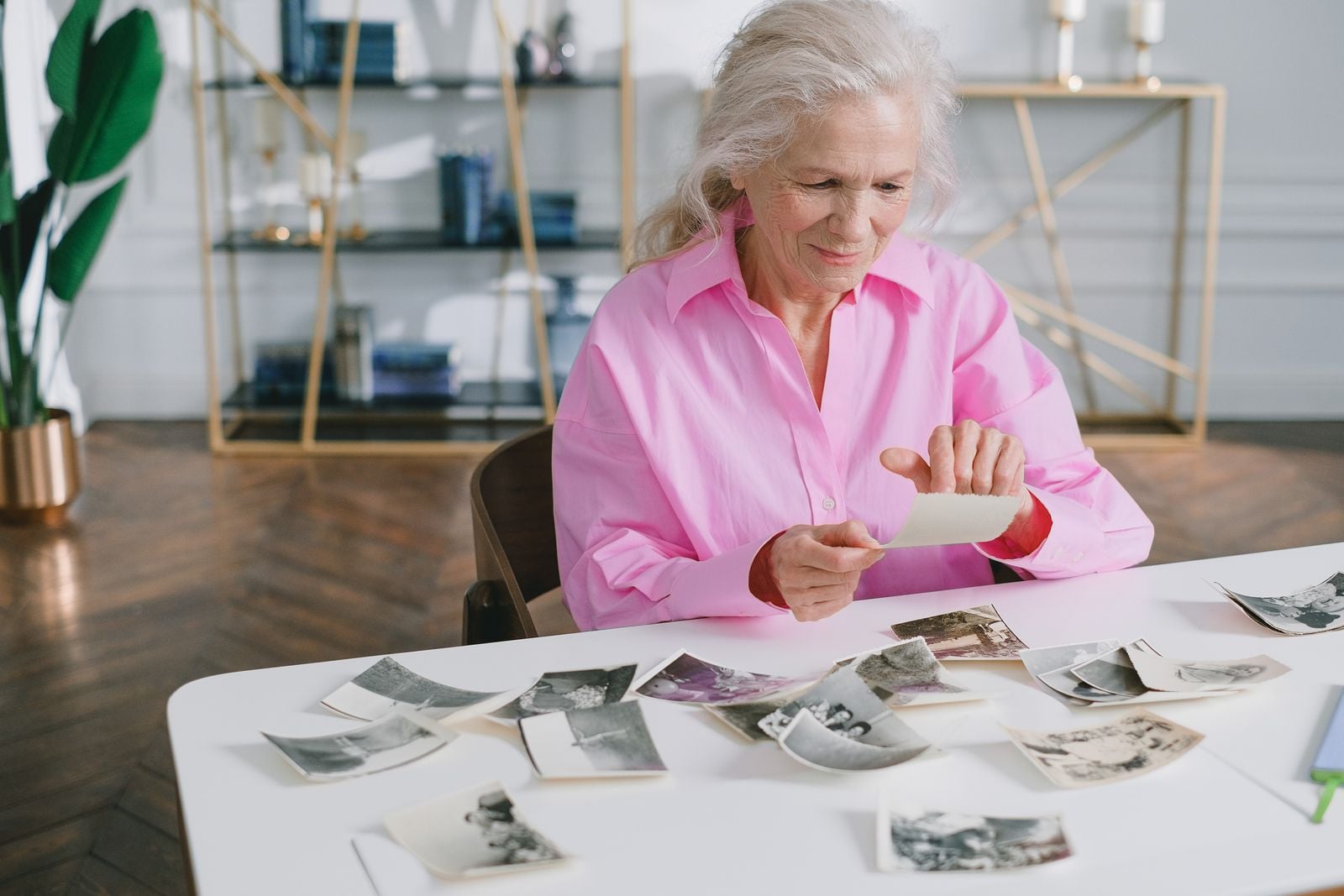
The common story about adulthood is that you leave home, become yourself, and your parents watch that self unfold from a slightly further distance. The more accurate story is that at some point the picture your parents hold of you stops updating, and you keep living past the edge of it. You go on becoming someone. They go on describing someone who used to be there.
This is not a rupture. It is rarely dramatic. It happens over years, in small increments, and most people only notice it during a specific kind of visit home, when a parent refers to a preference you no longer have, a fear you outgrew, a friend you stopped speaking to in 2016, or a version of your career that ended two jobs ago. The reference is affectionate. The reference is also wrong. And the wrongness is oddly hard to correct, because correcting it feels like arguing with someone’s memory of loving you.
What’s striking, looking at this pattern, is how little of the ordinary language of adulthood accounts for it. The common language is about becoming independent, about becoming an adult. There is little language for the stranger part: the business of continuing to grow while the people who once knew you best have quietly, and without meaning to, stopped taking new notes.
The version of you that got frozen
The freeze usually happens around the point of leaving. It might be university, a first job, a move to another city, a marriage, or simply the moment a parent stopped being the person you told things to first. Whatever the exact moment, the internal file gets closed. New information still arrives, but it is filed as an update to the old file rather than a new one. You are still, in your parents’ working model, the child who was afraid of the dark, or the teenager who was reckless with money, or the twenty-two-year-old who almost took the wrong job.
Emerging adulthood, a stretch from the late teens through the twenties, is a period in which people try on roles, revise their sense of self, and slowly consolidate a coherent identity. Much identity work happens in this window, and much of it is invisible to anyone not living inside it. Your parents were not in the room for most of it. They were doing their own lives. They saw the results at Christmas.
Which means the picture they hold of you is not lazy. It is just under-informed. It is what they could reasonably infer from the visits, the phone calls, the summaries you offered when you were tired.
Why the mismatch is hard to name
Part of what makes this experience strange is that it does not sit easily inside the usual categories of family conflict. It is not estrangement. It is not a fight. It is not, in most cases, a parent being difficult or unreachable in the way pride can sometimes make a parent protect their standing over the relationship itself. It is closer to a slow-motion mistranslation. Two people who love each other are working from different editions of the same book.
The friction shows up in small ways. A parent says, you were always the shy one, and you have run a team of forty people for six years. A parent introduces you at a family lunch using a job title you left in 2019. A parent gives you a birthday gift keyed to an interest you had at nineteen. A parent worries about a fragility you have long since worked through, or fails to notice a new fragility you did not have back then.
You could correct any single instance. Most people don’t. The cost of the correction feels higher than the cost of being slightly misidentified. And so the gap widens, quietly, and the version of you that got frozen keeps getting older without keeping pace.
What parents actually miss when they get it wrong
A YourTango roundup of phrases parents should never say to adult children, drawing on the observations of several family therapists, collects a set of things parents say to adult children that damage the relationship. What is striking about the list is how many of the phrases assume a version of the child that no longer exists: you don’t know how the world actually works, when are you getting married?, you wouldn’t survive without us. Each phrase is delivered from inside the old file. Each one is a small act of not seeing.
The therapists quoted in the piece frame this mostly as a communication failure, and it often is. But underneath the communication failure is something quieter: a parent updating slowly, on a different clock, because they are also aging, also frightened, also adjusting to a role they were not trained for. That is a related but different problem from the reversal that happens later, when adult children become the ones their parents turn to for reassurance. The frozen-picture problem happens earlier. It happens while everyone still feels healthy.
The grief nobody quite names
There is a specific loneliness that comes from realising the people who knew your earliest self are no longer the people who know your current self. It is not the loneliness of not being loved. It is the loneliness of not being described accurately by the people whose descriptions used to feel most true.
For a long time, the people who knew you best were, by definition, your parents. They had the fullest archive. They remembered the fever you had at four, the teacher who was cruel in Year 6, the summer you refused to eat anything green. Somewhere in your late twenties or thirties, that archive stops being the most important one. A partner knows you better in some ways. A close friend knows you better in others. A colleague sees a version of you at work that your parents have literally never met.
None of this is a betrayal of anyone. It is just the natural drift of a life. But it means the person you are on a Tuesday afternoon in your own kitchen is not really the person your parents would recognise if they walked in unannounced. They would recognise the face. The rest would take some catching up.
The temptation to keep performing the old self
One thing that happens, and it happens more often than people admit, is that adult children start performing the older, frozen version of themselves at family gatherings. You revert to the family joke you outgrew. You accept the description that no longer fits. You agree that you’re still the anxious one, or the disorganised one, or the one who never quite settled.
The performance is not dishonesty. It is a kindness, of a kind. It preserves the shared story. It keeps the visit smooth. It saves everyone the effort of updating.
The cost is that the performance keeps the mismatch alive. If you keep answering to the old file, the file stays open. And after enough years of small performances, you can end up in a strange position: your parents know you thoroughly, but only as you were, and you are the one keeping that fiction operational.
What updating the picture actually asks for
Updating is not a single conversation. It is not a revelatory dinner in which you finally tell your parents who you really are now. Those scenes work in films because films need scenes. In life, the update happens by accumulation. It happens when you mention, in passing, that you have changed your mind about something big. It happens when you let a parent see you handle a problem in a way the old version of you could not have handled. It happens when you correct, gently, a description that no longer fits, instead of laughing it off.
Some parents update readily. Some resist. The resistance is often not about you. It is about what your changing means for their own sense of the family, their own competence as a parent, their own timeline. A parent who has to admit that their child has become someone new also has to admit that time has moved in a direction they cannot reverse.
The reverse also matters. Your picture of your parents gets frozen too. The parents in your head are often the parents from a specific year of your childhood, and the actual people on the other end of the phone have moved on from that year in ways you have not fully absorbed. The mismatch runs both ways. It is just less visible from the child’s side, because the child has spent a lifetime being the object of the parents’ description, not the other way round.
A quieter observation
None of this is a problem to be solved. It is a feature of loving anyone for a long time across changing versions of both of you. The people who knew you first are not obliged to keep up with every revision. You are not obliged to stay legible to them in every detail.
What seems to help is holding both truths at once. The version of you your parents describe is not who you are now. It is also not nothing. It is a record of who you were when they were paying closest attention, and there is something worth keeping in that, even as you keep moving past it.
You outlive that version. You keep going. The picture stays where it was, and you carry the more current one yourself, and sometimes, on a good visit, you catch your parents seeing you clearly for a moment, and you realise the update was possible all along. It was just slower than either of you expected.