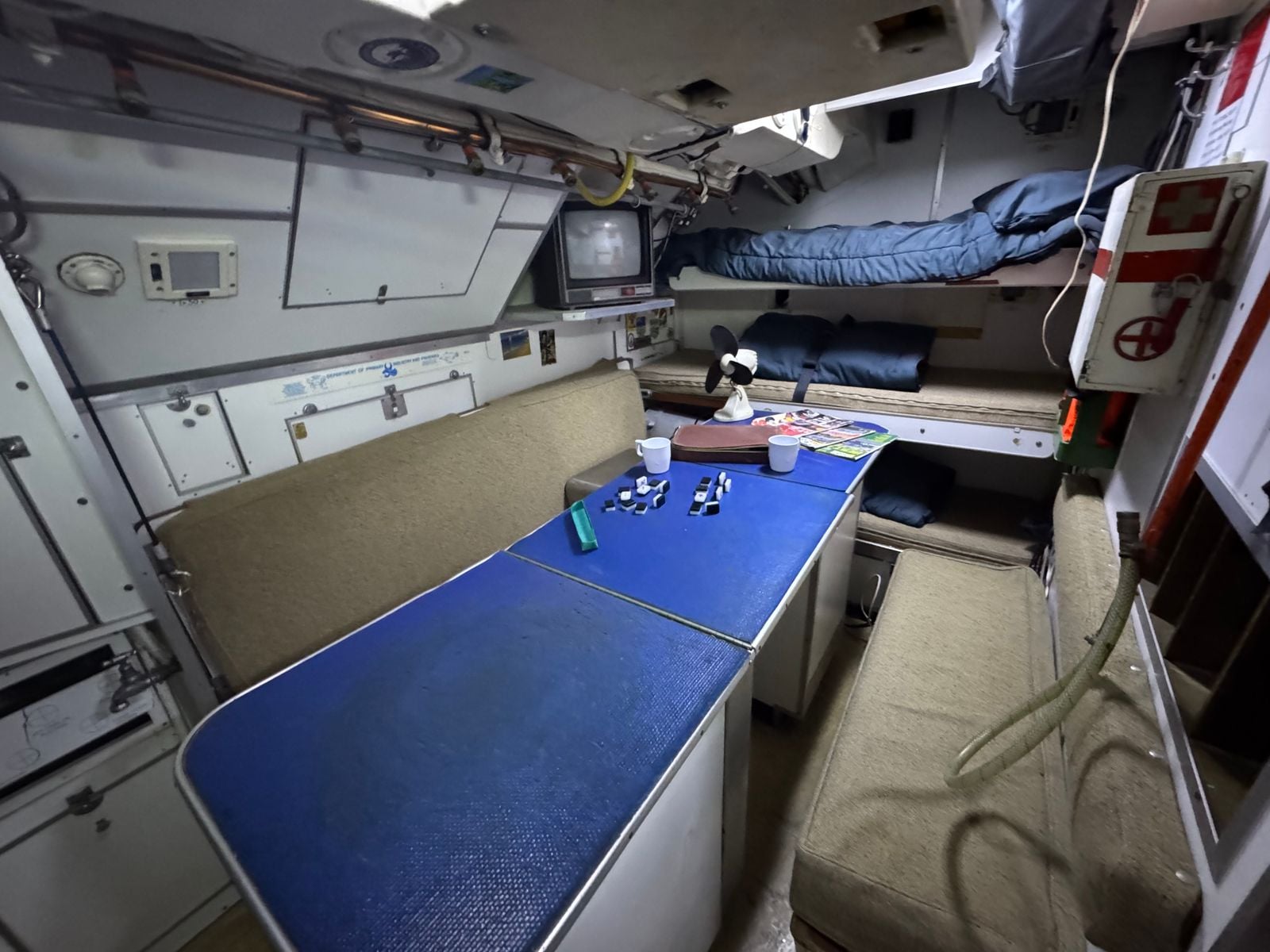
The order came down in mid-October 1957. Build a satellite that could carry a living passenger, and have it on the pad by the 40th anniversary of the Bolshevik Revolution. Sergei Korolev’s team had roughly four weeks. The cabin they bolted together had a fan, a heat exchanger, a chemical air regenerator, a gel feeder with about a week’s worth of paste, and no heat shield capable of bringing any of it home.
The thermal control system was designed around an assumption that did not hold. It assumed the upper stage of the R-7 would separate cleanly from the capsule. It did not. Part of the insulation tore loose on ascent, the core stage stayed attached, and within a few orbits the cabin temperature was climbing past 40°C. The passenger inside was a small mongrel with pricked ears and a white chest, pulled off the streets of Moscow roughly a week before launch. Her name was Laika, and she was dead within hours of liftoff from the Baikonur Cosmodrome on 3 November 1957.
The engineers who strapped her in knew she was not coming back. There was no parachute. No recovery trajectory. No plan. Sputnik 2 was a one-way object built in under a month to satisfy a deadline set by Nikita Khrushchev, who wanted a spectacular follow-up to the launch of Sputnik 1 on 4 October 1957.
A dog chosen for the streets she came from
Laika was about three years old and weighed roughly 6 kilograms, the size of a small terrier. Soviet space medicine veterans recalled later that she was picked from a group of stray females rounded up in Moscow because females did not need to lift a leg to urinate, which simplified the design of the waste-collection harness. Strays were preferred to laboratory-bred dogs on the assumption that an animal that had survived a Moscow winter would tolerate a cramped pressurised capsule better than one raised on kibble in a warm kennel.
She was trained for about three weeks alongside two other candidates, Albina and Mushka. Training meant being placed in progressively smaller cages for up to 20 days at a stretch, fitted into a sanitation device, and spun in a centrifuge that simulated the g-forces of launch. By the end, the dogs were urinating and defecating less, their pulses had slowed, and their general condition had deteriorated. Albina was held back as a backup because she had recently given birth to puppies. Laika was assigned the flight.
A capsule built in under a month
The order to build a satellite carrying a living passenger came down in mid-October 1957, less than two weeks after Sputnik 1 had stunned the United States by beeping over their heads at 96-minute intervals. Korolev was told to have the new payload ready by the November holiday.
What his team assembled was a conical pressurised cabin bolted to the upper stage of an R-7 rocket. Inside it sat a fan, a heat exchanger, a chemical air regenerator that absorbed carbon dioxide and released oxygen, and a gel feeder containing about a week’s supply of nutritive paste. There were two cameras and biomedical sensors monitoring Laika’s heart rate, breathing rate, and blood pressure. There was no heat shield capable of bringing the cabin back through the atmosphere intact. The plan, such as it was, called for Laika to be euthanised by a poisoned final meal after about a week in orbit.
The thermal control failure
Here is where the mechanism matters. Sputnik 2’s cabin had a cooling system that depended on the upper stage of the R-7 separating cleanly from the satellite. It did not. The Blok A core stage stayed attached to the capsule, and part of the thermal insulation tore loose during ascent. Inside the cabin, temperatures climbed past 40°C within a few orbits. That is roughly the temperature of a hot bath.
Telemetry showed Laika’s heart rate spiking to roughly three times its resting level during the launch acceleration, then taking three hours to settle back down, far longer than it had during ground centrifuge tests. By the fourth orbit, the biomedical signals from the capsule had gone flat.
For decades, the Soviet account was that she had survived in orbit for several days before being painlessly euthanised. The truth, that she had died of heat stress and panic within five to seven hours of launch, was confirmed only in 2002, when Dimitri Malashenkov of the Institute for Biological Problems in Moscow presented the data at a space congress in Houston.
What an overheating dog’s body actually goes through
Dogs cool themselves almost entirely by panting, evaporating water across the tongue and the lining of the mouth, because their skin produces very little sweat. In a sealed capsule with a failing fan and rising humidity, that mechanism breaks down quickly. As core body temperature climbs past 41°C, proteins begin to denature, the gut lining becomes permeable, and the cardiovascular system races to push blood toward the skin to dump heat that has nowhere to go.
Laid on top of that is the acute stress response itself. Work on primates at the Emory National Primate Research Center has shown that even routine relocation and isolation produces a sharp rise in plasma cortisol and the inflammatory cytokine interleukin-6. The protocol involves taking a macaque out of her social group and transporting her to a new building. Measurable changes in glutamate signalling in the medial prefrontal cortex follow. The body’s stress-response system lights up. The animal’s whole physiology is recruited for an emergency that the cage will not let it escape.
Recent epigenetic work has shown that even a single acute stress event leaves measurable changes in DNA methylation across stress-regulating genes. Studies at the University of Vienna have linked acute stress to rapid changes in gut microbiome composition within hours. None of that science existed in 1957. What the engineers monitoring Laika’s telemetry saw was a pulse that would not come down, breathing that would not normalise, and then nothing.
What the public was told
For five months, Sputnik 2 continued to circle the Earth with a dead dog inside. The satellite completed roughly 2,570 orbits before burning up on re-entry on 14 April 1958, taking Laika’s body with it. TASS reports during those months described her as alive and being monitored, and Western newspapers reported the same. The Soviet press eventually said she had been put to sleep humanely with a poisoned meal after about a week.
Oleg Gazenko, the scientist who had selected and trained Laika, reportedly expressed deep regret about the mission in 1998, more than 40 years after the flight, saying the knowledge gained did not justify the dog’s death. Gazenko reportedly told a press conference that the scientific knowledge gained from the mission was not worth the animal’s life.
What the flight actually proved
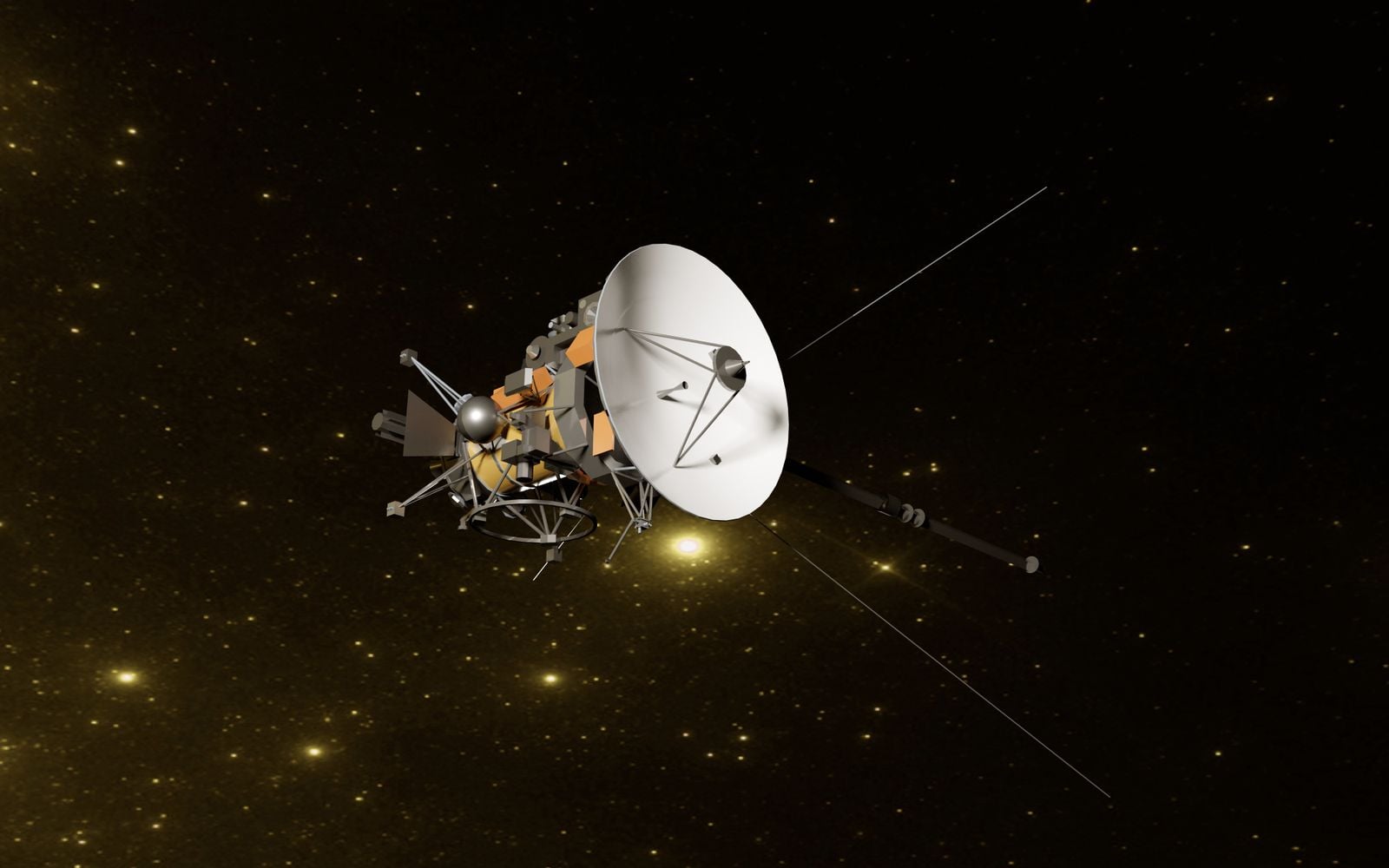
Sputnik 2 demonstrated three things. A living mammal could survive launch acceleration. A living mammal could survive several hours of weightlessness without immediate collapse, which had been one of the open questions. Some physiologists believed the cardiovascular system would fail in freefall. And a hastily designed life-support system could keep an animal alive long enough to gather telemetry, but not long enough to bring it back.
That third lesson is the one that shaped everything that followed. The capsules that carried Belka and Strelka in August 1960, the first dogs to survive a day in orbit and return alive, had redesigned thermal control, ejector seats, and a parachute recovery system. Yuri Gagarin’s Vostok capsule in April 1961 inherited that hardware. The principle that you do not put a passenger into orbit without a way to get them down again became, retroactively, a rule.
The trace she left
Laika was not the first animal in space. American V-2 rockets had carried fruit flies above the Kármán line in 1947, and a rhesus monkey named Albert II in 1949. She was the first living creature to orbit the Earth, and the first to die there.
A small monument was unveiled near the military research facility on the outskirts of Moscow where she had been trained, in April 2008. It shows a dog standing on top of a rocket. There is a plaque inside the Memorial Museum of Cosmonautics in Moscow that lists her flight among the firsts of the Soviet programme, alongside Gagarin’s and Valentina Tereshkova’s, without dwelling on what happened in those five hours.
The pattern of sending creatures into hostile environments and only later working out what to do with the bodies recurs across the history of exploration. When Apollo 11 splashed down in the Pacific in 1969, the astronauts were sealed in a quarantine trailer for weeks because nobody could rule out lunar microbes. That was an excess of caution that ran in the opposite direction from the deficit of caution that had killed Laika twelve years earlier.
Some of the most consequential machines and ideas in this field began as improvised, undercooked prototypes. Silicon Canals has covered how Elon Musk’s first Mars plan in 2001 was a tiny greenhouse called Mars Oasis, conceived as a publicity stunt rather than a colony, and how Linus Torvalds described his early Linux kernel as “just a hobby” before it ended up running most of the world’s cloud servers. Sputnik 2 sits in that same category of half-finished objects that altered history. The difference is that it had a passenger.
A small body in a steel cone
The capsule that held her was about 4 metres long and roughly 2 metres across at its widest point. Inside the pressurised compartment, the space allotted to Laika was smaller than a domestic oven. She was wearing a harness that allowed her to stand, sit, or lie down, and almost nothing else. The last image of her, taken at Baikonur before the hatch was closed, shows her looking at the camera with her ears forward and her tongue out, a posture that anyone who has lived with a dog will recognise as alert and slightly worried.
The engineers knew the cooling system was untested at orbital conditions. They knew there was no way home. They launched anyway, because the deadline was a political one and the passenger was a stray. The lesson the Soviet programme drew was technical: build a better thermal system, add a parachute, design a recovery. The lesson it did not draw, the one that gets harder to avoid the longer you look at the telemetry, is that the calculation itself was the problem. A pulse that will not come down is not a data point. It is an animal asking to be let out of a box.
We still make this calculation. The subjects change. The deadlines do not.