

Retirement planning is usually presented as a financial problem with a date attached. Work out the income, estimate the expenses, choose the final day and hope the life on the other side feels like freedom.
The people who appear to settle into retirement most easily often seem to have planned for a different kind of loss. Long before the farewell lunch, they have begun moving three functions of work elsewhere: the structure that starts the day, the people who notice their presence and the proof that something is better because they contributed.
The title is an interpretation, not a finding from one study. Researchers have not compared retirement account balances with this exact trio and established which matters most for every retiree. Financial security remains a major part of retirement adjustment, and no social routine can make inadequate income unimportant.
Yet the broader evidence does challenge the idea that money completes the preparation. A 2022 meta-analysis covering 915 effect sizes and 78,632 participants compared five established categories of retirement-adjustment predictors. Social participation had the strongest positive association, followed closely by physical health. Marital relationships, finances and the conditions under which people left work also mattered.
Those were associations, not guarantees. A pension answers only one of the questions work was answering.
Money matters, but it cannot organise a day
A healthy savings balance can reduce fear and expand choice. It can pay for housing, transport, leisure, care and the ordinary freedom to say no. Treating money as superficial would be particularly careless for people approaching retirement after interrupted employment, caring responsibilities, illness or low-paid work.
At the same time, money cannot decide what Tuesday morning is for.
A systematic review of 115 retirement studies classified adjustment predictors into 26 categories. The strongest bodies of evidence included finances and physical health, but also leisure, voluntary retirement, social integration and personality-related attributes. No single resource replaced the rest.
This helps explain why two people with similar pensions can experience the first months so differently. One has left a job. The other has lost the mechanism that supplied time, contact, responsibility and recognition in one package.
Work is unusually efficient at bundling these things. It places meetings on the calendar, creates repeated contact without requiring invitations, assigns problems with visible consequences and makes absence noticeable. Retirement can remove the bundle in a single afternoon.
The preparation described in the title is less about finding one grand new purpose. It is about unbundling work before work disappears.
They replace the reason to get up
A reason to get up does not have to be a mission. Often it is simply an obligation with a time and a place.
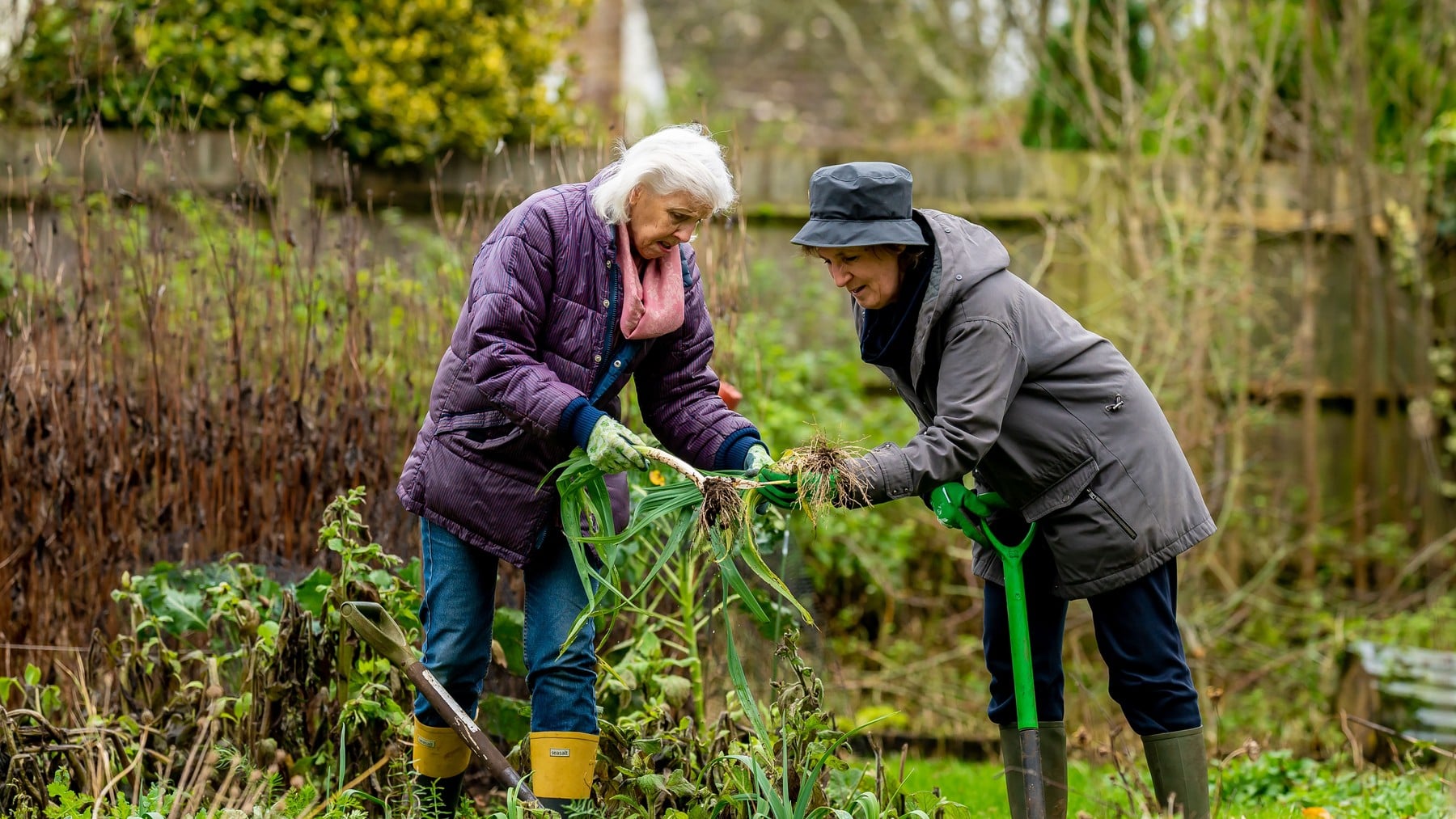
Someone opens the community garden on Wednesday. Someone takes a grandchild to school twice a week. Someone attends a language class where unfinished homework will be noticed. Someone walks with the same neighbour before the heat, rehearses with a choir or keeps the score for a local team.
The activity matters partly because it is not endlessly negotiable. “I could do that whenever I like” sounds like freedom, but an entirely flexible day can be strangely difficult to begin. A recurring commitment removes the need to invent the day from nothing each morning.
A 2023 Journal of Aging Studies paper drew on 40 in-depth interviews with recently retired Danish men. Researchers identified six themes in how participants understood meaning during the transition: family ties, social connectedness, the structure of everyday life, contribution, engagement and time.
The sample was small, all-male and culturally specific. It cannot establish a formula for retirement. Its value here is descriptive: structure and meaning were intertwined with other people and with contribution, rather than appearing as separate boxes to tick.
Replacing the reason to get up does not mean recreating a forty-hour working week without pay. Some retirees want slower mornings, solitude and days that remain open. The replacement can be modest. It only needs enough reality to give part of the week a beginning.
They replace the people who expected them
Colleagues are not always friends. Some are difficult, some remain acquaintances for decades and some disappear from a person’s life immediately after the final day. Even so, a workplace creates a form of social recognition that close relationships do not automatically reproduce.
People notice whether you arrive.
That small fact can be easy to miss while it happens every day. A chair is occupied, a key is turned, a question is directed to a particular person. Nobody has to arrange a social occasion to make the contact occur.
Research suggests that social continuity can be prepared before retirement. A 2023 longitudinal study followed 170 Australians during their first year after leaving work. Having several group memberships before retirement did not directly predict better outcomes once established factors were accounted for. It helped indirectly by making it more likely that people maintained valued groups and gained new ones afterwards.
That distinction matters. Signing up for six organisations before the final day is not a guaranteed route to an easy retirement. The study suggests a pathway: existing social worlds can provide continuity and make further connection easier during a major transition.
We recently examined what can happen when retirement removes the structure that regularly called a person’s knowledge into use. The same problem appears socially. Family may love someone deeply without noticing whether they are present at 9:07 on Monday morning.
A replacement relationship has some recurrence. It could be a walking group, a weekly shift, a class, a faith community, a standing breakfast or a regular school pickup. The important feature is not the activity’s prestige. It is that a particular person is expected, rather than merely welcome if they happen to appear.
They replace the sense of being useful to someone
Retirement advice often recommends staying busy. Busyness can fill time, but it does not necessarily restore the experience that one’s judgement, effort or care has consequences for somebody else.
Usefulness is more specific than activity.
A 2026 qualitative study interviewed 36 retired adults aged 64 to 96 in two Norwegian municipalities about community participation. Participants described the importance of being recognised, invited, remembered and missed. They also valued believing that their actions made a meaningful contribution. Some connected retirement with reduced participation and a fading sense of mattering.
This was one small Norwegian study, not a population estimate and not proof that usefulness makes retirement easy. It does, however, show why a calendar full of optional entertainment may not feel equivalent to a role.
A role contains consequence. The accounts need checking. The seedlings need water. A learner is waiting for feedback. A neighbour depends on the lift. A committee needs someone who understands the history. The task can be ordinary and still communicate that this person’s presence changes the outcome.
There is a boundary here. Being useful is not the same as becoming indispensable. A retiree should not have to earn love through unpaid labour, become the family’s permanent emergency service or accept obligations that exceed their energy. A good replacement role has limits. It allows contribution without rebuilding the pressures retirement was meant to end.
The sequence matters
People can build structure, relationships and useful roles after retirement. Many do. An abrupt or involuntary exit may leave no opportunity to prepare, while caring demands, health, money or geography can close options that looked available earlier.
Still, there is an advantage in testing the replacements while work remains.
A hobby imagined from a desk may feel different on the fourth empty Thursday. A friendship sustained largely by shared work may not survive once the shared subject disappears. A volunteer role can sound meaningful until it becomes clear that the organisation needs occasional labour but not the person’s particular knowledge.
Starting earlier reveals which activities have enough substance to carry part of a week. It also prevents retirement from becoming a simultaneous search for routine, company and value at the exact moment the old sources of all three vanish.
A useful pre-retirement conversation can go beyond income projections. Where will the week acquire shape? Who will notice an absence? Whose day, project or community will be different because this person remains involved?
These questions should not become another standard by which retirees are judged. Some people welcome a period with no obligations. Others have spent decades being expected by too many people and need to experience social optionality for a while. Ease does not have one appearance.
When retirement looks calm from the outside, the transition may have begun earlier than the final payslip. The person finished work on Friday already knowing what they were doing on Monday, and who would be there.
