


The Boring Billion is a nickname, not a literal diagnosis.
It describes the long stretch between roughly 1.8 and 0.8 billion years ago when several of Earth’s most visible geological signals became comparatively subdued. There were no animals walking across the sea floor, no forests altering the atmosphere and no repeated global ice ages carving dramatic boundaries into the rock record. Microbes still dominated the planet, while complex life remained small and scarce.
But evolution did not stop. Continents moved, mountains rose, microbial ecosystems functioned and eukaryotic cells developed innovations that would later make large organisms possible. What slowed was the expansion of energetic, structurally complex life in oceans that remained chronically short of oxygen and nutrients.
A biogeochemical modelling study by Kazumi Ozaki, Christopher Reinhard and Eiichi Tajika estimated that net biospheric oxygen production during the mid-Proterozoic may have been roughly one-quarter of its modern rate, with phosphorus scarcity in the ocean interior acting as a major constraint. That is sluggish. It is not zero.
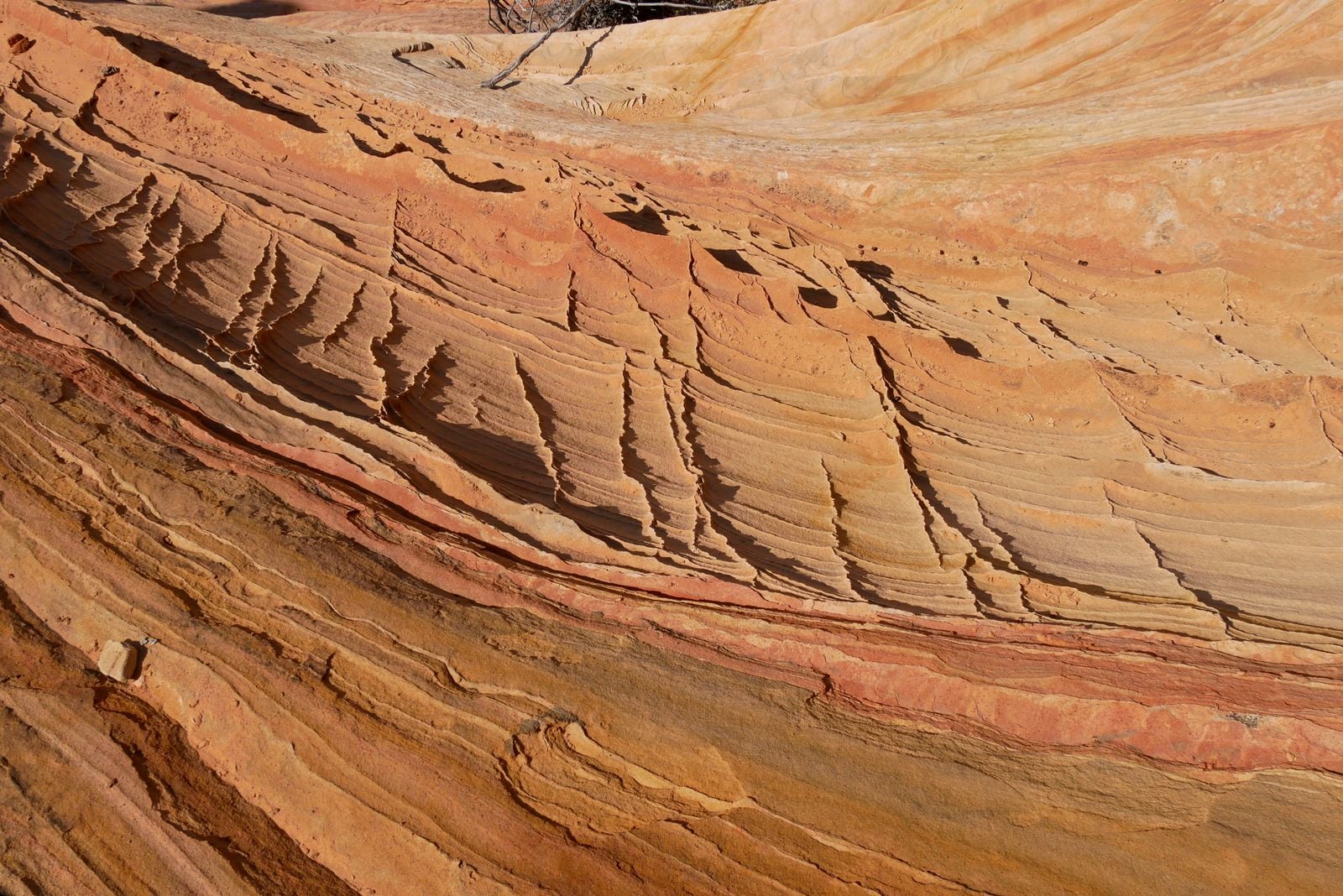
An ocean short of oxygen
The oceans of the Boring Billion were profoundly different from those of today. Oxygen was available in some surface waters, particularly near productive coastal environments, but much of the deeper ocean remained anoxic.
Those deep waters were not chemically uniform. An influential older model pictured a broadly sulfidic ocean, known as a euxinic ocean, in which hydrogen sulfide accumulated beneath a thin oxygenated surface layer. Later geochemical work produced a more complicated picture: many deep-water environments appear to have been iron-rich rather than persistently sulfidic, while euxinia expanded and contracted in particular basins and continental-margin settings.
That distinction matters. Sulfidic water removes metals such as molybdenum from circulation, while iron-rich anoxic water creates a different set of biological constraints. Either way, the supply and recycling of phosphorus, nitrogen and trace metals appear to have limited how much new biomass the oceans could produce.
Life continued everywhere it could. Cyanobacteria performed photosynthesis. Other microbes used sulfur, iron, methane and nitrogen. Cells reproduced, competed and evolved. The biosphere was active, but much of its energy remained trapped in microbial food webs that could not easily support large, oxygen-hungry bodies.
What the rocks actually record
The apparent quietness of the Boring Billion comes partly from what is missing from the global rock record. Carbon-isotope values remain comparatively stable across long intervals. There is no unambiguous evidence for the kind of widespread glaciation seen before and after it. The vast banded iron formations associated with earlier oceans also became much less common.
That does not mean geology stopped. The supercontinent commonly called Nuna or Columbia persisted and changed configuration, while Rodinia assembled later in the interval. Major mountain-building systems developed as continental blocks collided. Magmatism, erosion, sedimentation and plate motion continued even when they did not produce the same dramatic global chemical signals seen in other chapters of Earth history.
“Boring” therefore describes relative stability at the planetary scale. It does not describe every basin, continent or organism living through those billion years.
Life was changing beneath the apparent calm
Eukaryotes — cells containing nuclei and complex internal structures — were present by the early part of this interval. Their fossil record is sparse and difficult to interpret, but it includes increasingly diverse microscopic forms and, later, clearly multicellular organisms.
One of the best-known examples is Bangiomorpha pubescens, a roughly 1.05-billion-year-old fossil generally interpreted as a multicellular red alga. Its differentiated cells have also been discussed as early evidence for sexual reproduction. Long before animals appeared, cells were already experimenting with specialization, coordination and more complex life cycles.
Not every experiment produced a lineage that can be traced into the present. The fossil record is too incomplete to determine the fate of most of them. But it is no longer accurate to describe the entire interval as bacteria repeating the same chemistry without meaningful evolutionary change.
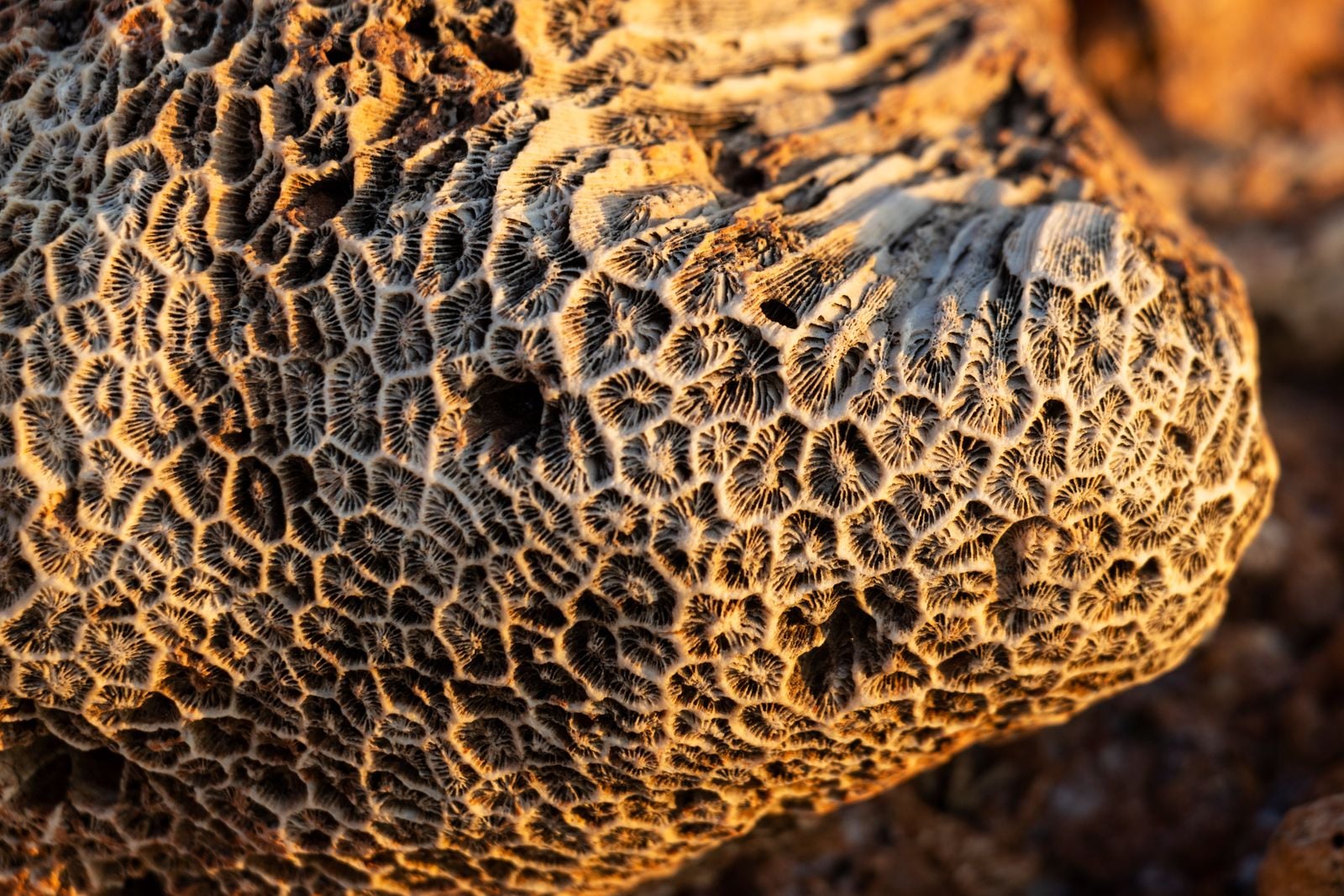
Why complexity remained limited
No single mechanism explains the slow rise of complex life. The leading explanations involve feedbacks among oxygen, nutrients, productivity and the chemistry of the deep ocean.
When little phosphorus reaches surface waters, photosynthetic organisms produce less biomass. With less organic matter available for burial in sediments, less oxygen accumulates over geological time. Low oxygen then alters weathering and nutrient cycles, helping preserve the conditions that limited productivity in the first place.
Trace metals may have tightened the constraint. Many enzymes required for nitrogen fixation and other essential reactions depend on metals whose availability changes sharply under anoxic, iron-rich or sulfidic conditions.
The result was not an evolutionary treadmill fixed at zero. It was a planet with a low biological energy budget. Microbial life could thrive under that budget. Large active organisms with muscles, guts, nervous systems and high oxygen demands could not.
The long exit from Earth’s middle age
The transition out of the Boring Billion did not happen through one clean switch. From around one billion years ago, Rodinia’s assembly and later breakup altered coastlines, weathering patterns and the delivery of nutrients to shallow seas. Oxygen levels appear to have risen and fallen in regional or temporary pulses rather than climbing smoothly toward modern conditions.
The Cryogenian glaciations came later, between roughly 720 and 635 million years ago. They therefore did not directly end an interval conventionally dated to about 800 million years ago, although the freezing and thawing of the planet may have accelerated the environmental upheaval that followed.
By the Ediacaran period, large soft-bodied organisms were living on the sea floor. Forms such as Charnia, Dickinsonia and Tribrachidium reveal ecosystems that looked unlike anything in the previous fossil record. Their precise relationships to modern animals remain debated, but they were not microbial slime.
Bodies were moving before the Cambrian explosion
The Cambrian explosion, beginning around 539 million years ago, marks the interval when many recognizable animal groups became conspicuous in the fossil record. Trilobites, brachiopods, mollusc relatives, arthropods and early chordates appeared or diversified rapidly.
Evidence of mobile animals reaches farther back. A 2025 study in Geology by Zekun Wang and Olmo Miguez-Salas examined locomotory trace fossils from 12 formations spanning the Ediacaran-Cambrian transition. The authors argued that probable bilateral animals with slender bodies and distinct front-to-back axes were moving across microbial surfaces by about 545 million years ago.
The tracks do not reveal every detail of the animals that made them. They do not by themselves prove segmentation or reconstruct a complete anatomy. What they show is that directional, body-driven movement had emerged before the most familiar Cambrian fossils appeared.
Oxygen came in pulses
Even the Cambrian explosion did not mark the instant when every part of the ocean became permanently oxygenated.
A 2025 PNAS study led by Kunmanee Bubphamanee, with Michael Kipp and an international team of co-authors, used selenium geochemistry to reconstruct changing deep-ocean conditions. The researchers reported temporary oxygenation near the Ediacaran-Cambrian boundary followed by predominantly anoxic deep waters through the Early Devonian.
Their record places the onset of sustained deep-ocean oxygenation between roughly 393 and 382 million years ago, coinciding with the spread of woody vegetation on land and the expansion of large animals into deeper marine habitats.
The authors proposed that the burial of resistant woody material removed organic carbon from the surface system, helping atmospheric and marine oxygen rise. The timing is suggestive, but it should not be reduced to the claim that forests single-handedly made large fish possible. Oxygen, ecology, climate and evolutionary innovation interacted over immense spans of time.
The scale of the pause
One billion years is about 22 percent of Earth’s entire history. It is longer than the whole span from the beginning of the Cambrian period to the present and nearly twice the length of the recognizable vertebrate fossil record.
To imagine a shoreline 1.3 billion years ago is therefore to imagine repetition on a scale the human mind handles poorly. There would be no birds, crabs, grass or trees. Bare rock and sediment would meet water containing microbial communities, while mats of microorganisms could build layered structures in the shallows.
The precise colour and smell of that ocean cannot be reconstructed with confidence, and its atmosphere would not have been breathable for an unprotected human. The scene would appear empty only because nearly everything alive was small.
The nickname survives because the planetary record looks unusually quiet between two more dramatic eras. But quiet did not mean lifeless, and stability did not mean that evolution had stopped. For a billion years, Earth’s chemistry constrained what life could build while cells assembled much of the biological machinery that later organisms would inherit.
Then the constraints loosened — not in one flood of oxygen, but in pulses.
