

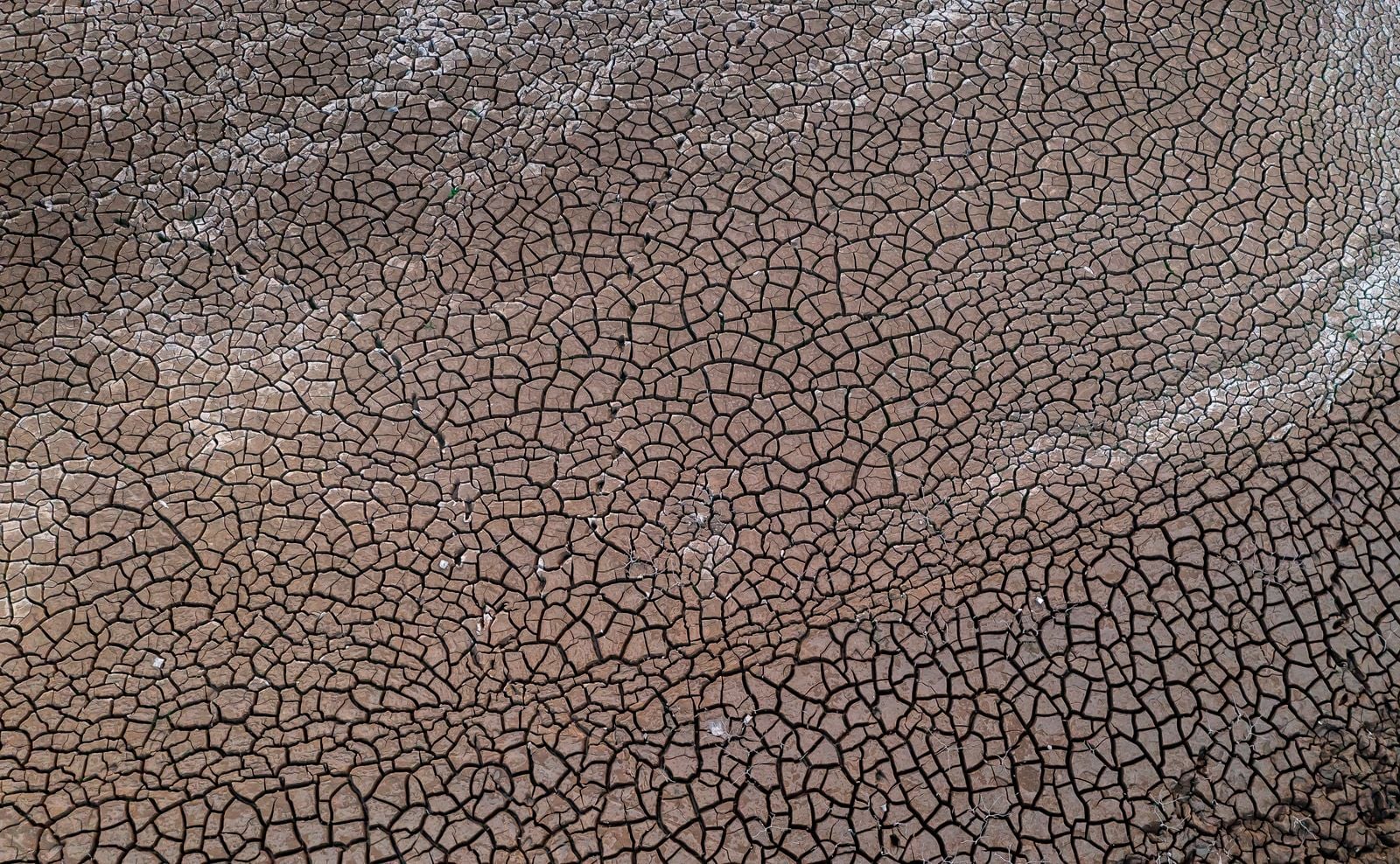
The last time a Pacific weather cycle of this magnitude collided with a live regional war, the models pricing global food risk were never built for shocks arriving in stereo. This time, the cushion is gone. The strength of a developing strong El Niño could push global food commodity prices up significantly, with effects rippling through supply chains for years. Layer that onto ongoing geopolitical tensions, which have already driven world food prices higher, and the planet is staring at two shocks at once.
The conventional read on climate-driven food inflation is that markets adjust. Farmers plant more where rain is good. Traders reroute cargoes. Central banks look through the spike because weather is transitory. That framework worked when only one variable moved at a time. It does not work when a super El Niño, a Middle Eastern war, depleted grain reserves and a fertiliser shortage all arrive in the same six-month window.
The Godzilla forecast
Ocean warming conditions are taking hold across the central and eastern equatorial Pacific, with forecasters tracking what could qualify as a very strong or super El Niño based on sea surface temperature anomalies. The event could be among the strongest seen over the past century.
Historical comparisons make the stakes concrete. The 1997-98 and 2015-16 El Niños both broke global temperature records. The 2015-16 cycle triggered severe droughts in the Caribbean and disease outbreaks across multiple regions. Go back further and the picture darkens: the 1876-78 El Niño produced famine conditions that killed millions in India, catastrophes worsened by British colonial grain policy but set in motion by the same Pacific mechanism now warming again.
What separates this cycle from previous ones is the baseline. The climate a super El Niño would amplify is already substantially warmer than pre-industrial averages. As recent heatwaves across Europe remind us, the climate baseline is already shifting.
Where the crops fail
El Niño does not damage agriculture evenly. It reshuffles rainfall and temperature, producing regional winners and losers, and the geography of the losses matters enormously for prices.
India is already feeling it. A drier monsoon season has left some regions with significantly reduced rainfall compared to usual levels, directly threatening wheat, rice and sugar cane output from the country that is the world’s largest rice exporter and second-largest wheat producer. When India tightens export controls, as it did during the 2023 disruption, the shock propagates instantly to buyers across Africa and the Middle East.
Southeast Asia faces a parallel drought risk that hits palm oil, an ingredient buried in roughly half the packaged goods on a supermarket shelf. Coffee and cocoa harvests are exposed. Sugar is exposed. In South America, the pattern typically flips: flooding in southern Brazil, Argentina, Paraguay and Uruguay disrupts soybean and corn logistics, while northern Brazil and southern Africa run dry.
In North America, if Midwestern states see below-normal precipitation this summer and autumn, this could impact crop production in the breadbasket. Flooding in the southern US could hit wheat and cotton. There are potential upsides — added rainfall could boost winter wheat yields in the Southern Great Plains after years of La Niña drought — but the balance sheet tilts strongly toward disruption.
The war multiplier
Weather alone would be manageable. The Iran conflict is what turns a manageable weather event into a systemic food shock.
The war has done three things simultaneously to global food supply chains. It has pushed energy prices higher, raising the cost of every diesel-powered tractor, every fertiliser plant that runs on natural gas and every container ship that moves grain across an ocean. It has choked fertiliser availability, particularly urea and potash flows that transit the Persian Gulf. And it has rerouted shipping around risk zones, adding weeks and insurance premiums to routes that used to be routine.
Lower-income importers are absorbing the worst of it. As reporting on the conflict has documented, African nations dependent on Gulf-transited grain and fertiliser are especially exposed, with countries already running thin foreign-exchange reserves now paying more for less. Egypt, Kenya, Nigeria and Ethiopia all sit in the crosshairs of both shocks: they buy wheat that El Niño will make scarce and route it through corridors the war has made expensive.
Even modest supply disruptions could trigger larger price moves than historical patterns would imply. Translation: the mathematical models that price food risk are calibrated on a world where shocks arrive one at a time. This one is arriving in stereo.
What large-scale lost output looks like
Extreme-scenario modelling suggests a major hit to global agricultural production, potentially equivalent to hundreds of billions in lost output. The food system enters the second half of 2026 with buffers, but with little margin for error.
Those buffers are not evenly distributed. Wealthy importers can pay through the spike. Rice-consuming nations without domestic production cannot. And the retail experience is filtered through supermarket buying power, national subsidy regimes and processed-food formulations that can quietly shrink portion sizes long before headline prices move. Previous analyses have indicated that a strong El Niño could drive global food commodity prices up significantly, with soya beans, corn and rice seeing the largest spikes. The current setup is worse.
The processed-food buffer, and its limits
One of the reasons headline supermarket inflation may lag the commodity move is that most of what shoppers in wealthy countries eat is processed food, and processed food is largely built out of a handful of interchangeable industrial inputs: refined vegetable oils, sugar, wheat flour, corn derivatives, and cheap protein. When one input spikes, formulations shift. Palm oil expensive? Substitute soy. Sugar expensive? Push high-fructose corn syrup. This is why the food industry absorbs commodity shocks better than restaurants or fresh-produce sellers do.
That flexibility comes with a public-health cost that outlives the weather cycle. As Silicon Canals has covered in its reporting on tobacco-level regulation of ultra-processed food, the industrial food system’s ability to reformulate around any commodity spike is exactly what makes it so difficult for regulators to police. When El Niño makes coffee expensive, roasters blend down. When cocoa spikes, chocolate bars quietly swap in more fillers. Shelf prices stay closer to normal, but nutritional density drifts lower, and the products that reach lower-income households drift furthest.
For fresh food, there is no such buffer. Vegetables, fruit, dairy and unprocessed meat track weather almost directly. That is where the sticker shock will land first, and where lower-income shoppers will be pushed hardest toward the ultra-processed aisle.
Central banks in a corner
The macroeconomic implication is the piece that has bond markets nervous. Central banks in the US, UK and eurozone spent 2024 and 2025 slowly cutting rates as pandemic-era inflation faded. A food shock lasting into 2028 rewrites that story. Eurozone food prices could rise significantly purely from the El Niño effect, before any war premium is layered on top.
Food inflation is politically corrosive in ways that goods inflation is not. Voters notice it weekly. Governments respond with export bans, price controls and subsidies — policies that, in a genuinely globalised food system, tend to shift shortages onto weaker buyers rather than resolve them. India’s 2023 rice export restrictions were the template. If a super El Niño delivers a poor harvest in late 2026, the political incentive to hoard will be immediate and international coordination against it will be, as always, thin.
Health shocks travel with weather shocks
The 2015-16 super El Niño did more than move grain prices. It shifted the geographic range of disease vectors, driving outbreaks of mosquito-borne illness into regions that had not seen them at scale. Warmer, wetter conditions in one hemisphere and drought-driven displacement in another combined to expand the pathogen map. Public-health systems in low-income countries were the ones that absorbed that shock, and they are the same systems now dealing with the food-security consequences of the Iran war.
There is a compounding logic here that risk models struggle to capture. A malnourished population is more vulnerable to infectious disease. A displaced population is harder to vaccinate. A country running trade deficits because grain and fuel cost more has less fiscal room to run public-health programmes. Every one of these variables moves in the same direction under the current scenario.
What actually breaks first
The order of failures matters for anyone trying to plan around this. Rice is likely to move first, because Indian monsoon damage is already visible and Southeast Asian drought risk is high. Palm oil follows on a similar timetable. Coffee and cocoa lag by a season but are structurally exposed because production is concentrated in narrow equatorial bands that El Niño hits directly. Wheat depends on which hemisphere gets the drought first — a poor Australian harvest in late 2026 would be an early tell.
Fertiliser is the wild card. If the Iran war disrupts natural-gas-based ammonia production in the Gulf or if urea shipping slows, the 2027 planting season globally gets more expensive before any weather effect shows up in the ground. That means the 2027 harvest is already partially priced in, regardless of what the Pacific does.
Shipping is the other wild card. Water levels in the Panama Canal have been chronically low during recent El Niño cycles, forcing transit reductions. Combined with Red Sea rerouting and any Persian Gulf disruption, the global grain trade could find itself running out of workable corridors at exactly the moment when more reshuffling of supply is needed.
The margin for error
Every actor in this system — farmers, shippers, buyers, central banks, governments — is being asked to absorb a shock that assumes the other actors will hold steady. That assumption will not hold. Export bans will proliferate. Fertiliser will be hoarded. Insurance premiums on Gulf shipping will keep climbing. Households in Cairo, Nairobi, Manila and Karachi will start eating differently long before anyone in Frankfurt or Washington notices the shift in headline CPI.
Framing the moment as El Niño and the Iran war teaming up in a food squeeze captures the mechanism, but the word “squeeze” understates the duration. Timelines could run into the second half of 2028. That is two full growing cycles in the northern hemisphere, three in parts of the tropics. The commodity spike is not the event. The event is the two years afterward, during which every reformulation, every export ban, every fertiliser shortfall and every skipped meal compounds into a food system that emerges materially different from the one that entered 2026.
The buffer exists. The margin for error does not.
