

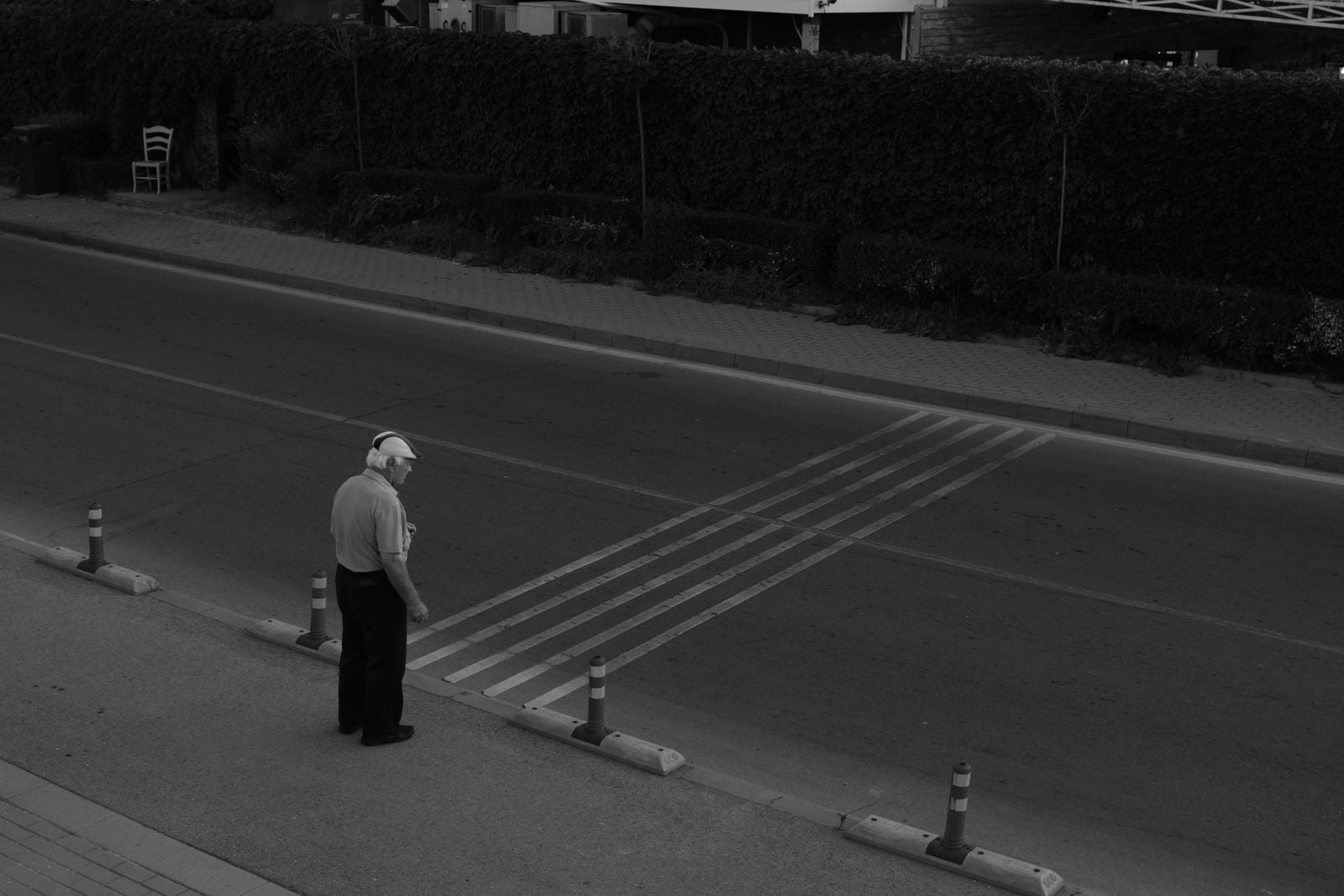
The evening walk can look like the smallest possible ritual. Same route, same hour, same slightly worn shoes. Neighbours begin to recognise the walker in the same way they recognise the streetlights coming on.
Research does not prove that repeating this walk clears the mind, protects the brain, or works as a treatment for anything. It supports a narrower and still useful idea: regular daily timing is associated with more stable body rhythms, while walking itself can encourage a looser and more associative mode of thought. For some adults, the repeated walk may therefore be less about rigid habit than about giving the day a dependable ending.
What the body knows before the mind agrees
Circadian rhythm is the roughly 24-hour timing system involved in sleep, hormone release, digestion, body temperature, mood, and other processes. It responds to external cues such as light, meals, social contact, activity, and sleep schedules. When these cues arrive at reasonably predictable times, they help keep the internal clock aligned with the day.
A 2026 University of Missouri study, led by assistant professor Eunjin Tracy and published in the Journal of Behavioral Medicine, examined survey data from 67 older adults, including 37 who had insomnia. Participants who reported more regular daily routines also tended to report less physical pain and fewer depressive symptoms, regardless of their reported sleep quality.
The study did not assign people to routines, follow an evening walking programme, or establish that regularity caused the differences. It found an association in a small group of older adults. Still, Tracy argued that predictable times for waking, eating, working, interacting with others, and sleeping can provide cues that help synchronise the internal clock.
An evening walk could be one of those cues, but it is not the only one. Its value may come partly from the fact that it occurs reliably and marks a transition the body can recognise.
The mind may loosen when the body follows a pattern
There is a broader research field concerned with social rhythms, the timing patterns created by ordinary activities such as waking, eating, working, and socialising. A Nature Index topic summary on social rhythms describes these activities as external signals that interact with the circadian system.
The concept is taken seriously enough to form part of Interpersonal and Social Rhythm Therapy, a clinical approach that combines greater regularity in daily routines with interpersonal work. That does not turn an evening walk into therapy. It shows only that the timing of ordinary behaviour can matter, rather than the content of the behaviour alone.
For someone who walks at the same hour each night, the route may become a signal that work, messages, errands, and unfinished conversations no longer require an immediate response. The walk does not solve the day. It creates a border between carrying the day and putting it away until morning.
Repetition as a form of thinking
Walking may also alter how thought moves. In a 2014 Stanford study of walking and creative thinking, Marily Oppezzo and Daniel Schwartz conducted four experiments involving 176 college students and other adults. Participants generally produced more responses on divergent-thinking tasks while walking than while sitting.
The benefit was specific. Walking helped with the generation of possible ideas, but it did not improve the kind of focused thinking used to reach one correct answer. The researchers also found benefits indoors and outdoors, suggesting that movement itself contributed to the effect.
This does not establish that walking processes difficult emotions or makes people wiser. It does support the familiar feeling that thought can become less fixed while the body is moving. A problem may not disappear, but it can stop occupying the only available position in the mind.
A familiar route may add another layer. When the walker already knows the crossings, corners, and inclines, less attention may be required for choosing where to go. The cited study did not compare familiar and unfamiliar routes, so this remains an interpretation rather than a demonstrated effect.
Why fragmented days have attracted attention
The evidence becomes more consequential when researchers examine daily rest and activity patterns over longer periods. A study published in Alzheimer’s & Dementia and reported by Medical News Today analysed 344 cognitively healthy adults with an average age of 73 who participated in the Baltimore Longitudinal Study of Aging.
The participants wore wrist accelerometers for up to a week and underwent MRI scans. Researchers examined the hippocampus, parahippocampal gyrus, and amygdala, regions involved in memory and emotion that are also vulnerable in Alzheimer’s disease.
Less fragmented rest-activity rhythms were associated with larger volumes in some medial temporal regions and better maintenance of amygdala volume over time. More fragmented rhythms were also associated with subsequent increases in ventricular volume, an indicator that can accompany the loss of surrounding brain tissue.
Adam Spira, a professor at the Johns Hopkins Bloomberg School of Public Health and senior author of the study, said the longitudinal findings raised the possibility that disrupted rhythms may precede structural changes. The authors nevertheless called for more research, including trials testing whether deliberately improving these rhythms can preserve brain health.
Another study of circadian rest-activity rhythms and dementia risk followed 2,183 older adults for a median of about three years. Weaker and more fragmented rhythms, along with later peak activity times, were prospectively associated with a higher risk of dementia. The researchers explicitly stated that the associations did not demonstrate that circadian disruption caused dementia.
Neither study tested an evening walking ritual. They examined broader patterns across entire days in older populations. A person circling the same block every evening should not be described as following a proven brain-protection protocol, but the research does make stable daily rhythms worthy of attention.
Social jet lag and the unsettled weekend
One reason regular routines may matter is social jet lag, the mismatch between the timing of weekday and weekend life. Someone may wake early, eat lunch at noon, and go to bed at 10:30 during the week, then shift every one of those cues by several hours on Saturday and Sunday.
The University of Missouri reporting notes that even relatively small differences between weekday and weekend schedules may disrupt the internal clock. Tracy suggested that maintaining a similar routine throughout the week could reduce those disruptions.
An evening walk can act as one stable point inside an otherwise changeable schedule. It may happen after an easy day, after a difficult conversation, or during a weekend when everything else has moved later. Its usefulness is not that every minute of life remains identical, but that one familiar cue stays in place.
Regularity should not be confused with punishment. People need flexibility, rest, travel, celebration, and unplanned evenings. A helpful routine is a structure that supports life, not a rule that turns ordinary variation into failure.
Why the walk works better than the intention to walk
Many attempts to begin walking are framed as health projects. The walk receives a target distance, a step count, a calorie estimate, and a set of performance expectations. Each evening then becomes another occasion to decide whether the project is still worth doing.
A durable ritual often feels different. The walk is connected to a cue such as finishing dinner, closing the laptop, or noticing the light beginning to fade. Over time, it may require less negotiation because it has become part of what the evening contains.
This does not mean that identity must be built around perfect consistency. It means the action no longer needs to win a fresh argument against tiredness, distraction, or the appeal of the sofa every night. The route is already there, and the next step is familiar.
What setting something down can actually mean
A difficult message rarely becomes clearer simply because it receives an immediate response. The first interpretation of an event is often the loudest one, not necessarily the most useful. A walk inserts time between what happened and what happens next.
For some people, that interval changes the scale of the problem. An unanswered email remains unanswered, and a hard conversation remains hard, but neither has to consume the full field of attention. Movement gives the mind something simple to accompany while urgency begins to settle.
This experience should not be turned into a universal promise. Some people think better while sitting, talking, writing, cooking, or doing nothing at all. An evening walk is one possible container for reflection, not a rule for emotional health.
Setting something down does not always mean resolving it. Sometimes it means deciding that the problem can wait until the body has eaten, moved, rested, and returned to it with more room.
The quiet argument against optimisation
There is a temptation to transform the evening walk into another system. The ideal duration must be calculated, the route tracked, the pace improved, and every minute filled with a podcast or educational programme. A quiet practice becomes another site of measurement.
For some walkers, repetition works precisely because nothing needs to be achieved. The same corner does not need to become more efficient. The same stretch of pavement does not need to produce a breakthrough.
The walk can remain ordinary. That ordinariness may reduce the pressure to perform and leave enough empty attention for thoughts to arrive without being summoned. The body has a simple task, while the mind is temporarily released from producing an answer.
What the walkers may already know
The research supports regular daily rhythms, identifies associations with health outcomes in older adults, and shows that walking can encourage divergent thinking. It does not prove the full emotional meaning people attach to their nightly routes.
That meaning remains recognisable. A repeated walk can mark the moment when the day stops expanding, when no more tasks are added, and when the accumulated weight of messages, decisions, and unfinished thoughts is allowed to redistribute itself.
The walker is not necessarily rigid, anxious, or incapable of variation. The walker may simply have discovered that predictability can be restful when the rest of life keeps asking for a response.
What looks like a habit may be a hand-off. The body takes the route for a while, and the mind no longer has to carry everything at once.
