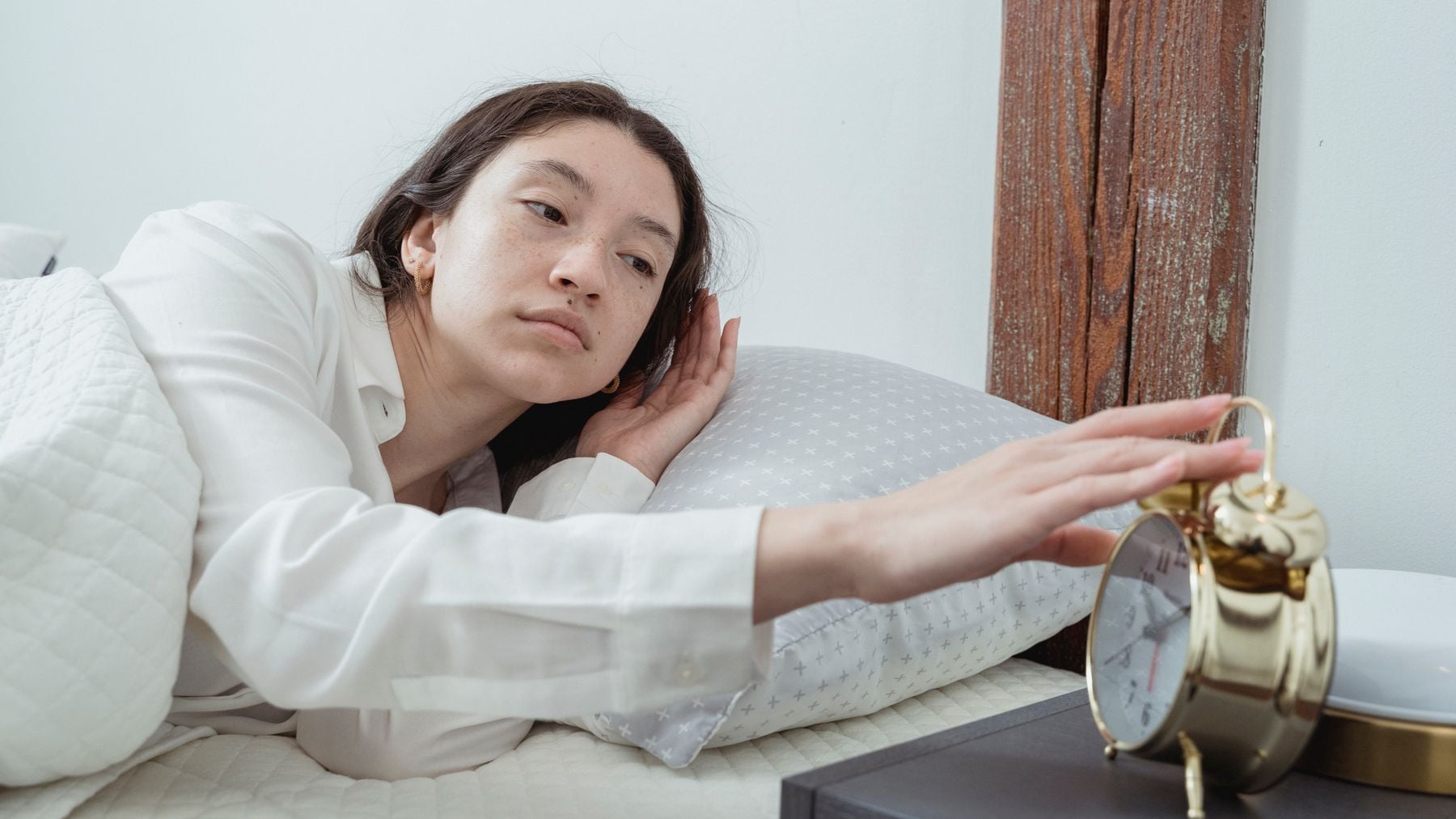
The alarm clock is democratic only in the narrowest sense. It shows everyone the same hour. It does not wake everyone at the same biological point in their night.
For a morning type, an early start may arrive close to the body’s preferred waking time. For a night owl, the same start can land while the circadian system is still asking for sleep. The person who looks disciplined at 7am may be receiving more help from their internal clock, while the person fighting the snooze button may be doing exactly that: fighting biology.
A University of Toronto study found that stronger morning preferences were associated with more positive affect and better subjective health in younger and older adults. The headline’s “happier” is a fair shorthand only with limits. The researchers measured current positive mood, not overall life satisfaction, and social jet lag was one possible explanation they discussed rather than something the study directly tested.
The Toronto study was about present mood
The study, published in Emotion in 2012, included 435 younger adults aged 17 to 38 and 297 older adults aged 59 to 79. The younger participants were University of Toronto undergraduates. The older group consisted of healthy community volunteers, most of whom were retired.
Everyone completed the 19-item Morningness-Eveningness Questionnaire. It asks about preferred sleep and rising times, alertness after waking, evening tiredness and when someone would choose to do demanding activities. They also rated their current state using mood words covering a positive-to-tired dimension and a negative-to-relaxed dimension.
Greater morningness was associated with higher positive affect in both age groups, even after the researchers accounted for the time of the laboratory appointment. It was also associated with better self-rated health. Morningness was not associated with negative affect in either group.
That last result narrows the finding. Morning types reported more of the activated feelings captured by words such as cheerful, lively and alert. They did not necessarily report less nervousness or distress. The study does not support the blanket claim that every early riser is happier than every night owl.
Older adults were both earlier and more positive
The younger group’s average chronotype score was 43.8, close to the evening side of the questionnaire’s neutral range. The older group averaged 59.4, which falls in the moderately morning range. Older adults also reported substantially higher positive affect.
In a mediation analysis, morningness statistically explained part of the association between age and positive affect. That is interesting, but the design was cross-sectional. It compared different people at one point rather than following the same people as they aged. The authors specifically called for longitudinal research and the inclusion of middle-aged adults.
The sample creates another wrinkle. Undergraduates and mostly retired older volunteers both had more control over their waking times than a full-time worker with a fixed start. The older participants were selected as healthy community dwellers, so the result should not be treated as a population estimate for all older adults.
All measures were self-reported, and mood was captured once during a laboratory visit between 9am and 6pm. The researchers adjusted for appointment time, but a one-time mood rating is not the same as measuring happiness repeatedly across daily life.
Social jet lag explains a mismatch, not a personality
The phrase came from earlier research on the misalignment between biological and social time. In that 501-person study, later chronotypes showed the largest differences between sleep timing on workdays and free days. Early school or work starts could create sleep debt during the week, followed by later recovery sleep when the schedule relaxed.
The Toronto researchers proposed this as one reason morning types might report better mood. Standard school and work hours usually reward people whose preferred activity begins earlier. Night owls may have to wake before their bodies are ready, function through their biological low point and repeatedly move between an imposed weekday schedule and a later weekend one.
But the Toronto study did not measure the workday-to-weekend gap or test whether it caused the mood difference. “Possibly” is doing essential work in the headline. The word “permanent” is rhetorical too. Social jet lag can persist for years under a rigid timetable, but it can also change with employment, remote work, caregiving, season and age.
Your chronotype is not a moral achievement
A genome-wide analysis of 697,828 people identified 351 genetic loci associated with chronotype and linked those variants to objectively measured sleep timing in a smaller subgroup. Genes do not set one immutable bedtime, but they help explain why morningness cannot be reduced to willpower.
Age matters. Light exposure matters. Work, meals and exercise provide time cues. Screens and artificial light can push behaviour later. Even so, two people can follow similar routines and feel sleepy at different hours because their circadian systems are not identical.
That is why the familiar moral ranking is unhelpful. The early riser is not automatically more ambitious, and the late sleeper is not automatically lazy. Our earlier examination of the biology behind the 5am routine reached the same conclusion: a clock preference should not be marketed as a character test.
Later studies suggest timing can be moved, with caveats
A 2019 randomised trial involving night owls used a three-week package of non-drug changes involving morning light, earlier and consistent sleep times, fixed meals, caffeine limits and exercise timing. Participants shifted their sleep and circadian markers about two hours earlier without reducing sleep duration. They also reported lower depression and stress and performed better during morning tests.
That offers more than a correlation, yet it does not prove that everyone should shift earlier. The intervention combined several changes, so it cannot isolate which part produced each benefit. The relevant goal was alignment with participants’ social demands, not transforming them into people who enjoy sunrise.
A 2021 Mendelian-randomisation study added another line of evidence. Using genetic data from hundreds of thousands of people, it estimated that a one-hour earlier sleep midpoint was associated with 23 per cent lower odds of major depressive disorder. All participants in the main datasets were of European ancestry, and the authors still called for randomised clinical trials.
Depression risk is also not the same outcome as the Toronto study’s current positive affect. The newer evidence strengthens the case that sleep timing can matter, but it does not turn “morning person” into a treatment.
The sensible target is less conflict between clocks
A critical review of chronotype and social jet lag notes that the concept is useful while warning that definitions and measurement choices can change conclusions. There is no single number that captures every kind of circadian mismatch.
For someone who wants or needs to move earlier, consistent waking, morning outdoor light and dimmer evenings can provide signals to the body clock. Sudden large shifts are usually harder than gradual ones. Persistent inability to sleep or wake at required times, severe daytime sleepiness or marked mood symptoms deserves clinical attention, not blame.
Workplaces and schools have a role as well. Flexible start windows, fewer unnecessarily early meetings and attention to shift design can reduce mismatch without asking every employee to re-engineer their biology. Where flexibility is possible, performance is a better guide than performative early rising.
The Toronto result is therefore more interesting than a victory for larks. Morning people may report feeling better partly because the social day meets them closer to where their bodies already are. Night owls are not failing the clock. In many settings, the clock was simply designed without them in mind.