

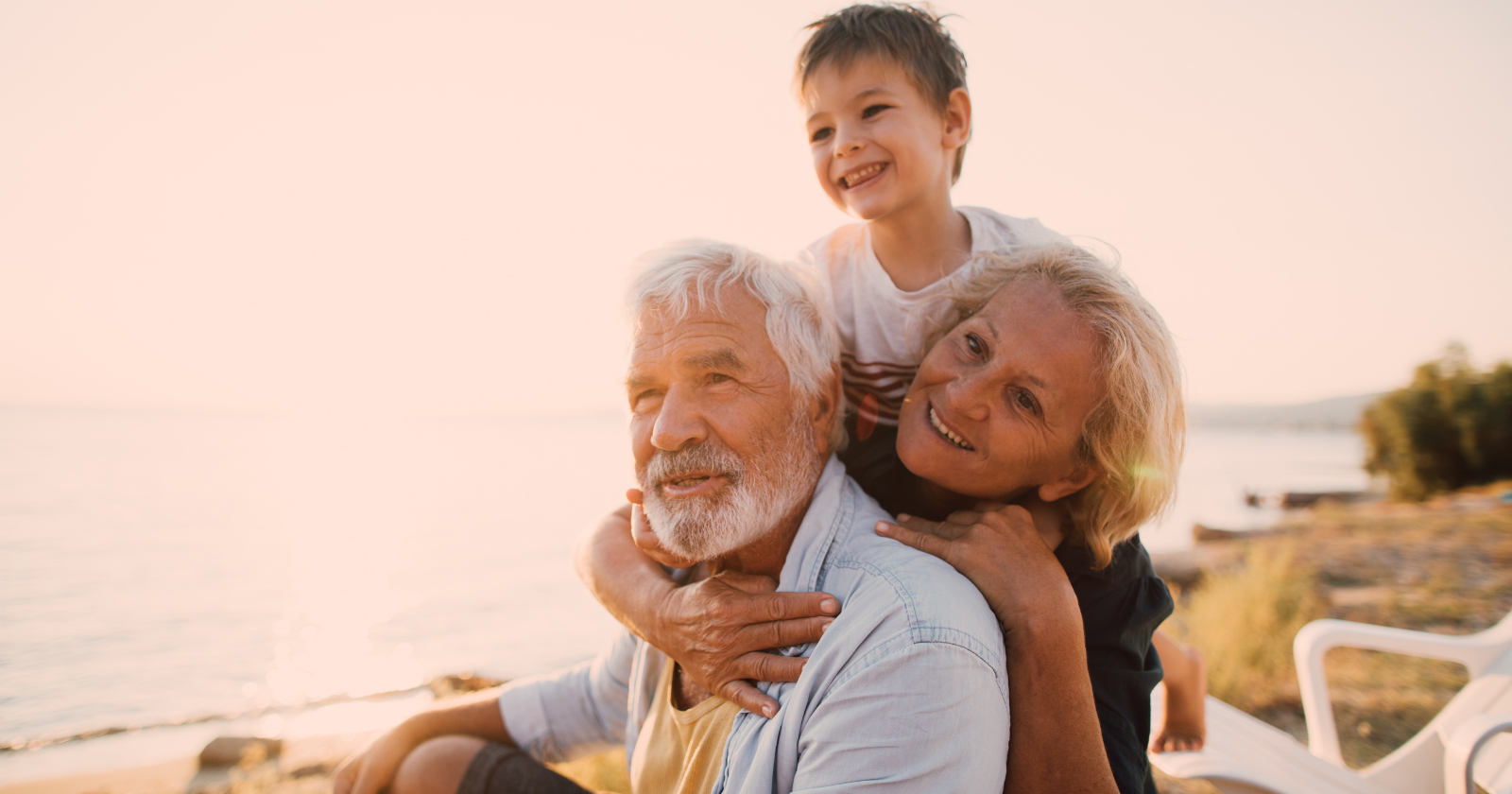
There is a particular kind of grandparent who arrives with a carrier bag. Something in it for everyone. The children fall on it, the noise is tremendous, and for roughly eleven minutes that grandparent is the most popular adult in the building.
Then the toys go under the sofa.
Ask a grown adult which grandparent they actually loved and the answer almost never involves a carrier bag. It involves someone who asked a question and then sat still long enough to hear the answer. Psychology has been circling this for thirty years, and the findings are less sentimental than they sound.
What the money actually buys
The most useful study here separates the two things people tend to lump together. Researchers following 408 families in the Flourishing Families Project measured grandparents’ emotional involvement and their financial involvement as distinct variables, then checked back a year later on children aged ten to fourteen.
Emotional involvement predicted more prosocial behaviour, both at the time and a year on, in single-parent and two-parent households alike. Financial involvement predicted exactly one outcome: better school engagement a year later, and that held only in single-parent families.
So the money does something, and that something is narrow, conditional and closer to logistics than love. Cash keeps a stretched household in the game. Little sign it shapes how a child feels about whoever writes the cheque.
A survey of 1,515 British teenagers points the same way. Greater grandparent involvement tracked with fewer emotional problems and more prosocial behaviour, and the effect was strongest for children in lone-parent and step-families.
The same mechanism shows up in adult relationships too. This short video explains the psychology behind why people can feel emotionally alone with the family and friends who love them most, and it lands on almost exactly the point this research keeps circling: being known is not the same thing as being seen.
The word psychologists use is mattering
Gordon Flett, a Canadian psychologist who has spent decades on this, calls it mattering: the sense that you are significant to other people. Self-esteem is a verdict you pass on yourself. Mattering is evidence, gathered from outside, that somebody notices when you walk into a room and would notice if you stopped turning up.
Flett’s work links a weak sense of mattering to depression and hopelessness, and the pattern starts early. Children run this audit constantly without knowing they are doing it, and they are very good at spotting the difference between an adult who is interested and one who is merely being polite.
Grandparents tend to score well here for reasons that have nothing to do with virtue. Nobody is making them enforce homework or drive anyone to football in the rain. They have the resource the parents have run out of, which is unhurried attention.
Being taken seriously is a specific behaviour
Worth being concrete, because “listen to your grandchildren” is the sort of advice that survives on a fridge magnet and dies on contact with an actual eight-year-old.
Taking a child seriously means asking the second question. “How was school” gets a shrug. “Who did you sit with at lunch” gets a story. Whatever the child is currently obsessed with, dinosaurs or a football team or a game with an incomprehensible name, gets treated as a legitimate subject rather than a phase to be waited out. The child gets to be the expert for once, which almost never happens to them anywhere else.
Harvard’s Center on the Developing Child calls the underlying mechanic serve and return: the child offers something, an adult responds to that specific thing, and the loop closes. Their broader finding is blunt. Across the research on childhood resilience they have reviewed, what shows up again and again in kids who cope well with hardship is one adult, somewhere, who was steady and stuck around. Parent, grandparent, teacher, aunt. None of them needed the right title, just the habit of showing up.
Stories do a job that presents cannot
Marshall Duke and Robyn Fivush at Emory built a twenty-item questionnaire called the “Do You Know?” scale. Do you know where your grandparents grew up? Do you know how your parents met? Do you know about an illness or something difficult that happened in the family?
In a study of 66 adolescents aged fourteen to sixteen, higher scores tracked with greater self-worth, a more developed sense of identity and fewer behavioural problems. Once the researchers controlled for how well the family functioned generally, the link to behavioural problems disappeared, while the link to self-worth and identity held. Knowing the stories was doing something that ordinary family warmth was not.
Small sample, one point in time, mostly healthy middle-class households, correlational throughout: caveats the authors flag themselves.
The useful stories are rarely the flattering ones. The researchers suggest that hearing how a parent or grandparent handled something badly, or came through a thin year, gives a teenager a working model for their own difficulties. A grandparent who talks about the business that failed or the crossing that went wrong hands over something no toy can carry.
Where the evidence gets shakier
Most of this literature catches families at a single moment and cannot untangle cause from effect. Warm households produce both close grandparents and well-adjusted children, and separating the two is genuinely hard. A within-child British study following the same children across three waves made that point directly, and found smaller effects than the headline versions suggest. A recent review of the field lands in the same place: grandparent involvement helps, just not by as much as the coverage tends to claim.
The short version
Ask what actually happened, not just how the day went, and remember the answer well enough to follow it up next month. Tell the family stories that flatter nobody. Turn up predictably rather than spectacularly, because children read reliability as commitment. Let the child correct you about something. Save the carrier bag for the drive home, after the part that actually mattered has already happened.
None of it photographs well. It still works.
