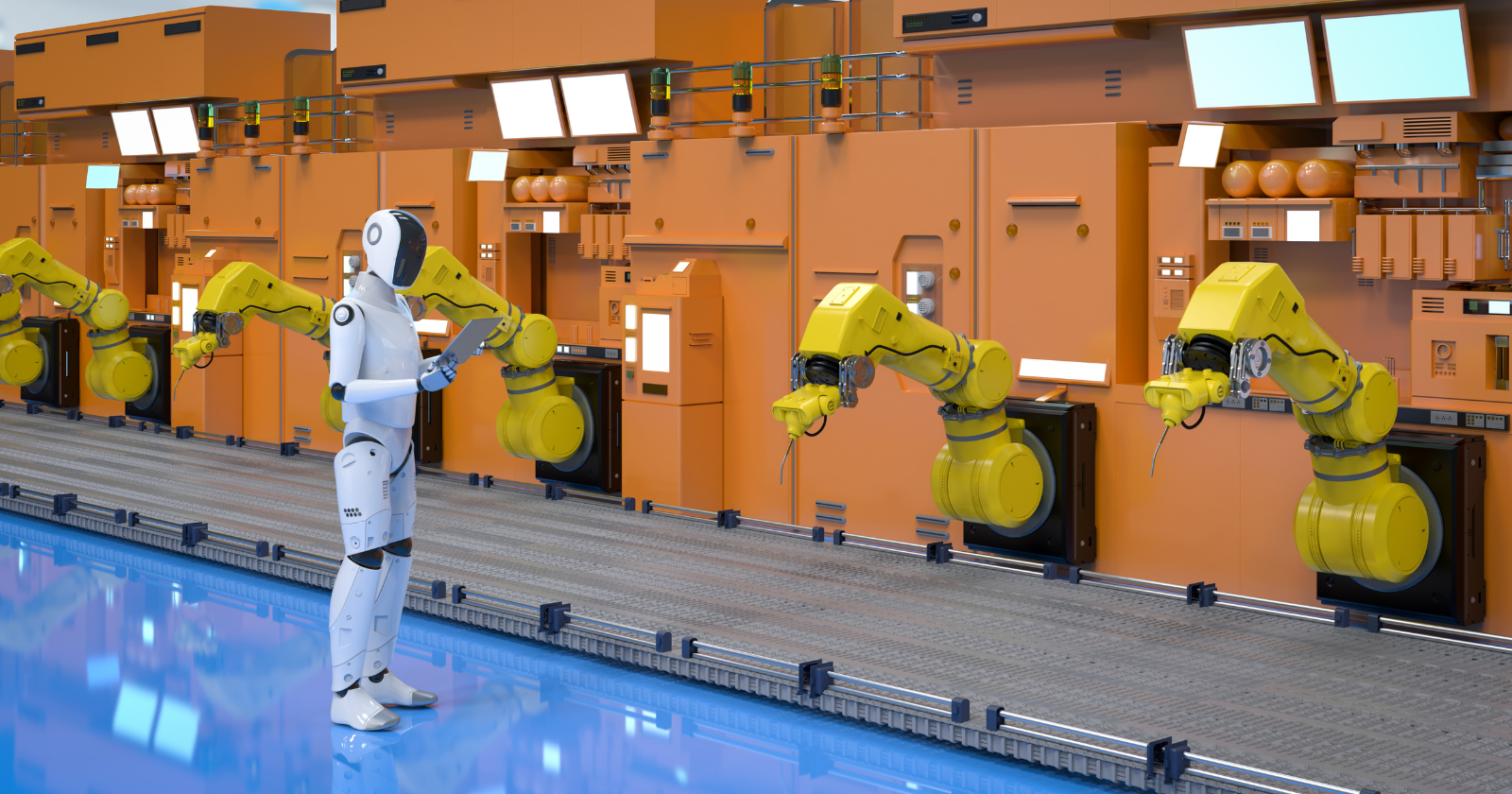
Agility Robotics has unveiled Digit 5, the fifth generation of its bipedal warehouse robot, and the headline change is the safety cage — specifically, its absence. Earlier Digit models, like most industrial robots, operated inside fenced cells to keep people out of reach. Digit 5 is designed to work in the open, using sensors and a separate safety controller that can make it stop, back away or drop into a seated position when a person gets close, according to the company’s hardware rundown from The Robot Report.
The robot stands 5 feet 11 inches tall and weighs 284 pounds, roughly the mass of two adult humans packed into a torso, legs and a pair of articulated arms. That weight matters less as a curiosity than as context for what follows: a machine that heavy needs a battery system that can be recharged fast enough to stay useful across a full shift, and Agility has built its pitch to investors and warehouse customers around exactly that number.
The 90-minute run, nine-minute charge math
Digit 5 runs for about 90 minutes on a charge and returns to full power in roughly 9 minutes, a figure Agility frames as a 10-to-1 run-to-charge ratio, up from the 2-to-1 ratio it says the previous Digit 4 managed, per the company’s own announcement. In practical terms, that means a robot could in theory swap onto a charger for the length of a coffee break and be back on the floor before a human coworker finishes one.
The arithmetic behind Agility’s marketing is straightforward: nine short charging breaks spread across a 24-hour day, at roughly 90 minutes of work between each one, add up to something close to round-the-clock operation. That is the basis for the company’s claim that Digit 5 can deliver 20 hours of work in a 24-hour day, leaving roughly four hours for charging, maintenance or handoffs between shifts.
What a 20-hour day actually means
Agility is measuring two things and projecting a third. The 90-minute runtime and 9-minute recharge are specifications the company attaches to Digit 5’s battery hardware. The “more than 20 productive hours” figure is a company calculation built from those two hardware numbers, assuming charging cycles that fit cleanly around a robot’s task queue — no downtime, faults or maintenance stops of the kind that show up in real operations. No robot has run that math for a full day in a live warehouse yet.
Independent reporting on the launch has generally repeated the 20-hour figure as Agility’s claim rather than as a verified outcome. IEEE Spectrum’s Evan Ackerman, reviewing Digit 5, raised a broader doubt about Agility’s underlying assumption that the robot can function as what he called “a more or less effortless drop-in replacement for human labor,” noting he was not sure that had happened yet with any robot, anywhere. The one field metric that has been independently reported involves the previous generation, not Digit 5: at a GXO logistics facility, Digit 4 reportedly 98% accuracy sorting totes over more than 100,000 units, a real operational number — though it speaks to picking accuracy, a separate metric from hours worked per day.
Heavier lifts, taller reach than the last generation
Alongside the battery changes, Agility increased what Digit 5 can physically do. The robot can repeatedly lift loads of up to 50 pounds, which the company describes as a 40 percent jump over Digit 4’s payload, and it can reach items up to 7.2 feet high, up from about 5.5 feet on the previous version, according to Forbes’ coverage of the launch. Both changes target the same use case Agility has pursued since the original Digit: moving totes, boxes and cases between conveyors, shelving and pallets in warehouses and distribution centers, work currently done by human “pickers” and “stockers.”
How Digit 5 compares with Boston Dynamics’ Atlas
Agility is not the only company chasing this category, and the comparison is not entirely favorable to Digit 5 on paper. Boston Dynamics’ electric Atlas, per the same Forbes report, is rated to carry up to 66 pounds, reach 7.5 feet and run for about four hours on a hot-swappable battery pack that can be physically pulled and replaced rather than recharged in place. On payload and reach, Atlas currently claims an edge. Digit 5’s advantage is charging speed and, by extension, uptime: a fixed nine-minute recharge cycle is a different operational model than swapping battery packs, and it is the piece Agility is betting its productivity math on.
Orders, a SPAC, and a company still losing money
The timing of the announcement lines up with a corporate transition. Agility disclosed more than $300 million in multi-year customer orders for Digit 5, a figure the company itself qualifies as subject to unspecified contractual milestones being met, and it disclosed the number days after filing paperwork for a SPAC merger with Churchill Capital Corp XI, a deal valued at roughly $2.5 billion. Regulatory filings tied to that merger show a company still far from commercial scale: Agility net sales and losses came to $1.78 million in 2025, up from $310,000 in 2024, against an operating loss of $140.2 million that roughly doubled year over year, and an auditor’s note flagging “substantial doubt” about its ability to continue as a going concern absent further financing.
That financial picture is the backdrop against which the hardware claims should be read; it doesn’t make them false. A company preparing to go public via SPAC has a direct financial incentive to publish its most favorable operating math right before that listing, and the $300 million order figure and 20-hour productivity claim are doing real work in that narrative, alongside more grounded facts, like Amazon’s $1.05 million purchase of five Digit units — a completed transaction, not a pipeline projection.
What 2027 actually promises customers
Agility says early customer access to Digit 5 is expected to begin in the first half of 2027, with general availability, aimed at manufacturing, warehouse and distribution operators, following by the end of that year. The company also plans to extend sales into the European Union and United Kingdom alongside its existing North American base, pending regulatory approval in those markets. Those dates put Digit 5’s actual commercial debut more than a year out from this week’s unveiling, and every performance figure attached to the robot right now, from its 90-minute runtime to its 20-hour workday, is a specification and a projection. Still, this has not yet been measured on a customer floor.