


On October 4, 1959 — exactly two years to the day after Sputnik 1 opened the Space Age — a modified R-7 rocket lifted off from Baikonur carrying a probe with a camera in its belly and a photographic darkroom the size of a filing cabinet. Its target was a place no human eye had ever seen: the far side of the Moon.
The camera carried film stock hardened against radiation and temperature swings. Enemy film, sent to photograph a hemisphere no camera had ever pointed at.
The problem no one had solved
The Moon is tidally locked to Earth. It rotates on its axis at the same rate it circles us, which means the same face has stared down at every human who ever lived — every Babylonian priest, every Ming astronomer, every Renaissance cartographer. The other half was pure blank on the map. Guesses ranged from mirror-image maria to entirely alien geology.
Getting a camera there was one problem. Getting the picture back was a completely different one. In 1959, video tape recorders existed but weighed hundreds of pounds. Live television transmission was impossible from behind the Moon’s mass. And no spacecraft had ever returned safely to Earth — that milestone was still years away.
Engineers at OKB-1, working under Sergei Korolev, took the only option left. Photograph the Moon on film, develop the film onboard, and then scan the dried negatives with a photocell and radio the result home line by line, the way a fax machine would one day send documents down a phone wire.
A darkroom in a can
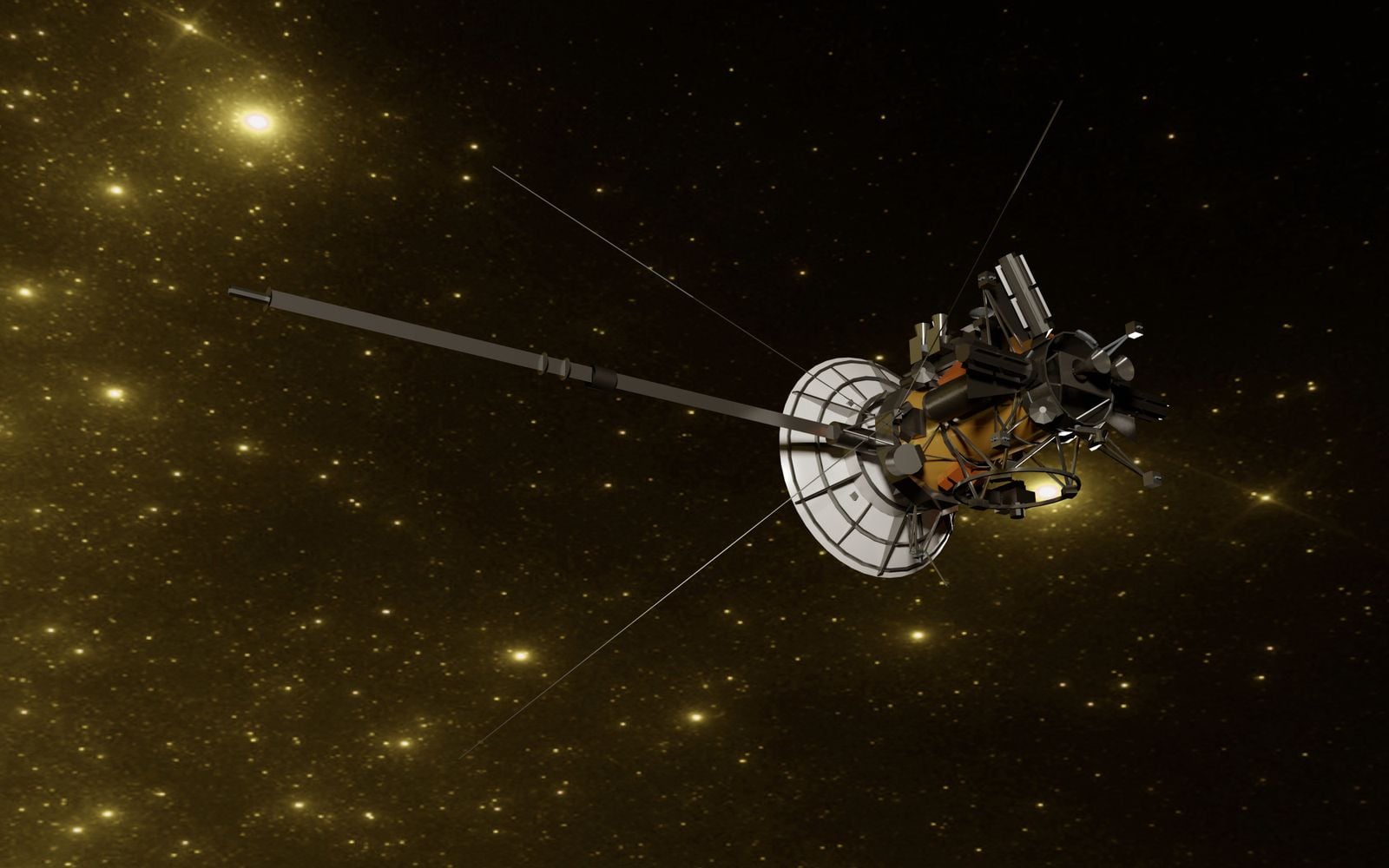
The imaging package sat inside a pressurised cylinder with a camera fitted with two lenses — one for wide shots and one for tighter frames. A photocell mounted on the hull would detect the bright disc of the Moon and trigger the shutter automatically. The craft used a pioneering three-axis stabilisation system to hold itself still, because the camera couldn’t pan.
After exposure, the film wound into a miniature automated lab. Chemicals developed the negatives, fixed them, and then dried them, all while the probe tumbled through space at thousands of miles per hour. Every stage that would normally require a technician in a red-lit room happened by clockwork inside a can hurtling past the Moon, as detailed in a technical account of the mission at RedShark News.
Once dry, the film wound past a cathode ray tube. A focused beam of light scanned each negative. On the other side, a photocell picked up whatever light passed through, generating a voltage inversely proportional to the density of the film. That voltage frequency-modulated a radio signal — the same trick fax machines would later use over telephone lines. The Moon, photographed on captured American film, was now a warble of radio tones aimed at receiving dishes in Crimea and Kamchatka.
Getting there
Luna 3 was the third success in a program that had already delivered a string of firsts and a longer string of failures. Luna 1, launched on January 2, 1959, had become the first object to break Earth’s gravity — but it sailed past the Moon, where it fell into an eternal orbit around the Sun. Luna 2, launched that September, corrected the aim and slammed into the lunar surface, the first human-made object ever to touch another world.
Behind those three named successes sat a graveyard of failures the Soviet state kept quiet. Soviet secrecy covered up many failed robotic lunar launches.
Luna 3 threaded through the failures because the mission planners caught a break. The R-7 injected the probe into a highly elliptical Earth orbit that would carry it around the back of the Moon three days after launch — timed so that the far side would be lit by the Sun as the spacecraft flew past.
The twenty-nine frames
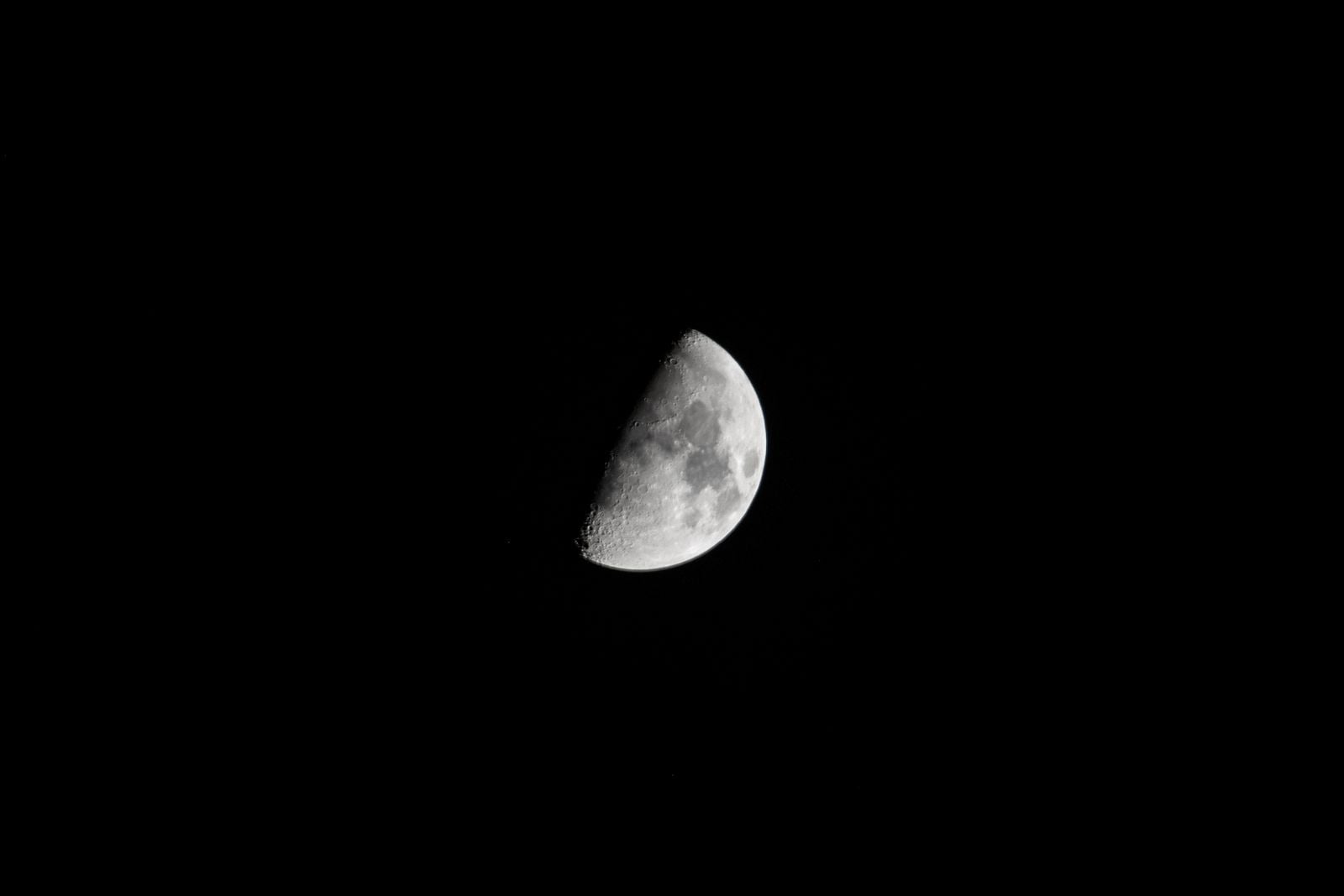
On October 7, 1959, the photocell on Luna 3’s hull registered the bright disc below. The imaging system woke up. Over the next 40 minutes, the camera cycled through 29 exposures, alternating between the two lenses.
Then the little darkroom did its work. The film was developed, fixed, and dried. The scanner spun up. The probe swung back around toward Earth and, once it had line-of-sight to the ground stations, began its slow radio transmission.
The first attempts failed. The signal was too weak, the noise too loud, the geometry wrong. Engineers waited as the orbit brought the craft closer. Over the following days, receiving stations pulled 17 usable frames out of the static.
They were terrible photographs by any earthly standard — grainy, low-contrast, blocky, monochromatic. And they were the most valuable images ever transmitted through space. For the first time in the history of the species, humans could see the hemisphere that had been hidden from every observer who had ever lived.
What the far side actually looked like
The near side of the Moon is dominated by dark plains — the maria, ancient basalt floods that filled enormous impact basins and gave the Moon its familiar face. Everyone on Earth had grown up with that face. Scientists had assumed, reasonably, that the other side would look similar.
It did not. Luna 3’s frames showed a hemisphere covered in bright, cratered highlands with almost no dark maria at all. Two small dark patches earned Soviet names. The rest was rugged, ancient, and pocked with craters in numbers the near side couldn’t match.
The pictures forced a rethink of lunar geology. Why was one hemisphere so different from the other? The asymmetry — thicker crust on the far side, fewer basalt eruptions — remains one of the questions planetary scientists still work on, more than six decades later. When Artemis flight planning began looking at the Moon again, as Forbes recounted in its piece on Luna 3 and Artemis II, that same asymmetry was still on the whiteboard.
The sensation
When the Soviet Academy of Sciences released the images, the reaction was global. Newspapers ran the frames on front pages from Moscow to New York. Astronomers pored over the fuzzy shapes trying to identify features. The Soviets, riding a run of Space Age firsts that already included Sputnik and Luna 2, had once again produced something the United States could not match.
Soviet cartographers rushed out an atlas of the far side, naming features with a Cold War flourish. A crater got Tsiolkovsky’s name. Another was named for Jules Verne. The naming rights of a hemisphere no telescope on Earth had ever resolved fell, briefly, to the state that got there first.
The trace it left
Luna 3 itself did not last. Its orbit decayed and it eventually burned up in Earth’s atmosphere, though the exact date is disputed in the mission records. The team that built it went on to score more firsts — Luna 9’s soft landing, Luna 16’s robotic sample return, and the Lunokhod rovers, one of which drove kilometres across the surface under remote control from Earth.
The onboard-development trick that made Luna 3 possible was quickly obsolete. Ranger, Lunar Orbiter, and later Surveyor used vidicon tubes and different transmission schemes. By the time Apollo 8 astronauts photographed the far side with their own eyes on Christmas Eve 1968, the frames Luna 3 had radioed home nine years earlier looked like cave paintings by comparison.
But those 17 images changed the map. They took a hemisphere that had been blank since the first hominid looked up and filled it in with craters and highlands and two small dark patches. The technology that pulled it off — a chemical darkroom the size of a filing cabinet, a photocell scanning negatives by cathode-ray light — was the kind of engineering that only ever gets built once, because by the time you’d build it again, something better already exists.
The last Luna probe, Luna 24, crash-landed its return capsule in Siberia in August 1976 carrying 170 grams of lunar soil. After that the program went dark for nearly half a century. When Russia finally attempted a return with Luna 25 in 2023, the lander crashed into the Moon’s south pole — a reminder that the trick Luna 3 pulled off in 1959, on captured film and clockwork chemistry, was never as easy as the grainy frames made it look.
The negatives themselves, developed in orbit and never touched by a human hand, are gone — burned up with the probe. What remains are the radio transmissions, converted back into pictures on paper at ground stations in Crimea and Kamchatka. Copies sit in archives in Moscow. Somewhere in those blurred grey shapes is the exact moment the far side of the Moon stopped being a blank.
