

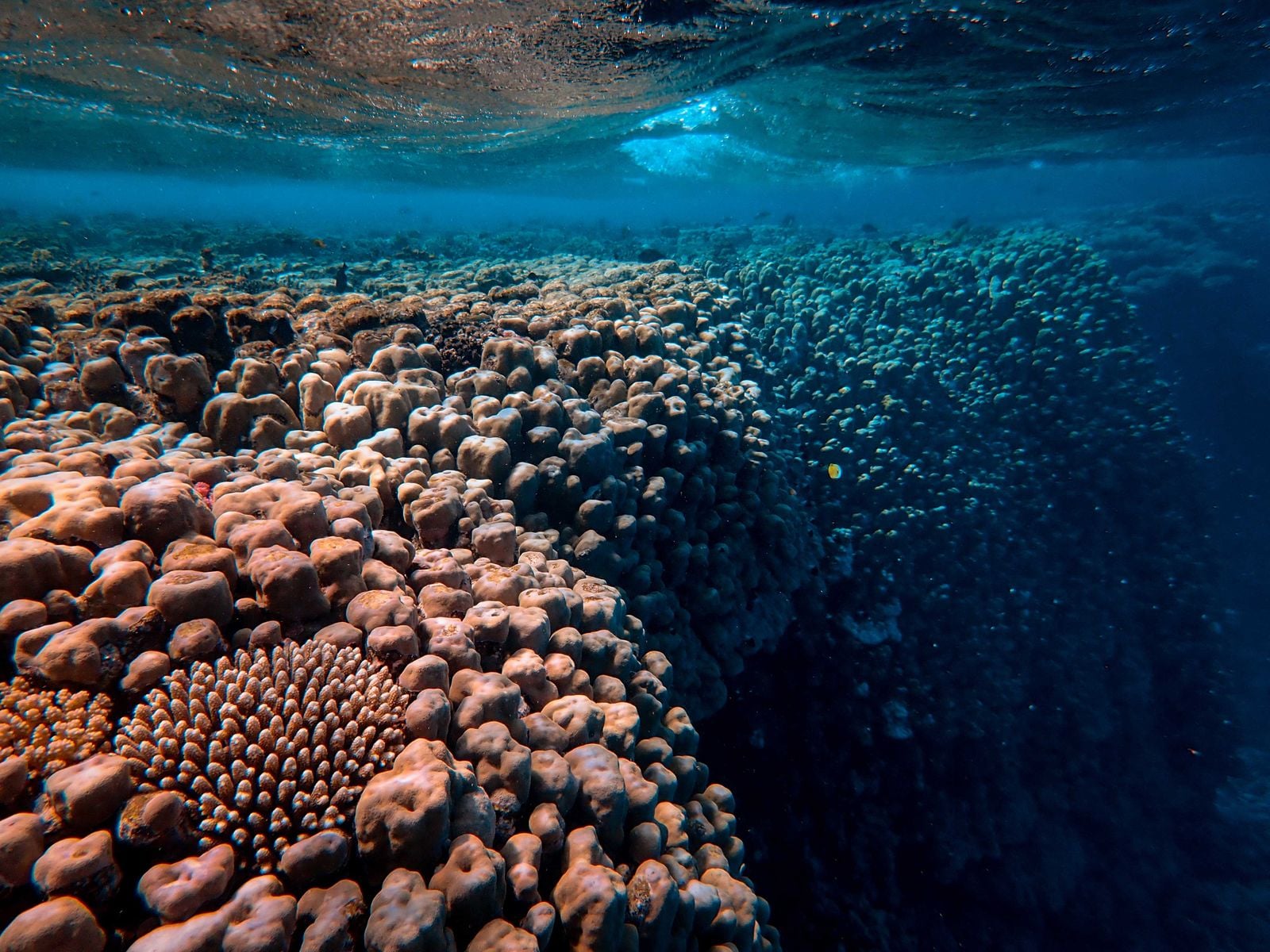
Four kilometres beneath the Pacific, across a vast stretch of seafloor between Hawaii and Mexico, lie billions of tonnes of dark, potato-sized rocks containing manganese, nickel, cobalt, and copper. A US Geological Survey review puts the Clarion-Clipperton Zone’s polymetallic-nodule resource at a conservative 21.1 billion dry tonnes and says its tonnages of many critical metals exceed those in terrestrial reserves.
That is the basis for the zone’s extraordinary mineral comparisons. It is also an estimate of metal in place, not a declaration that every tonne can be recovered economically or without unacceptable damage.
The nodules form layer by layer around small hard fragments on the seabed, at rates measured in millimetres over millions of years. Industry sees a deposit that can be collected without blasting an open pit. Marine scientists see a habitat whose physical structure cannot be replaced on any human timescale.
The maths that makes the seafloor irresistible
Many electric-vehicle batteries use substantial quantities of nickel, cobalt, manganese, lithium, and graphite, although the mix varies sharply between chemistries. Expanding grids, renewable generation, and electricity storage also increases demand for copper and other processed minerals.
A Nature Index summary of recent research says rapid electric-vehicle uptake could increase demand for some metals by factors of up to 30 by 2050. It also describes an order-of-magnitude increase in the materials needed for the electric-vehicle battery value chain under aggressive transition scenarios.
Existing supply chains are geographically concentrated. The Democratic Republic of the Congo is central to cobalt production, Indonesia has become the dominant nickel producer, and China occupies a commanding position in the refining of several battery materials.
An Oxfam analysis argues that countries in the Global South hold roughly 70 percent of the reserves needed for the energy transition, while investment and profits remain concentrated elsewhere. That combination of rising demand and strategic dependence helps explain why governments and mining companies are looking toward the deep ocean.
Collecting nodules would not require clearing a rainforest, excavating an open pit, or relocating a settlement at the extraction site. Those differences form the heart of the industry’s case. They do not make the ecological and political consequences disappear.
What lives down there
The abyssal plain is dark, cold, food-poor, and under immense pressure, but it is not empty. Camera surveys and biological sampling have revealed sea cucumbers, glass sponges, brittle stars, worms, corals, and other organisms, some of which attach themselves directly to nodules.
A 2023 synthesis in Current Biology reported that an estimated 92 percent of the species identified from the CCZ were new to science. Many had been collected only once, and only a small fraction of the thousands of recorded species had received formal scientific names.
That uncertainty matters because removing the nodules also removes hard habitat from an otherwise sediment-covered landscape. Sediment plumes, noise, light, and the movement of collection vehicles could affect areas beyond the tracks themselves.
A long-term study published in Nature in 2025 revisited an experimental mining site 44 years after it was disturbed. The physical tracks remained visible and biological effects persisted across decades. Some groups had recolonised the disturbed area, but the community had not simply returned to its former state.
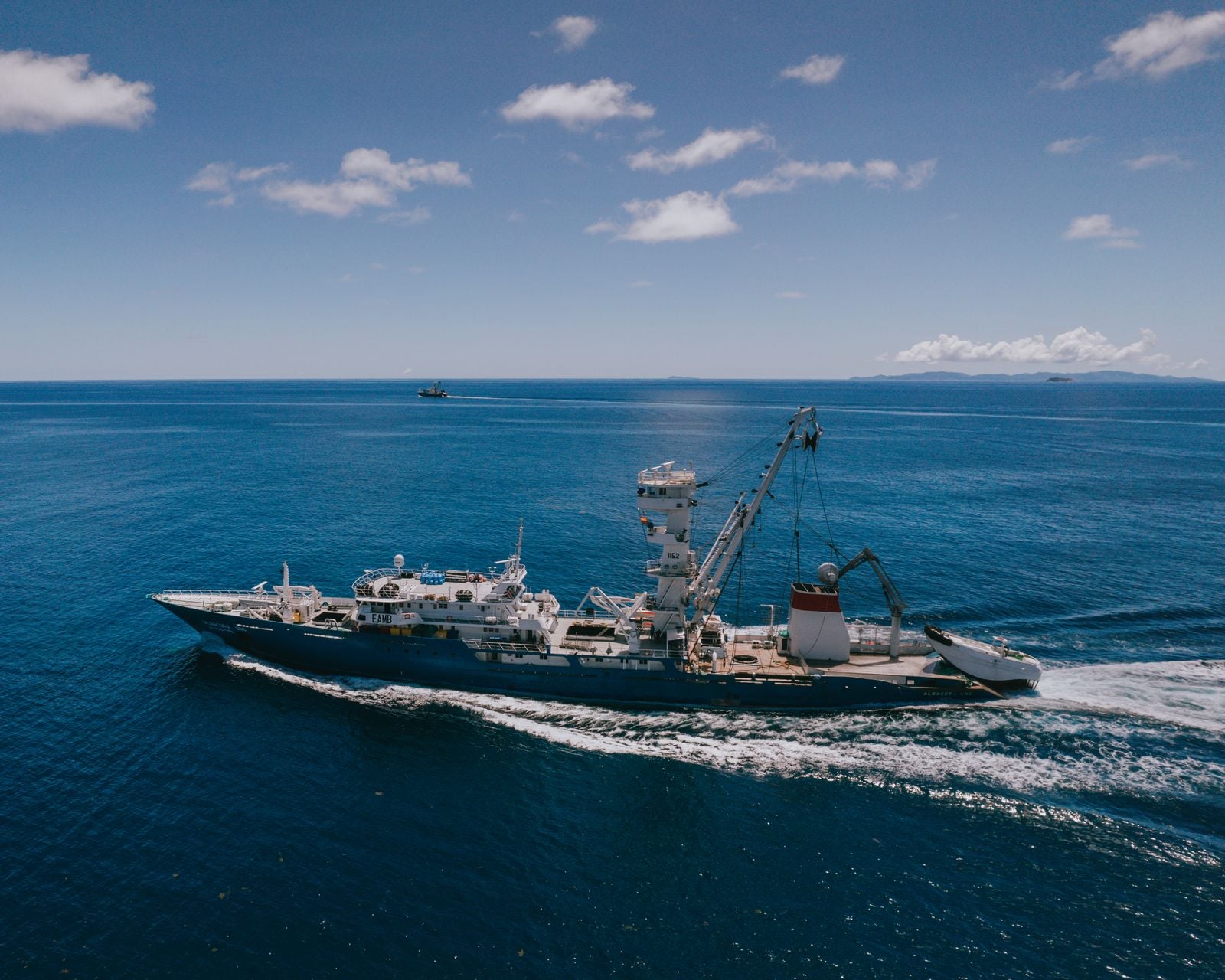
The company driving the timeline
The most determined commercial push has come from The Metals Company, a Vancouver-based firm focused on collecting polymetallic nodules. Its central argument is that producing battery metals from nodules could create less waste, fewer carbon emissions, and fewer direct social harms than expanding some terrestrial mines. Those remain company claims that regulators and independent researchers are still testing.
The company’s subsidiaries have explored CCZ contract areas through the International Seabed Authority system. In June 2021, Nauru notified the ISA that the Nauru-sponsored contractor NORI intended to apply for approval of a mining plan. That activated a provision calling on the authority to complete the relevant regulations within two years.
The July 2023 deadline passed without a finished Mining Code. The Metals Company then pursued a second route through the United States. TMC USA submitted a consolidated application to the National Oceanic and Atmospheric Administration for an exploration licence and commercial-recovery permit under the 1980 Deep Seabed Hard Mineral Resources Act.
NOAA determined that the application contained the information needed to enter the next stages of review, but that is not the same as granting a permit. The agency says an application must pass multiple steps before an exploration licence or commercial-recovery permit can be issued, including environmental review and opportunities for public comment. Its current programme page lists no existing commercial-recovery permits.
The company’s May 2026 update also said its full production and logistics network was still being designed and integrated. It targeted commissioning of its first commercial system for the fourth quarter of 2027, explicitly subject to regulatory approval. That is a corporate target, not a confirmed mining date.
The regulator is running behind the technology
The International Seabed Authority has spent more than a decade negotiating rules for commercial mining in international waters. Its Council was meeting in Kingston from 13 to 24 July 2026 as part of the authority’s 31st session, with the Assembly scheduled to follow.
Important parts of the draft code remain unresolved, including environmental standards, inspection, liability, financial terms, compliance, and the circumstances in which operations would have to stop. The ISA itself describes completion of the Mining Code as a prerequisite for future commercial activity in the international seabed area.
At the previous annual session, the GEOMAR-coordinated MiningImpact3 programme was formally launched. The international project has a budget of about €9 million and is coordinated by GEOMAR biogeochemist Matthias Haeckel.
Its work includes translating evidence from mining tests and adjacent industries into measurable environmental thresholds. Haeckel has described a traffic-light approach in which increasing impacts would trigger escalating safeguards and, at the highest level, require an operation to stop.
The difficulty is that regulators are being asked to define those limits while researchers are still determining what recovery looks like and which effects can be measured reliably. Engineering has moved faster than ecological certainty.
The colonial arithmetic nobody wants to name
The ISA is supposed to administer mineral resources beyond national jurisdiction for the benefit of humankind as a whole. In practice, the costs, benefits, and influence are not distributed evenly.
Pacific states have taken different positions. Nauru, Tonga, and Kiribati have sponsored exploration contractors, while other governments in the region have supported a precautionary pause or moratorium. Indigenous Pacific advocates have also challenged a regulatory process they say does not adequately recognise their rights, knowledge, or cultural relationship with the ocean.
Reporting from the negotiations has documented Indigenous advocates’ attempts to secure recognition in the global rules governing seabed mining. Their argument is not that communities live four kilometres down on the abyssal plain. It is that international law should not treat the ocean as culturally empty simply because no settlement stands on the extraction site.
The commercial value would move through contractors, processing facilities, manufacturers, and consumer markets spread across several continents. The environmental risk would remain in a deep-ocean system that no country owns outright and no regulator has ever overseen at commercial scale.
The counterargument the industry uses
Supporters of seabed mining are right about one thing: terrestrial mining is not a harmless alternative. Cobalt production has been associated with dangerous labour conditions in the Democratic Republic of the Congo. Nickel expansion has contributed to forest loss and pollution in Indonesia. Copper mining can consume large quantities of water in already dry regions.
The difficult question is not whether the energy transition requires materials. It is how much demand can be reduced through recycling, longer-lasting products, more efficient transport, and changing battery chemistry — and which remaining sources create the least irreversible harm.
Critics argue that presenting the choice as “mine the seabed or destroy the land” is a false binary. Some battery chemistries already use no cobalt or nickel, and recovery of metals from used batteries is expanding. Those changes will not eliminate primary mining, but they make long-range demand forecasts less fixed than industry presentations sometimes imply.
The opposition is not confined to environmental organisations. BMW, Volvo, Samsung, and Google have publicly supported a moratorium and said they would not source minerals from the deep seabed.
What happens next
Three processes now determine the timetable: the ISA’s unfinished international rules, NOAA’s review of the US applications, and the completion of a commercial collection-and-processing system. None has yet produced an authorised start date.
Political resistance has also grown. More than 43 countries have called for a moratorium or ban on deep-sea mining, while environmental organisations have signalled legal challenges if commercial permits are granted without adequate safeguards.
The earliest date currently promoted by The Metals Company is a target for commissioning in late 2027, and even that depends on regulatory approvals. Commercial mining could therefore begin later in the decade, or it could remain blocked while governments dispute the legal route and scientists contest whether the environmental baseline is adequate.
The nodules will still be there while those arguments continue. They took millions of years to form. Once collected, they will not grow back within any period that matters to the people making the decision.
That is the real imbalance at the heart of the debate: the machinery can cross a patch of seabed in hours, while the physical and biological consequences may remain long after every company, regulator, and government involved has changed.
