

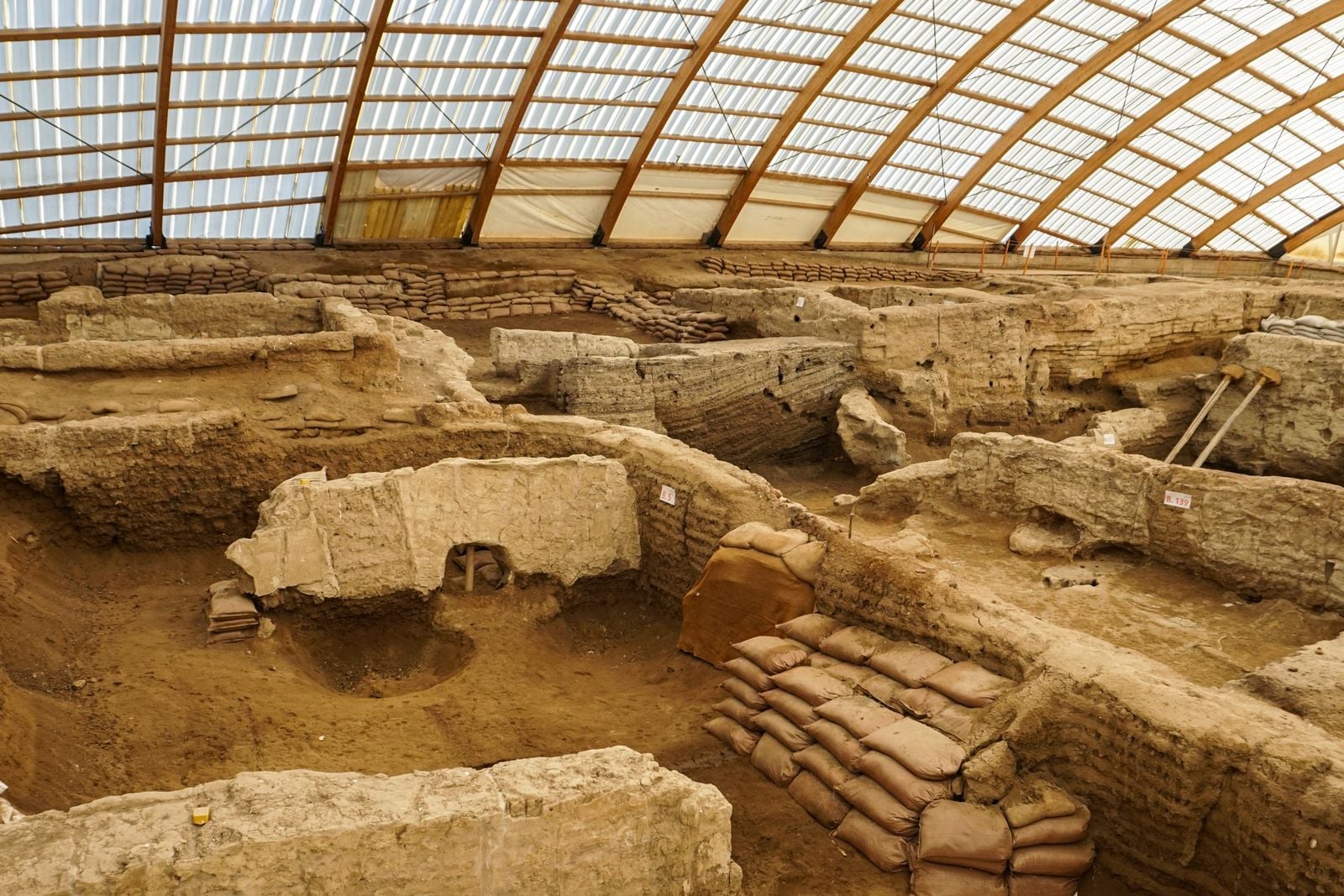
In May 1939, Basil Brown was cutting a trench into the largest burial mound on Edith Pretty’s Suffolk estate when his tools met a piece of corroded iron. He stopped broad excavation and began working carefully with a small trowel. One rivet became five, fixed in a curve beneath the sand. Brown was looking at the prow of a ship whose timber had disappeared more than a thousand years earlier.
As he followed the rivets and the darker impressions left by decayed wood, the vessel expanded across the trench. Its surviving outline measured about 27 metres, making it longer than the diagonal of a modern tennis court and revealing what would become the richest early medieval grave yet excavated in Europe.
The widow and the largest mound
The estate belonged to Edith Pretty, a widow in her mid-fifties who lived at Sutton Hoo House within sight of a group of grassy burial mounds. Stories had gathered around them for generations, and Pretty had a documented interest in spiritualism. Yet the route to excavation was practical: she approached local historian Vincent Redstone in 1937, and he contacted Ipswich Museum on her behalf.
The museum recommended Basil Brown. He had left school young and educated himself in astronomy, geology, local history and archaeology, eventually working as an archaeological contractor for Ipswich Museum. His knowledge came not from a university post but from years spent studying East Anglian soil and excavating local sites.
Brown first worked at Sutton Hoo in 1938, opening three smaller mounds. All had been disturbed by earlier treasure hunters, although fragments of cremated bone, weapons, pottery and ship rivets showed that the cemetery still had important stories to tell. In May 1939 he returned with estate workers and began investigating Mound One, the largest mound on the site.
Why the ship survived as a ghost
Sutton Hoo’s light, sandy and acidic soil is hostile to organic material. The ship’s oak planks, wooden fittings and other perishable components gradually dissolved, but their positions survived as subtle changes in the sand. Rows of iron rivets remained where they had once fastened the overlapping planks of the clinker-built hull.
Brown’s achievement was recognising those fragile signs and changing his method before they were destroyed. According to the National Trust’s excavation history, he stopped after finding the first iron and continued with a small trowel, widening his trench as the ship’s form emerged. The result resembled a photographic negative, with the vessel preserved through stains, impressions and metal rather than surviving timber.
The ship had been designed for a large crew and somehow brought from the nearby River Deben to the burial ground. It was lowered into a prepared trench, fitted with a wooden chamber and covered by a monumental mound. Moving a vessel of that scale across land required planning, labour and authority, all signs that the burial commemorated someone of exceptional importance.
The chamber at the centre
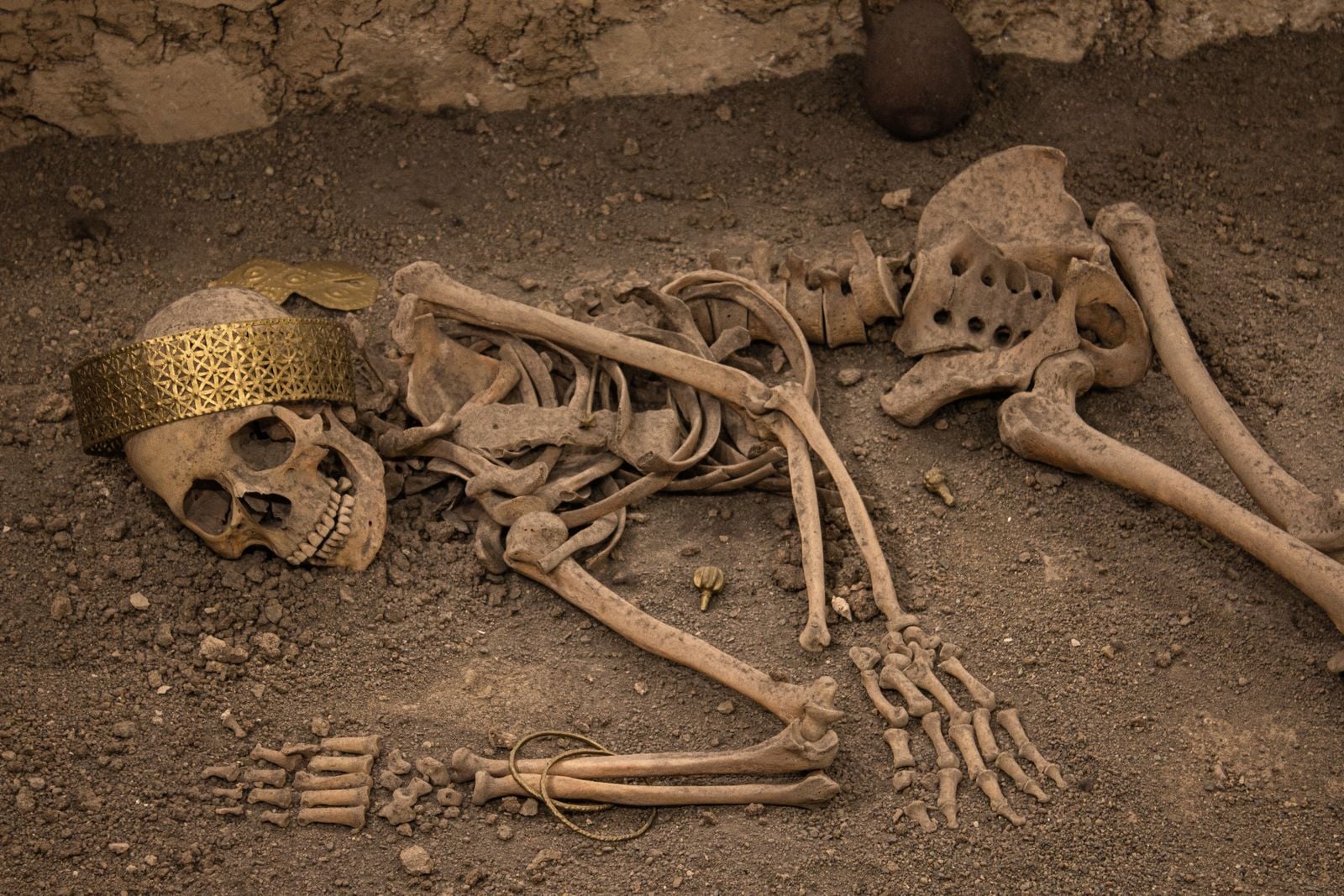
Brown reached the burial chamber in the centre of the ship on June 14, 1939. Apparent signs of robbery caused alarm at first, but medieval quarrying had altered the mound’s shape and sent earlier diggers away from the true centre. The chamber itself had escaped them.
News of the discovery spread quickly, and responsibility for the excavation passed to Cambridge archaeologist Charles Phillips and a specialist team. Phillips formally took charge in July, but Brown did not vanish from the site. He continued working under his contract with Pretty, recording and completing excavation of the ship while Phillips’s team concentrated on the chamber.
The team recovered 263 recorded finds made from gold, garnet, silver, bronze, enamel, iron, wood, bone, textile, feathers and fur. They included a pattern-welded sword, gold shoulder clasps set with garnet, a monumental gold buckle, silver vessels from the Byzantine world, coins from Merovingian Gaul and more than 100 fragments of an iron helmet.
No intact body survived. Later chemical analysis found elevated phosphate levels beneath the chamber, supporting the conclusion that human remains had dissolved in the acidic soil. The burial is most often associated with Rædwald, an early seventh-century king of East Anglia, but the identity of the person placed inside the ship remains unproven.
The helmet and the argument over its origins
The reconstructed helmet became Sutton Hoo’s defining image. Its iron cap, face mask, neck guard and cheek pieces were originally covered with decorated tinned copper-alloy panels. Metal eyebrows, a nose and a moustache combine into an animal-like face, and the British Museum describes it as one of only four complete helmets surviving from Anglo-Saxon England.
For decades, comparisons with helmets and burials in Uppland, eastern Sweden, shaped interpretations of its design. A copper-alloy die found on the Danish island of Tåsinge later produced another possibility: its mounted-warrior motif closely resembles a panel on the Sutton Hoo helmet. Researchers therefore proposed that the helmet might have connections to a Danish metalworking centre, although the Danish National Museum cautioned that it was too early for a firm conclusion.
The debate shifted again on June 17, 2026. Kent County Council announced that a late sixth- or early seventh-century die discovered near Lynsted closely matches the size and design of panels on the Sutton Hoo helmet. Analysis conducted with the British Museum suggested that helmets once considered Scandinavian imports could also have been produced in England.
The newer discoveries do not establish one final workshop. Instead, they reveal a North Sea world in which images, craft techniques and political symbols travelled among England, Denmark and Sweden. The helmet may be less a passport from one country than evidence of an interconnected elite culture.
The bucket that turned out to be a grave
Sutton Hoo continues to release surprises. Fragments of an ornate copper-alloy vessel called the Bromeswell Bucket first surfaced in 1986, with additional pieces recovered during later work. Its decoration includes armed figures, lions and dogs, alongside a Greek inscription offering good wishes to its owner.
The bucket dates to the sixth century and is thought to have originated around Antioch, in what is now southern Turkey. It was already roughly a century old by the time it reached Sutton Hoo. Whether it arrived as a diplomatic gift, a traded luxury or the possession of a well-travelled individual remains uncertain.
During the 2024 excavation, Time Team, the National Trust, FAS Heritage and volunteers lifted the surviving base in a single block. CT and X-ray examination at the University of Bradford revealed cremated human and animal remains inside the deposit, including part of a human ankle bone, fragments of the skull and bones from an animal larger than a pig.
The National Trust confirmed that the bucket had served as a cremation vessel and said the remains probably belonged to an important member of the Sutton Hoo community. Time Team’s Anglo-Saxon specialist Helen Geake described the find as a striking meeting of two traditions: a vessel from the southern classical world reused in a northern Germanic cremation burial.
Suffolk as a hub in a larger network
The ship burial changed how historians described the centuries between Roman Britain and the Norman Conquest. Earlier accounts had often treated the period as culturally poor, isolated and technologically diminished. Sutton Hoo exposed a society capable of elaborate craftsmanship, large engineering projects and international exchange.
The garnets set into the shoulder clasps originated far beyond Britain. Silver vessels came from the Byzantine world, while the coins connected East Anglia with Merovingian territories across the Channel. The burial gathered materials, objects and artistic influences from several regions into a single chamber beside the River Deben.
Nearby excavations at Rendlesham have strengthened that interpretation. Archaeologists have uncovered evidence of a royal settlement containing imported and high-status objects from continental Europe and the eastern Mediterranean. Sutton Hoo was not an isolated edge of the known world, but part of a political and commercial network stretching far beyond Suffolk.
Whoever was buried beneath Mound One had not been sealed away from the world. The world had been placed inside the ship with them.
Buried again, then found again
The Second World War began on September 3, 1939, only weeks after the excavation. The ship impression was backfilled for protection, while the most important finds were taken to London and stored in a disused section of the Underground during the Blitz. The surrounding land later became a military training area, and tanks damaged parts of several smaller mounds.
A coroner’s inquest ruled that the objects belonged to Edith Pretty because they had been deposited as a permanent burial rather than hidden for later recovery. Pretty then donated the entire collection to the British Museum. Most of the major objects remain there today, while the Sutton Hoo estate is cared for by the National Trust.
Pretty died in 1942. Brown continued working as an excavator in Suffolk until ill health forced his retirement, and he died in 1977. His contribution was underplayed in many popular accounts for decades, but his surviving notebooks demonstrate the precision with which he recorded the disappearing ship.
The wider public encountered his story again through the 2021 Netflix film The Dig, in which Ralph Fiennes played Brown. The film dramatised parts of the story, but it also returned a self-taught local excavator to the centre of one of Britain’s most consequential archaeological discoveries.
What the sand may still hold
Sutton Hoo belongs to a small group of discoveries that forced historians to reconsider an entire period. Silicon Canals has also covered the Antikythera Mechanism, recovered from a shipwreck before imaging revealed an ancient geared computer capable of tracking eclipses and athletic festivals. Alexander Fleming’s contaminated culture dish produced another kind of accidental opening when mould led him towards penicillin.
At Sutton Hoo, chance mattered, but so did judgement. Pretty chose to investigate the mounds, Brown recognised the meaning of a few corroded rivets, and the chemistry of the soil preserved an outline even as it consumed the vessel itself.
Archaeologists have identified a wider cemetery of nearly 20 mounds around the estate, many of which have never been completely excavated. The Bromeswell Bucket showed in 2025 that objects recovered decades earlier can still change meaning when new fragments and new technology become available.
The heath remains open beneath the Suffolk sky, its low mounds visible above the grass. Somewhere below them, more pieces of iron may still be holding the shapes of things that are no longer there.
