Technology, Politics, Mind. Since 2014.
Category

Curiosities

Biology, geology, deep ocean, evolution, and natural-world facts. Cross-domain wonder pieces.

62 articles · Curiosities

Curiosities

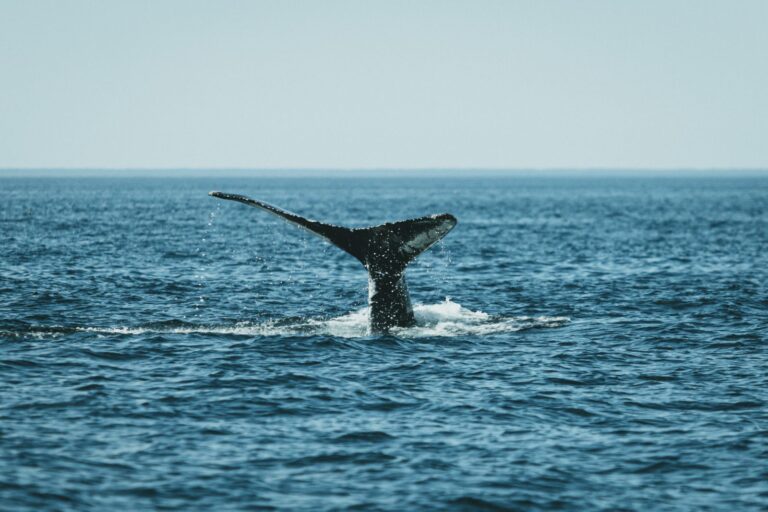
Bowhead whales can live more than 200 years and their cells appear to repair DNA damage so efficiently that researchers studying them have found tumors that simply stop growing partway through, leaving the animal to swim the Arctic for another century unaffected

Bowhead whales can live more than 200 years, and a 2025 Nature paper from the University of Rochester shows their cells repair DNA breaks two to three times better than human cells — thanks to a cold-activated protein called CIRBP that may explain why tumors in these Arctic giants sometimes simply stop growing.

Mind

Beneath the streets of Paris lie roughly 200 kilometres of tunnels holding the bones of around six million people, moved underground starting in 1786 to relieve overflowing cemeteries, and only a small lit fraction is open to visitors who descend 20 metres below the city.

Beneath Paris lie around 200 kilometres of former limestone quarries holding the bones of an estimated six million people, transferred from overflowing cemeteries starting in 1786. Only about 1.5 kilometres of the network is open to visitors, twenty metres below the streets.

Curiosities

The Mariana snailfish lives nearly 8,000 metres below the Pacific surface at pressures that would crush a submarine, and survives because its bones are partly unossified and its cells are packed with a molecule called TMAO that keeps proteins from collapsing

At nearly 8,000 metres below the Pacific surface, the Mariana snailfish survives pressures that would crush a submarine — thanks to a partly unossified skeleton, TMAO-saturated cells, and a liver rebuilt for famine.

Curiosities

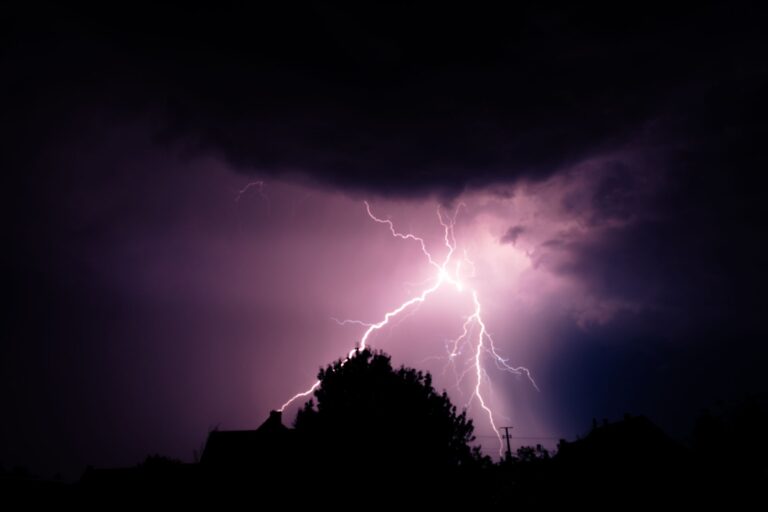
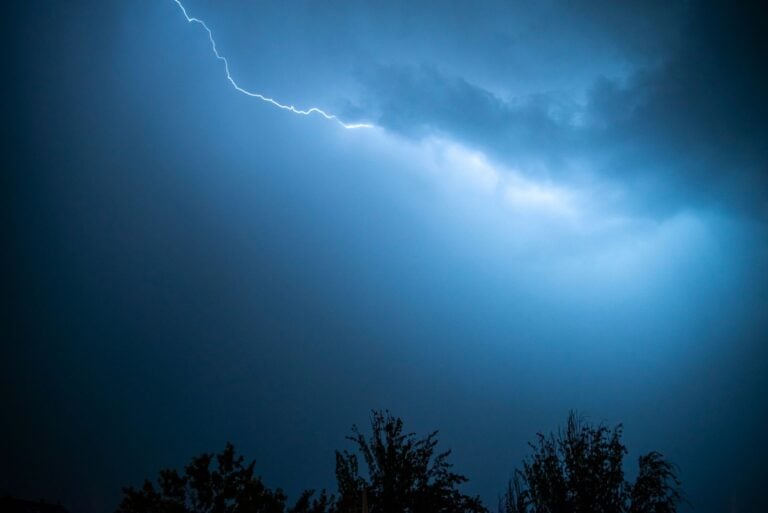
A single bolt of lightning that crossed Texas, Louisiana, and Mississippi in April 2020 stretched 768 kilometres end to end, once the longest single flash ever recorded and roughly the distance from New York City to Columbus

On 29 April 2020, a single lightning bolt crossed Texas, Louisiana, and Mississippi end to end — 768 kilometres of continuous discharge in under seven seconds, the longest flash ever recorded. Here is what scientists now know about how such megaflashes start.

Curiosities

On September 9, 1947, Grace Hopper's team at Harvard pulled a dead moth out of the Mark II computer's relay, taped it into the logbook with the note 'first actual case of bug being found,' and preserved the page that gave software its oldest metaphor

On September 9, 1947, engineers at Harvard's Computation Laboratory pulled a moth from Relay 70 of the Mark II computer and taped it into the logbook. The word 'bug' was already 70 years old — and that's exactly why the joke worked.

Curiosities

On September 9, 1947, a technician on Harvard's Mark II team taped a dead moth into the logbook beside the line 'first actual case of bug being found' — Grace Hopper didn't find it, didn't write it, and didn't coin the term, but she told the story so well for 45 years that it became hers

On September 9, 1947, technicians on Harvard's Mark II found a moth wedged in Relay #70 and taped it into the logbook. Grace Hopper retold the story for 45 years, fixing the word 'bug' into the vocabulary of computing — even though engineers had been using it since Edison.

Curiosities

In 1991, researchers at Cambridge's Computer Lab pointed a grey-scale camera at the department coffee pot and streamed the image to their desktops, because they were tired of walking three floors only to find the jug empty — and accidentally invented the webcam

In 1991, Cambridge researchers wired a grey-scale camera to a coffee pot to avoid wasted trips down three flights of stairs. Two years later, they put it on the web — and invented an entire category of technology by accident.

Curiosities

Olympus Mons on Mars rises nearly 22 kilometres above the surrounding plains, three times the height of Everest, but its slopes are so gradual that a person standing on it would not realise they were climbing the largest volcano in the solar system

Olympus Mons stands 21.9 kilometres above the Martian plains — nearly three times the height of Everest — but its slopes average just 2 to 5 degrees, gentler than most wheelchair ramps. The science of why a climber's vestibular system would never register the ascent.

Curiosities

The Pistol shrimp snaps its claw so fast it creates a bubble that briefly reaches 4,700°C — nearly the surface temperature of the sun — and stuns prey with a flash of light the animal itself cannot see

The pistol shrimp's modified claw fires a jet of water fast enough to vaporise the sea around it. When the resulting bubble collapses, temperatures spike to nearly 4,700°C and a flash of light briefly appears — invisible to the shrimp itself.

Technology

On October 29, 1969, a UCLA student named Charley Kline tried to send the word 'LOGIN' over ARPANET to Stanford, and the system crashed after the letter O — making the first message ever transmitted across the internet the accidental, almost biblical 'LO'

On October 29, 1969, UCLA student Charley Kline tried to type LOGIN to a computer at Stanford. The receiving system crashed after two letters, leaving LO as the first message ever sent across what became the internet.

Curiosities

The Wollemi pine was known only from ancient fossils until a park ranger rappelled into a canyon outside Sydney in 1994 and found a grove still alive, and the exact location is now a state secret guarded by Australian rangers

In 1994, a New South Wales park ranger abseiled into a hidden canyon outside Sydney and found a grove of conifers last seen in the fossil record 90 million years ago. The Wollemi pine's wild location remains undisclosed — and for biological reasons that have nothing to do with theatre.

Curiosities

Tardigrades can survive freezing near absolute zero, extreme radiation, and the vacuum of space by drying into glass-like tuns that suspend their biology until conditions improve

Tardigrades survive boiling, near-absolute-zero cold and the vacuum of space by curling into a desiccated 'tun' and vitrifying their cellular interior with disordered proteins and sugars that take over water's structural jobs. Fossil evidence suggests the trick is at least 250 million years old.